

From Hamburg’s graffiti scene of the early 1990s to contemporary mural painting: a conversation about artistic identity, style and the new work created in collaboration with the WALL+ in the Gängeviertel.
GOLDEN GREEN belongs to a generation of artists whose roots lie deep in graffiti culture. What began in Hamburg in 1991 developed into a distinctive visual language between abstract painting, graphic art and urban art. Today, he moves between the studio, canvas and public space. With the WALL+ in Hamburg’s Gängeviertel, his artistic practice finds a new platform.
You painted your first graffiti in 1991, aged twelve. Even at that young age, you were already part of the first graffiti exhibition in Germany, held at the Altonaer Museum. What fascinated you about graffiti back then, and what has remained a driving force to this day?
Back then, simply everything about graffiti fascinated me: the sprayers from my neighbourhood, the imposing size of the pieces, the forbidden paths of the city, the adventure with friends, the calm of sketching, the thrill of getting hold of materials, the strategy in choosing colours, the incomprehensible creativity of others, the sporty side of spraying, the art of photography, etc. Graffiti has so many different aspects and facets and stimulates the senses on so many levels, and that has actually stayed exactly the same to this day.
Before art became your profession, you worked as a stage builder at the Deutsches Schauspielhaus, at the fish market and as a postman, among other jobs. Becoming an artist was never really part of your original plan. What did you take away from those years, and how did art eventually become your profession after all?
Yes, in my twenties I did an incredible number of side jobs, and there I met the nastiest assholes and the nicest freaks. Those jobs gave me an understanding of people that I wouldn’t want to miss. Many of the people I met there did those jobs to make a living and feed their families. At that time, I just needed enough money to be able to live out my creativity. And by that I mean spraying graffiti and, back then, making music too.
I never considered going to art school, but in the end it was always only about art. About creating. I pursued it instinctively, without thinking about the consequences. I only became truly aware of that much later. I actually haven’t planned much in my life. I’m a drifter in the truest sense of the word: I like to let myself drift and just do what I enjoy. And by the way, that can also be hard work.
Through your studies in graphic design, you developed an artistic position between lettering, abstract painting, graphic art and urban art. In graffiti, style is closely tied to individuality and identity. What does style mean to you today, and how has it evolved over the years?
Style is everything. It’s your handwriting, your mind, your spirit in everything you do. Not just in graffiti. And the maturity that hopefully comes with the years naturally shows in your work and your style, too.
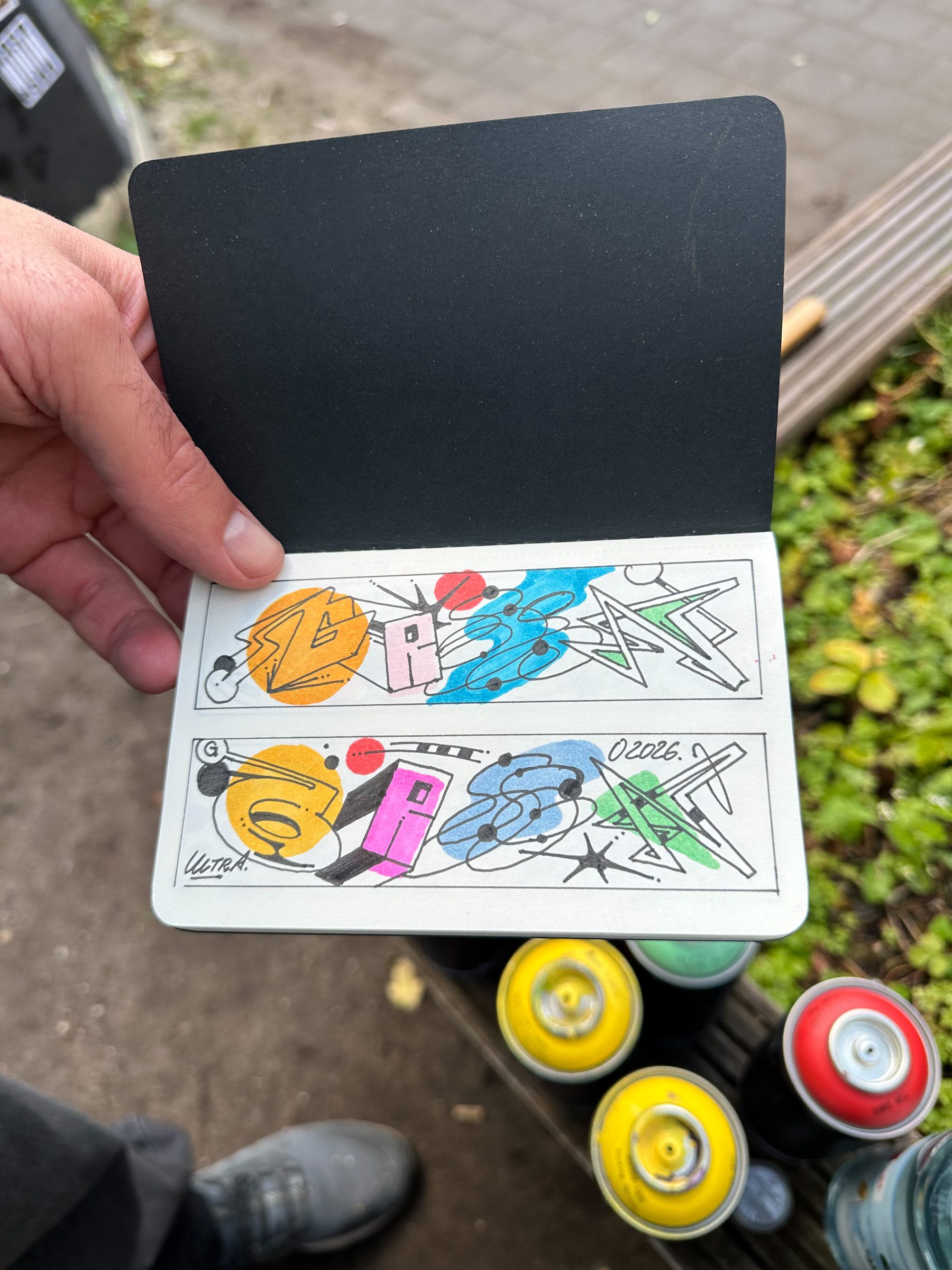
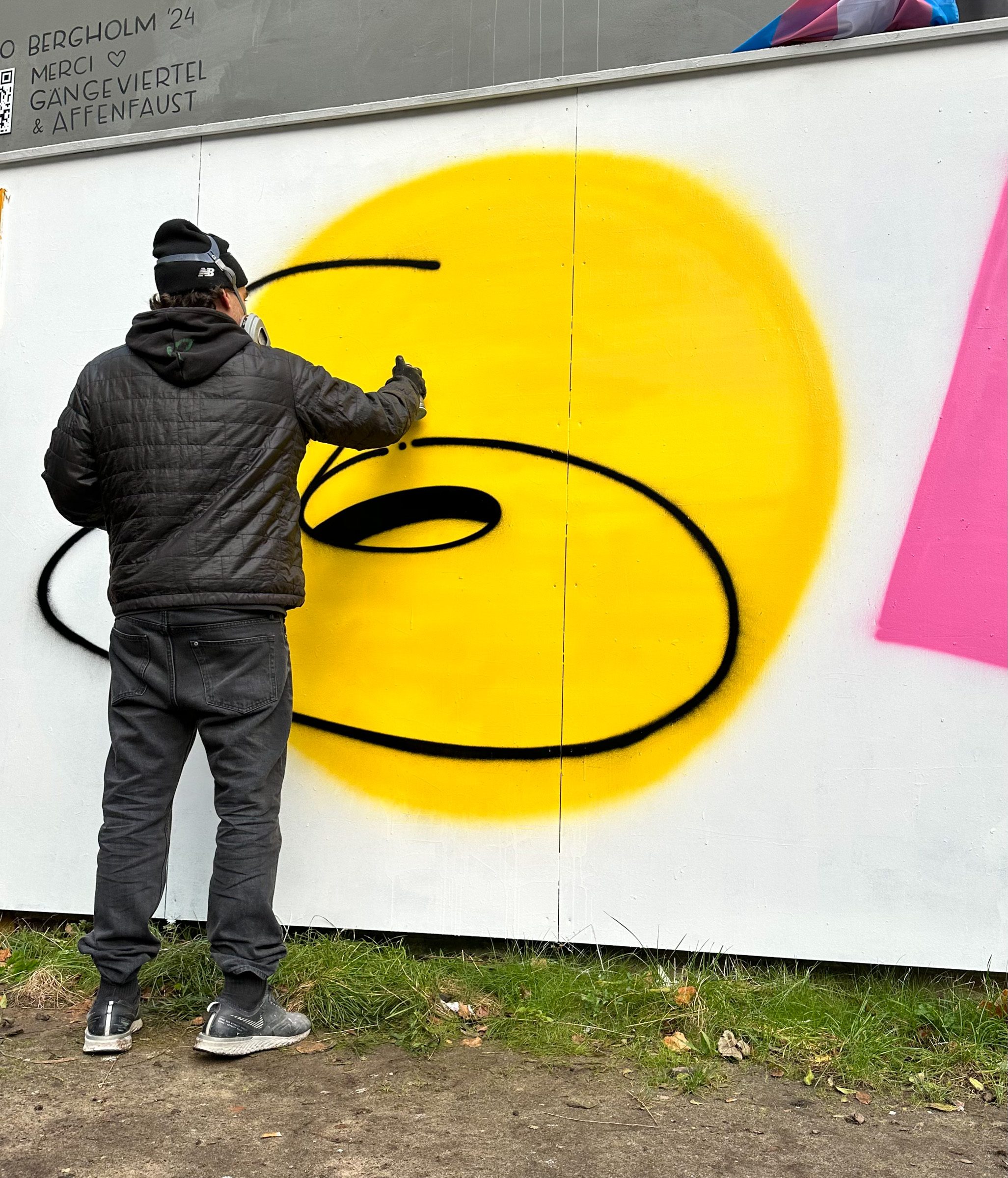
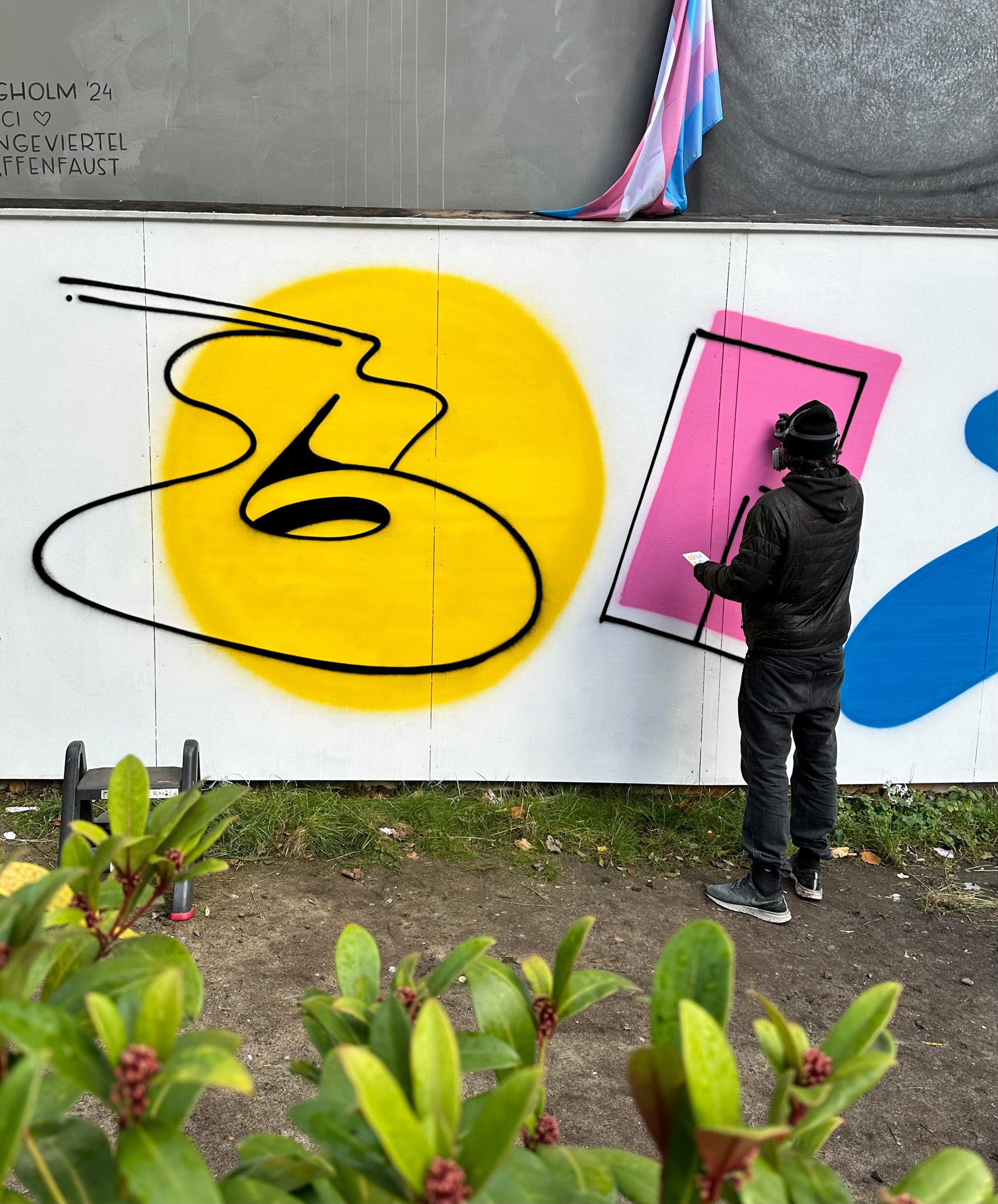
Geometric shapes, dynamic typography, intense colours and contrasts, as well as architectural and figurative elements, define your work. How do these visual worlds come about – spontaneously or through careful planning? And when do you consider a piece finished?
I think artists’ visual worlds simply arise from their preferences. From what a person is occupied with, what drives them. And that then gets mirrored, remixed and rearranged somehow. Sometimes intuitively, sometimes derived in a concrete way. And at some point, ideally, the whole thing takes on a life of its own and becomes a visual language of its own.
You always actually feel when a piece is finished… but then you usually can’t leave it alone and do more – and that’s almost always a mistake.
You are part of the international artist collective and crew Ultraboyz. What does this crew and community mean to you, and what do you take from exchanging ideas with others into your own work?
I’ve always liked being out on my own, too, but without a crew and community, everything is nothing. Exchanging with others is real life. It truly humbles me that I get to be in touch with so many artists from all corners of the world. Constructive criticism and recognition from your own milieu is the only thing that really counts. You can maybe also impress people from outside your field and make a lot of money. But if you can’t convince your own bubble with your work, then I’d say: fail.
How has your life as an artist changed since becoming a father? What has perhaps surprised you most along the way?
Becoming a father did me a lot of good, because I’ve become much more structured in how I plan my time. On the other hand, I de facto have a lot less time than artists without children. What keeps surprising me is how much you can get done in a very short time when you count to three and get going…
You have been part of Hamburg’s graffiti and street art scene since the early 1990s. While graffiti back then largely claimed public space on its own terms, today there are numerous mural projects, festivals and collaborations with galleries. How has the scene changed, and how do you see the tension between artistic freedom and curated formats today?
The difference is: today, somehow, everything is already there. The whole infrastructure is just a click away. There aren’t that many blank spots left anymore. The world is lit up. That’s good – but also not. I’m glad I was still able to go on real voyages of discovery and witness something truly new emerge. On the other hand, younger sprayers and artists can also be glad that there are already so many opportunities. Every era has its pros and cons.
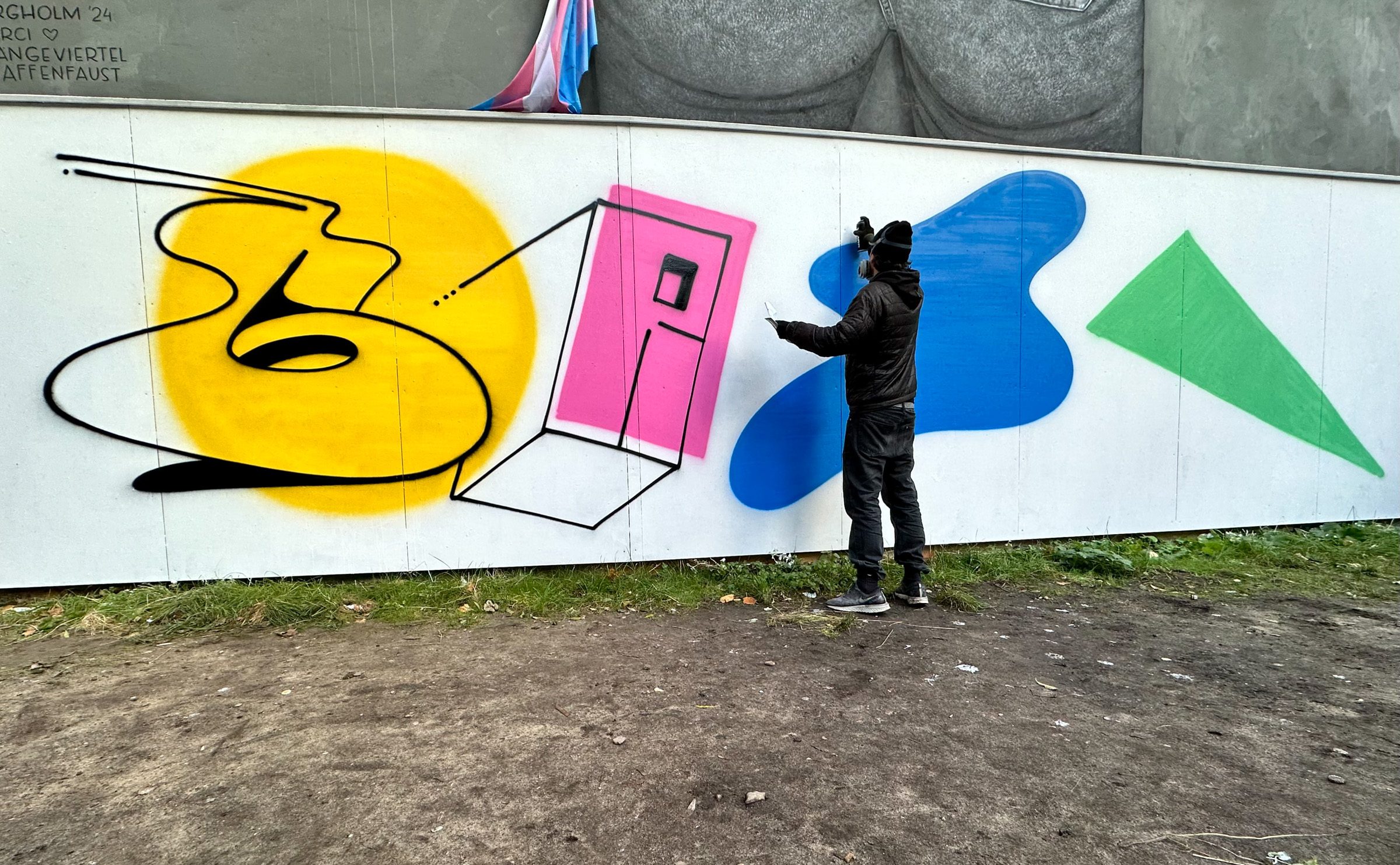
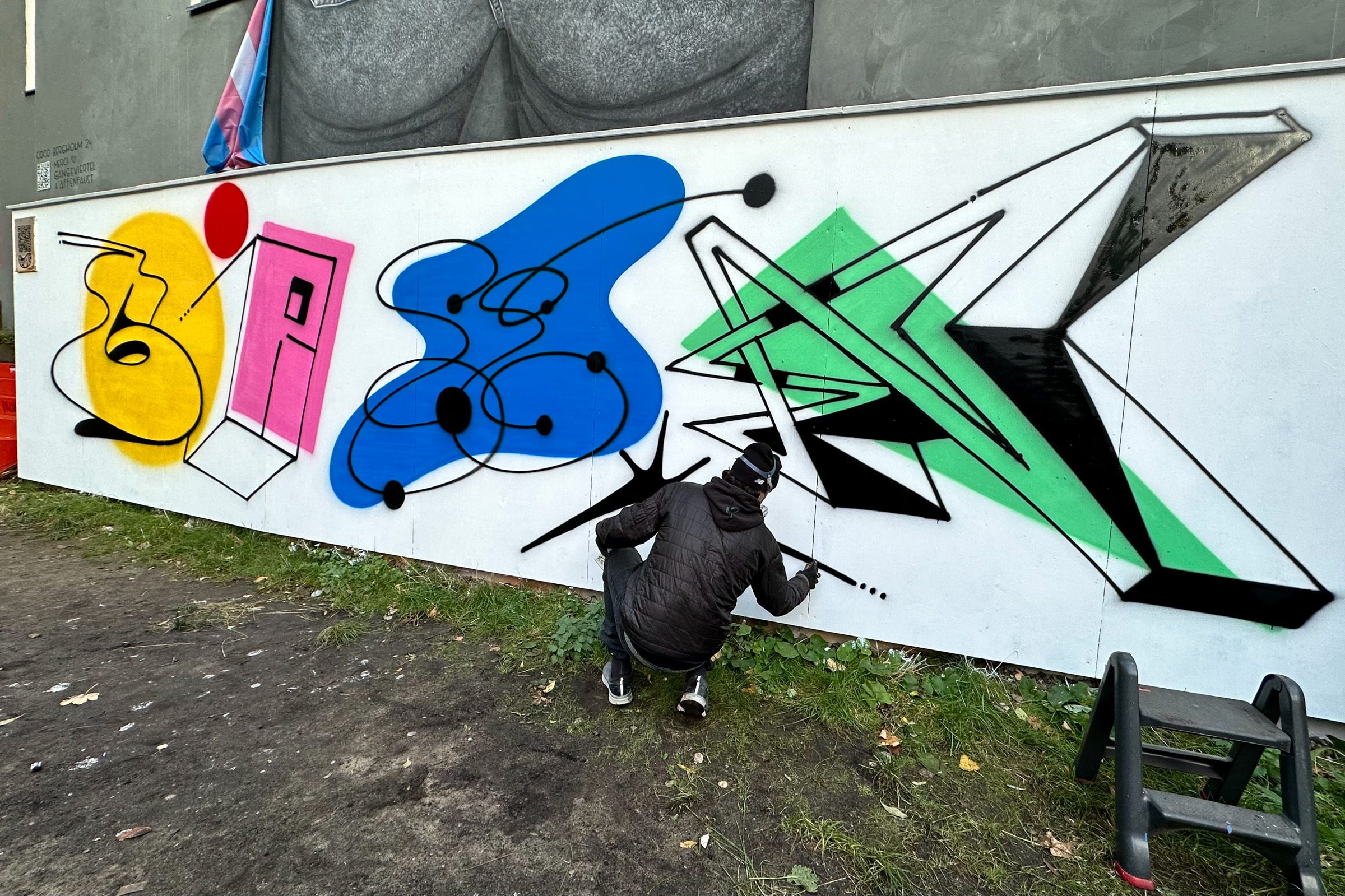
Your work spans paper, canvas and wood as well as large-scale walls. With its 10 × 2.50 metre surface in Hamburg’s Gängeviertel, the WALL+ offers you a particular challenge and an open space for experimentation, an invitation to explore new approaches and showcase the diversity of contemporary mural painting. Does your artistic approach change when working in public space, and what appeals to you about this panoramic format?
Of course, painting on canvas or paper is different from spraying on a big wall outside. Every surface offers the chance to try out a new tool. But the visual language doesn’t fundamentally change because of it – it just gets adapted somehow to the format and the circumstances.
Actually, landscape formats don’t appeal to me all that much. That’s probably because graffiti mostly happens in landscape format and I’ve already painted far too many of them… But I’m still always happy to have the opportunity to paint a white wall the way I envision it.
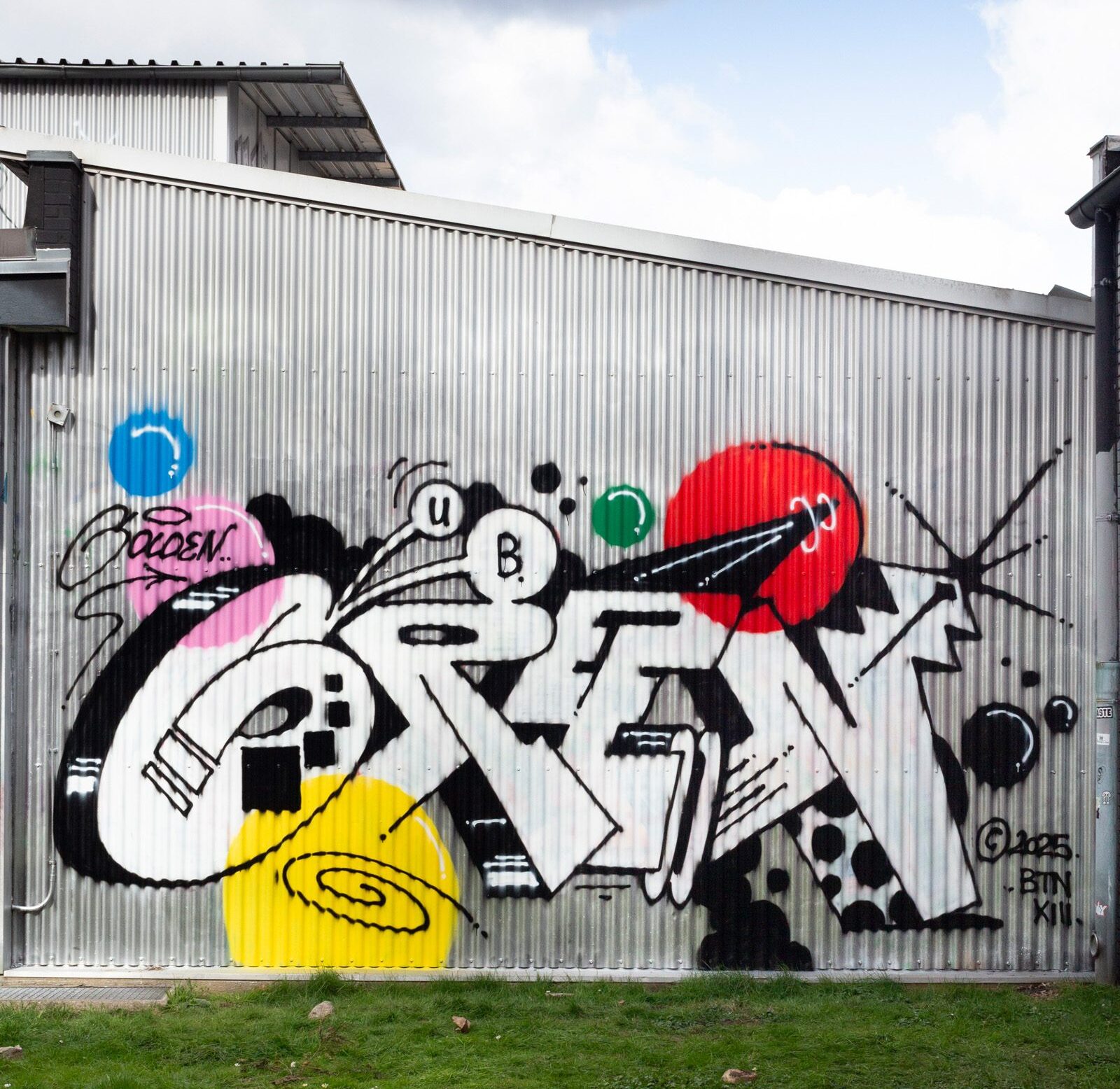
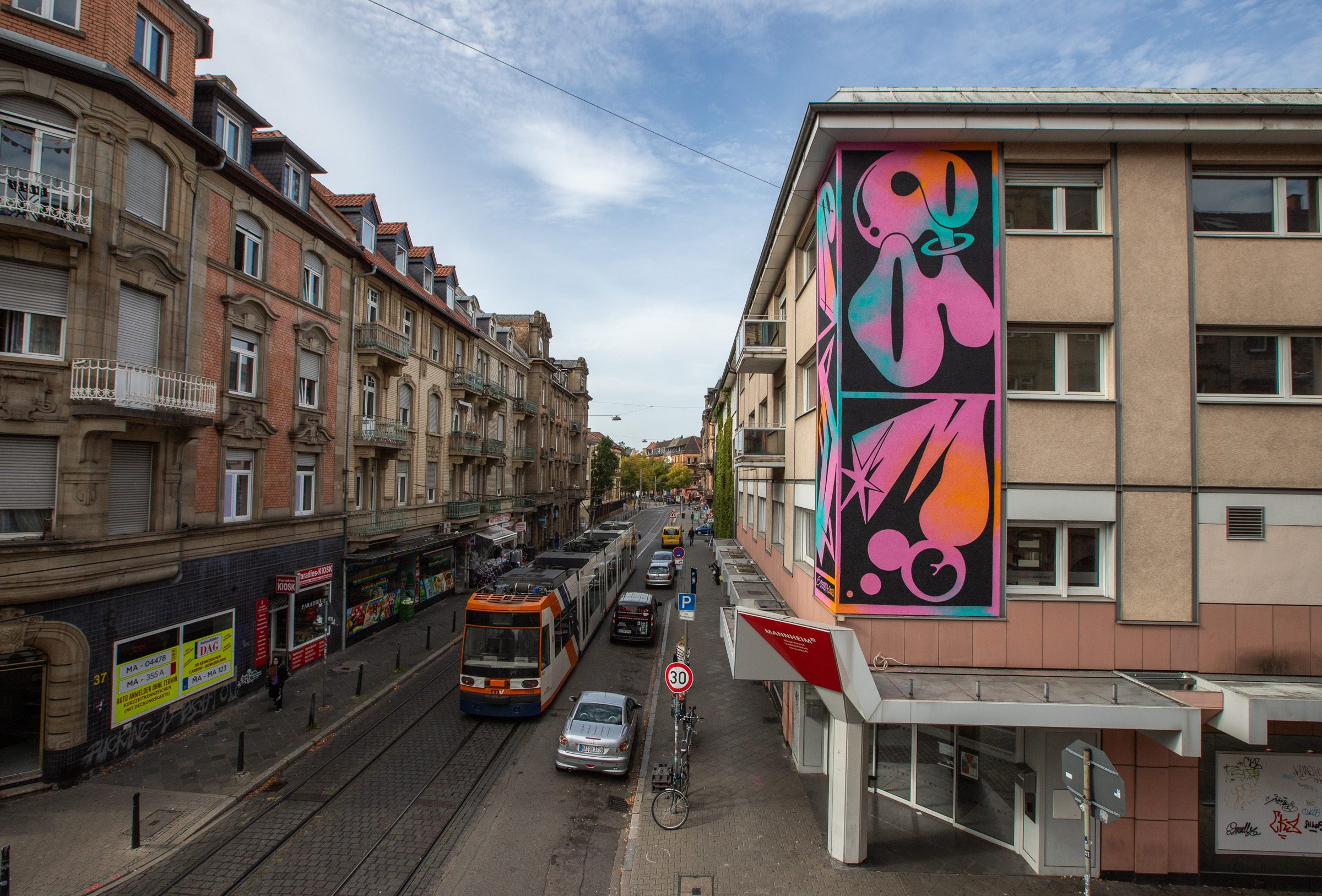
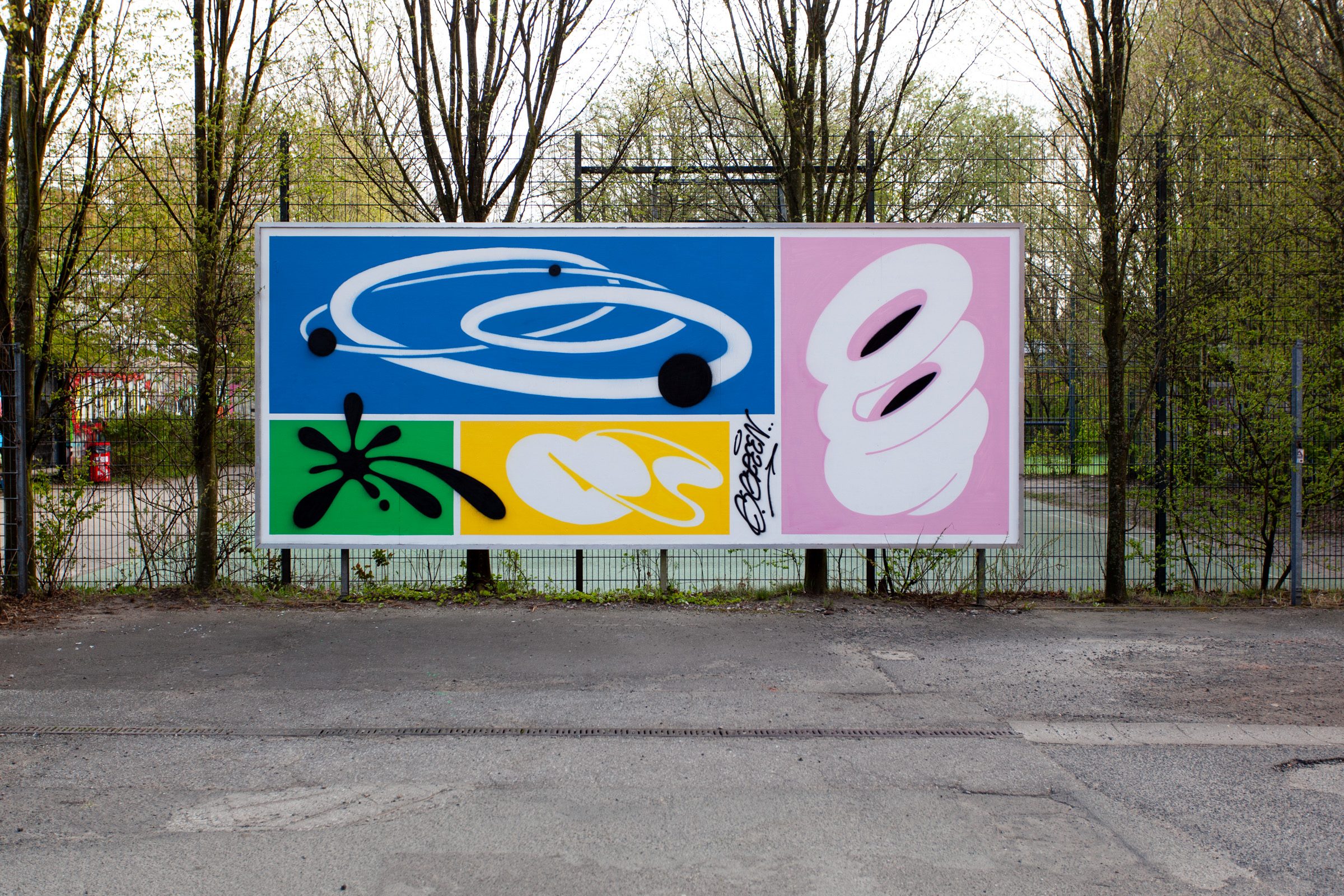
Previous artists have interpreted the location in very different ways – from the architecture of the neighbourhood to the murals in the surrounding area. Do you already have an image in mind, or do you deliberately allow yourself to be guided by the process? What role does the Gängeviertel play as a place?
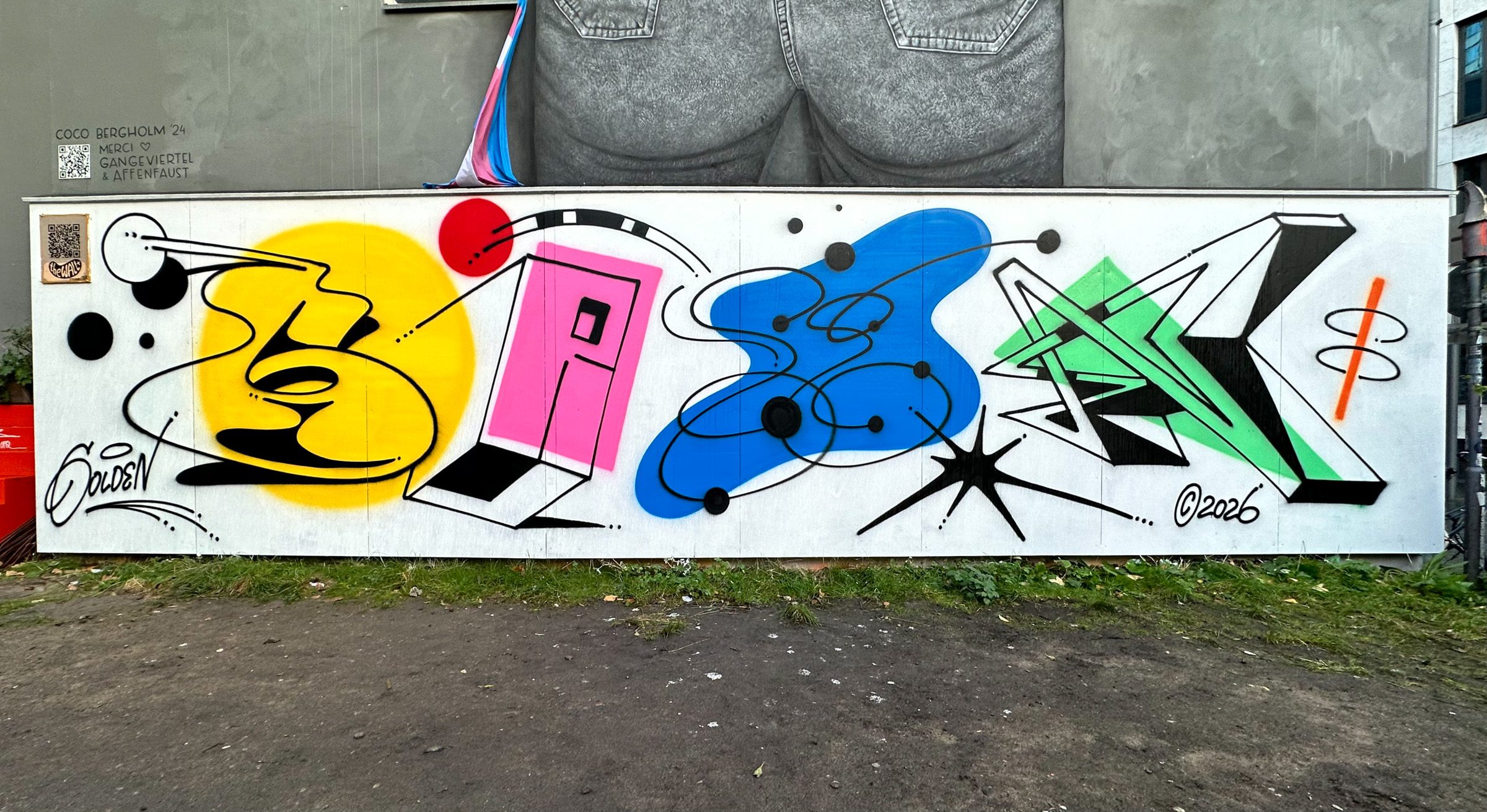
I could invent some pseudo-intellectual foundation now, but I’ll be honest: this time, my planning for this piece had no connection to the location whatsoever beforehand. I’d had an idea for a long time that I wanted to realise, and theWALL+ gave me the opportunity to do it. I knew I could execute this concept relatively quickly, and since it’s very cold in Hamburg in November, it was also a very pragmatic decision. But now that the piece is there, a connection to the place is emerging as well. Especially for the residents and visitors of the Gängeviertel.
You have been working as an artist for more than three decades. Is there something you still really want to explore – a new technique, a special location or a particular challenge?
I’d like to become more three-dimensional at some point, that is, create a sculpture. So far, I haven’t found the leisure for it…
Thank you, Golden Green, for becoming part of the WALL+ and for making Hamburg’s Gängeviertel shine even brighter with your creativity.
We’re already looking forward to seeing your work expand into the third dimension! Keep it up!
His new work is on view now at the WALL+ in Hamburg’s Gängeviertel. Come and take a look!
Outlook: the WALL+ 2.0
After almost three years in which the WALL+ has offered space to a wide range of positions in mural painting, a new chapter begins in mid-2027. the WALL+ 2.0 sets its focus on collaboration: on encounters, exchange and the emergence of an in-between where artistic positions meet, connect and create something new that no one could have made alone.
We’re looking forward to this next step and to taking it together with you. Stay tuned!
More about the WALL+ on Instagram: @thewallplus.hamburg
More about Golden Green: moritzgreen.com | @goldengreen179


Leave a Reply