

Prologue
This text may disappoint some readers. The focus is not on the image, not on the finished piece, and not on the supposed end result. Here, the image itself is irrelevant. Interchangeable.
Style? Not a relevant category. And yet, graffiti inevitably provides the context.
Instead, this text focuses on the “before” and the “after.” The “before” is what we call exploration; what follows is documentation.
Special thanks to HOPE from the OH Crew for the inspiring conversation and open exchange.
Exploring
“When I look back at how much time I used to invest in it [meaning graffiti, author’s note] – both mentally and in practice – development of the actual style plays a completely secondary role for me in retrospect. What mattered most to me was researching train models, studying satellite images of rail yards, figuring out how to access them, mapping out train schedules on-site and so on and so forth. The actual painting is just a craft that takes very little time. But everything leading up to it is far more extensive, and far more meaningful to me as a person. For me, it’s about exploring. Exploring Europe and beyond.”
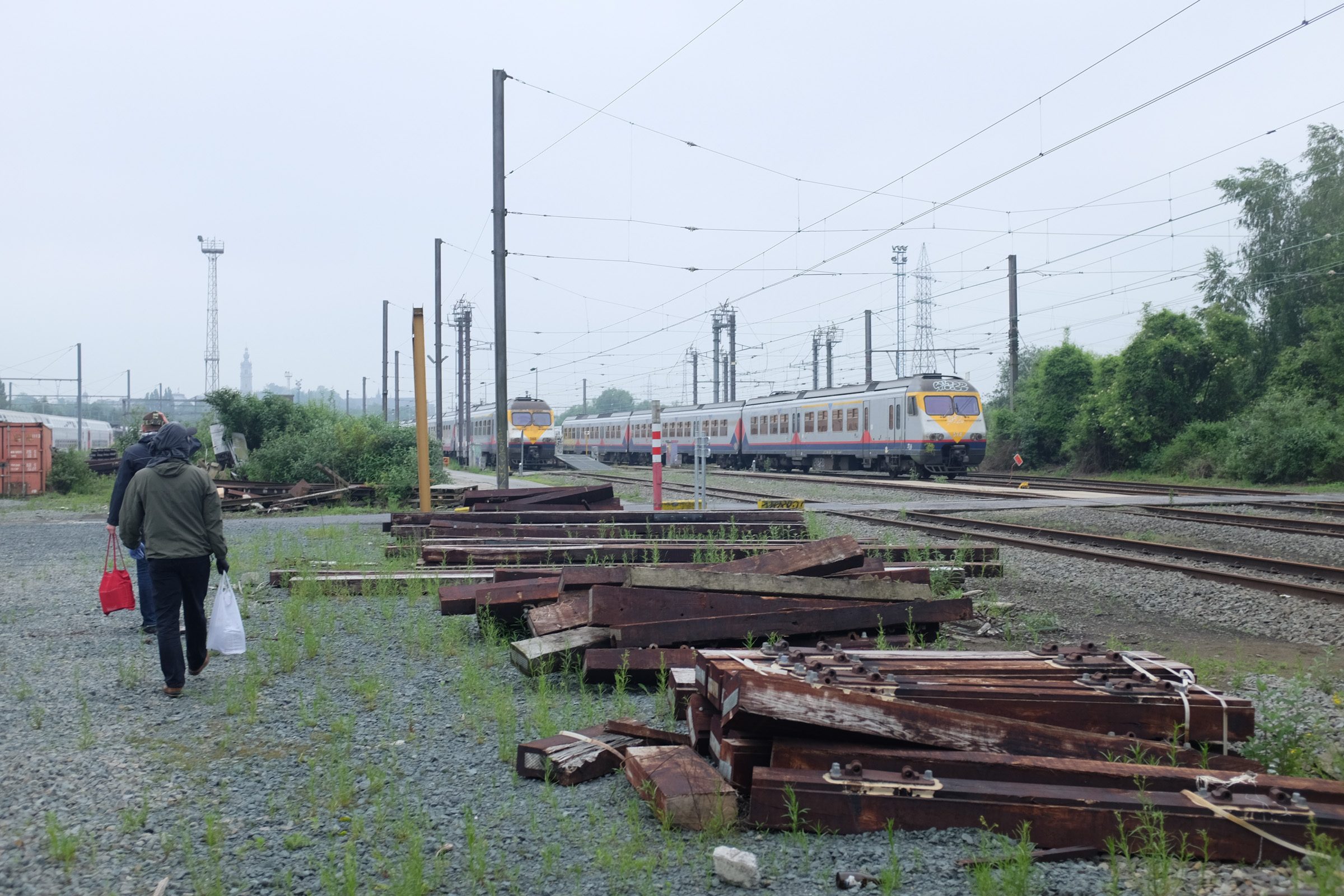
Moritz Klein makes a similar point in his essay “Graffiti Is Murder”: Graffiti cannot be reduced to its visuality. For him, it is not primarily about creating images; what truly counts is the process – the act, the experience, the moment. The image (or, more precisely, its photographic documentation) is at most a byproduct, a visual trace of the activity.[1]
And one thing is clear: he’s right about that.
This places us directly in the discourse about graffiti’s “detached” visual nature. Or, in other words: in the realm of the before and after.
For HOPE, the concept of “exploring” applies in every sense: There’s also something like ‘train tourism.’ People travel somewhere, then call the local hero and say ‘we’ll be in your city on such-and-such a date; please take us along.’ That was rarely an option for me. At best, I always wanted to figure it out myself. It was important to me to see how I could apply the skills I’d learned to new situations. Maybe with fewer results, but I didn’t care. You can’t see that just by looking at the train, but I know it. And that’s why I have a different kind of respect for those who’ve made it on their own.” He adds: “Doing the same thing over and over is deadly boring to me. It’s a nightmare!” HOPE’s graffiti practice is thus always an act of translation. Each time, he asks himself: How can I apply my knowledge of infrastructures A, B, and C to infrastructure D? Which skills do I use as usual, and where do I need to adapt to suit the specific location? Given this, it’s no surprise that the conditions under which a piece is created are a key criterion for its value. After all, these conditions play a decisive role in shaping the final product, including all the preparatory work such as exploring.[2] HOPE explains: “For example, I sit at the train station and watch what time each train departs. Next, I write down when the cleaners arrive and when they leave […]. Also: at what time it’s light enough to take a traffic photo in the morning. It’s no use to me to draw train number 1 leaving in the dark; instead, I have to draw train number 3 leaving in daylight so I can take a good photo, even if it’s parked in a spot that’s less convenient for my work. That’s the effort you just have to put in; otherwise, it won’t work.”
Disruption
To understand the roots of this practice, you have to go back a few years in HOPE’s life. “When I was younger, I spent hours obsessing over letters and style. I was a total nerd kid, sitting in my bedroom at night, drawing an S for four hours – until it was exactly how it was supposed to be. Only then did I start painting outside, and even then, I thought carefully about where, with whom, and how. There was a shift, and the piece itself gradually became less important ”
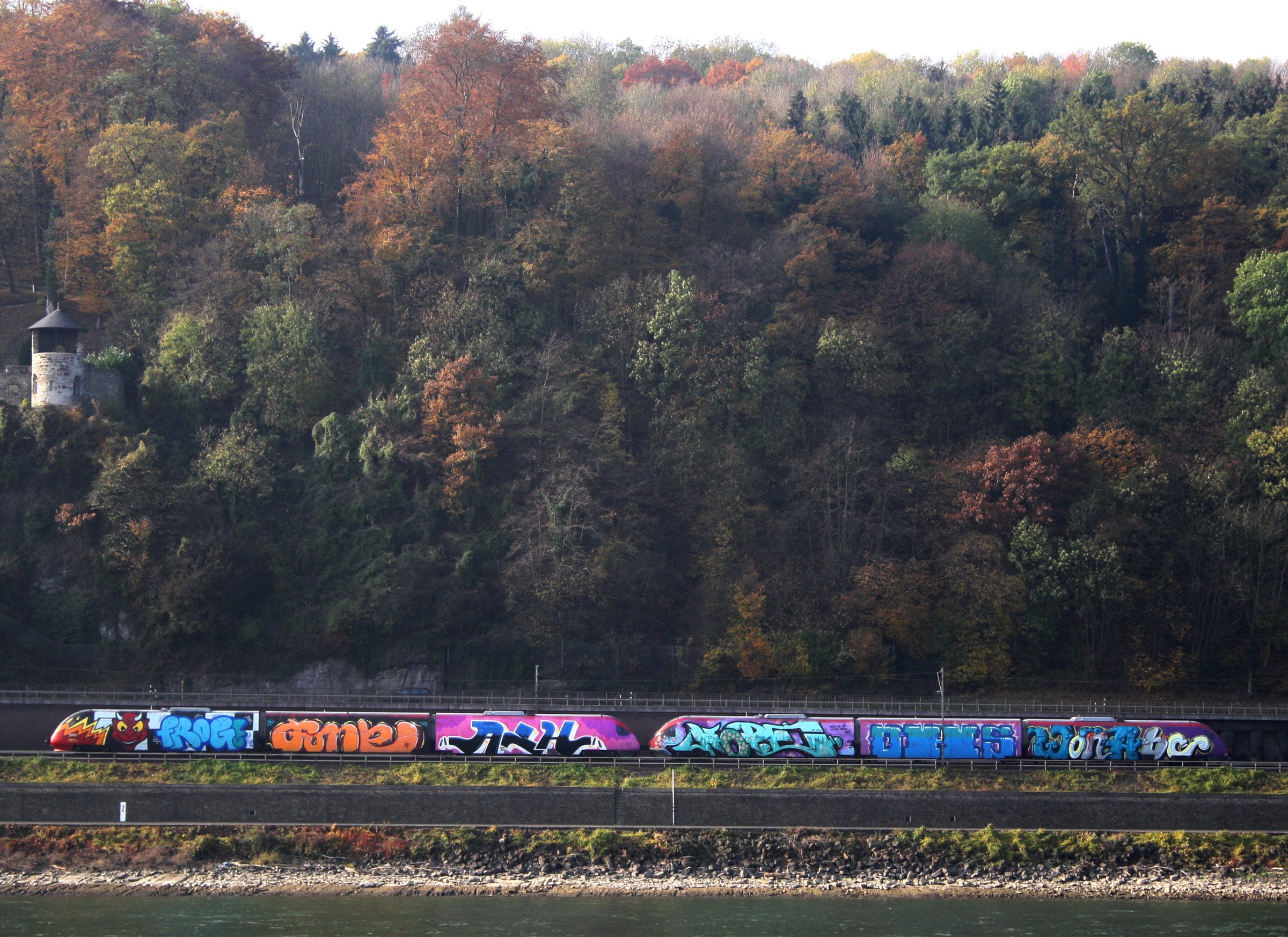
For HOPE, it’s all or nothing: “‘ I’ll just go spray a little’ doesn’t exist for me. When I – or we – go out to spray, we do it right. We paint the biggest, most colorful piece exactly where we want it. Maybe it’s unhealthy perfectionism: I don’t know. But when I’m emotionally invested in something, I have to be all in.” And he adds: “I think a lot of people feel that way. Otherwise, you wouldn’t take all that on yourself. Otherwise, you wouldn’t put yourself through all that. For example, I used to often skip parties I was supposed to attend because I hadn’t slept the night before. I froze my ass off in some bushes. I sat for four hours in some muddy hole watching some guy clean a train. That kind of endurance has to come from somewhere. It’s not something you do casually. Others have risked relationships with girlfriends or parents. You only put up with that if you really want it.“
At the same time, and this is where it gets crucial, graffiti – or train writing in particular – is, of course, also about cracking the system. It’s about infiltrating a system that isn’t meant for you. Silently, and on tiptoe. Destruction isn’t the goal; what matters is temporarily undermining the system’s mechanisms, disrupting them, and exposing that disruption from within.[3] Like a hacker – an offline hacker – who knows the security gaps and exploits them without collapsing the system. On the contrary: the intervention adds complexity. And that’s a good thing. After all, who wants to live in a world where everything is black or white, in or out, small or large? The most compelling stories unfold in the gray areas – where those who navigate the boundaries feel at home, play their game, and keep the system alive. Anything else would be stagnation.
HOPE describes it as a demonstration of power: “You immerse yourself in a system, you look for the loopholes, and you exploit them. To be honest, that’s a truly exhilarating feeling. And when you actually see your train rolling in, that’s the ultimate thrill. It’s a key moment every single time: standing at the station, watching your train arrive.” This suggests that: Even in seemingly strictly controlled systems, there are tactical leeway or loopholes within which the mechanisms of discipline can be undermined or reinterpreted.[4] The result: Discipline becomes an anti-discipline displayed within the system. And HOPE adds: “Some people paint for 10 minutes, some for 20 minutes, and some for hours. And then, for example, the 2-hour painting comes in, that’s a moment of pure joy. It’s hard to top.
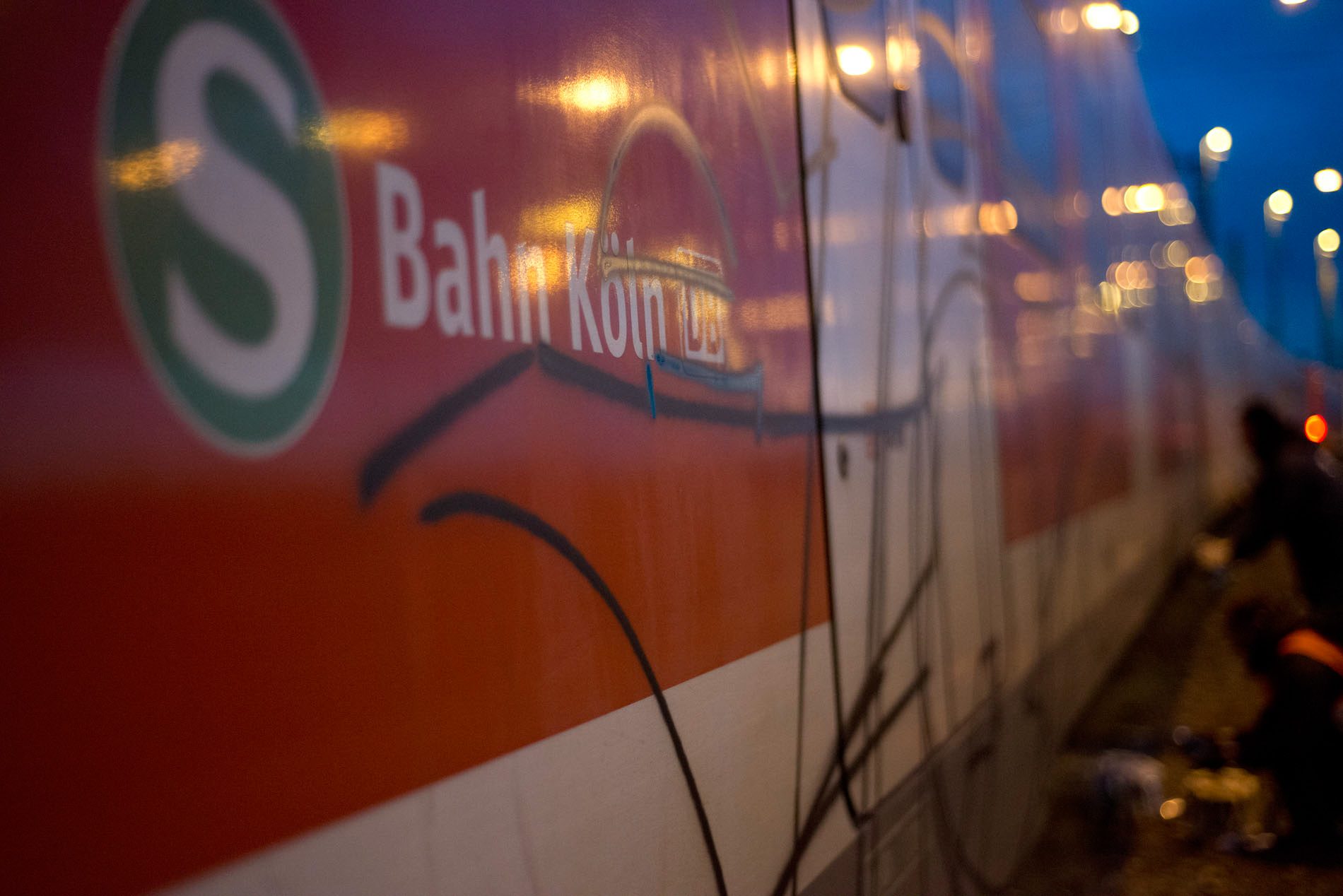
It’s clear that cracking the system carries political weight. Yet HOPE doesn’t prioritize bold slogans; subtlety is key: “It’s political in itself to observe a system, document it, and then exploit the loophole. Of course it’s political – it’s a statement, after all. It’s about showing a system where the limits of total control lie.” Once again, the pictorial or visual expression recedes into the background. Or as Moritz Klein puts it succinctly: The image does not generate any aesthetic value on its own; it is more of a trophy than an image. It points to the writer’s victory, signaling: I made it. I’ve won.[5] Klein identifies pushing limits, achievement, competition, entertainment, adrenaline, and urban adventure as the central motifs of this practice.[6] And HOPE confirms the significance of adrenaline – but also its ambivalence: the intense emotional experience is by no means easy to process or overcome. “Dopamine addiction? Maybe,” says HOPE.
High-End Lure Fishing for Zander
What does this “system cracking” feel like after more than 25 years of graffiti for HOPE? HOPE compares it to this: “Imagine you’re in the eye of a storm for a brief, sublime moment. First, you fight your way into the storm with all your energy. Then, when you’re right in the middle of it, everything suddenly goes quiet. You’ve consciously put yourself in this situation, and at first, you’re under immense stress. You’re constantly aware of the potential consequences. That boosts your dopamine. Only once the first lines are painted, the tension eases, creating a huge contrast to the minutes or even hours before. Mastering and enduring that is really exciting. It has enormous addictive potential. And there’s another challenge: most of the time, you have almost no space to work. The sketch on the train might be 8 meters long, but you only have about a meter of free space behind you before the next train or fence. You can’t step back to check the proportions. But when, in that situation, you deliver what you’ve practiced for years, that’s incredibly satisfying. Though you often don’t realize it until the next day, when you see what you’ve created.”
HOPE has since stepped back from active graffiti writing, but he’s applied his approach to other pursuits like fishing: “These days, I really enjoy fishing for zander with artificial lures, often late at night. That means I’m willing to travel long distances and overcome obstacles to fish in spots where no one else goes, because most people simply can’t get there. So I’ve kind of adapted the game to a more age-appropriate and family-friendly alternative, but one that’s not boring for me. It’s super exciting – but also super nerdy!” To understand this, you have to know: “I got my fishing license when I was 14, then I completely forgot about it. And when I stopped doing graffiti, I went fishing like a maniac, basically as a self-imposed methadone program. And like I said: I don’t just go fishing any old way. I don’t sit by the river, cast a line, drink a beer, and wait. Instead, I use high-end tackle from Japan or the U.S. and actively fish at night, targeting a very specific species of predatory fish with modern artificial lures. To do this, I travel a long distance and use modern fish finder data to scout the structure of the riverbed, since predatory fish aren’t distributed linearly throughout the water. They only live and hunt around very specific structures that you have to learn to recognize.
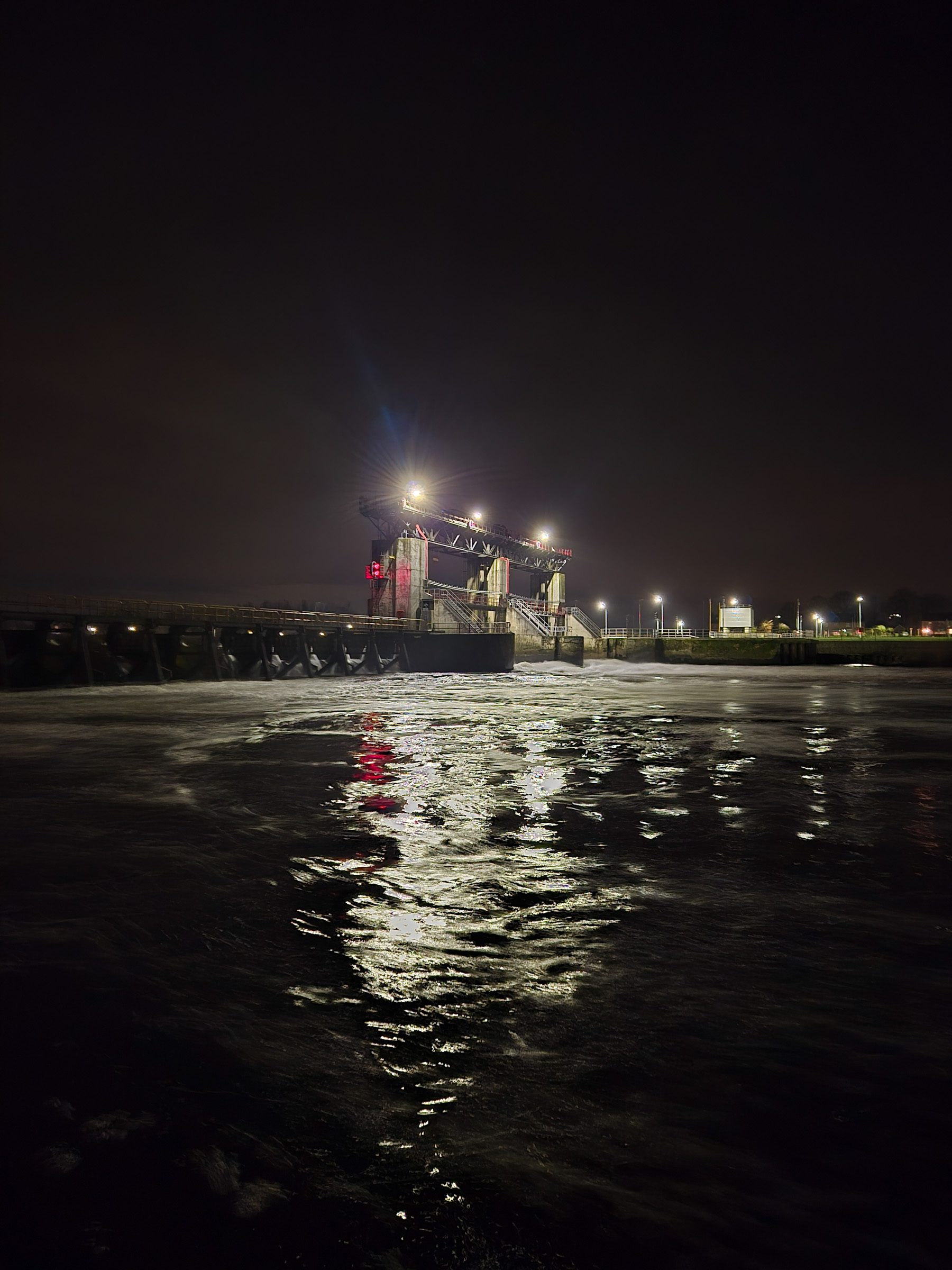
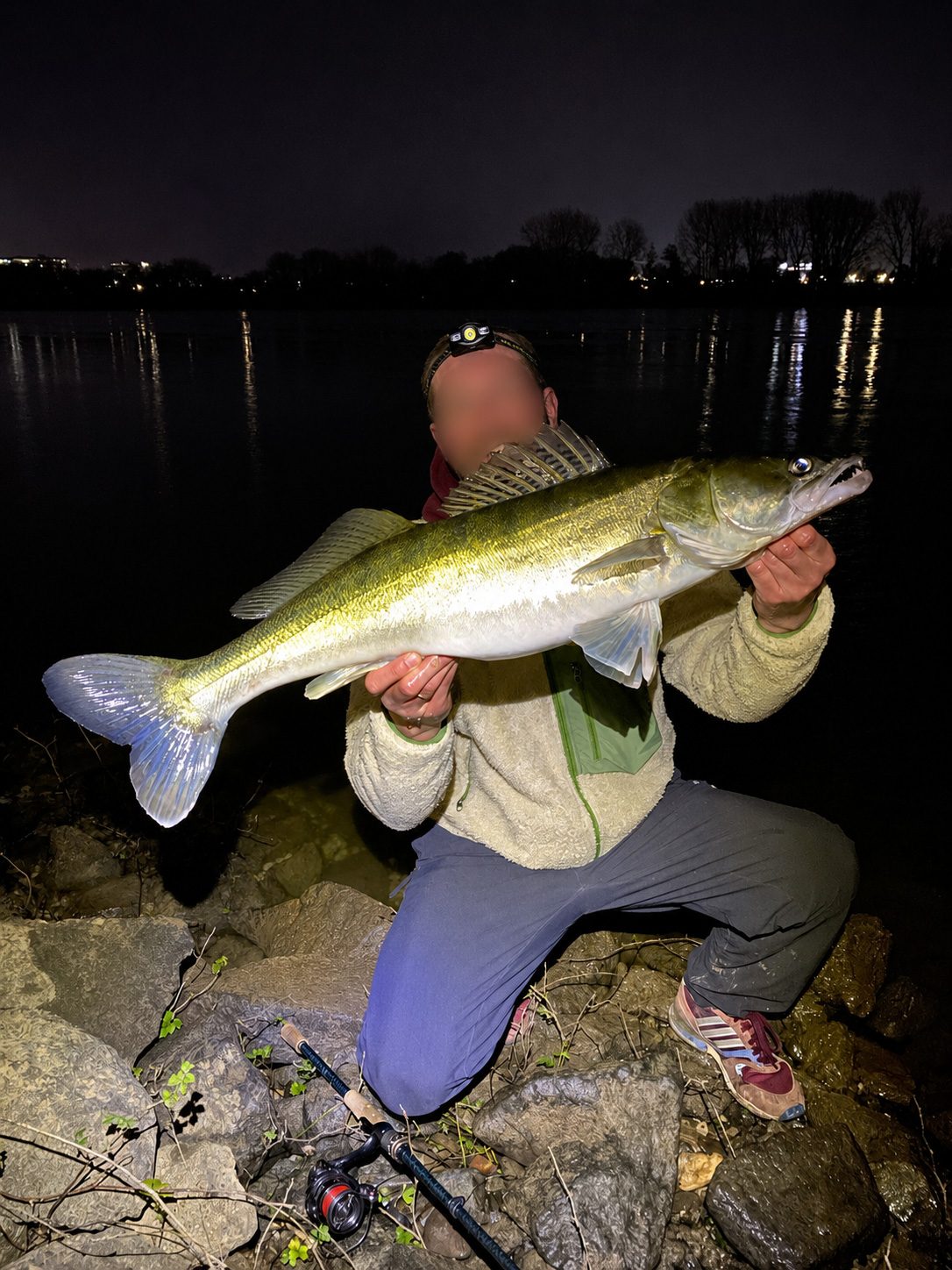
Does graffiti give him an advantage in fishing?
“Of course it does,” HOPE confirms. “Here, too, good preparation is everything, as is the ability to endure hardship and a willingness to push boundaries. Being able to handle sleep deprivation isn’t a bad thing either.”
What remains of all this? A photo – of the piece. Or of the fish. Because: “It’s true, if you don’t have a photo, you just don’t have a photo. In ten years at the latest, you’ll have forgotten it; the rest of the world forgets even faster.”
Footnotes and Context:
This text is not a traditional artist portrait. Instead, it emerged from a longer conversation in which many aspects were intentionally left open. The author’s questions provided a framework but served only as initial impulses. The discussion centered on the topics that mattered most to the interviewee.
In conversation with HOPE, several compelling themes emerged. One of them is explored in the text above: exploring. Incomplete and subjective, it offers a selective glimpse into the graffiti cosmos, which is as heterogeneous as it is multifaceted. This text may inspire further topics, perspectives, or conversations – as a supplement or an alternative. We’ll see: Anything is possible, nothing is mandatory.
Many thanks go to HOPE for his willingness to exhange, his openness, and his confidence in a potential outcome that would meet his expectations.
Endnote
[1] See Klein, Moritz: „Graffiti ist Mord“, in: Zugriff. Schriften zum visuellen Ungehorsam (hrsg. von Robert Kaltenhäuser), Nr. 1/November 2013, S. 12. I myself have also pointed out this supposed fallacy on several occasions; see, for example Glaser, Katja: „Graffiti cannot be deciphered with the eyes, it can only be read by the soles of the feet“, in: Graffiti. Interdisziplinäre und kontemporäre Perspektiven (hrsg. von Friederike Häuser), Beltz Juventa, 2021, pp. 62-81.
[2] See Klein 2013: 13.
[3] The idea of not destroying systems but rather creatively exploiting their gaps recalls the work of the two French sociologists and philosophers Michel de Certeau and Michel Serres. De Certeau describes how people act tactically in everyday life—for example, how pedestrians carve out their own paths through the city instead of following predetermined routes. Serres speaks of “parasites” that disrupt systems in order to transform them productively. Both demonstrate that genuine change often arises not when rules are broken, but when they are cleverly circumvented or redefined. See De Certeau, Michel (1988): Die Kunst des Handelns, Berlin; and Serres, Michel (1987): Der Parasit, Frankfurt a.M.
[4] See De Certeau 1988: 16.
[5] See Klein 2013: 13.
[6] See ibid.


Leave a Reply