

A temporary outdoor painting, „Golden Tree for Fake Hope“ at the Haus der Kulturen der Welt Berlin, commemorates the forgotten soldiers who helped liberate Europe
Often derided as cannon fodder, the Tirailleurs – troops of soldiers hailing from the colonies – were deployed by France from the 19th century onwards in both world wars and during many other colonial operations to suppress uprisings, – and primarily to secure West Africa and other colonies. They came not only from Senegal, but from a multitude of other French colonies: the Tirailleurs Algériens from French North Africa (Algeria, Tunisia, and Morocco), the Tirailleurs Malgaches from Madagascar, and the Tirailleurs Indochinois from French Indochina, including Annam, Tonkin, and Cambodia. With around 200,000 soldiers, they fought alongside white soldiers in both the First and Second World Wars and made a decisive contribution to the liberation of Europe from National Socialism.
The Haus der Kulturen der Welt (HKW) in Berlin is dedicating a major exhibition and research project to this dark chapter of colonial history and the stories of the Tirailleurs – the women and their descendants – which have largely remained marginalized to this day. Here, it views the Tirailleurs as an avant-garde, not only in a military sense, but also politically and culturally, as evidenced by their role in decolonial liberation movements.
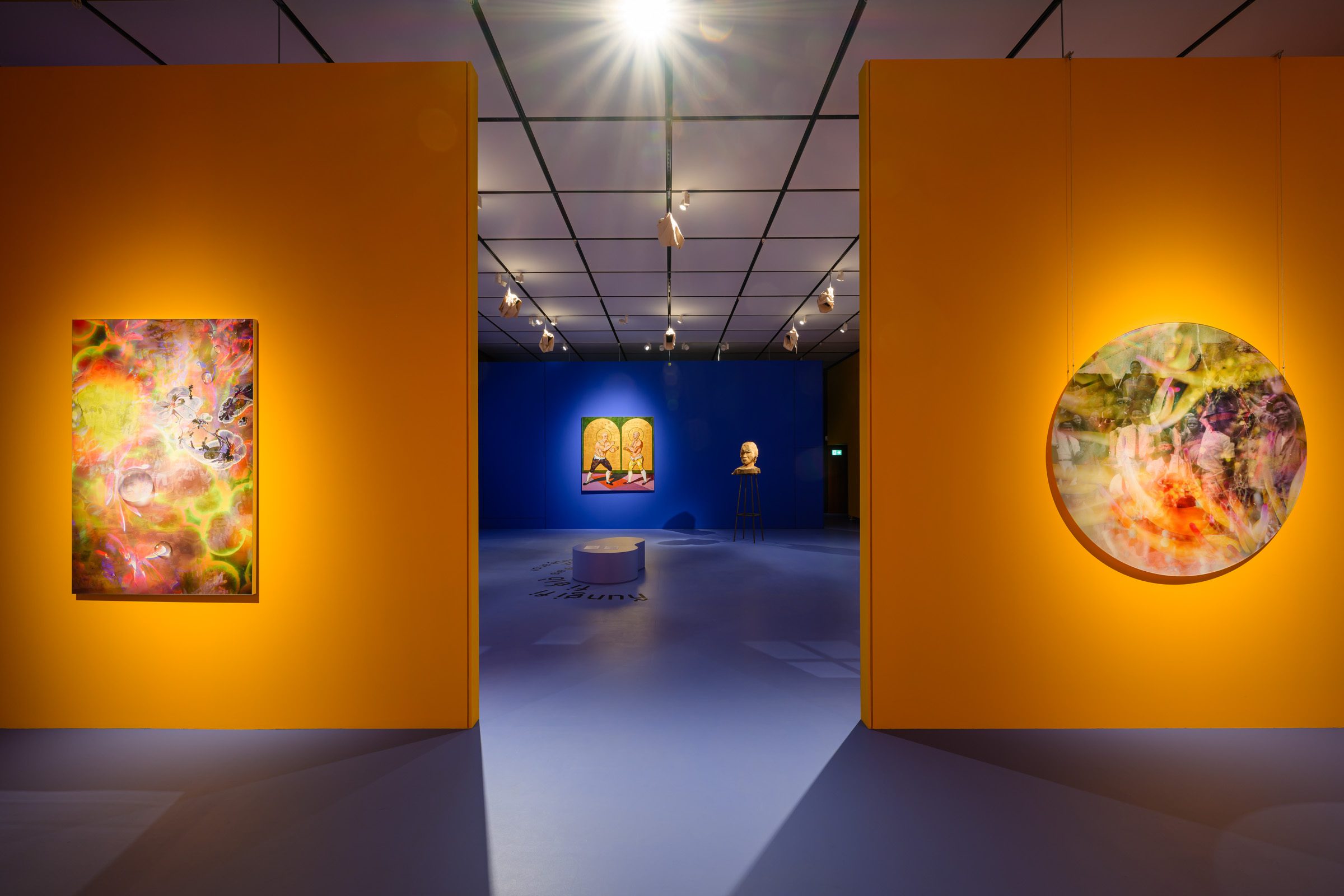
Among the artworks by more than thirty international artists of various generations are fourteen new commissioned works. Archival materials, research findings from five art spaces and collectives abroad, as well as a film programme, contribute to this reappraisal, and all the contributions underscore the current relevance of the history of the Tirailleurs for artists, filmmakers, and cultural practitioners.
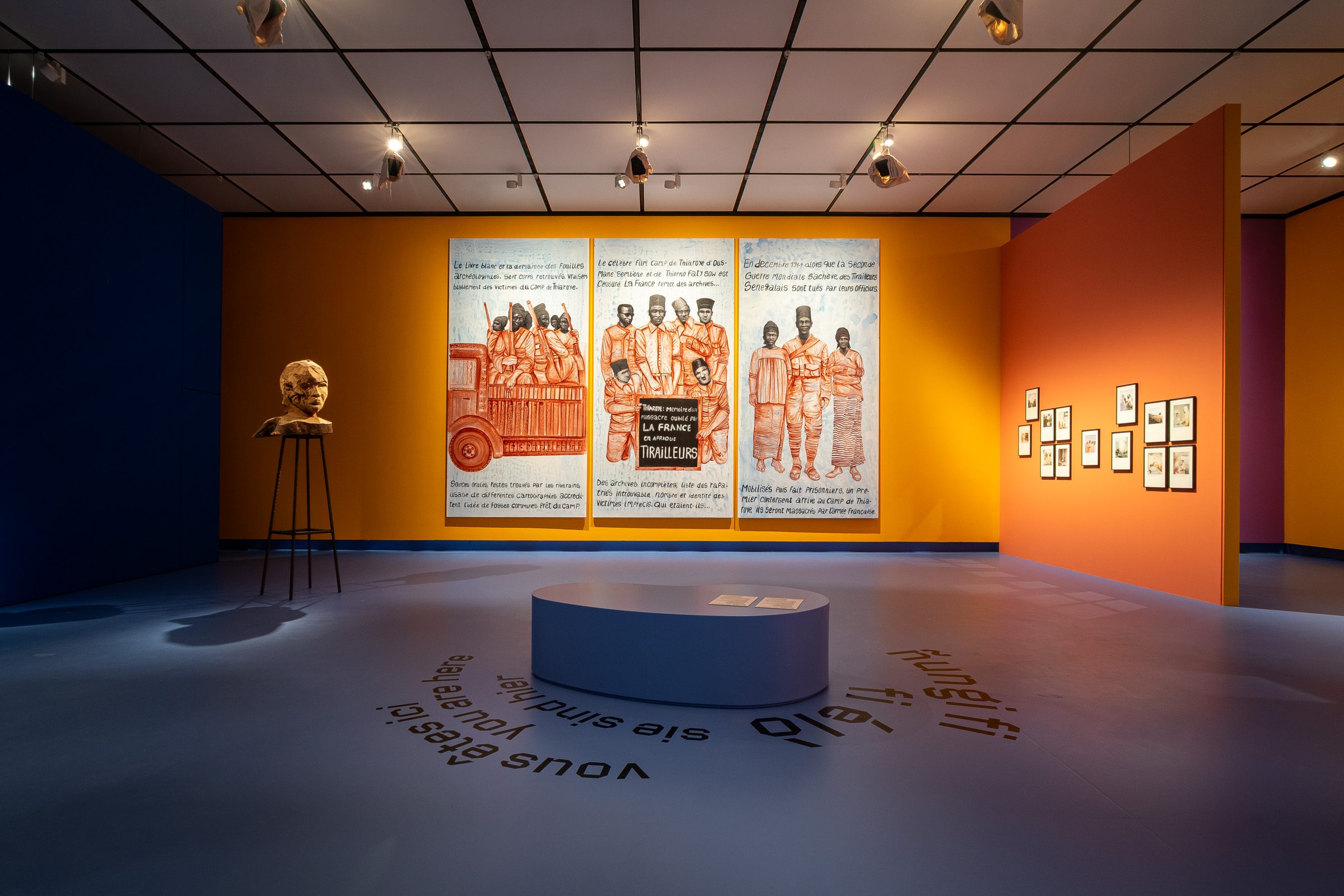
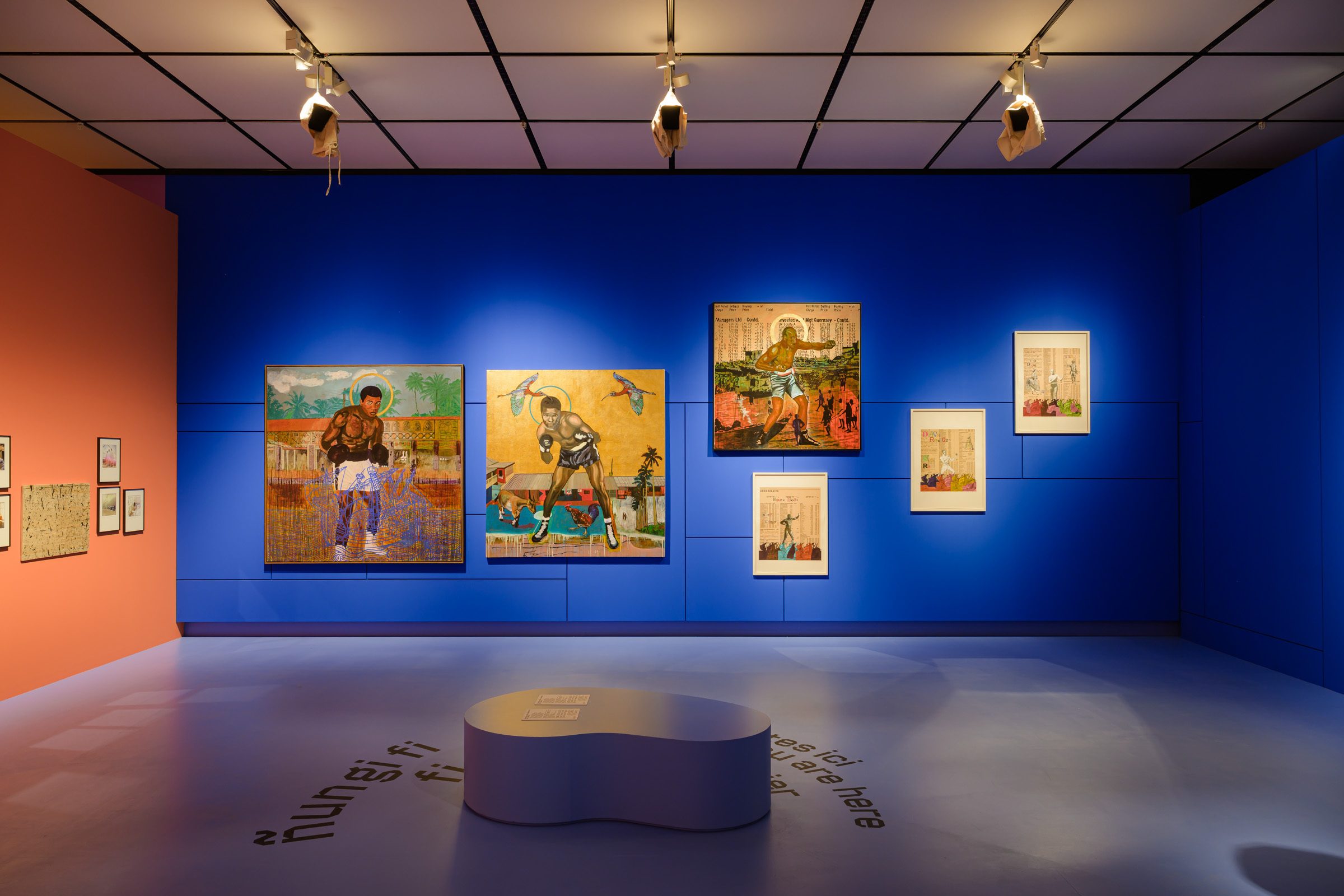
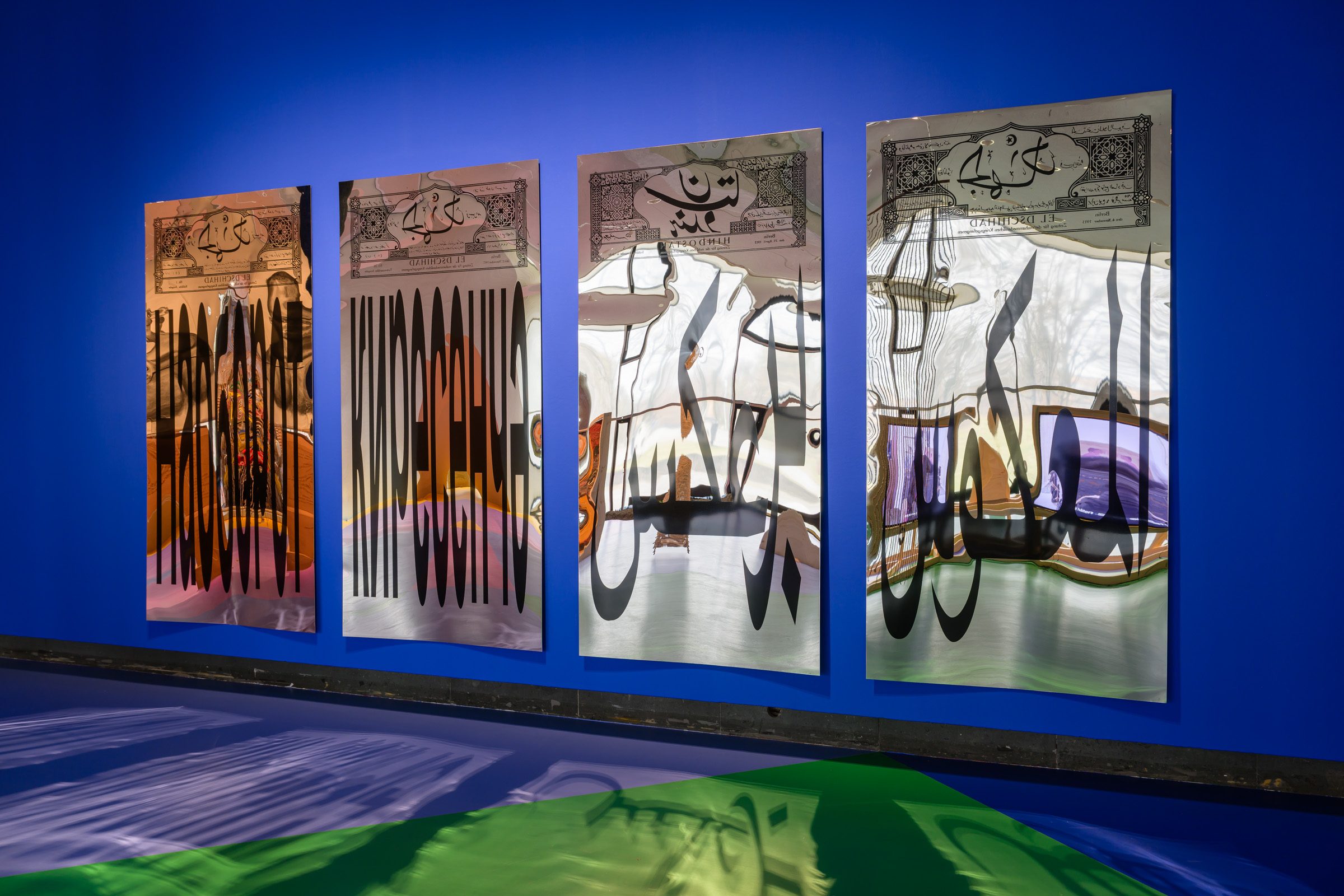
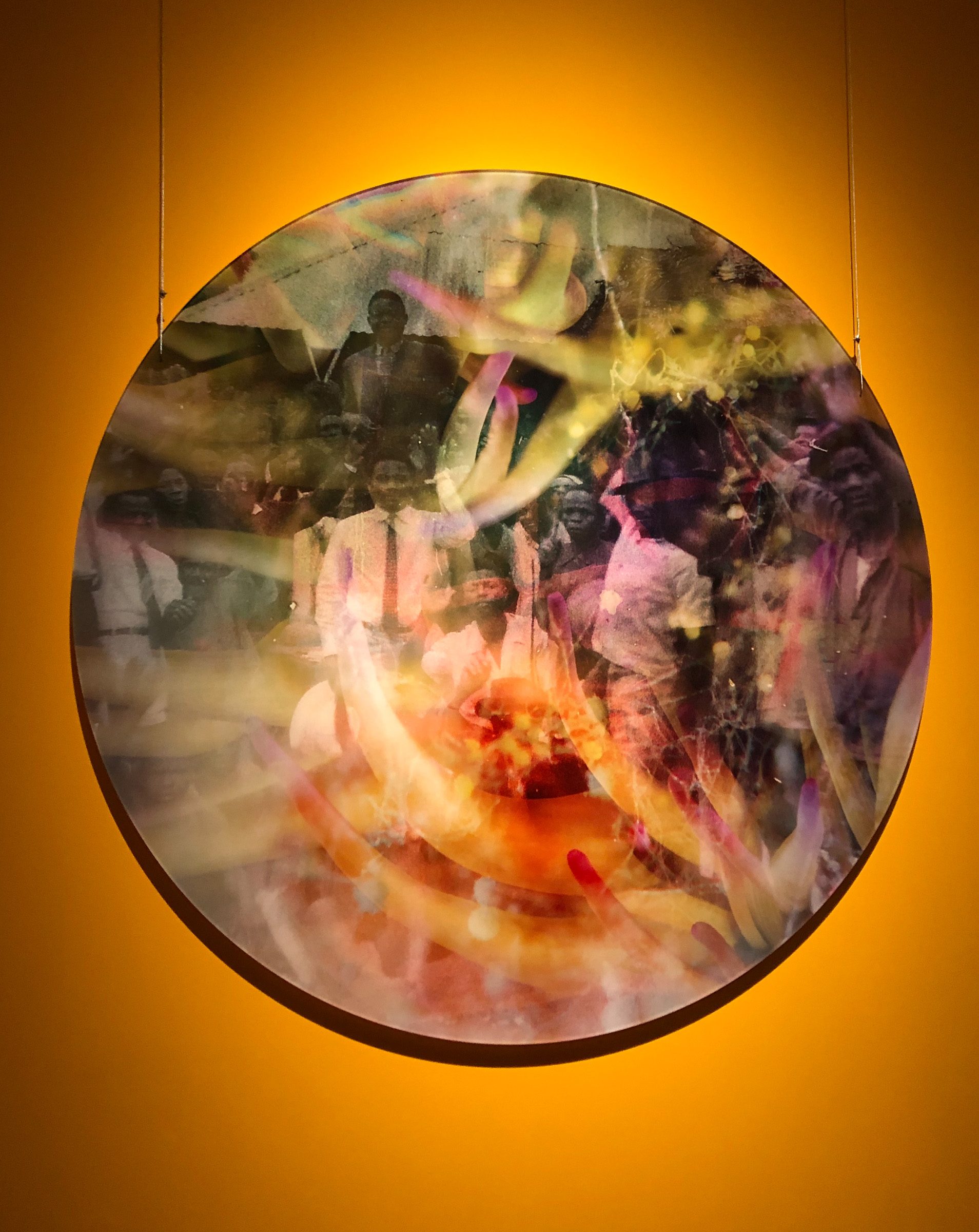
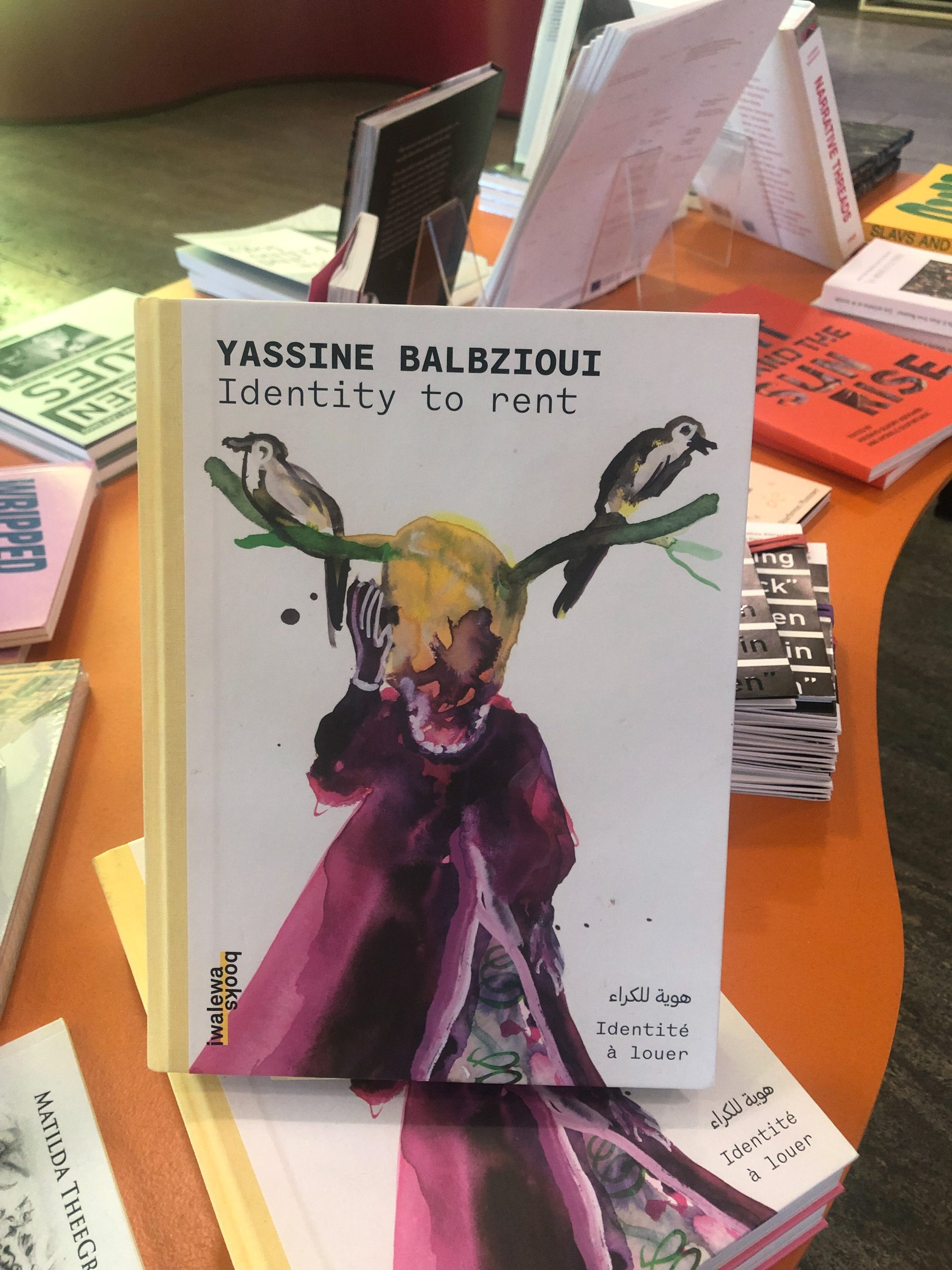
A significant commissioned work is the temporary painting on the balustrade of the ‘pregnant oyster’ by the Moroccan artist Yassine Balbzioui. His artistic practice explores history and social reality, which he expresses through painting, murals, performances, tapestries, and installations. He was confronted with this theme of the Tirailleurs whilst studying at the art college in Casablanca in 1993, and subsequently whilst studying conceptual art at the École supérieure des Beaux-Arts de Bordeaux. The stories of their lives and their – often futile – demands for recognition and reparations had a lasting influence on his work. Balbzioui’s figurative paintings always convey stories of people in a kind of chaotic cosmos, grappling with sincerity and hypocrisy, truth and lies. The human figure and the mask are recurring and central motifs, reflecting his vision of a society based on outward appearances and thus questioning identities. The absence of human faces is particularly striking in his work, as are animals and hybrid creatures, which refer to symbolic bestiaries and behaviours that bring animals and humans closer together.
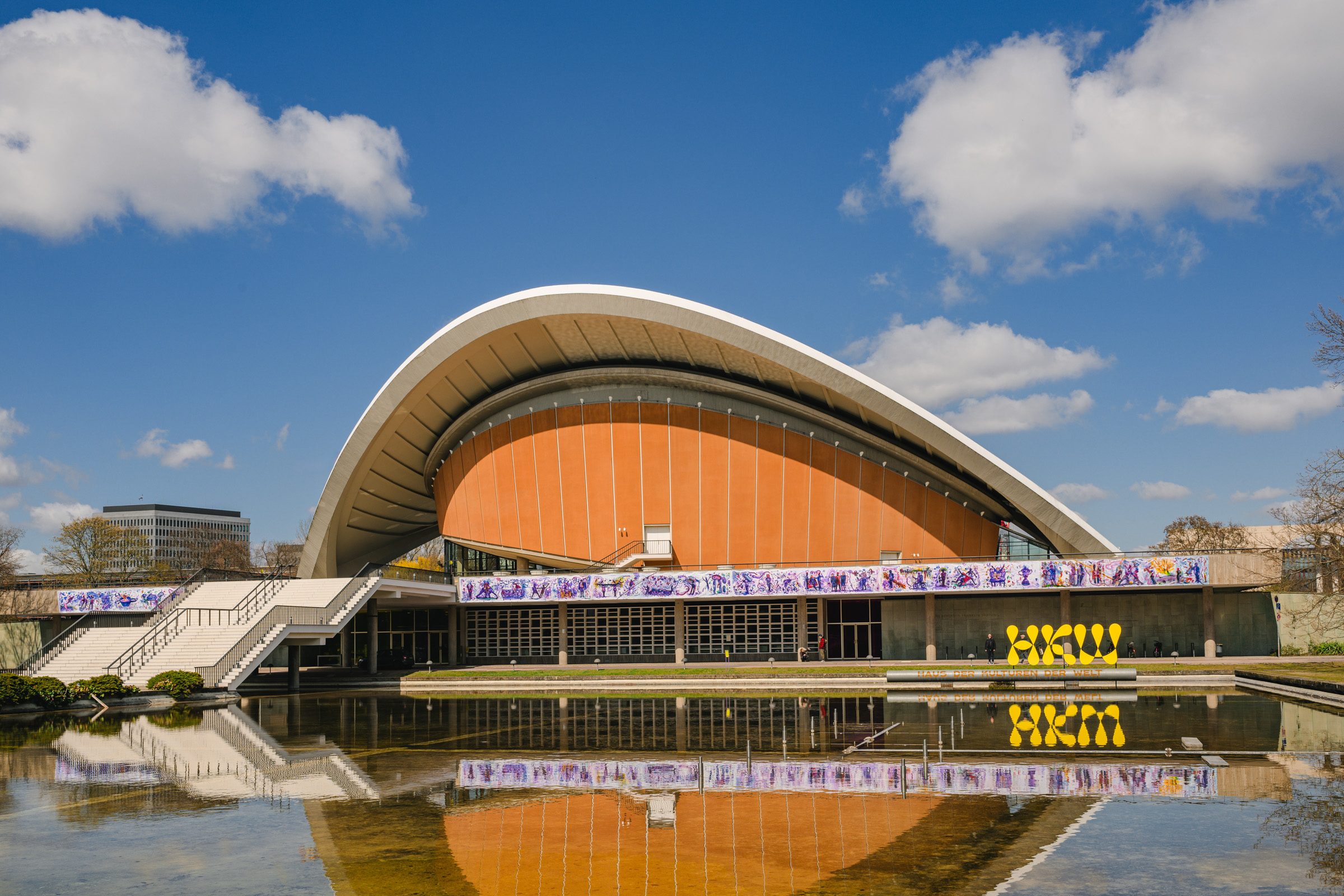
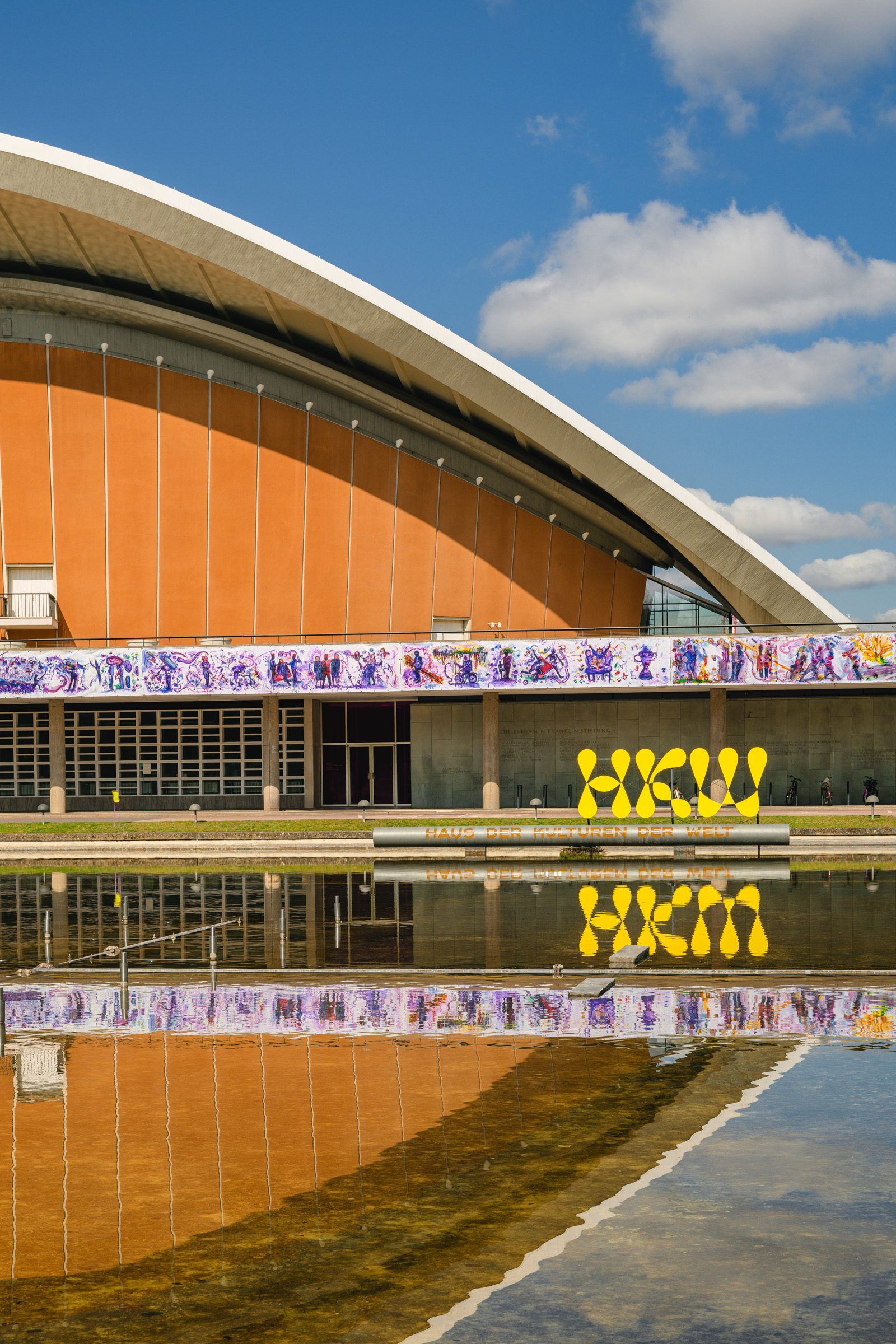
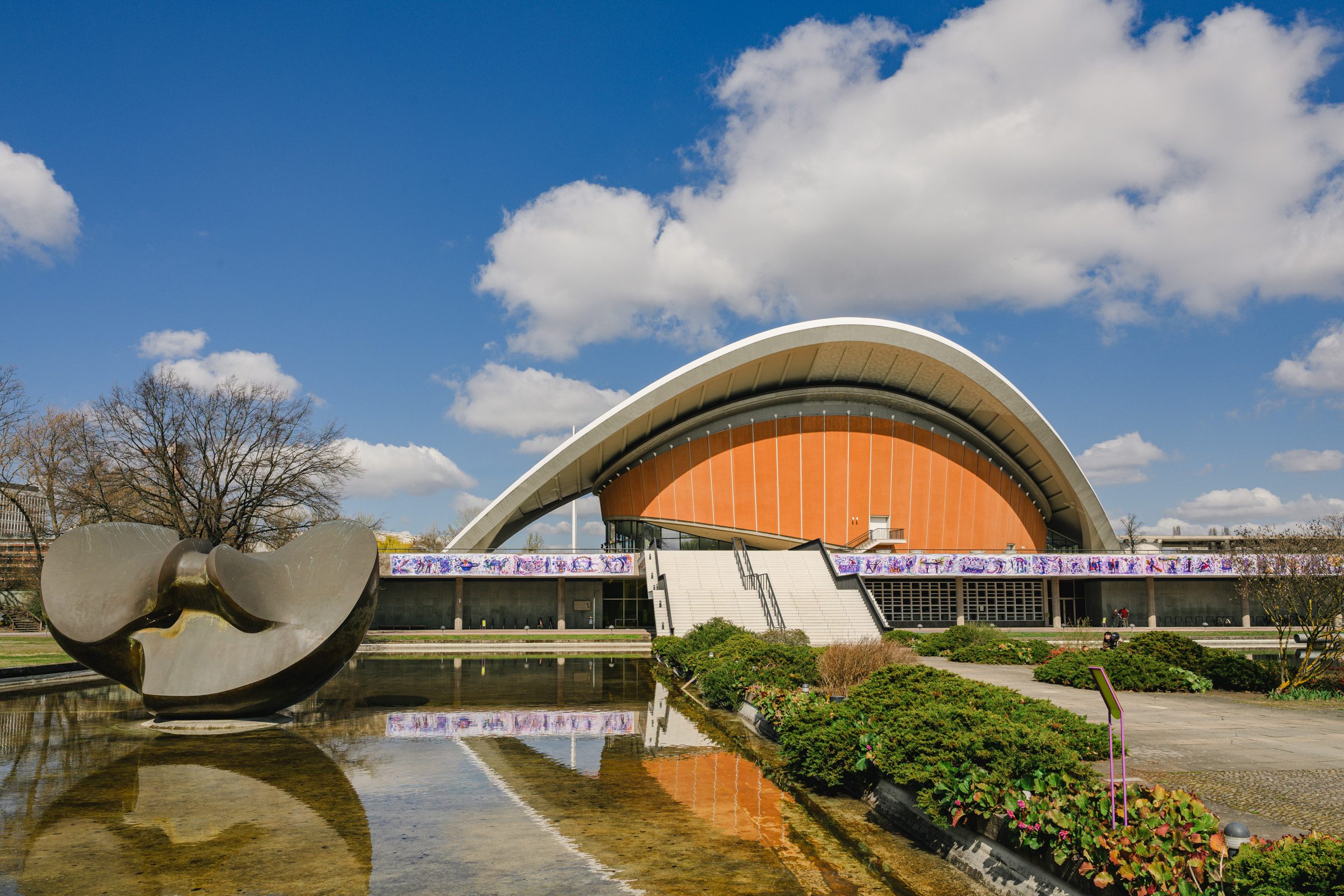
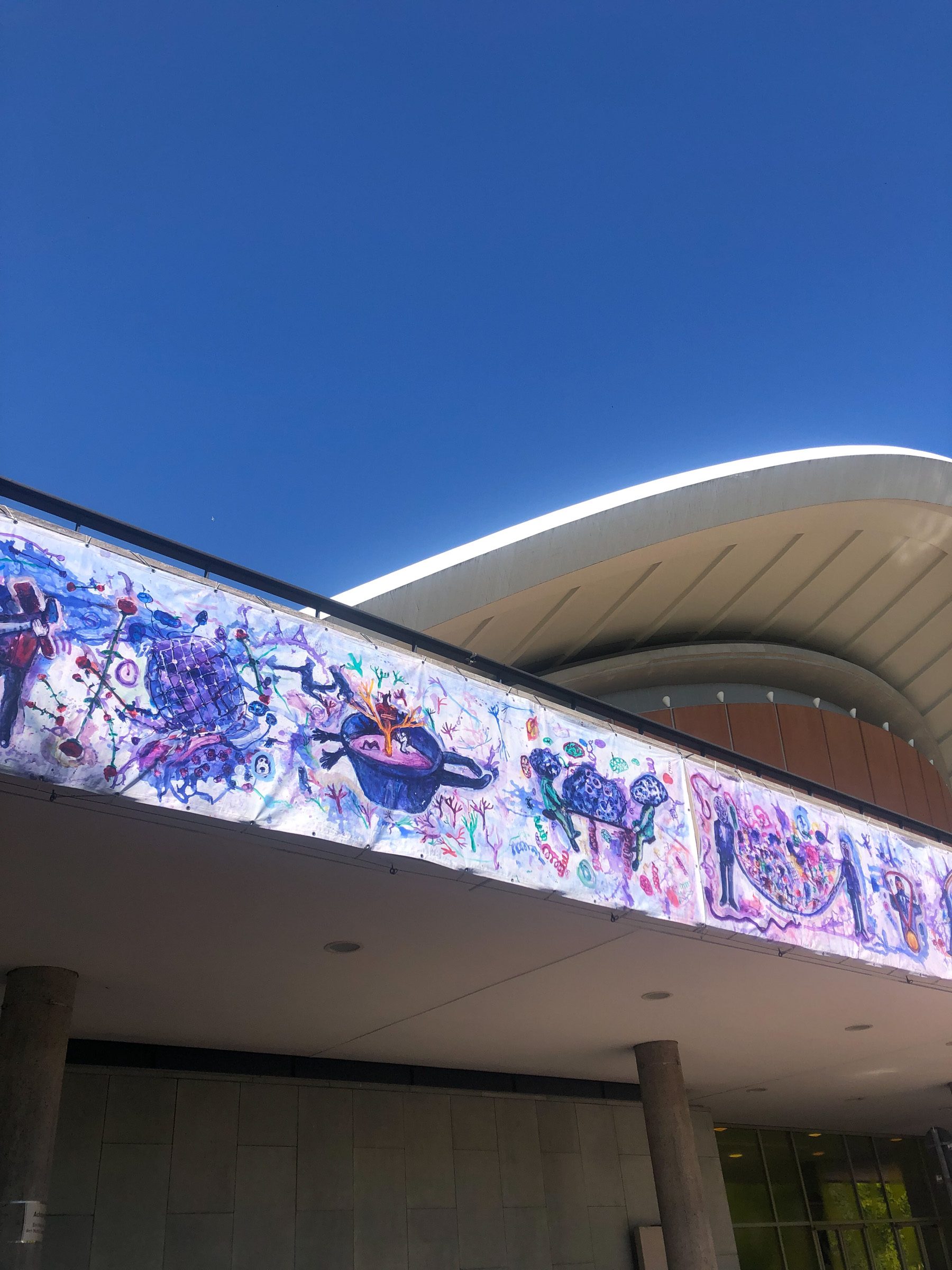
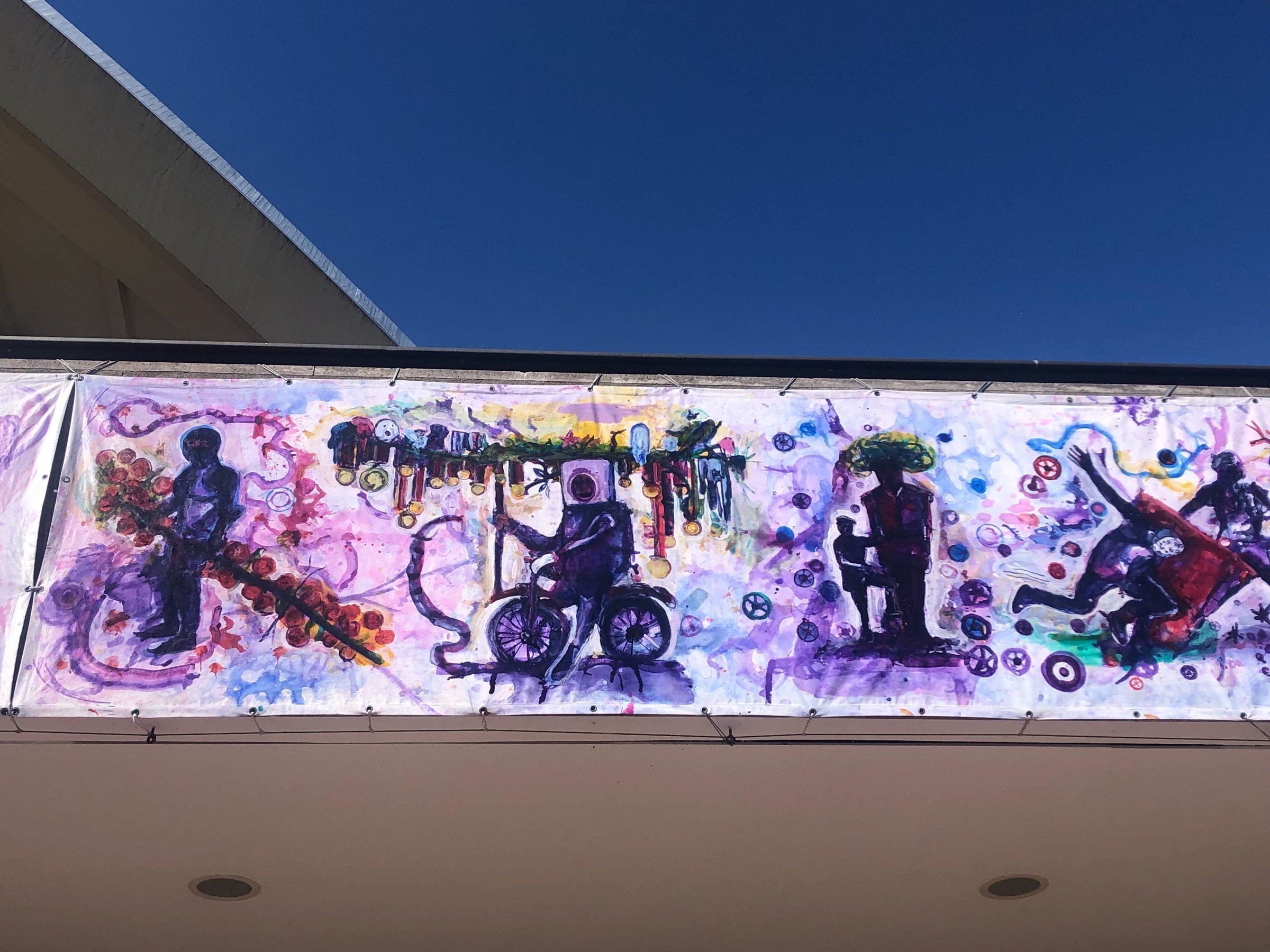
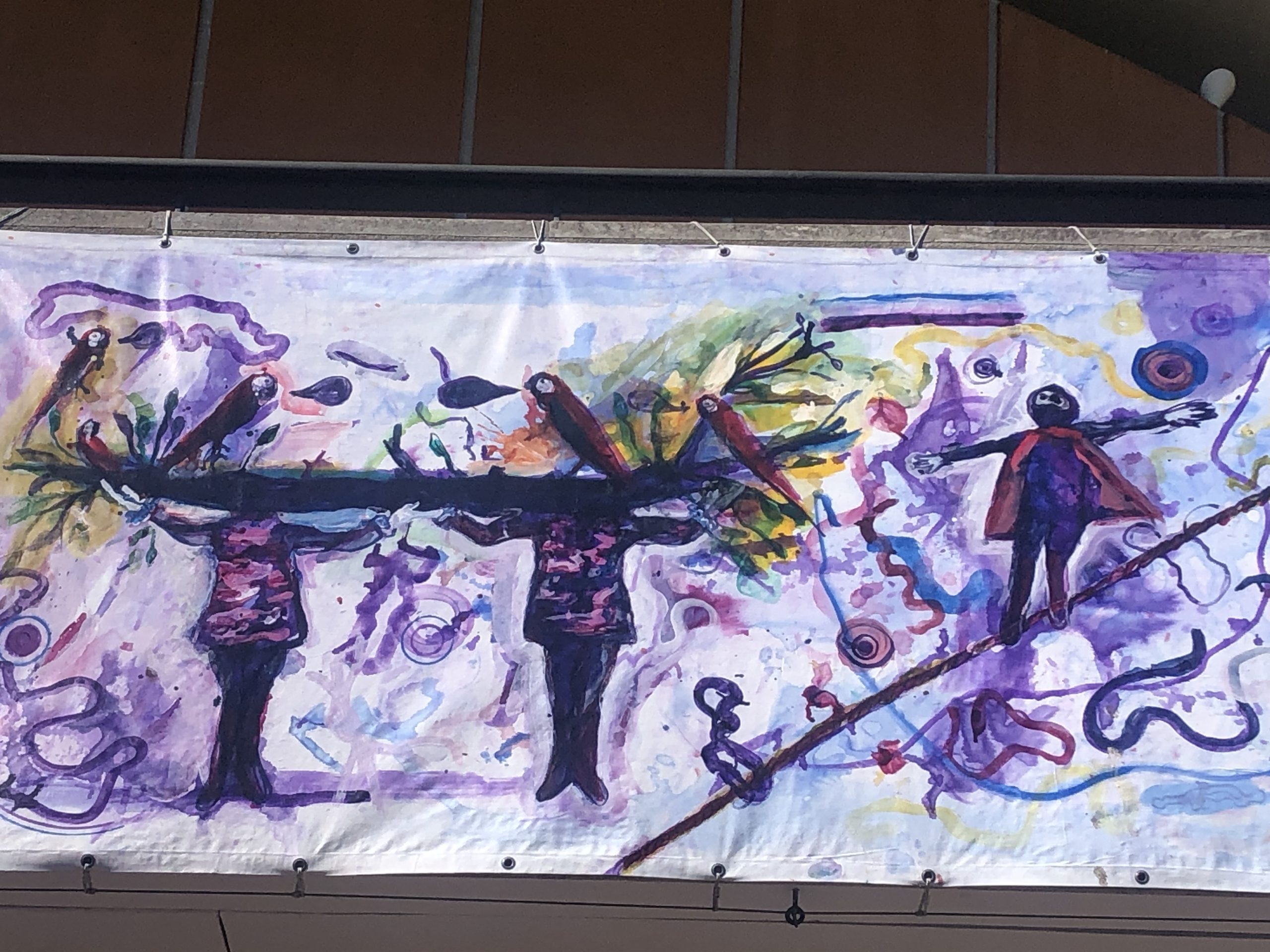
His expressive brushwork, informed by his performative practice, creates vivid figuration within a compositional structure that is at times reminiscent of theatre sets. For Tirailleurs, Balbzioui has created a 70-meter-long temporary mural on tarpaulins along the balustrade of the façade of the Haus der Kulturen der Welt. In shades of blue, lilac and red, various scenes unfold side by side here, as if on a film reel, inviting viewers – as they walk along the façade – to engage with the history and memory of the Tirailleurs through partly mysterious, cryptic images.
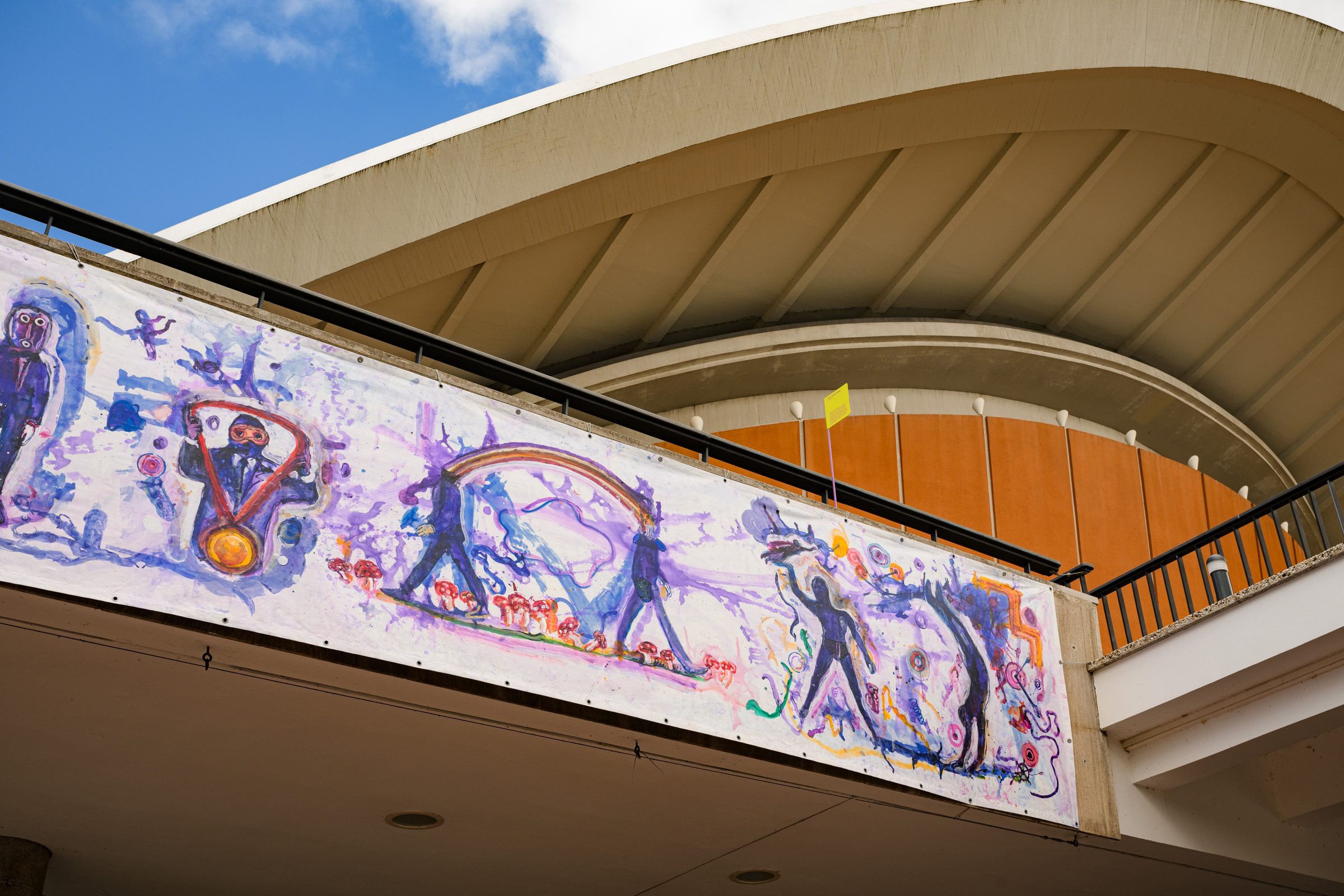
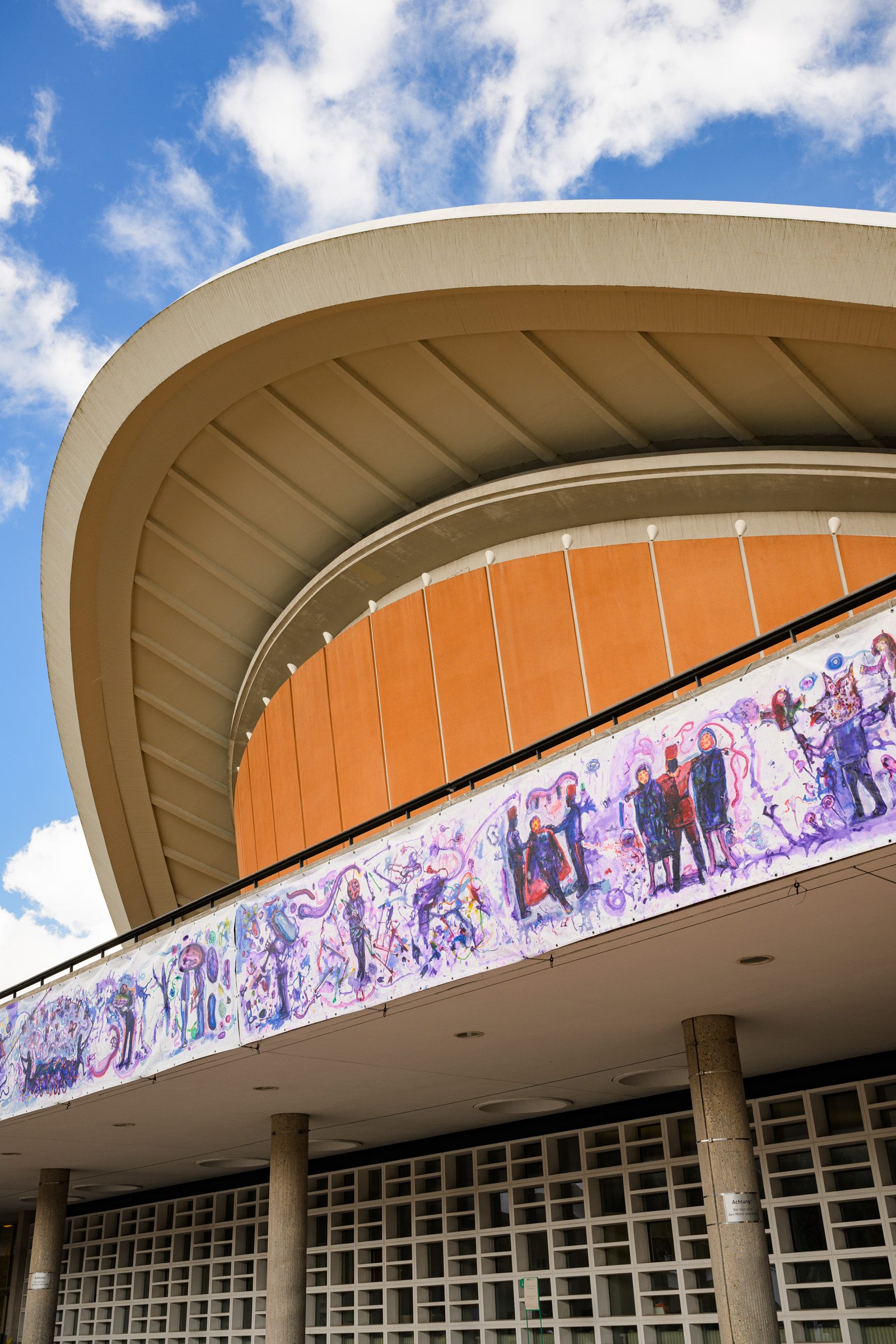
Balbziouis wall paintings, which are created both indoors and outdoors, are generally conceived as a proposal, as an open form that takes shape through a collective experience. Yassine Balbzioui lives and works in Marrakesh and Marseille.
Yassine Balbzioui answered a few questions for us about his mural and his work:
How many pieces does this painting have, how large is it, and in which technique did you paint on this canvas?
It is a 70-meter-long canvas, divided into seven parts. The technique I used was acrylic ink on linen canvas.
Where did you paint it, and how long did you work on it?
I felt it was important to work on site, so I was in residence for one month to execute the piece.
What is your personal link and approach to this particular topic of the colonial past?
Even if I can say I have a connection because I am Moroccan and come from the descendants of that generation, I also have a personal story. When I arrived in Bordeaux as a Fine Arts student in 1996, I ended up in a place that housed former soldiers. This experience gave me insight and made me sensitive to this theme.
How did you plan the different scenes you painted on it? Did you sketch any scene or idea before? Did you use any archive material as inspiration?
Through the workshop hosted by the HKW, I was able to explore materials, archives, and films. This helped me complete the sketches which later served as the basis for the piece.
Can you describe your working process for this work, and for the iconography related to the topic of the Tirailleurs?
Whenever I work on a theme, I immerse myself in it like a child – trying to detach from stereotypes, so as not to influence my vision. I gather as much material as possible in order to have a broad reflection and a 360-degree perspective. Then I start drawing, taking photographs, and making collages. These collages become the raw material for the final work.
Did you develop a particular narrative from left to right, like on a film roll?
The structure of the wall itself, with the staircase in its middle, required a cinematic division. The piece was conceived almost like a film sequence, and it was specifically made for that wall.
Those scenes next to each other with different motifs seem cryptic and symbolic. Are there symbols you can name and explain?
While watching films and researching, I extracted elements, such as medals, ropes, splatter-like motifs, trophies, and other symbols. These motifs speak indirectly about the issue. It is also a way for me not to fall into the trap of judging a subject I did not physically experience myself.
In your work, human beings have no faces, wear masks or have animal heads. How does this match this historical topic?
My relationship with the mask began in 2004, during a personal experience at the Grand Palais in Paris. It led me toward the idea of Pinocchio and masks as themes. Over time, this personal experience became a pretext to address other subjects. For me, a mask allows me to tell stories more freely.
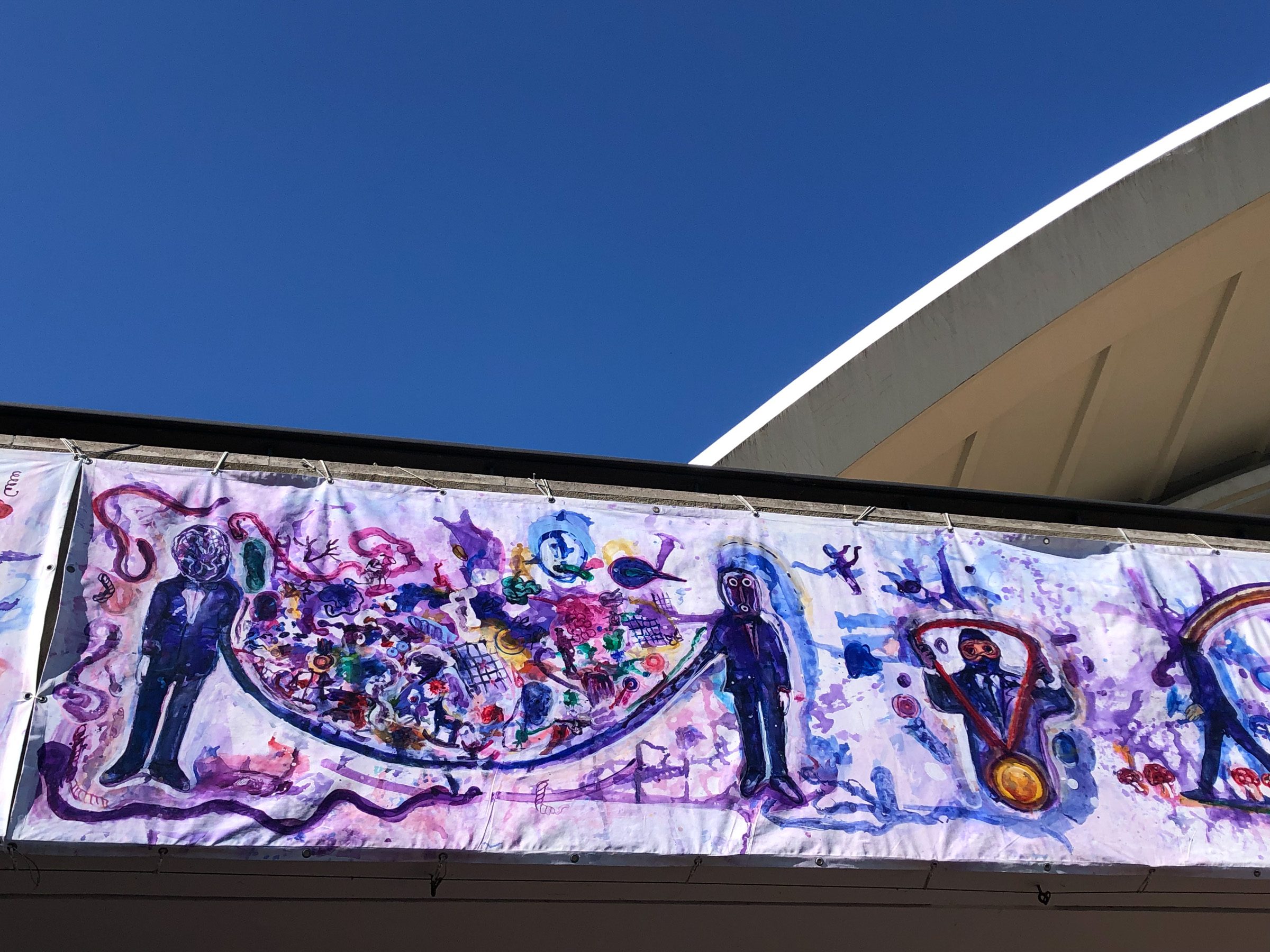
You titled this work “Golden Tree for Fake Hope”. Can you explain the title? What is the golden tree?
In one of the films, someone said: “I don’t care about a medal.” I have always been sensitive to the idea of symbols, especially medals given in relation to something extremely complex. When I practised Taekwondo at the age of fifteen, I noticed how everyone gathered around the symbol of the medal. One day, someone stole the medals, and the frustration that followed made me question their role and whether they truly compensate for pain or sacrifice. That is why I wonder: when we say a medal is ‘gold’, is it really ‘gold’?
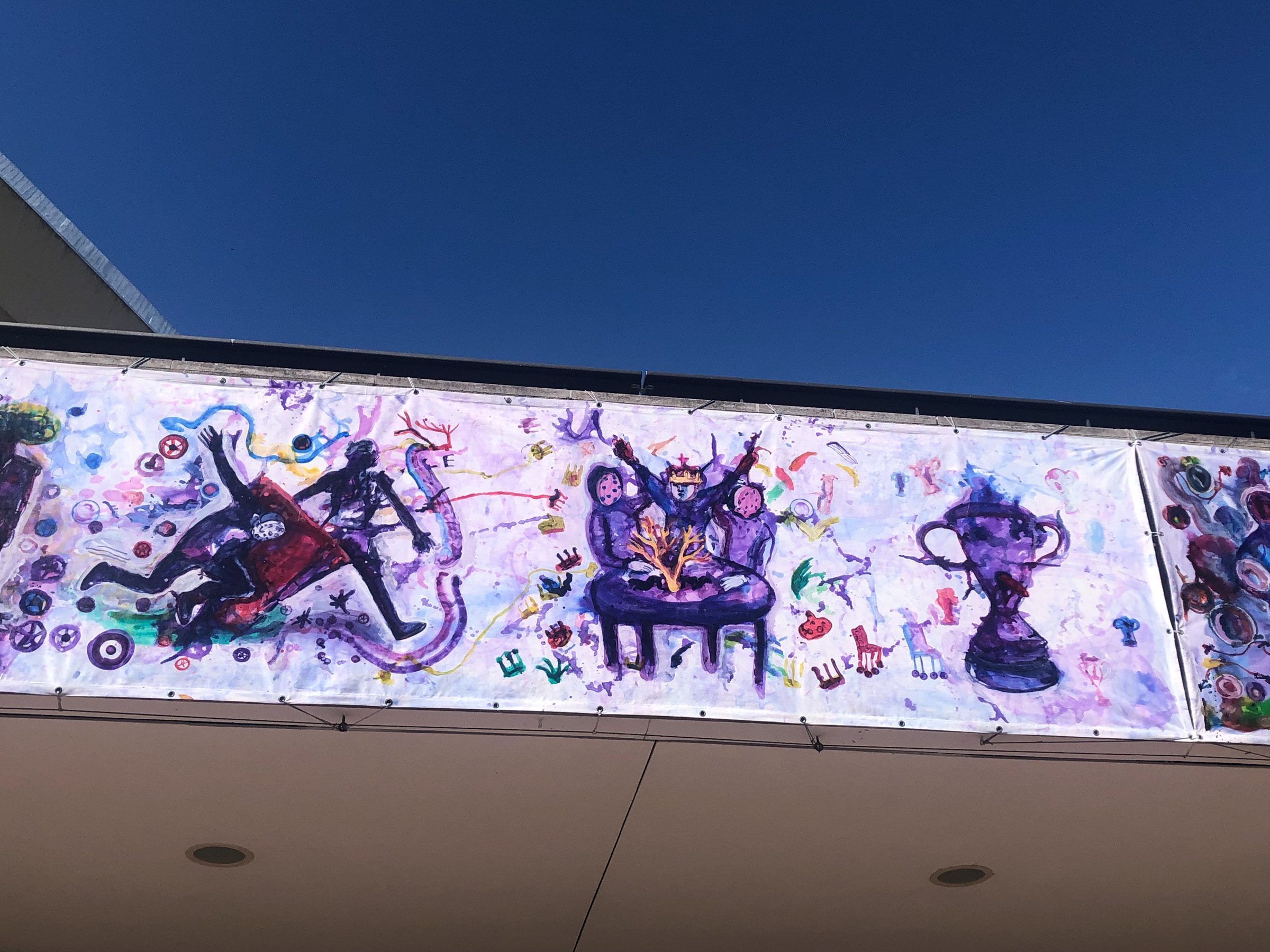
Which scene is the most powerful or important in your eyes?
All the scenes are important because each one works independently, but also as part of a larger puzzle, like a film.
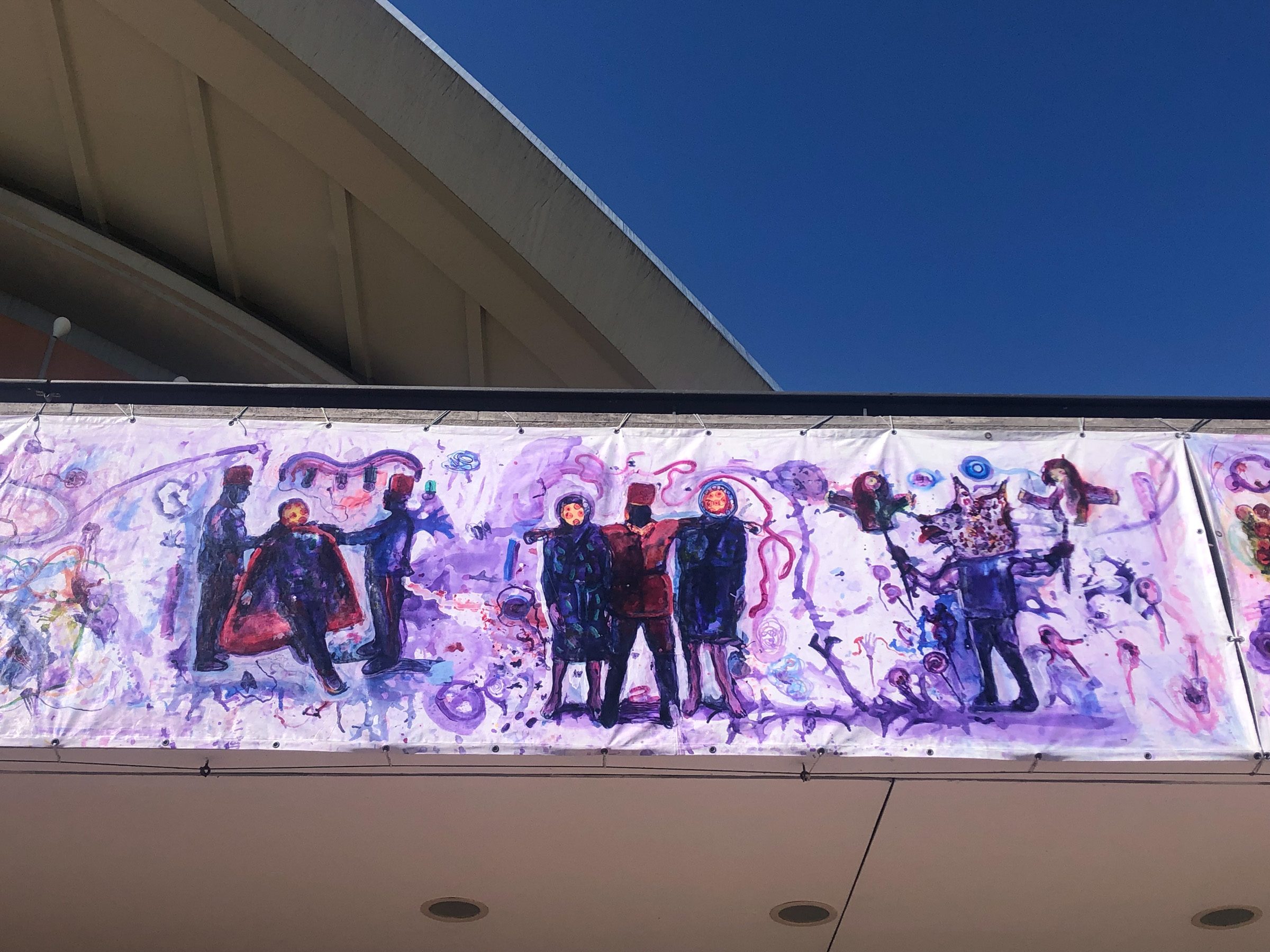
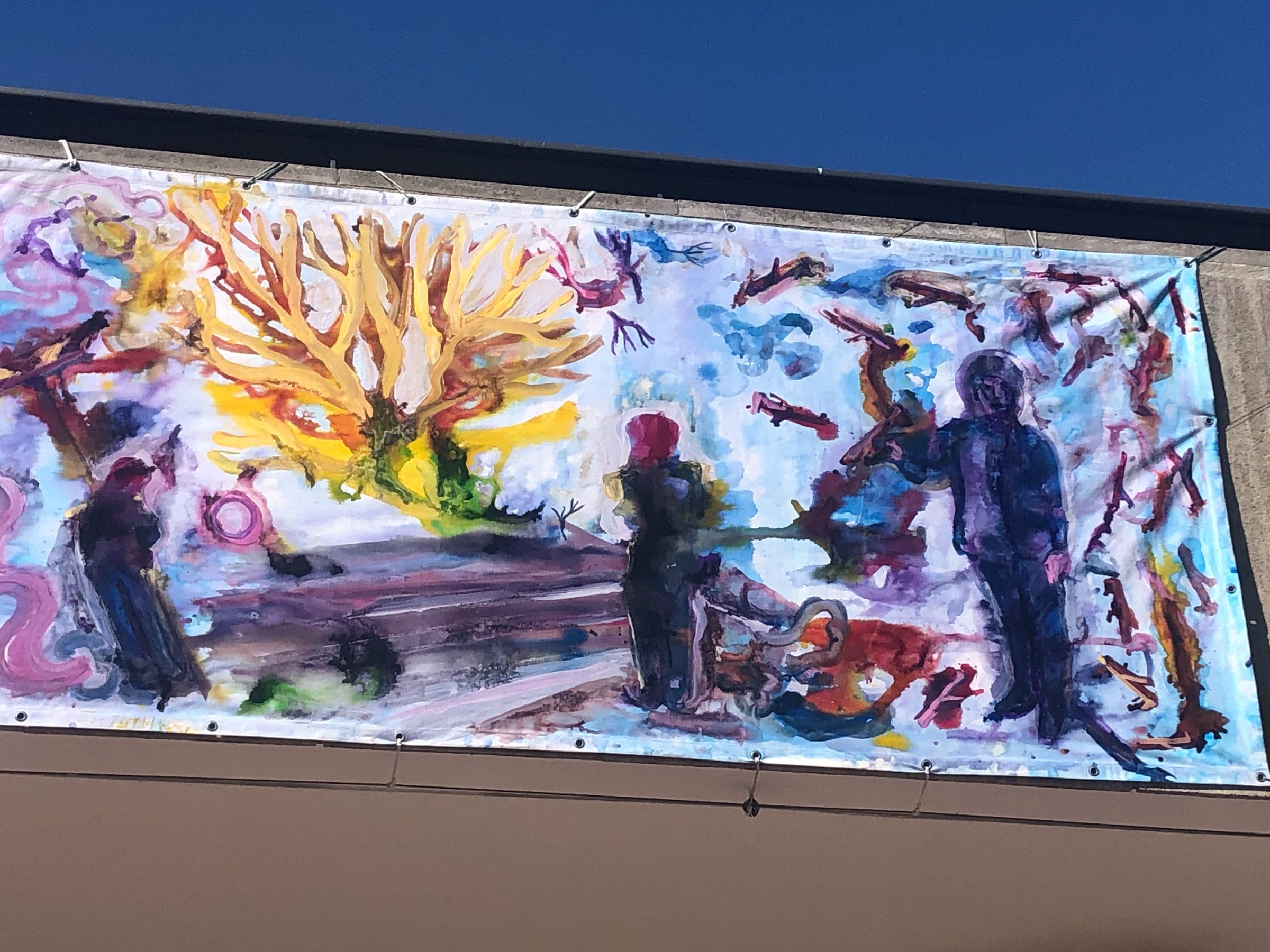
You realised several wall paintings and murals, both indoors and outdoors. Do you know how many and since when?
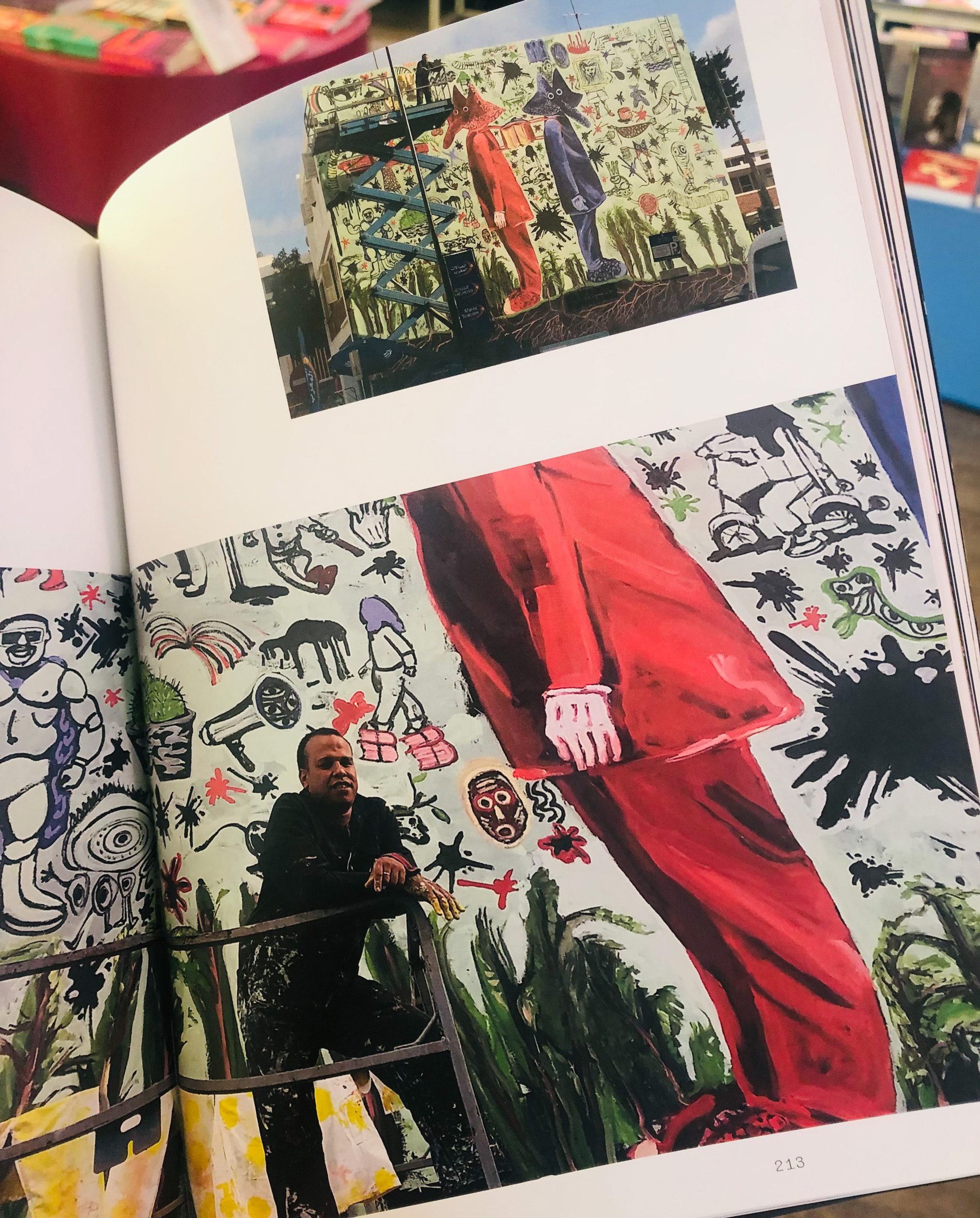
I cannot really answer because there have been so many walls. But the first mural I can mention is in Rabat, created during a festival called Jidar in 2016. I treated the wall like a canvas: I painted and stepped back to observe it. Although I am not really a street artist, this experience made me appreciate murals because the interaction outdoors is much freer than in enclosed spaces.
For what kind of event or institution?
It depends on the context: collectors, the street, festivals, and institutions. I enjoy this diversity because every situation changes the nature of the work.
Did you have to do a sketch or a draft before painting a permanent mural? And was there always a given theme?
Not necessarily. Each context imposes its own rules, much like an actor adapting to a film and learning how to master a role.
Did you also get invited to urban art festivals in the past?
Yes, especially through projects such as the Jidar festival in Rabat, which allowed me to discover and appreciate mural painting in public space.
How big is your largest mural, where, and is it permanent?
There is a piece in Fez measuring 36 by 7 meters. I even lost six kilograms of weight, as it was very hot then – the temperature reached 45°C while I was painting it. It is located in what could be described as a car cemetery. But the most important mural for me remains the first one in Rabat.
What particular challenges do you face in creating large wall paintings/murals?
With large murals, mastery happens in the model or maquette, not during the execution. That is what interests me most about this medium.
Do you always use acrylics on canvas and on walls?
I use acrylic often, because it dries quickly; although I also love oil painting. For me, the subject itself determines the technique.
Do you like working outdoors on walls, and did you get in contact with a larger public during the process in a public space?
Outdoors, the interaction is freer than in galleries, museums, or enclosed spaces. You are constantly in dialogue with the environment and the people around you. It is both fascinating and very difficult.
If yes, what kind of conversations did you appreciate in particular?
I appreciate fresh discussions with a new vocabulary, because people outside the gallery world express themselves differently and more spontaneously.
Would you like to create more murals and bigger ones?
Of course. You just have to try.
Thank you for your time and good luck with your future projects!
Tirailleurs: Trials and Tribulations. From Cannon Fodder to Avant-Garde—The Forgotten Soldiers Who Freed Europe. Haus der Kulturen der Welt Berlin, 21.3.–14.6.2026
Featuring works by: Kader Attia, Yassine Balbzioui, Anguezomo Nzé Mba Bikoro, Kathleen Bomani, Halida Boughriet, Tiffany Chung, Binta Diaw, Godfried Donkor, Juan-Pedro Fabra Guemberena, Abrie Fourie, Othon Friesz, Pélagie Gbaguidi, Nadia Kaabi-Linke, Daniel Lind-Ramos, Mónica de Miranda, Oscar Ngu Atanga, Tuấn Andrew Nguyễn, Josèfa Ntjam, Mario Pfeifer, Slavs and Tatars, El Hadji Sy, Pascale Marthine Tayou, Dior Thiam, Barthélémy Toguo, Félix Vallotton, Francisco Vidal, Hana Yoo.
Film programme featuring contributions by: Rachid Bouchareb, Dalila Ennadre, Oumarou Ganda, Grégoire Georges-Picot, Idrissou Mora-Kpai, Kollo Daniel Sanou, Philip Scheffner, Ousmane Sembène & Thierno Faty Sow, Tony T. & Rebecca Goldstone, Futuru C.L. Tsai, Mathieu Vadepied
Research in collaboration with: Alice Yard, Port of Spain; Ancrages, Marseille; Cinémathèque de Tanger, Tangier; Hide and Seek Audiovisual Art, Taipei; RAW Material Company. Centre for Art, Knowledge and Society, Dakar
hkw.de/programme/tirailleurs
yassinebalbzioui.com
instagram.com/yassinebalbzioui


Leave a Reply