


How did you get into art / urban art?
Art found us.
What does ‘style’ mean to you, and how would you describe your own style?
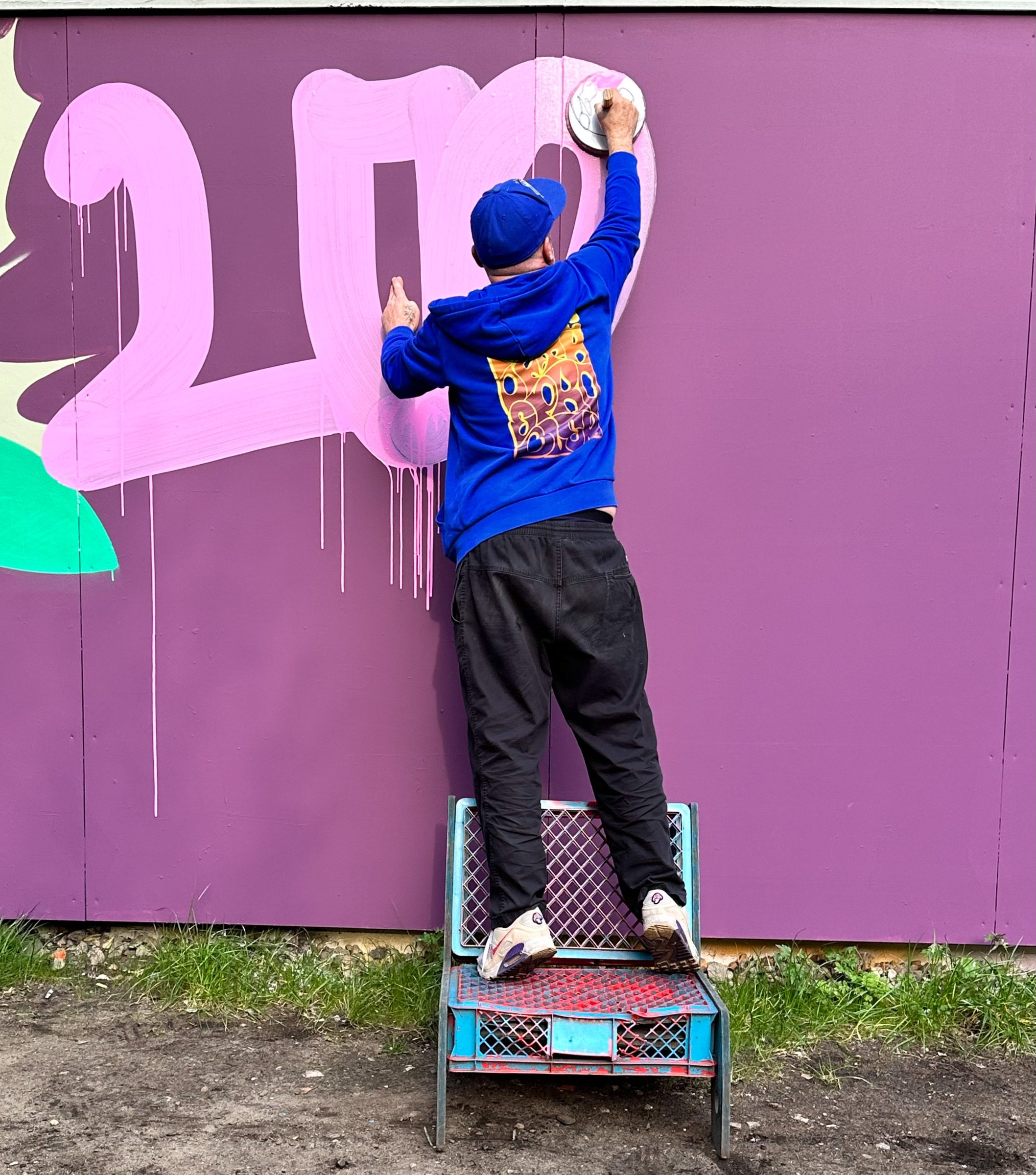
You either have style or you don’t. For us, style means balance, feeling, individuality and flow. Mina’s style is a fusion of classic graffiti elements and aspects of modernism. Stohead describes his style as contemporary handstyle and written abstraction.
What goals or dreams do you have for your future as artists? And which ones have you already achieved?
We think that, in this case too, it’s about the journey, not the destination. However, one dream has already come true for both of us: being able to make a living from art.
You work together on various mural projects: when did you actually meet, and how long have you been working together? How do you plan and execute such projects – especially with such different styles? How do you merge your individual styles while keeping them balanced?
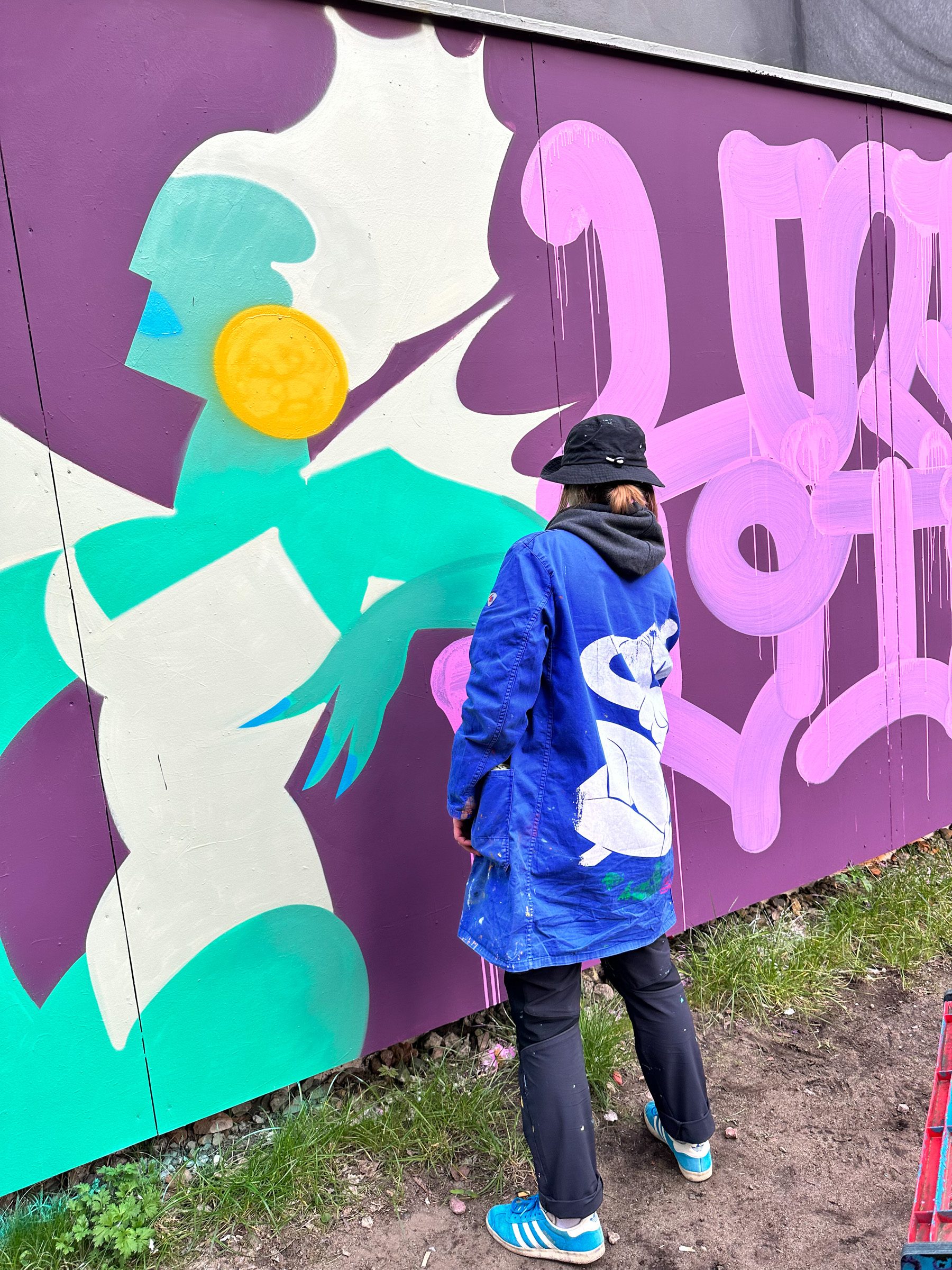
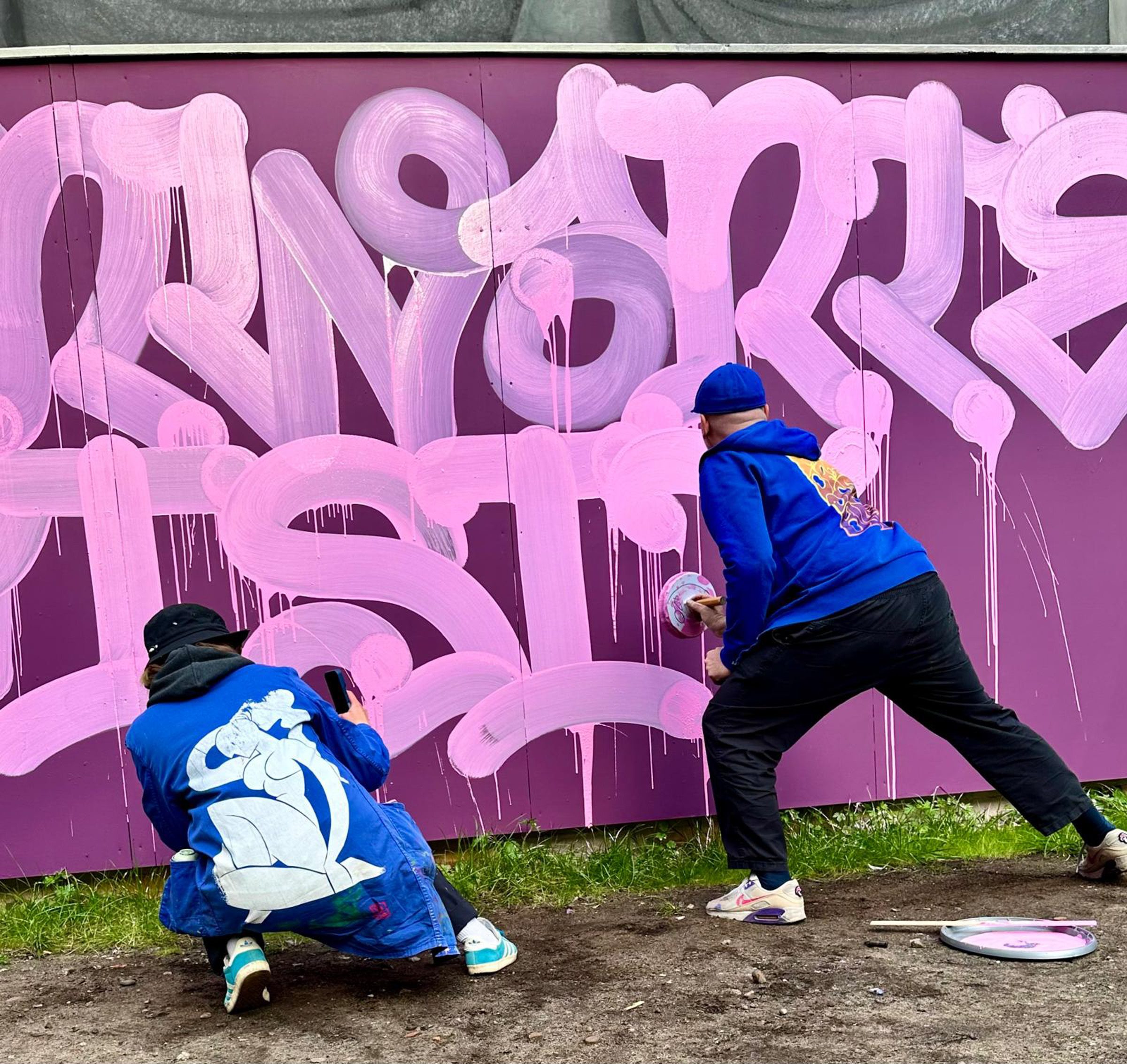
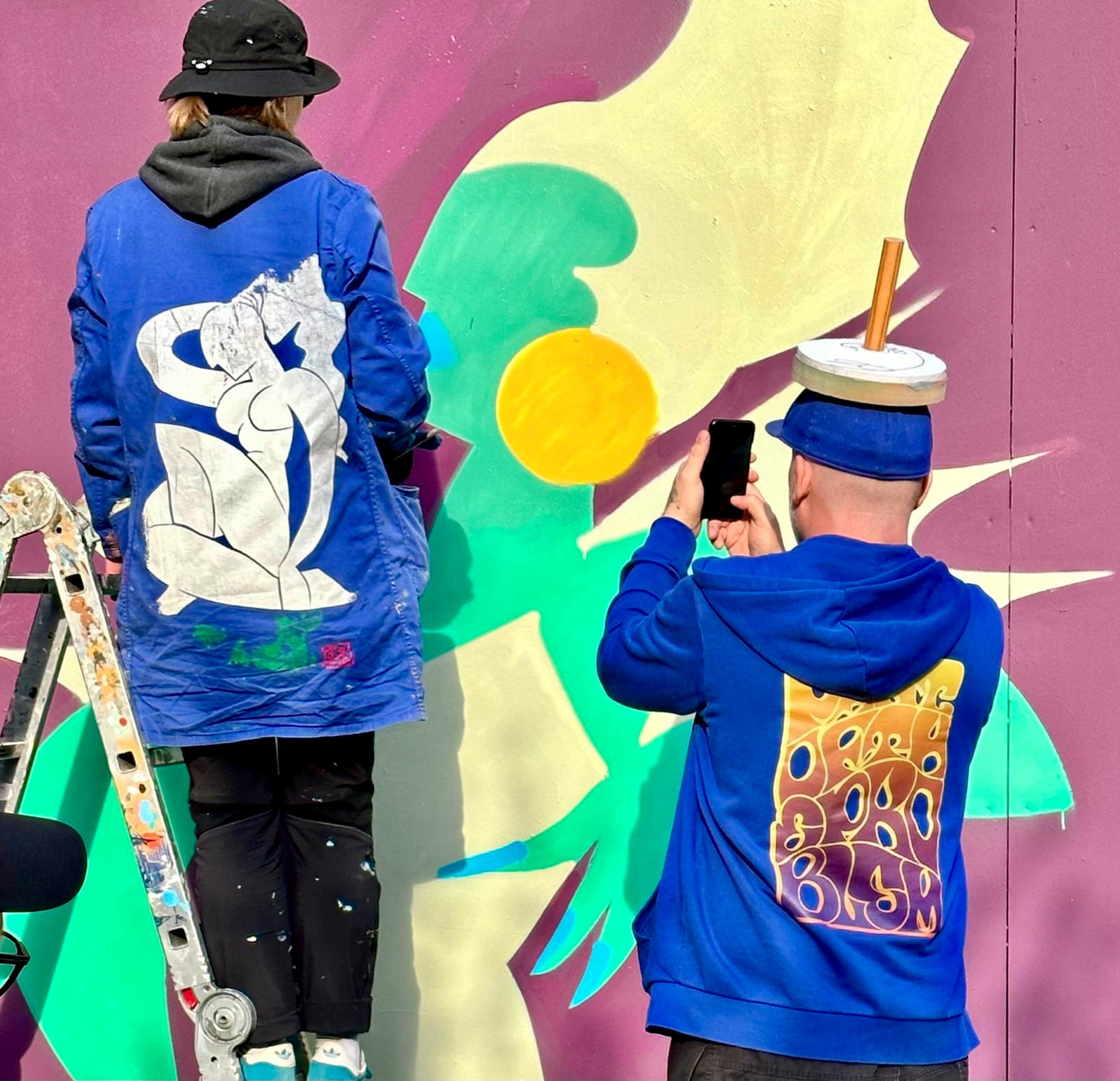
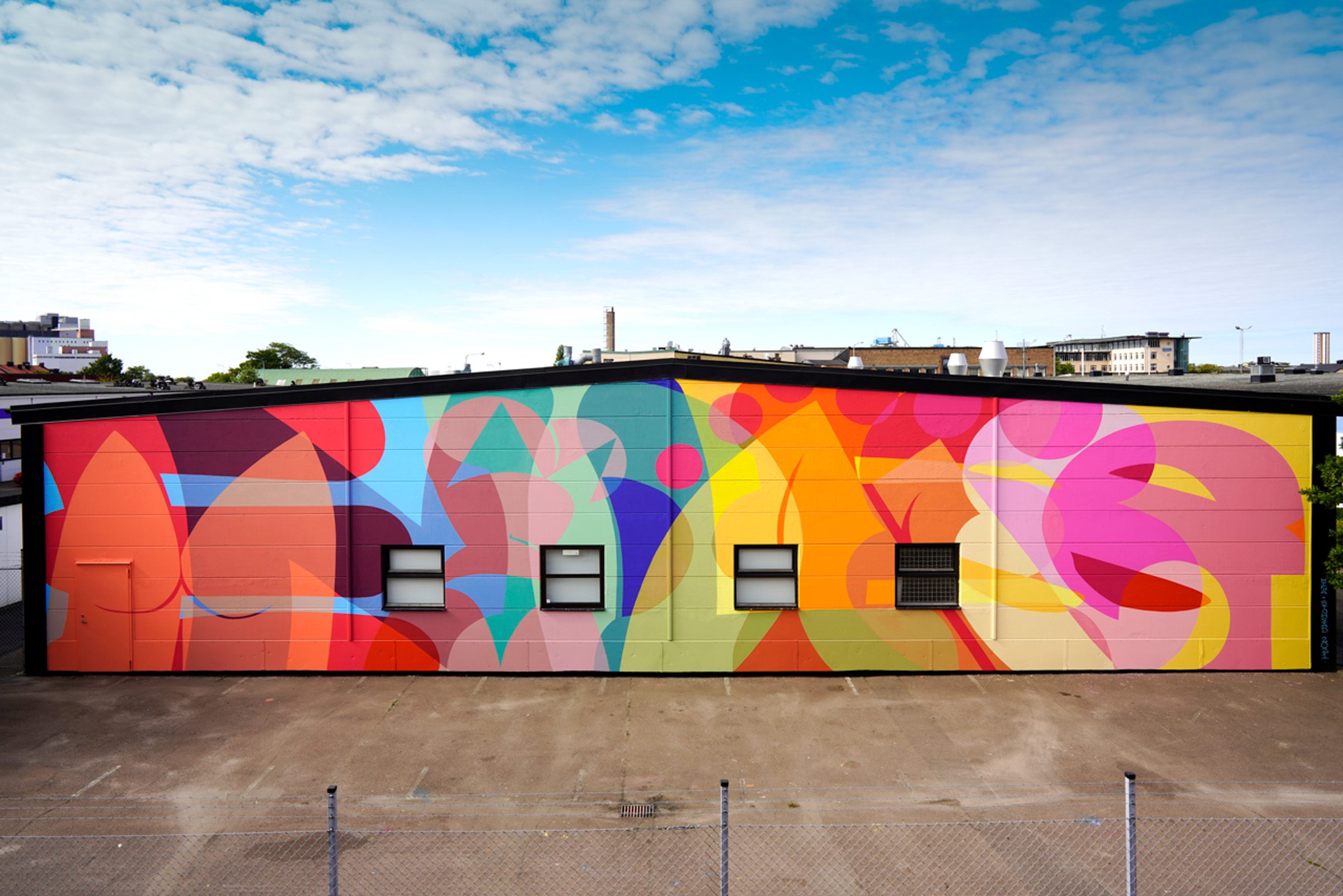
Our paths crossed in Berlin around 2018. The artistic exchange was very inspiring from the start, and we realised that our styles combine very well. We like to work with transparencies, so that the respective dynamics are preserved and a tension-filled complexity emerges. Through these overlaps, the work gains power and depth.
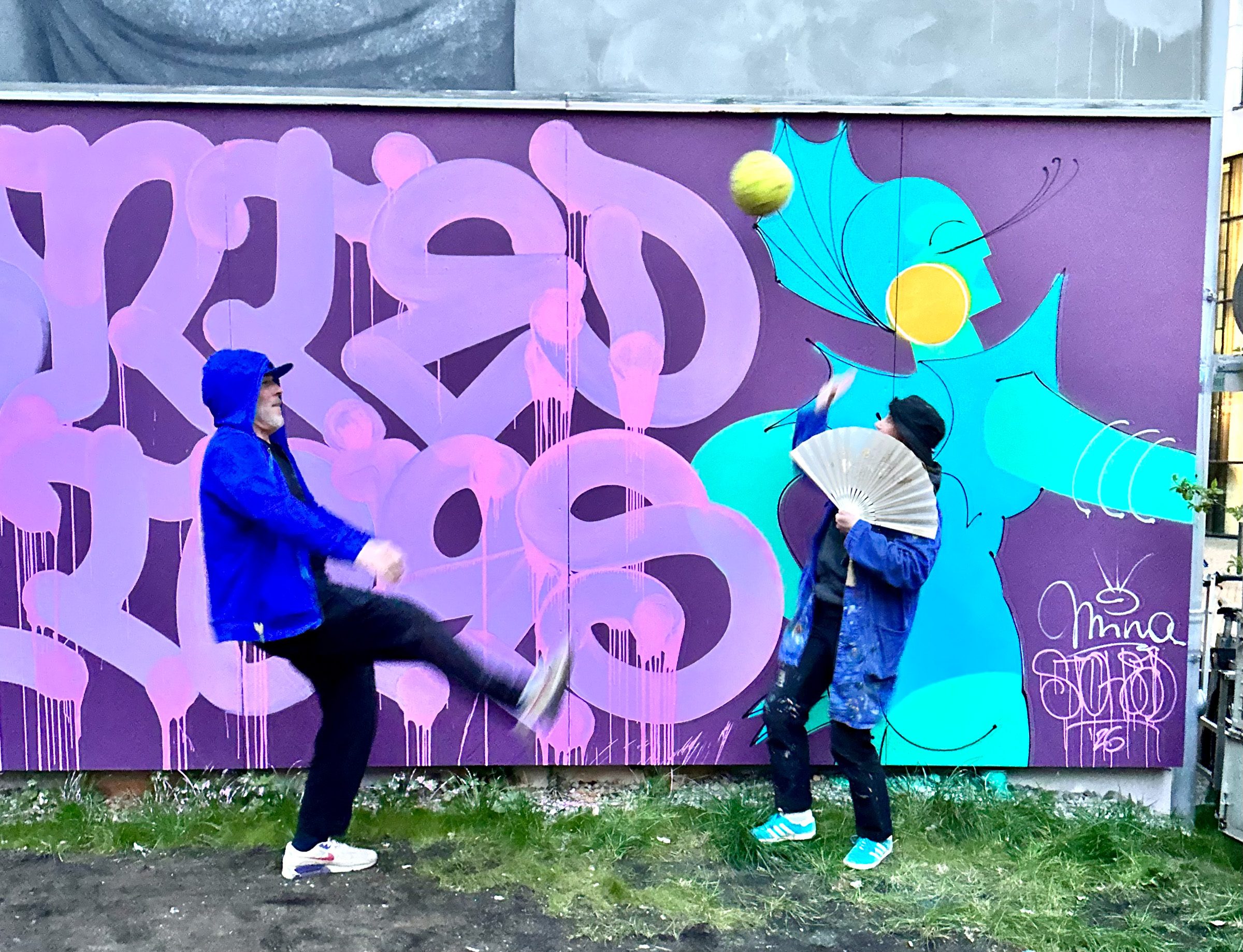
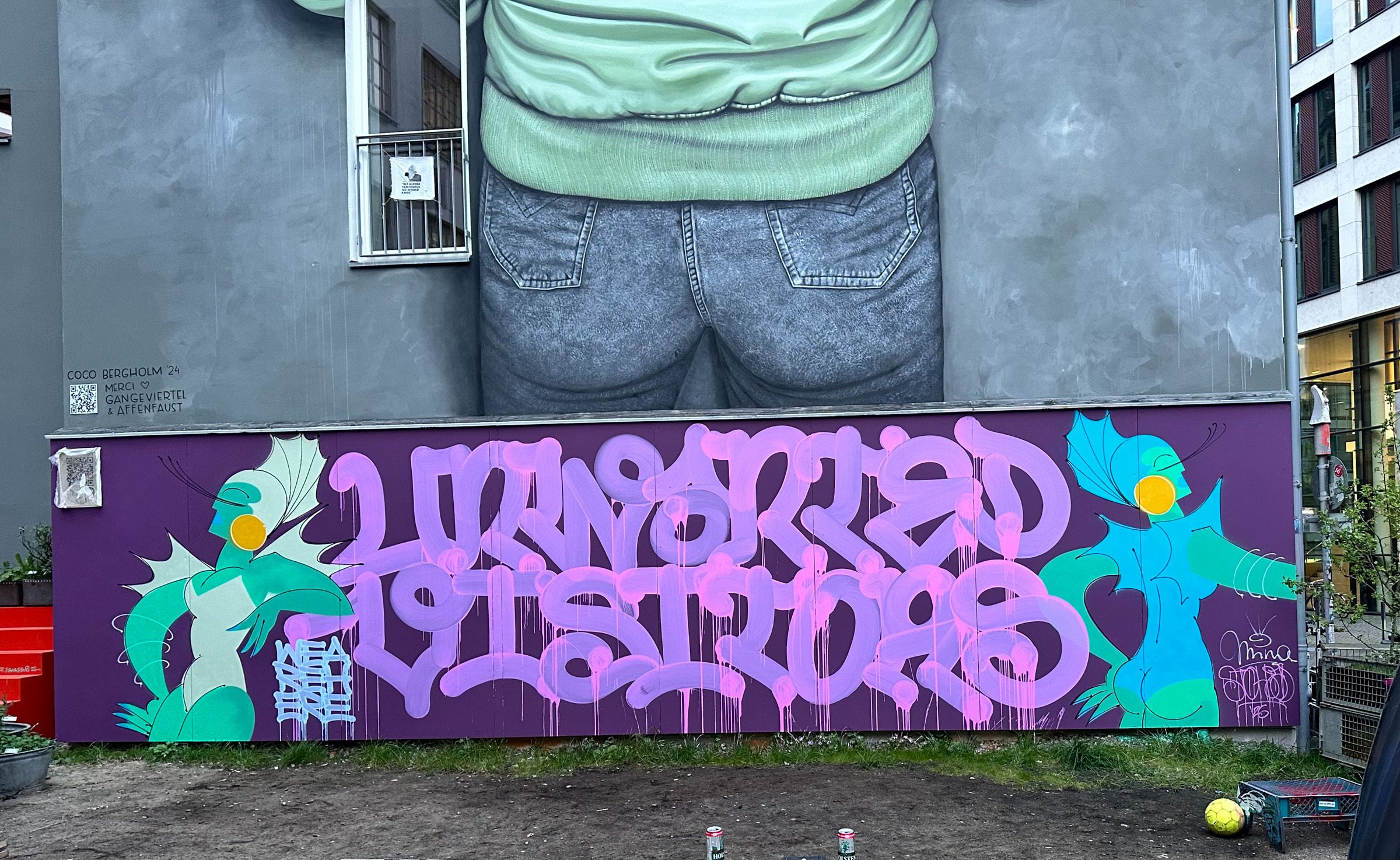
What are you aiming to convey with your current work here on theWALL+, and to what extent has the location influenced it, particularly the distinctive features of Hamburg’s Gängeviertel?
We wanted to express our openness towards the unknown. Cosmic elements recur frequently in our works. The Alienettes, in conjunction with our slogan ‘we are here’ and our crew name ‘Unwanted Visitors’, could symbolise a minority seeking tolerance and acceptance.
You both work in public spaces and within the museum context/white cube of galleries. What does this shift mean to you – and how do your approaches change depending on the space and context?
The studio offers experimental possibilities which, when combined with work in public spaces, can lead to new stylistic forms and techniques.
To Stohead: Your roots lie in graffiti; you’ve been active since the late 1980s. In your work, your distinctive style and calligraphy remain central elements to this day – complemented by a playful interplay of bold colours, words and quotes, characterised by lightness, dynamism and elegance. What inspires you, and which themes do you subtly explore in your work?
I started organising exhibitions with colleagues very early on. To foster connections within the scene and, not least, to create a platform for ourselves. By the late 90s, the so-called art world was only just beginning to rediscover graffiti culture and its offshoots. We wanted, so to speak, to show what else the artists behind the graffiti actions had to offer. In the early 2000s, these exhibitions played a decisive role in shaping the concept of URBAN ART.
The selection of words and quotations often has socially critical content. As music and a passion for collecting have always played a major role in my life, I draw on my own collection for textual excerpts. These often have a serious background but can also be poetic and sometimes entertaining. In doing so, I impose a constraint on myself by seeking out quotes that can be arranged mathematically, for example by forming a square.
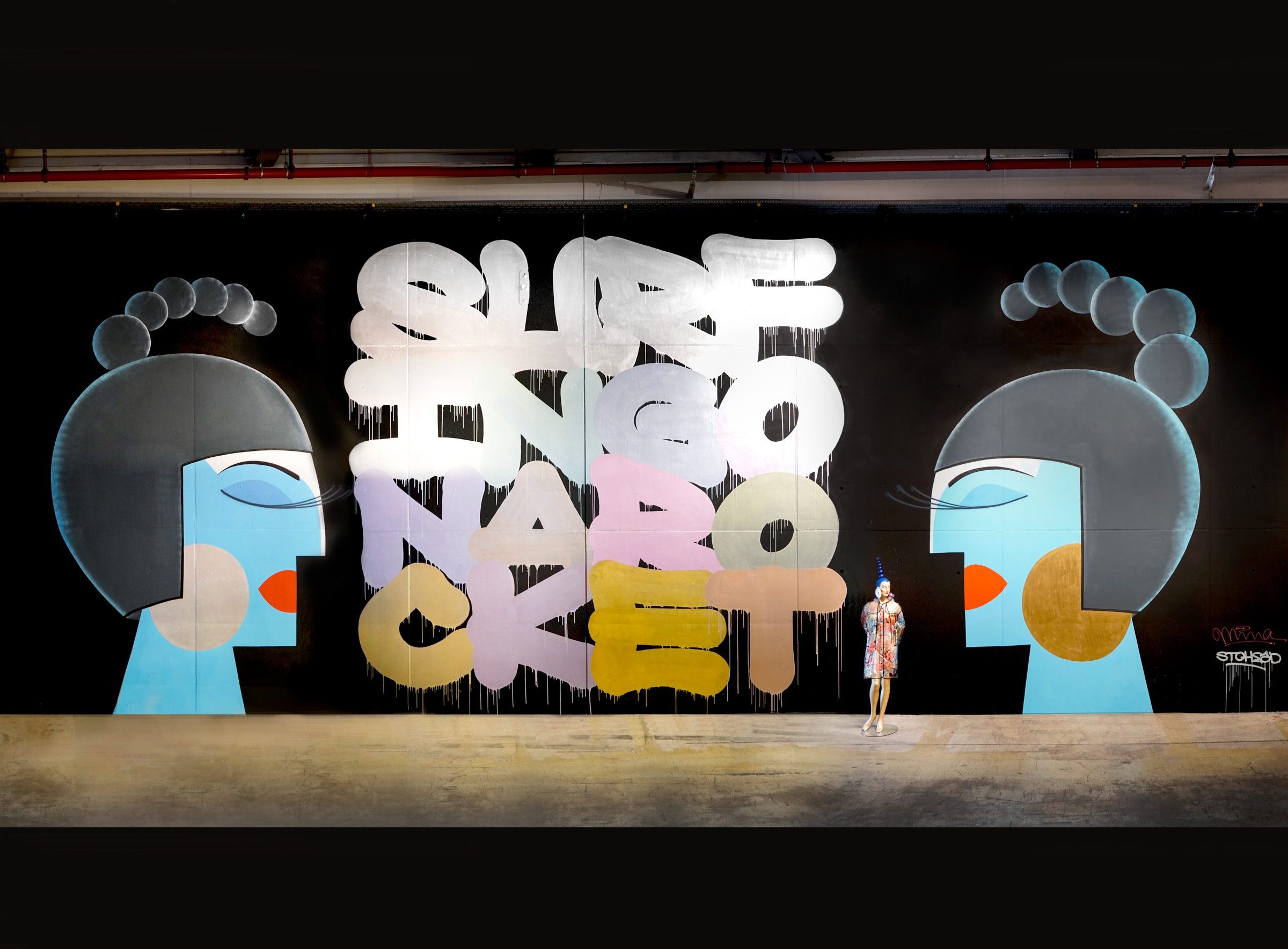
To Mina: The iconic female figure Nana plays a major role in your work. She embodies self-determination, self-confidence, openness, courage, freedom, strength, joie de vivre and vitality. How and when did you first encounter Nana, and how did she come to play the leading role in your work today?
Nana turns 10 this summer. She simply flowed from my pen back then: her powerful and dynamic lines embody the spirit of graffiti. Nana’s forms are an abstract evolution of my letters into figurative forms, conveying flow and energy, power and self-confidence. I began painting her quite intuitively and with great joy. Ever since Nana came into being, I’ve discovered increasing depth and meaning in the figure. She has become my empowering companion, representing both the individual and the collective. Many women thank me for the strength Nana gives them. And that, in turn, gives me strength. Subconsciously, the creation of this female figure is surely linked to the fact that I am forging my own path in a very male-dominated scene.
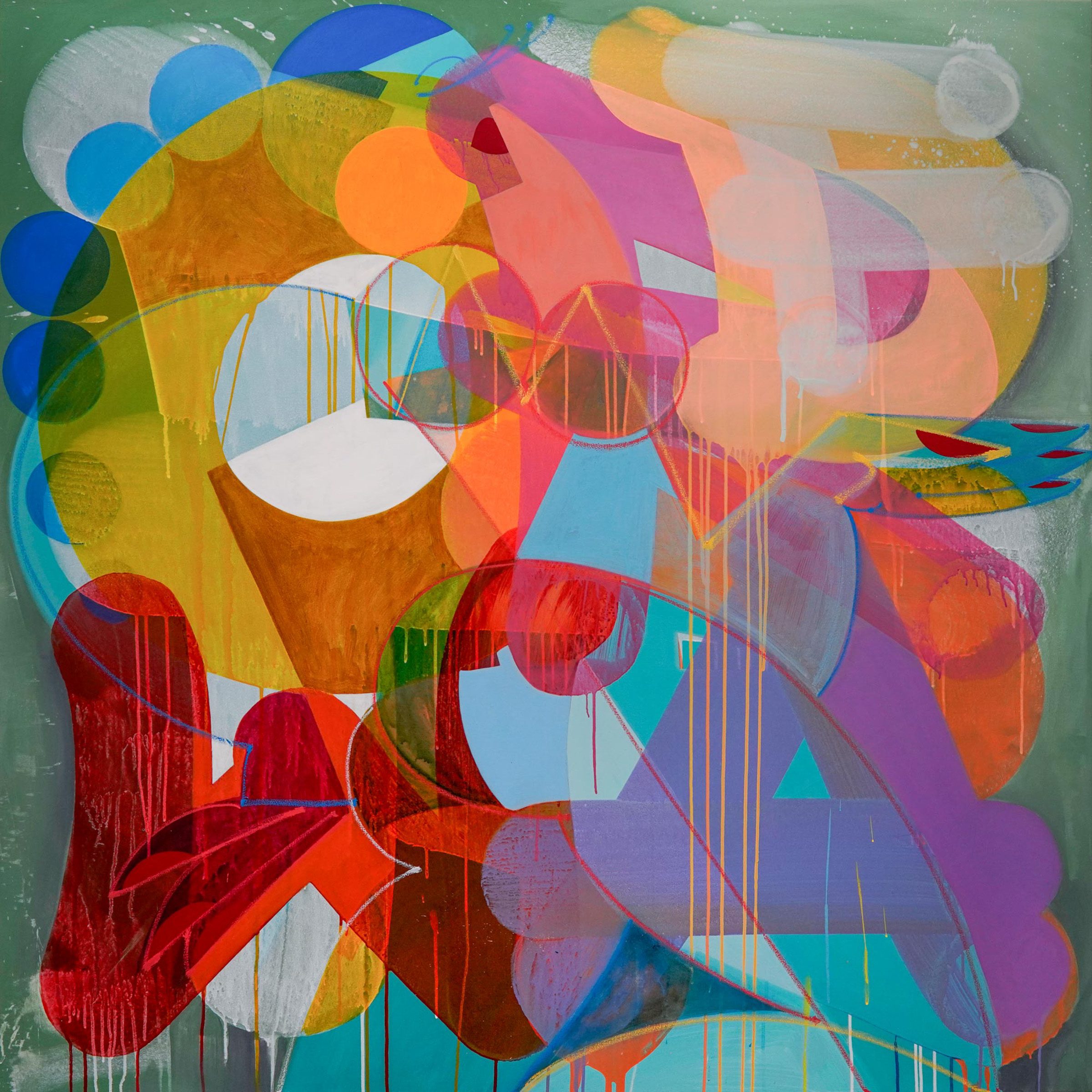
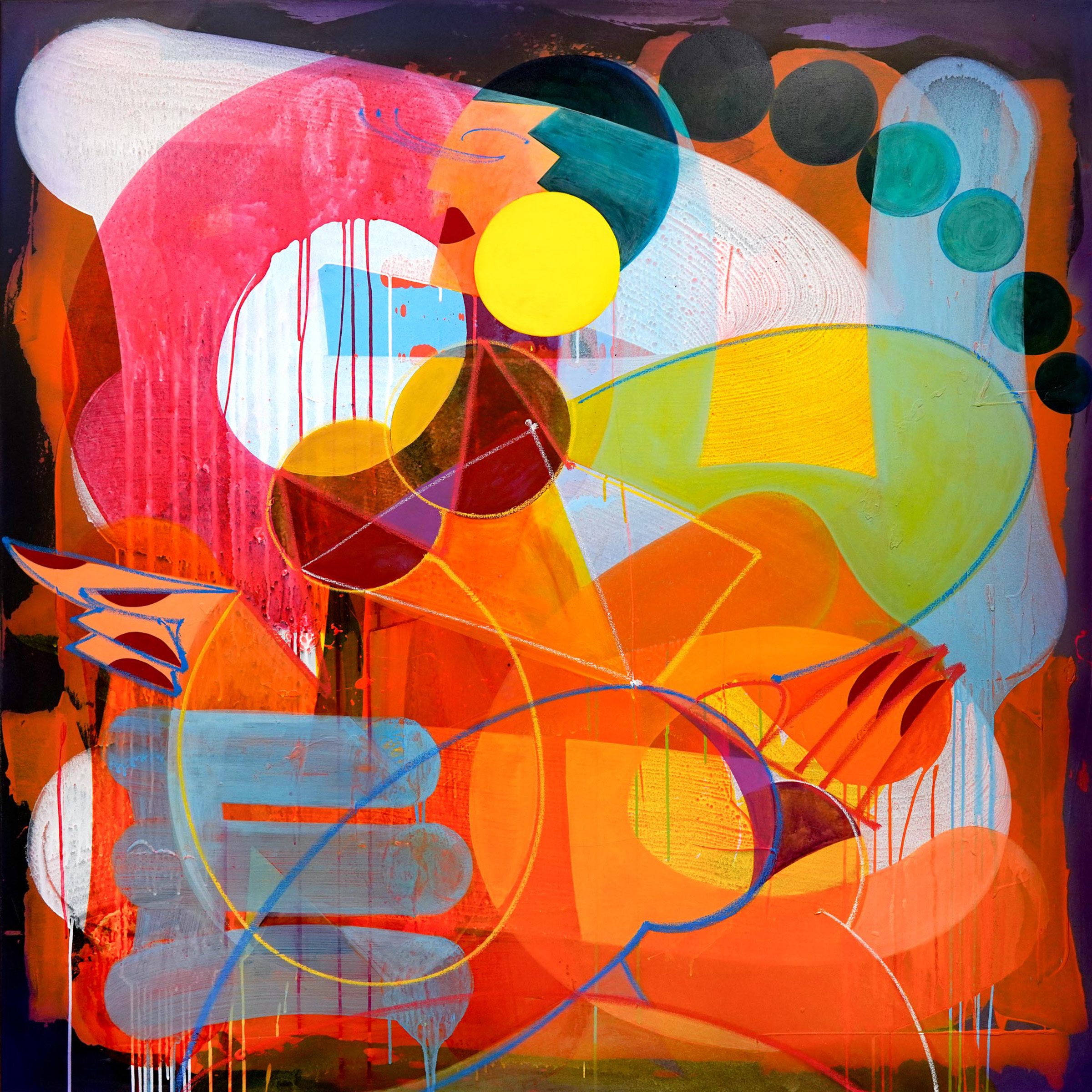
We’re excited to have you as part of the theWALL+ project! We can’t wait to see what you’ll be presenting at the group exhibition SAME DIFFERENCE at MOM ARTSPACE in Hamburg’s Gängeviertel, opening May 22.


Leave a Reply