

Hello! You are from France and you live in Rennes, in the region of Brittany. How long have you been living there, and why?
I moved to Rennes for studying, in 2018, I started university to study visual arts.
Where did you grow up and live before that?
I grew up and lived in Île-de-France. That’s where I started with graffiti, but it was in Rennes that I really developed my work.
Can you tell us about your childhood? How did you grow up?
I grew up in a loving family; I had the opportunity to pursue whatever interested me. I played music when I was younger, and I was already painting as a child. I was lucky that my family let me pursue what I loved.
What instrument and music did you play as a child? And are you still playing music today?
I started playing the clarinet when I was younger; I played it for six years and stopped when I was a teenager. It gave me an appreciation for music, even though I didn’t enjoy playing it by the end. I don’t play a physical instrument any more, but I do make music using software from time to time.
Is there an artist in your family?
My father is an architect; he’s good at figurative drawing—he’s skilled at that and using watercolor. He draws and paints in his free time. But my approach to and vision of art are quite different from his, of course.
Did you draw or paint when you were a child?
Yes, I painted a lot with children’s art supplies—gouache and cheap paintbrushes. I’d make up stories in my head and paint them at the same time; it’s that energy I try to recapture when I paint even today.
Have you read any comic books?
Not very many. I had some Gaston Lagaffe comics that I thought were really funny, but I’m not an avid comic book reader. I really loved manga-style comics, like Albator and Goldorak; those imaginary worlds left a lasting impression on me because of their visual and auditory atmospheres.
How, when, and where did you discover graffiti writing?
A friend and I discovered a vacant lot surrounded by walls, a bit hidden and not far from the middle school we attended. We went there several times, and one day we found spray cans on the site. We started tagging just like that, and one thing led to another—we discovered the Parisian spray paint shops and slowly got into it.
You started when you were 15 or 16, right? What was your name, and what kind of style did you use?
That’s right—I was 15 at the time. I tried out several tags that I didn’t stick with for long; my second-to-last one was EUROP. We were studying Europe in history and geography class, and I thought it was lame, so I wanted to “blind” the word “Europe” by removing the “E” at the end and tagging it.
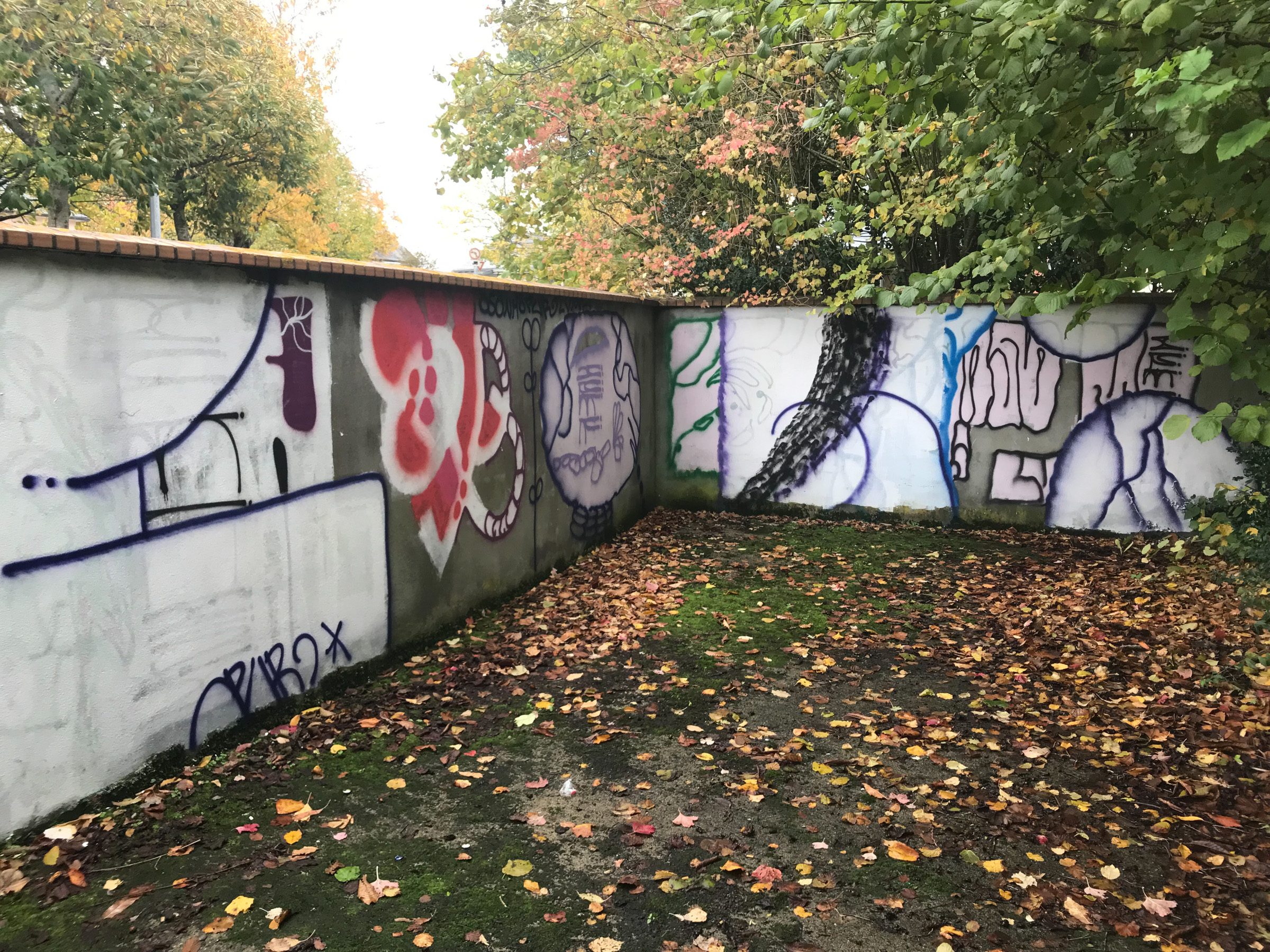
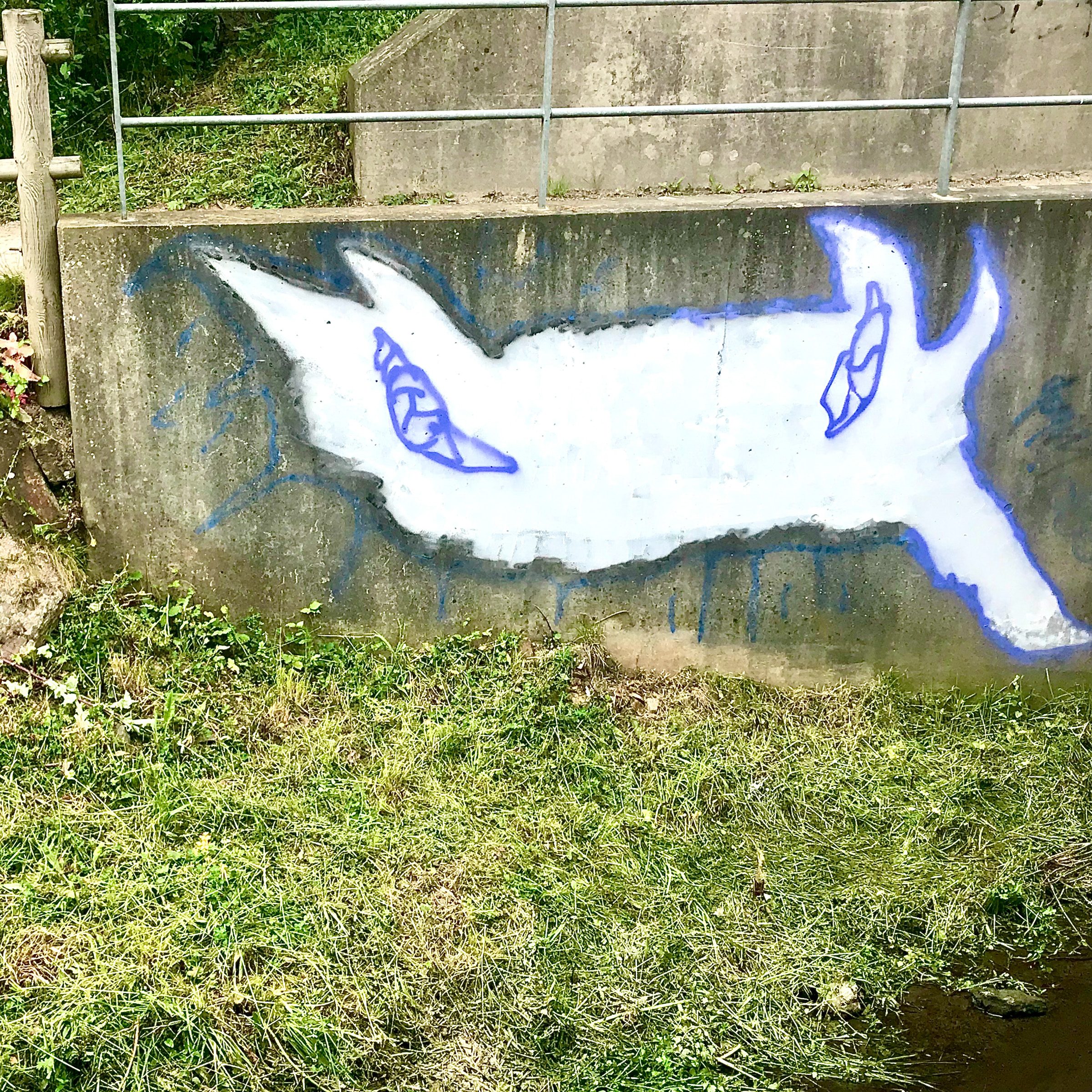
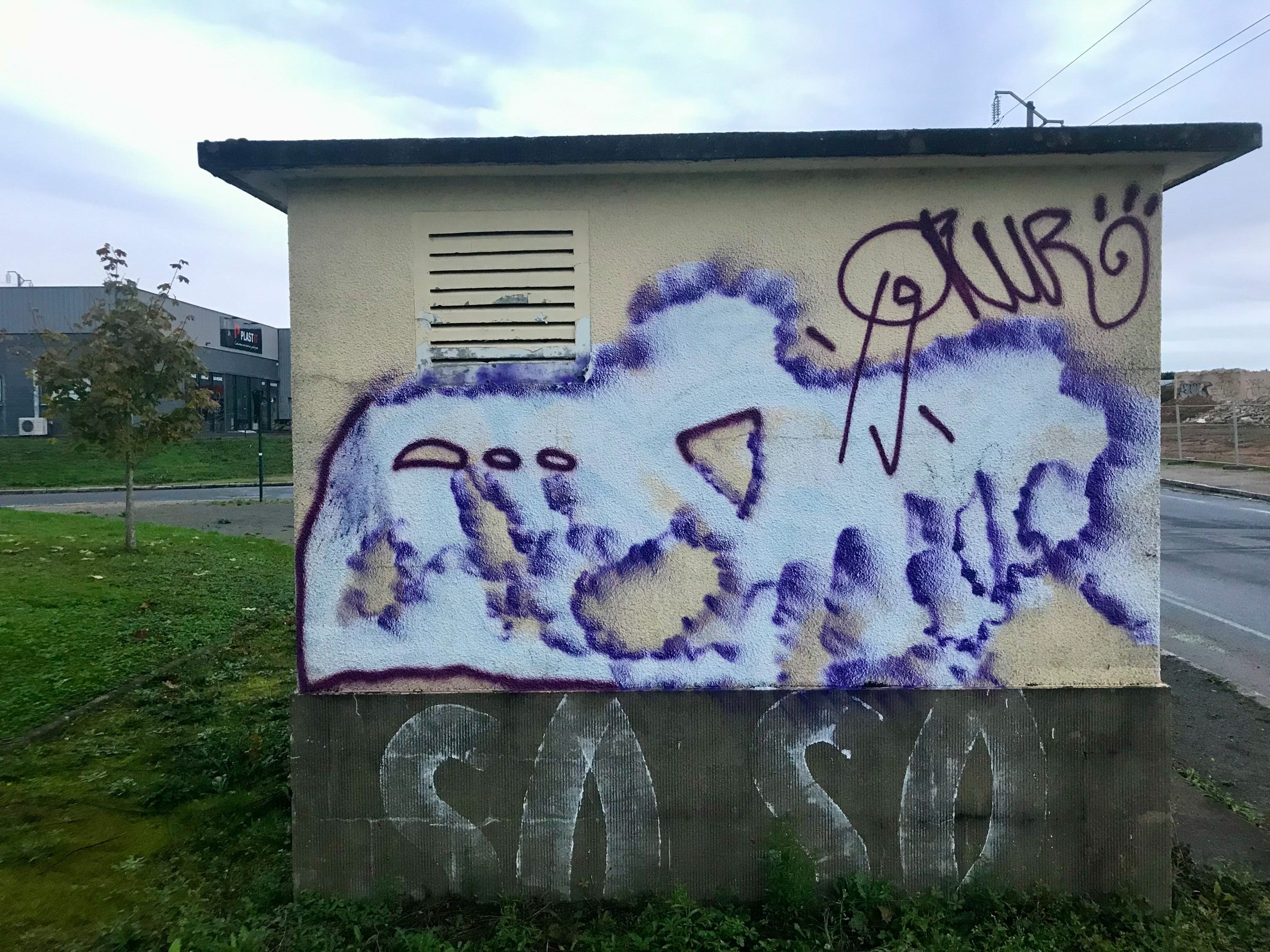
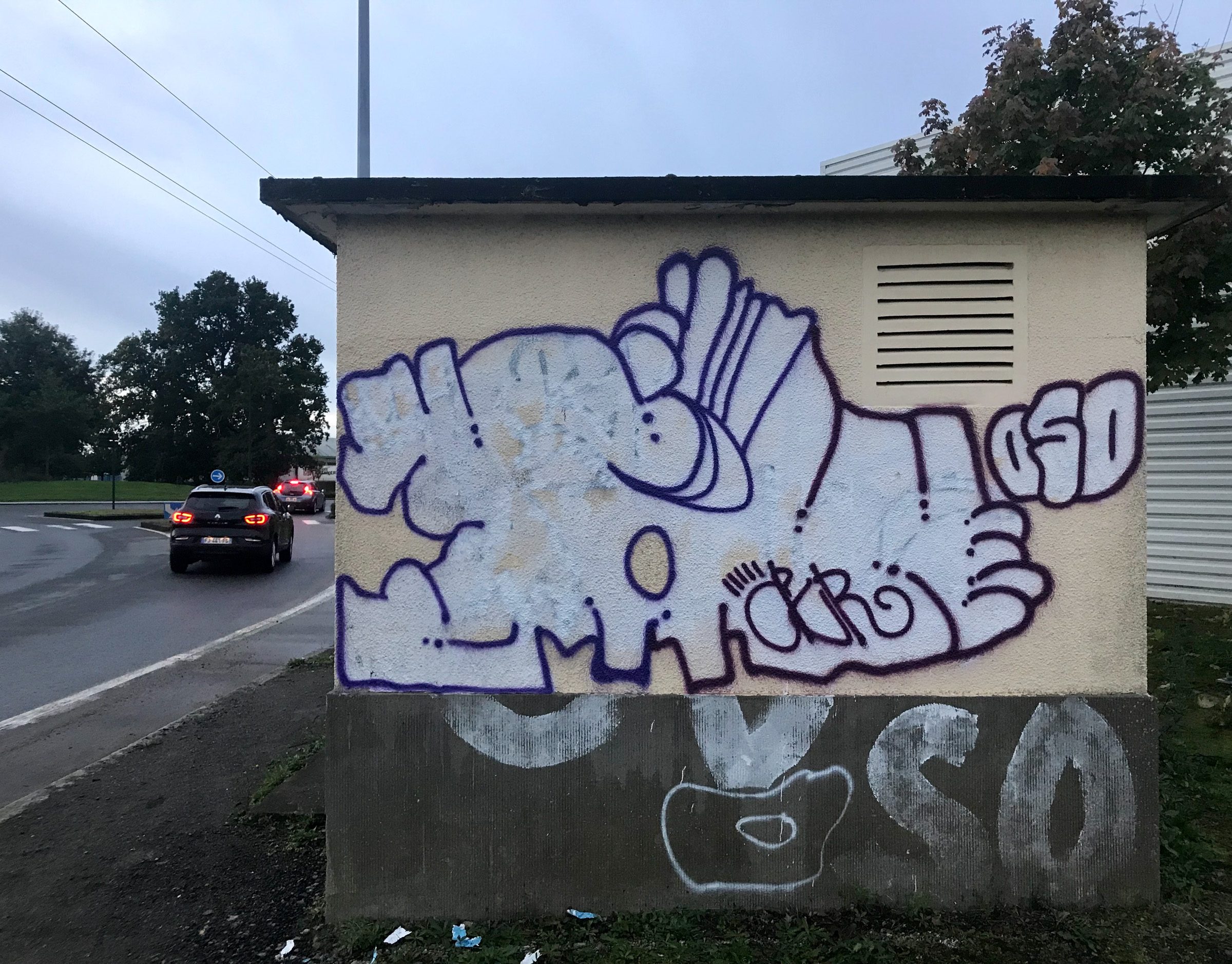
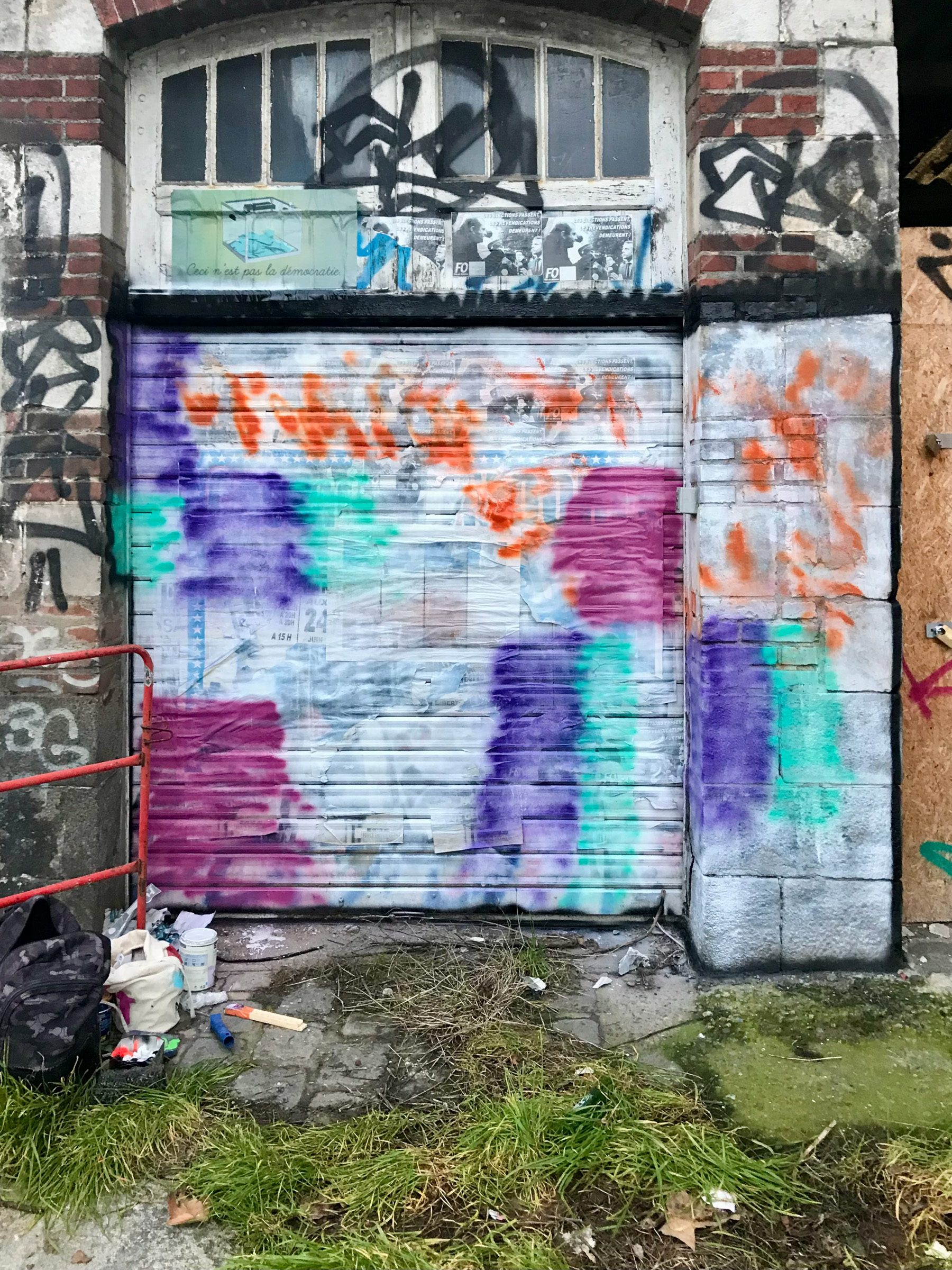
How long have you been going by OPUR (Opur LaBouture on Instagram), and what does it mean?
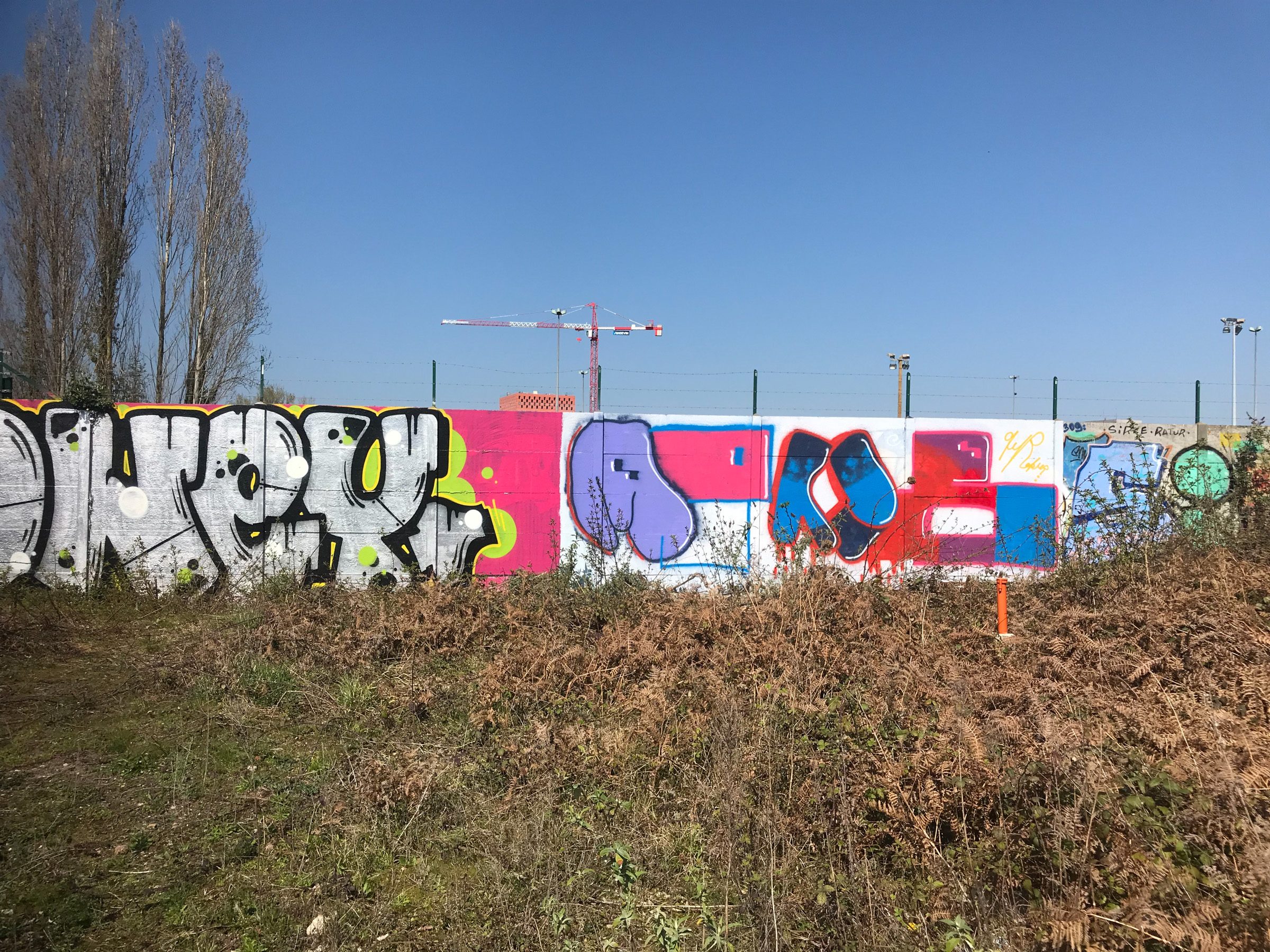
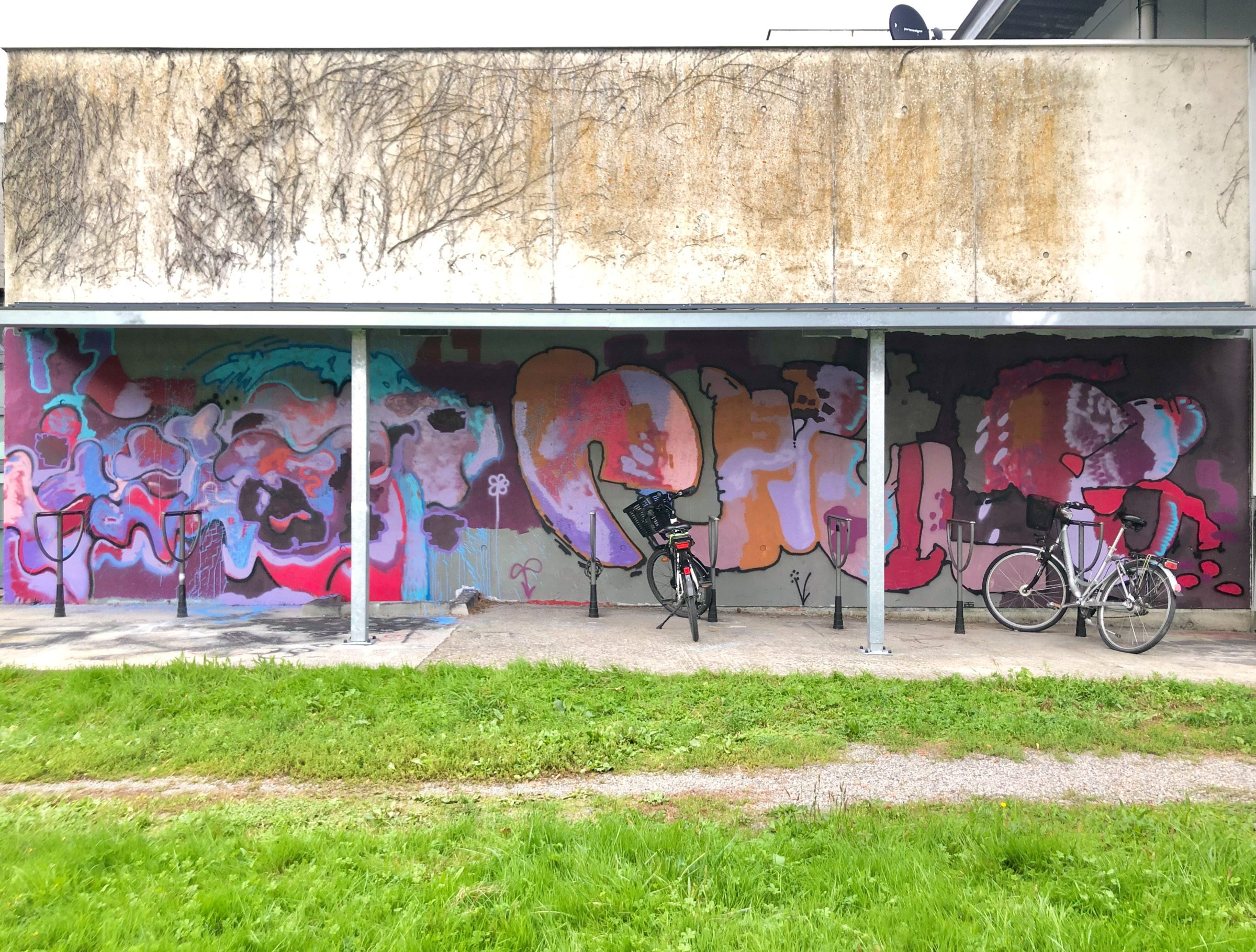
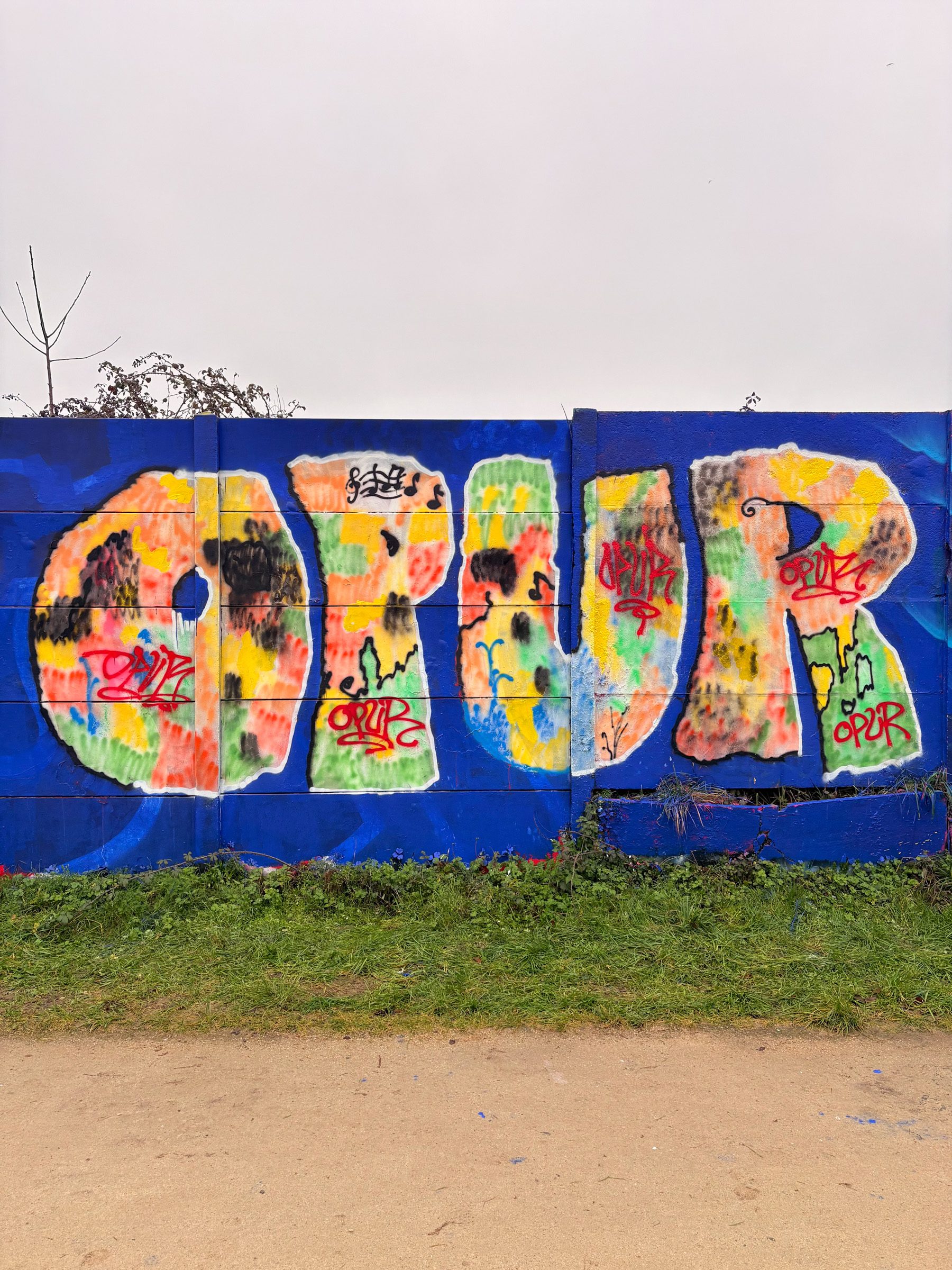
I went to Rennes for the first time in 2017, and on my very first day I was tagging “EUROP” when a police car drove right past me. I ran to hide in an alley, but they found me and threatened me after taking my ID.They told me that if they saw even one more “EUROP” tag in town, they’d know it was me. I got scared and changed my name. I rearranged the letters of that name—which I was starting to get the hang of—and that’s how I came up with “OPUR”! While I was in university, I became interested in plants and the metaphors they carry— parasitism and invasion. Delving into those ideas led me to find a rhyme for OPUR: la bouture/ OPUR “cuttings.” Like a plant, when I do graffiti and tags, I plant seeds and scatter cuttings wherever I go.
How important was tagging to you? And what about throw-ups?
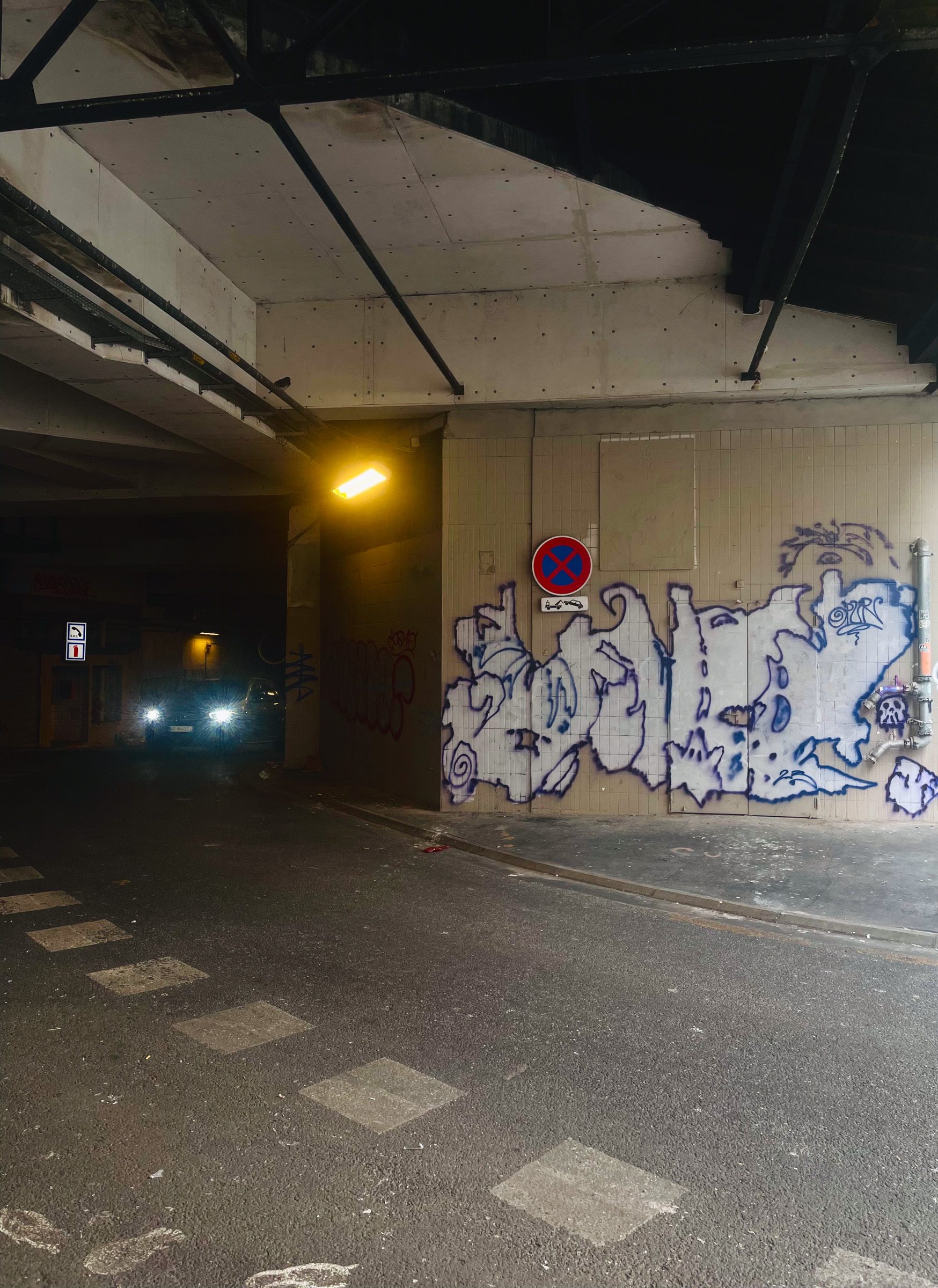
I thought it was awesome to leave a part of yourself in public spaces—tagging is about claiming a space as your own. Scouting out spots to paint is also a way to get to know the city you live in, and that’s way more important to me than shops or restaurants, for example. It took me a while to get into throw-ups; I did quite a few in 2020 and I’m doing them again now, but it’s a slightly secondary discipline, I’ve always preferred to focus on pieces—large-scale graffiti.
Did you start out painting alone or as part of a crew? If so, which ones?
In the very beginning in Île-de-France, there were just my friend and me graffitiing together. I met other people back then, but we never formed a crew. Later, I co- founded a crew in Rennes that was the perfect counterpart to my abstract and experimental style. It was a very structured crew—lots of block lettering, efficiency, and grandeur in the letters.
Did you learn about graffiti styles from books, magazines, or websites?
I spent a lot of time online when I first started doing graffiti; it was through websites and YouTube that I discovered artists who left a lasting impression on me and greatly influenced me back then, like SAEIO and IGIT. Later on, it was books and contemporary artists who inspired me with the different approaches they took.
Did a classic style or specific writers influence you in the beginning?
It wasn’t really a particular style; it was more about individual artists whose work I found compelling. SAEIO, the PAL crew members in general, and all the people who deconstructed letters and created something different. I really appreciated the work of Artur Breakdance Socia and the Moderne Jazz crew, especially Obisk.
Which classic styles do you prefer: block letters, wild style, 3D style, etc.?
Generally speaking, I don’t have a favorite style, not even within what’s called “antistyle.” I have a particular fondness for Parisian block letters, because that’s the kind of graffiti I saw first and what made me want to try graffiti.
Can you describe your style when you first started?
At first, I was just trying to draw straight lines; my lettering was pretty rounded, and without even realizing it, I was already working with the colours and textures I preferred.
Did you really focus on letterforms while learning the rules of style writing?
Not really—I just went with the flow based on my influences, discoveries, and whatever I felt like doing at the moment. I’ve always thought a lot about my pieces based on where they’re being done. So some traditional lettering work came about because the conditions called for it.
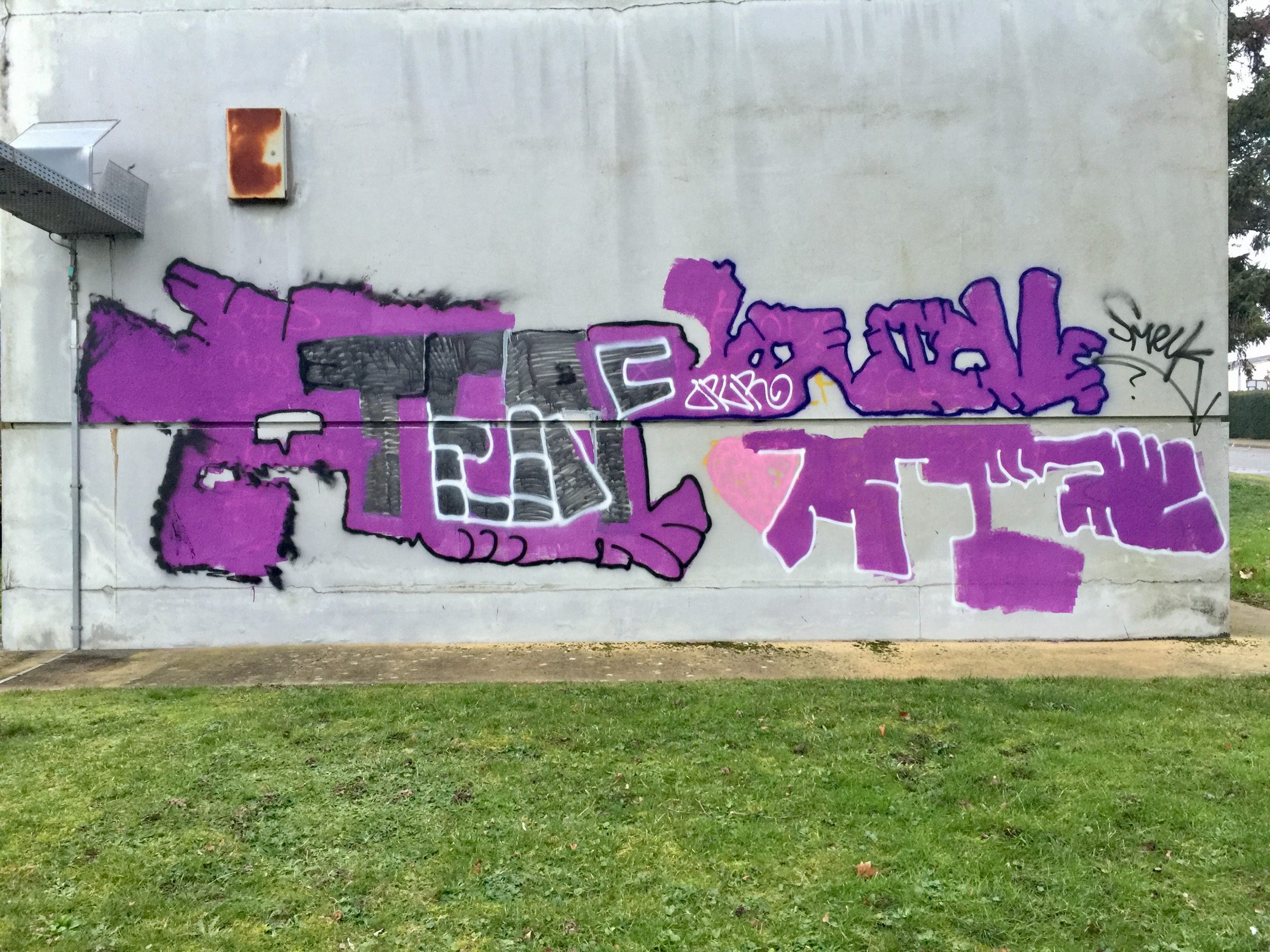
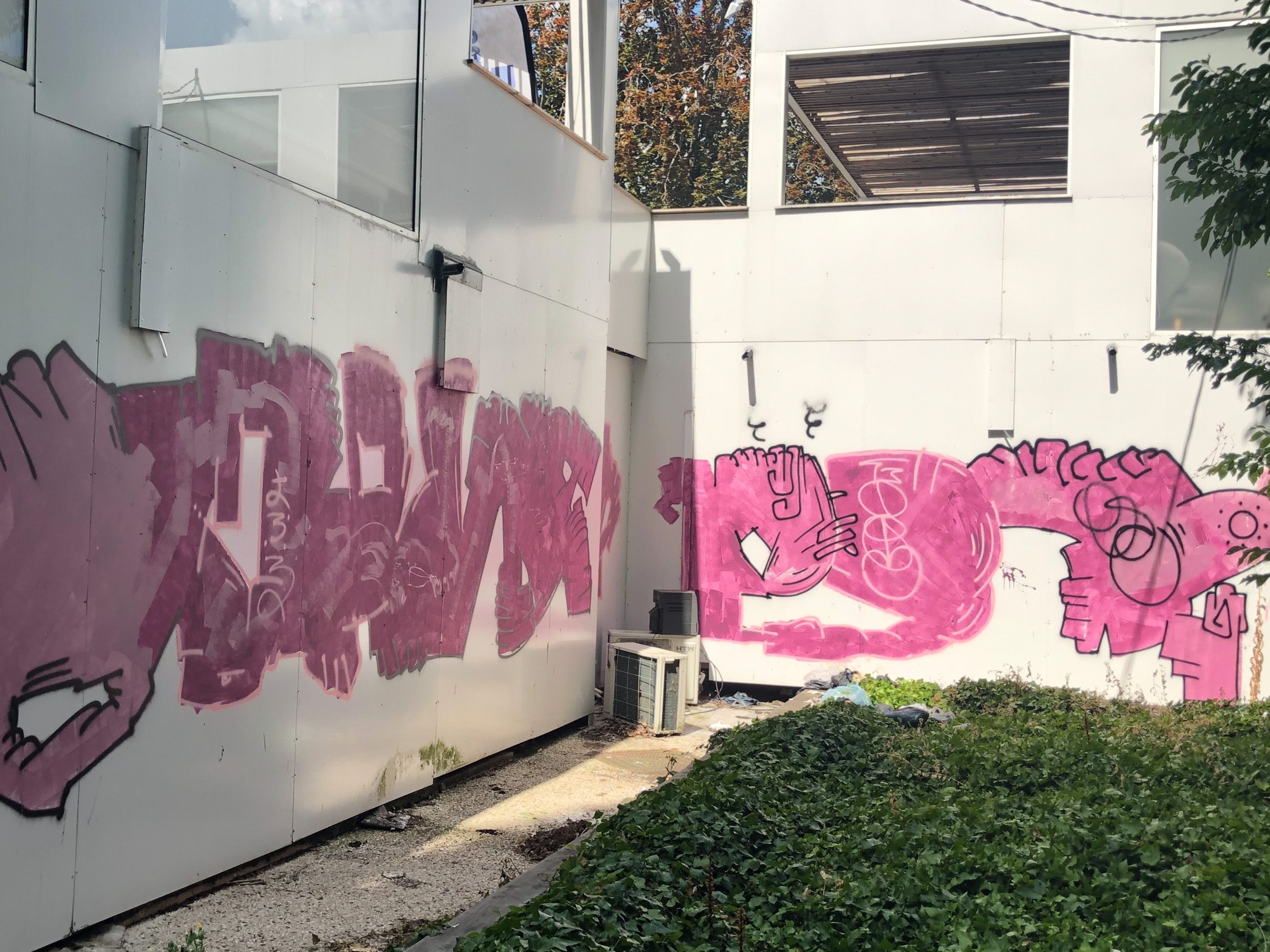
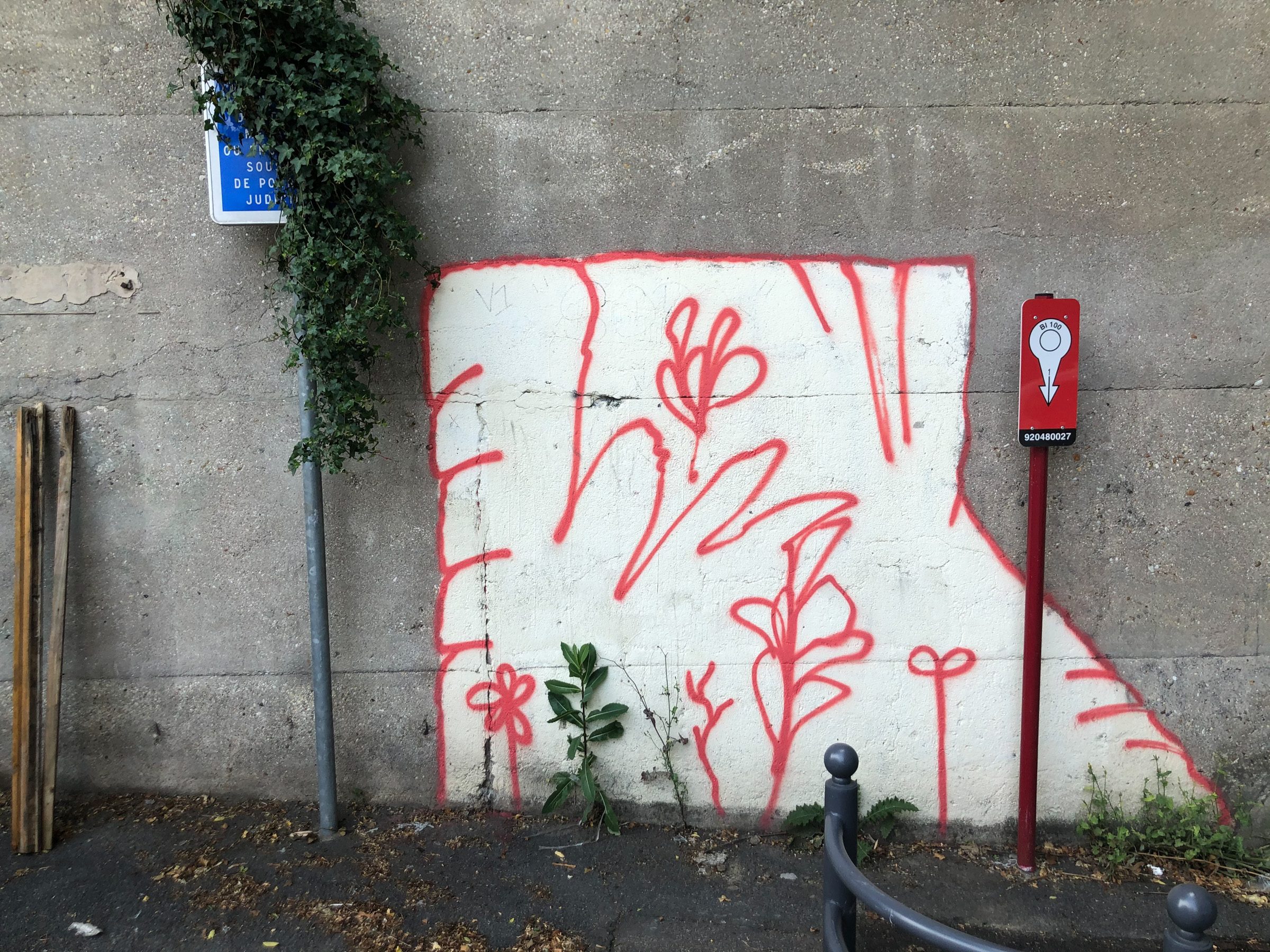
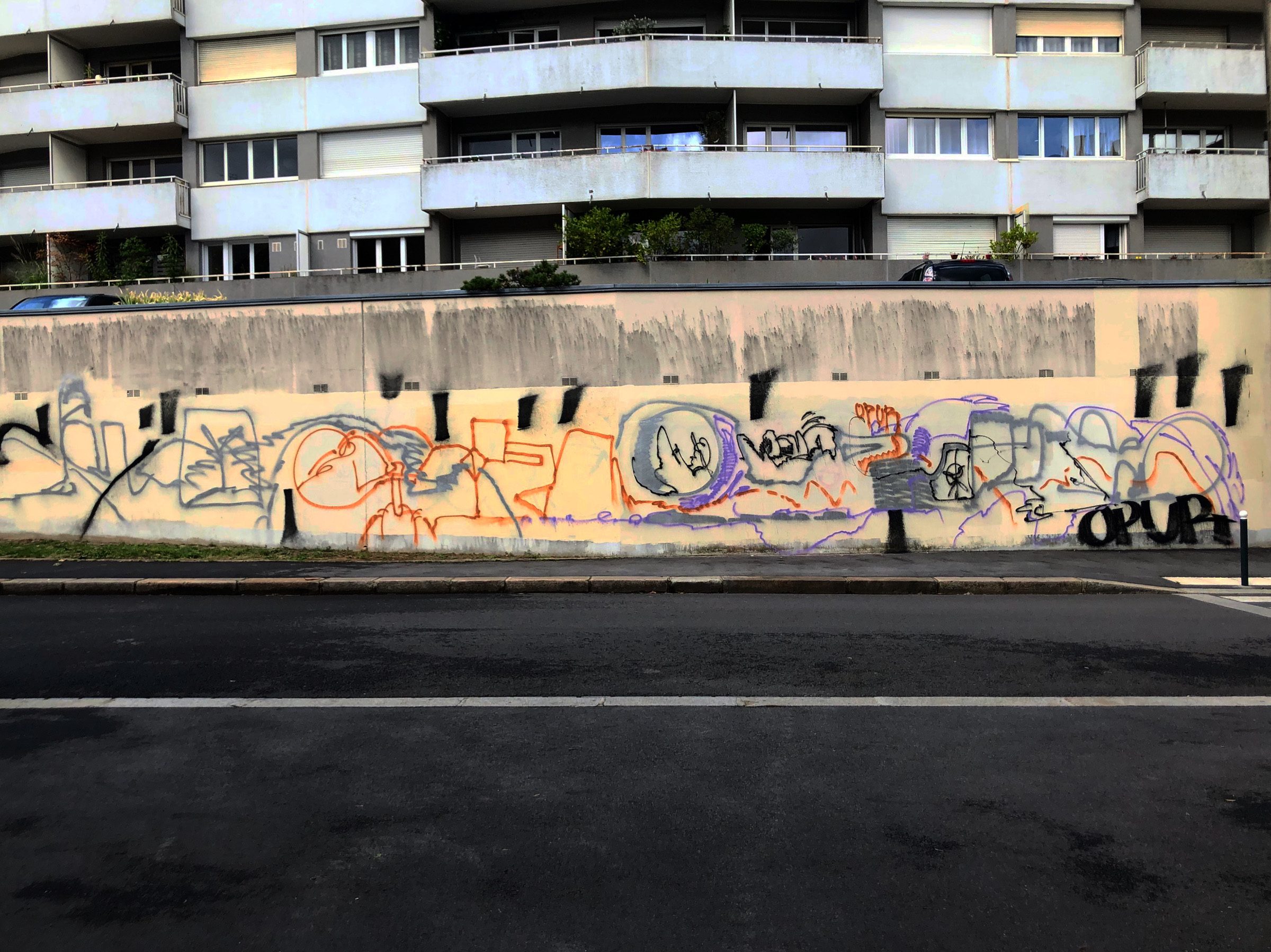
Where did you paint the most in the beginning?
At first, I started at a lot in the 92; the Western suburb of Paris. I went there pretty often and painted there frequently. But once I moved to Rennes, I learned to get out and look for more varied spots.
You started working with abstract forms fairly quickly in 2018, inspired by buffs. What gave you the idea to work that way?
I had seen the documentary “The Subconscious Art of Graffiti Removal”; it moved me and broadened my perspective on what graffiti can be. If people are completely unfamiliar with graffiti and can intervene in public spaces and create new aesthetics, this approach can also come from writers themselves.
How did you discover the aesthetic of “buffs” on the street?
After watching that documentary and seeing PAL’s work online, the way I looked at the streets slowly changed. I started noticing more and more of the erasures, the traces of pressure washers, and the unintentional marks in public spaces—like burn marks on walls when people set trash cans on fire.
Are there many “buff zones” in Rennes?
A few—there are places where city workers frequently clean the walls. Over time, I’ve come to know the most interesting spots for graffiti writers: strange places where buff traces keeps reappearing, but the writers always come back.
After school, you told me you studied visual arts. Where and for how long?
I studied visual arts for four years; it allowed me to discover new ways of thinking about and approaching graffiti. For example, I gained theoretical knowledge about the relational aesthetics movement of the 1990s. It’s a movement that left a lasting impression on me and made me think about graffiti differently.
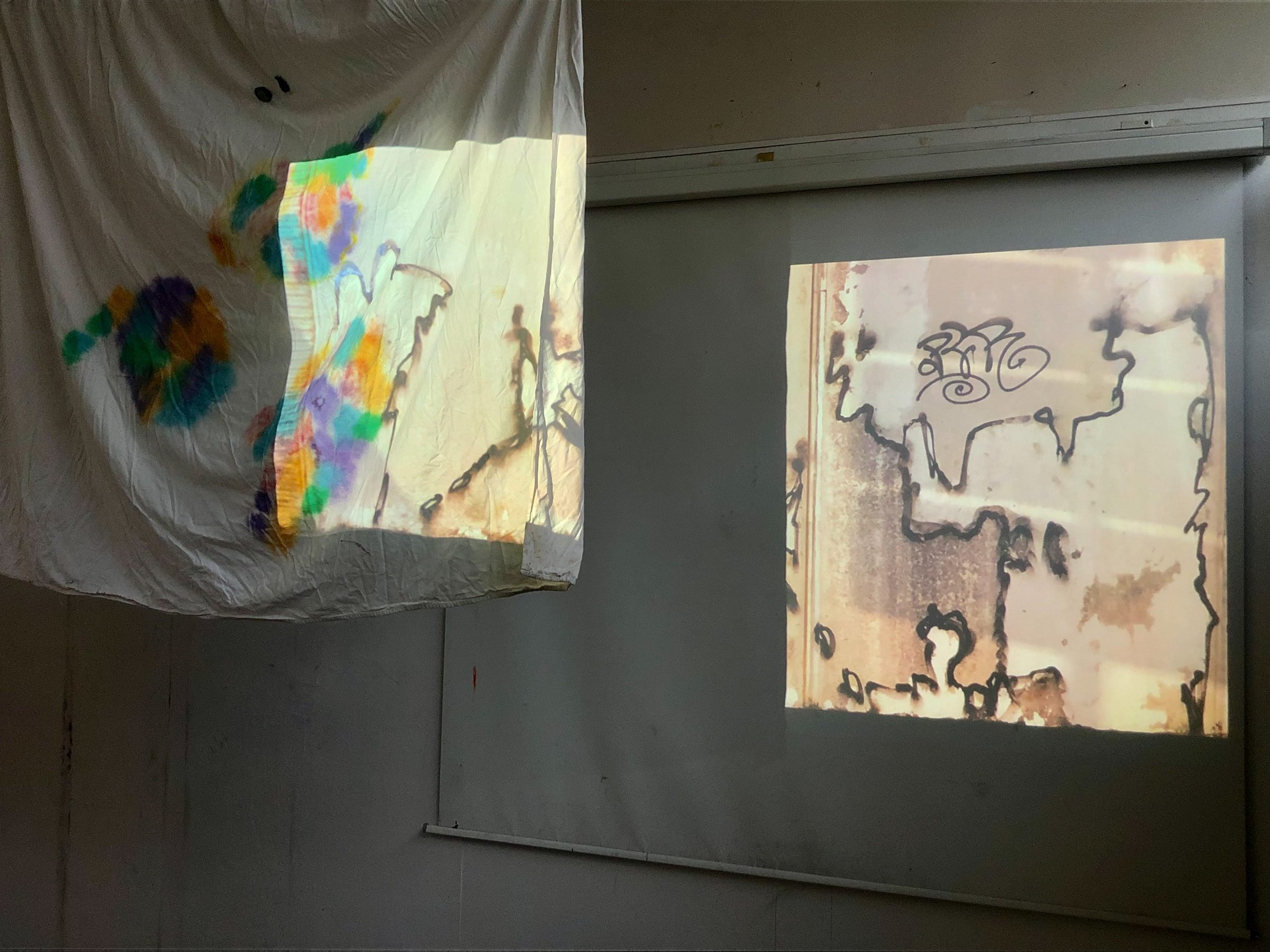
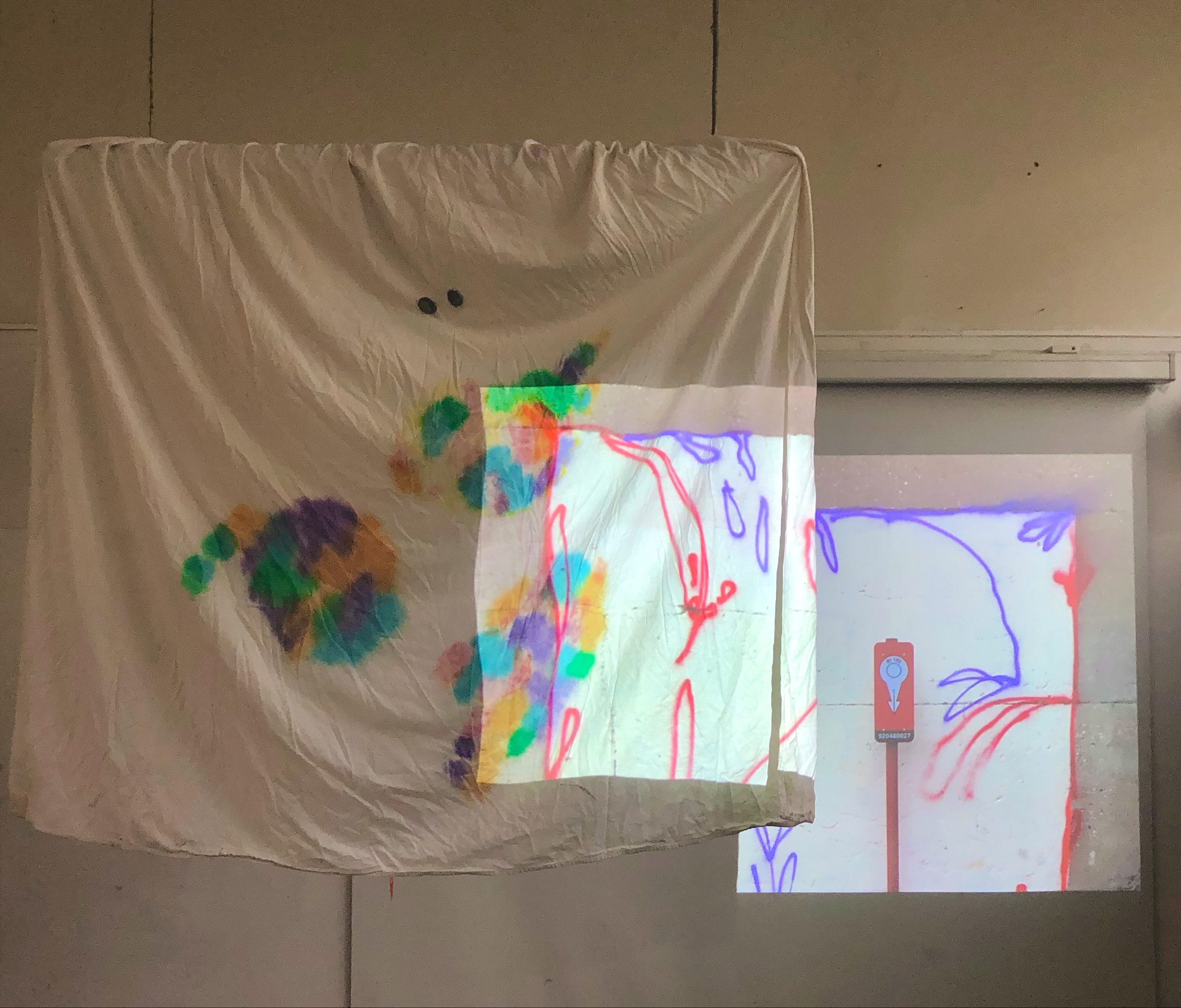
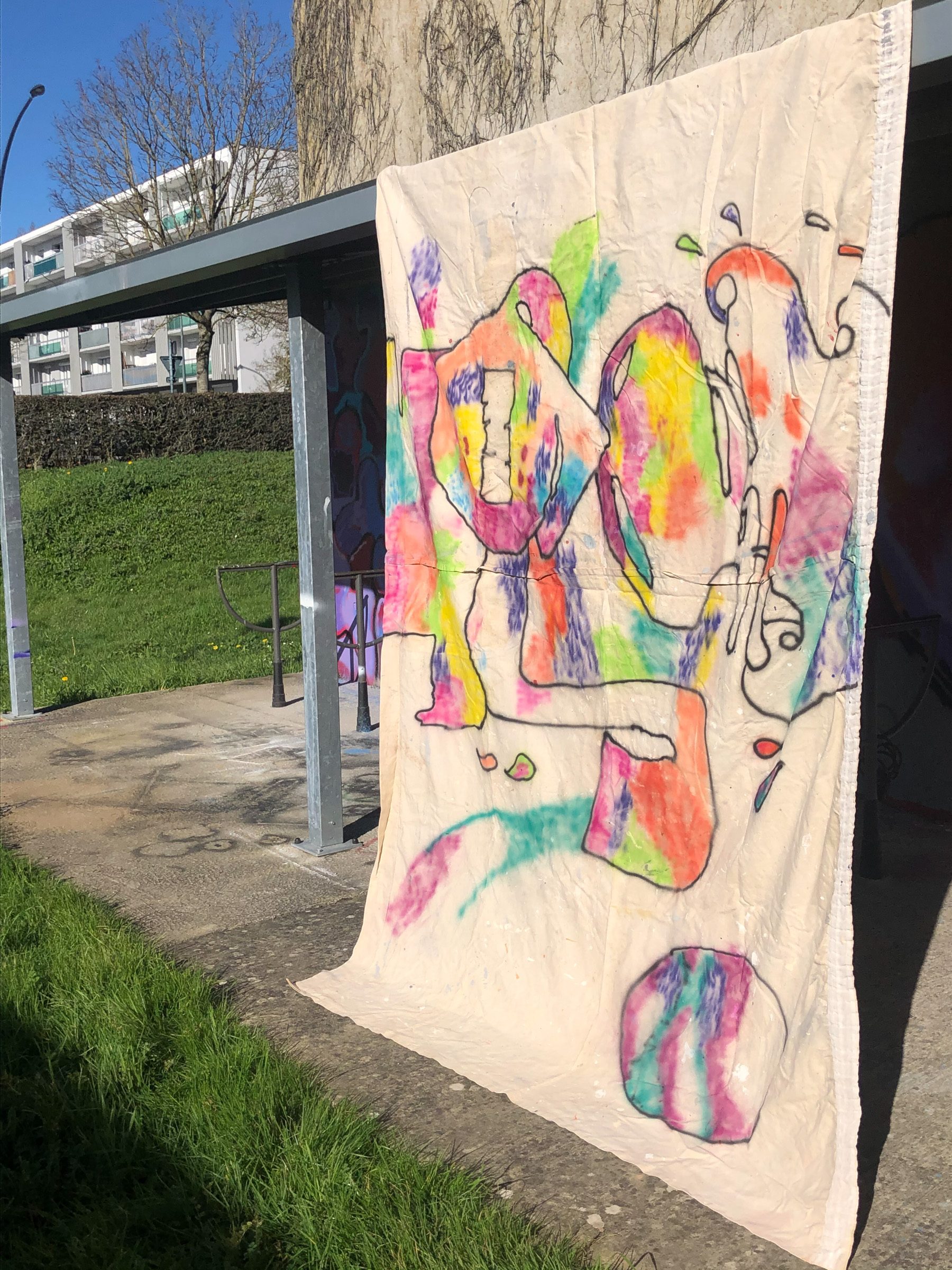
Can you tell us about the relational aesthetics movement of the 90s and the link for you to graffiti?
This movement – which isn’t quite a movement but rather a kind of trend – made a big impression on me at a time when I was trying to intellectualise my graffiti practice as much as possible. It was after reading Jean-Charles Massera’s *Amour, gloire et CAC40* that I began to think about ways of adapting this way of thinking to graffiti. Drawing inspiration from the works the author discusses in his book and from my own personal references, I devised several types of artwork to be created in public spaces and in a studio setting. I was still studying fine art at university and organised several participatory and collaborative graffiti workshops with the public. I also worked on interactive forms of visual art.
Did these art studies influence your actual graffiti practice?
Of course! I created graffiti and canvases specifically for college, and that constantly influenced my graffiti practice. My studio work and my vandalism-style graffiti went hand in hand.
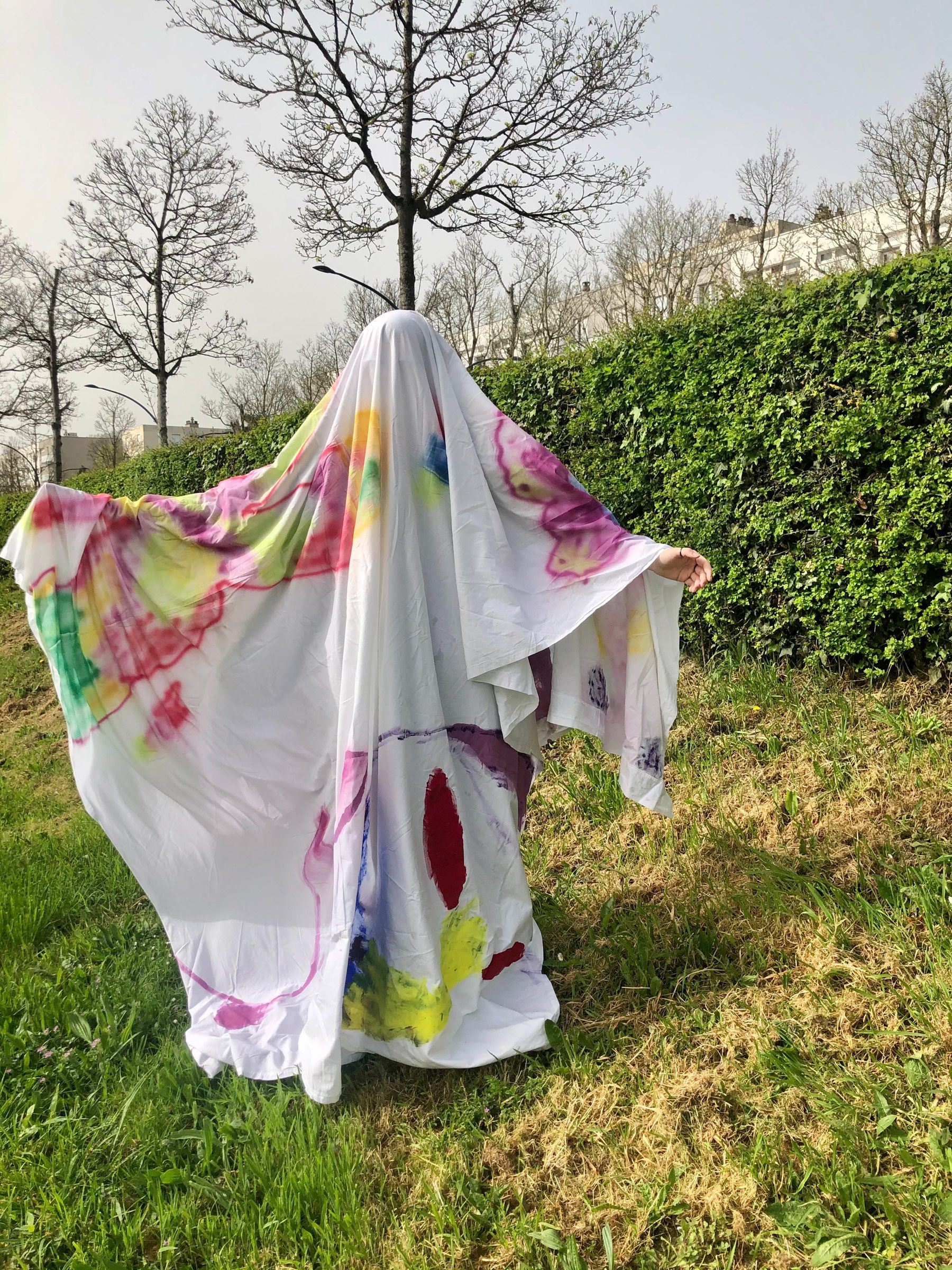
Your photographs of certain works from your art school days show that you focused on the connection between graffiti and interior painting, emphasizing erasure and the effect of layering. You made videos back then, as well as projections of graffiti onto bed linens. What inspired you to work on erasure and the effect of layering?
One of the most recurring themes in graffiti is indeed this notion of erasure; it’s one of the most frequent variables that alters and shapes the aesthetics of public space. Noticing that most graffiti artists don’t pay attention to this kind of detail, I wanted to take the opposite approach by adopting a method that considers and engages with these variables.
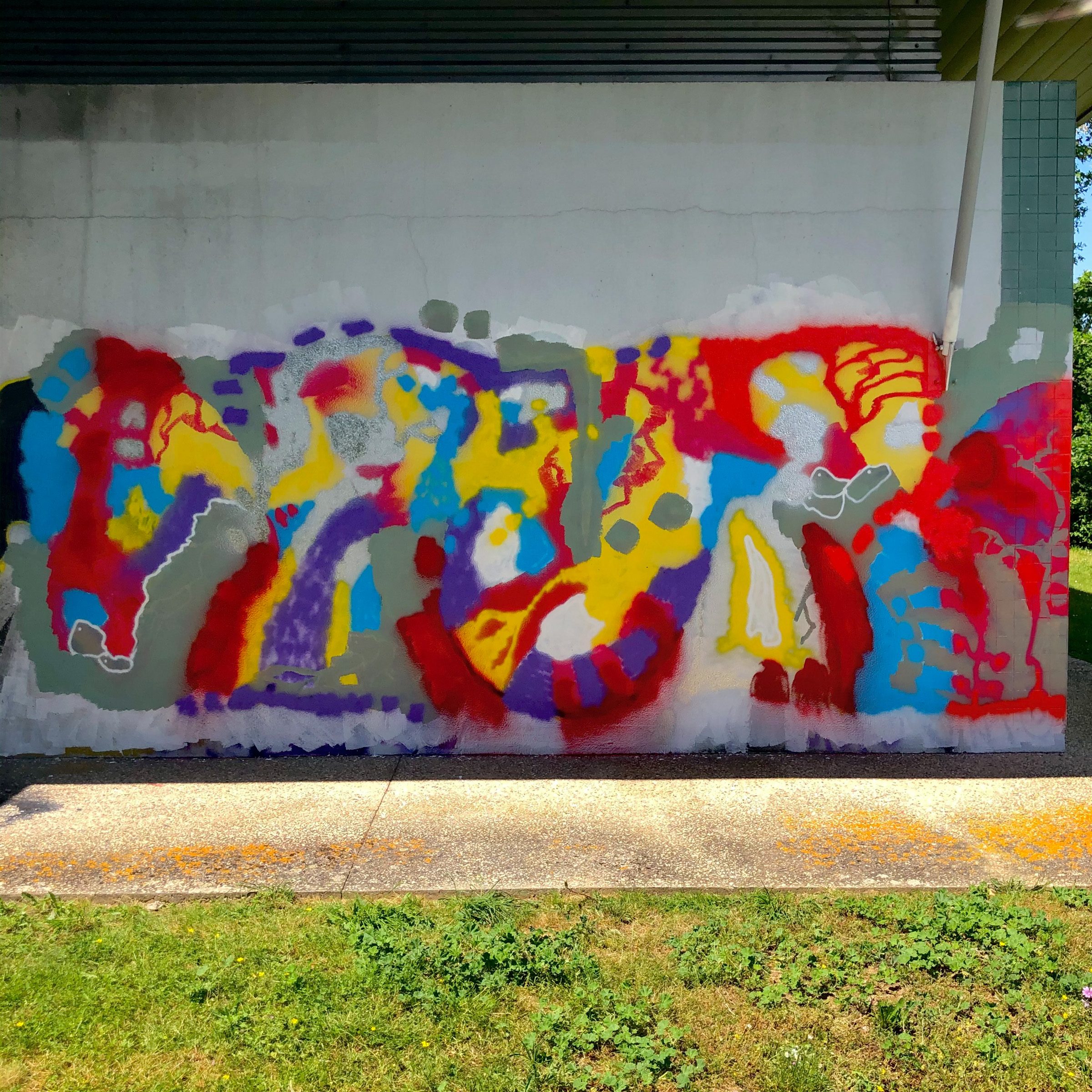
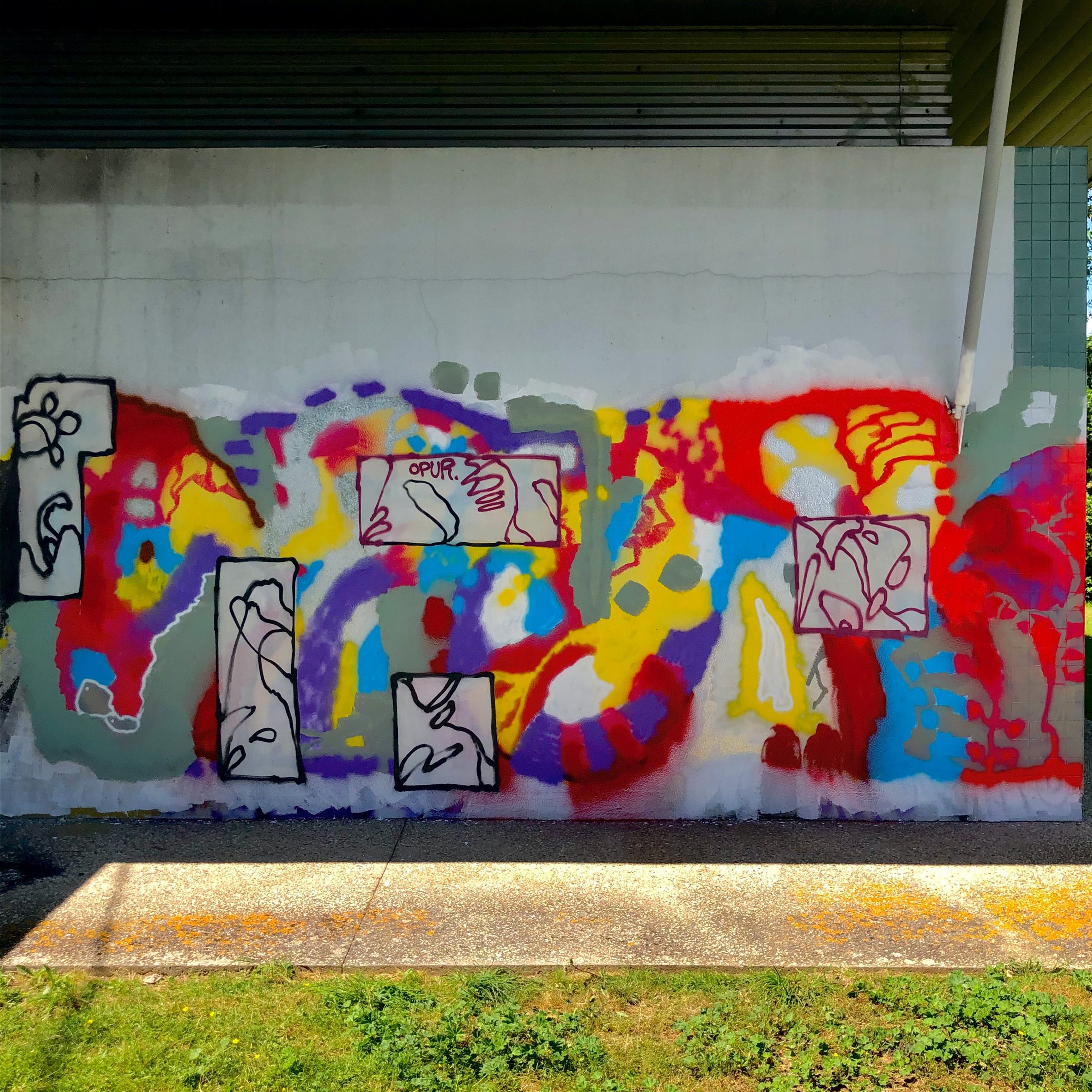
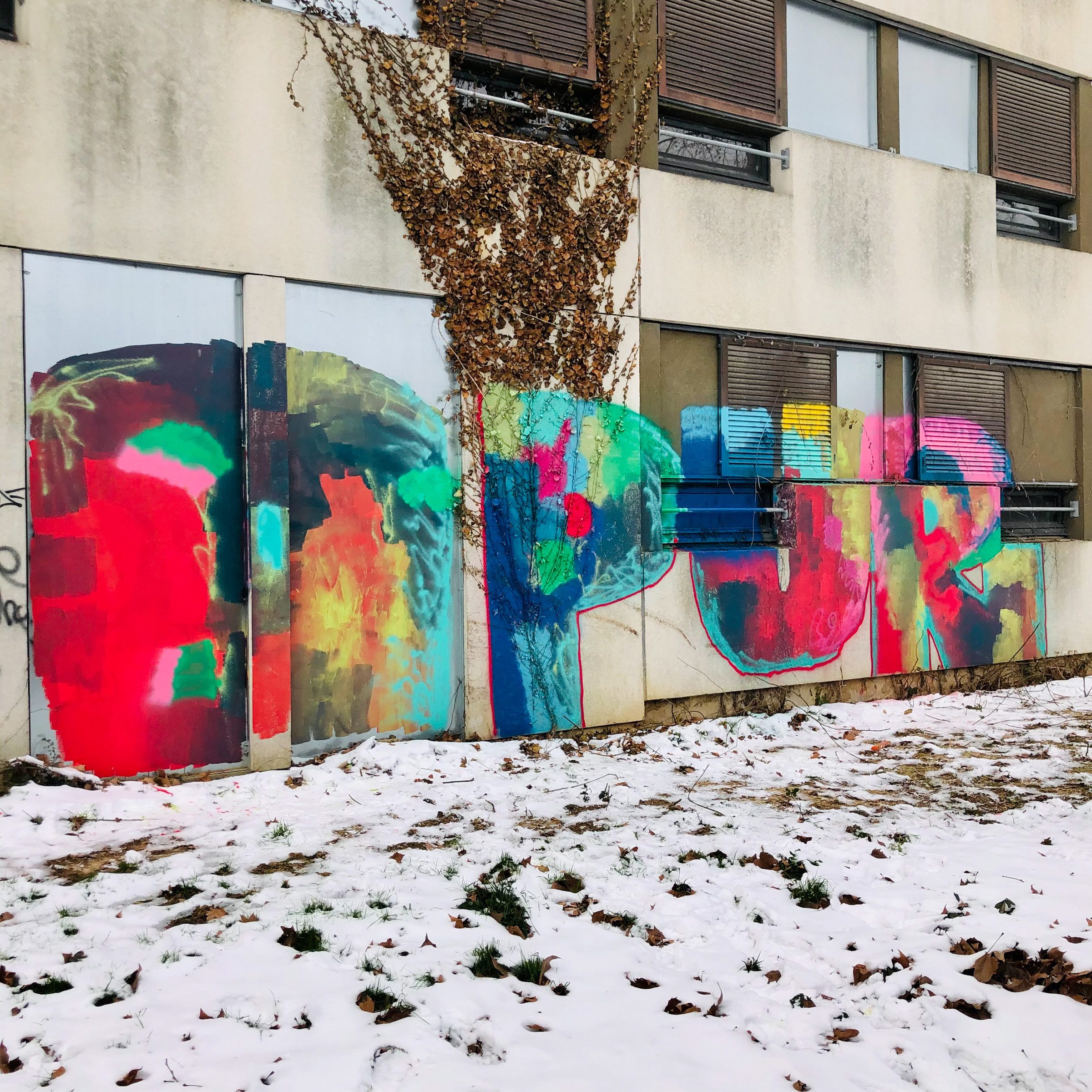
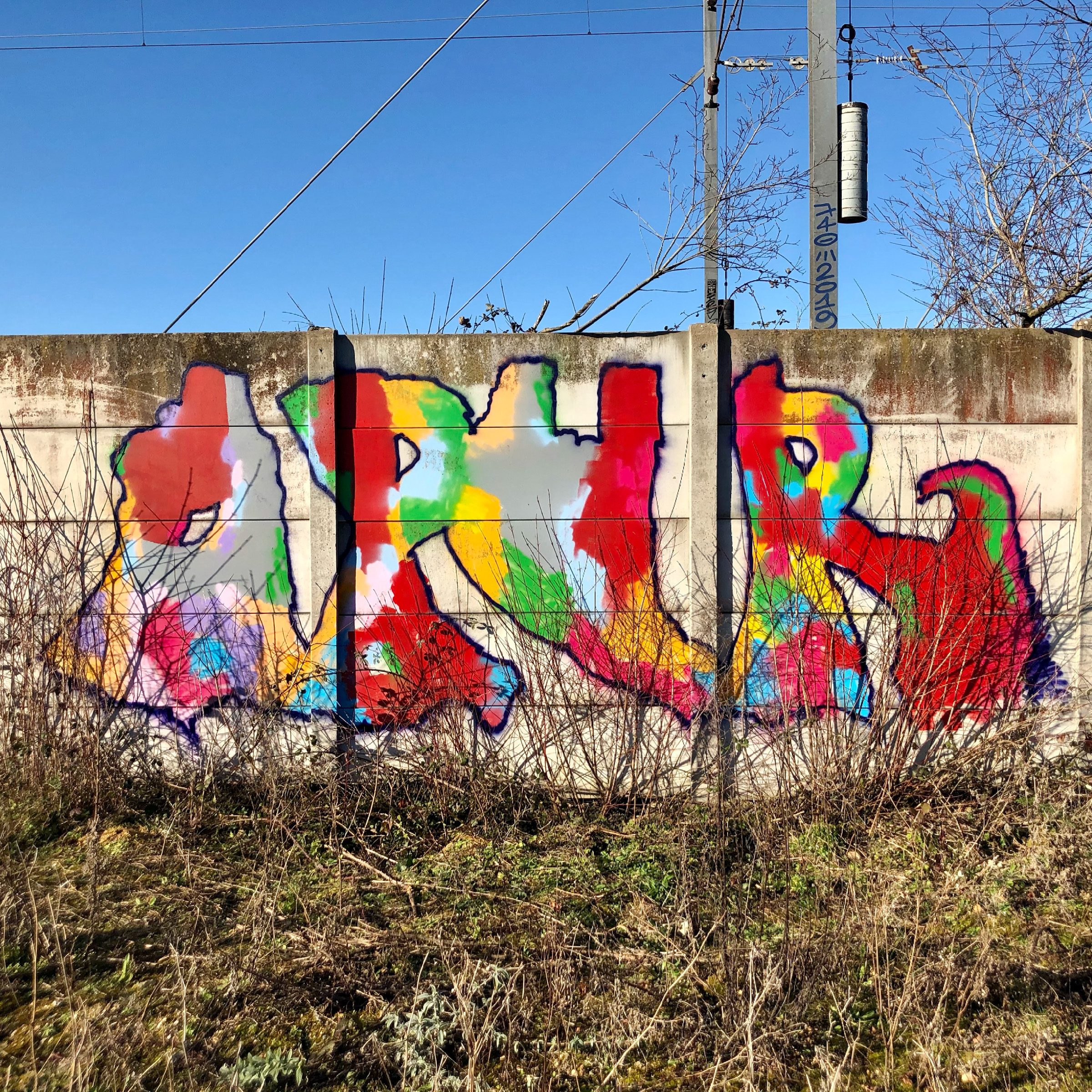
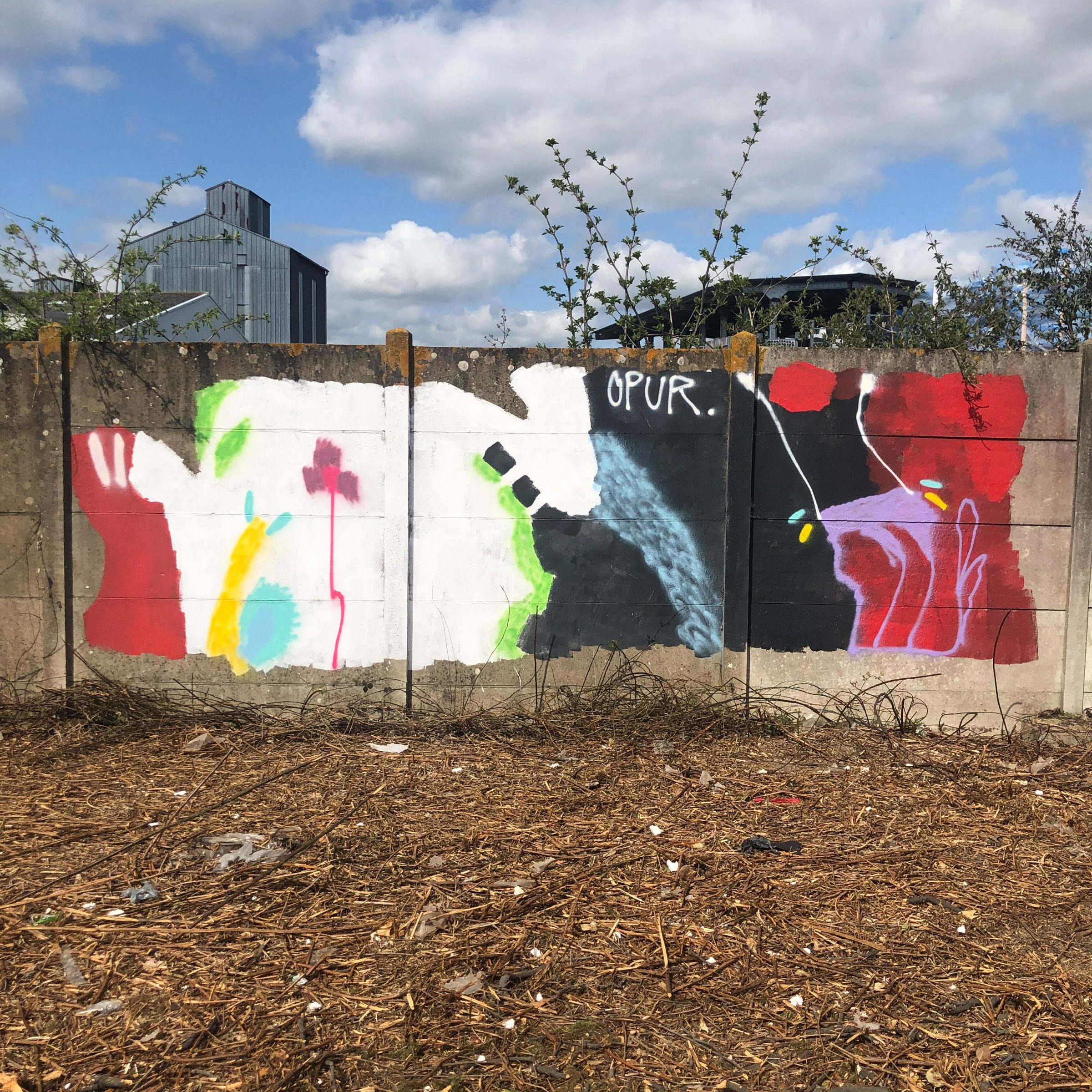
I can sense the influences of antistyle and post-graffiti works, such as the works by PAL crew, KESO, the Diamonds crew, BUS126, and others. When did you discover these styles, and how?
I discovered them little by little; some piqued my interest and reinforced my belief that a dialogue between urban aesthetics and other styles could exist. It didn’t necessarily influence me aesthetically, but it made me realize that this approach was shared by others.
Which artists working in these styles do you particularly like?
Today, the people whose work I appreciate the most are NOKIA from Germes Gang, Sindri Dyrason, Capsor N4S, and Rozer TLS. I find their styles truly innovative.
Are there also any modern and contemporary painters you like?
I appreciate the work of Katharina Grosse, Lisa Mouchet, and the creations of “La S Grand Atelier”—artists who produce work that goes beyond the boundaries of contemporary art, venturing into areas like graffiti, art brut, and graphic design. I also enjoy seeing conceptual works that can influence my graffiti practice, such as Allan Kaprow’s *Yard* (1967).
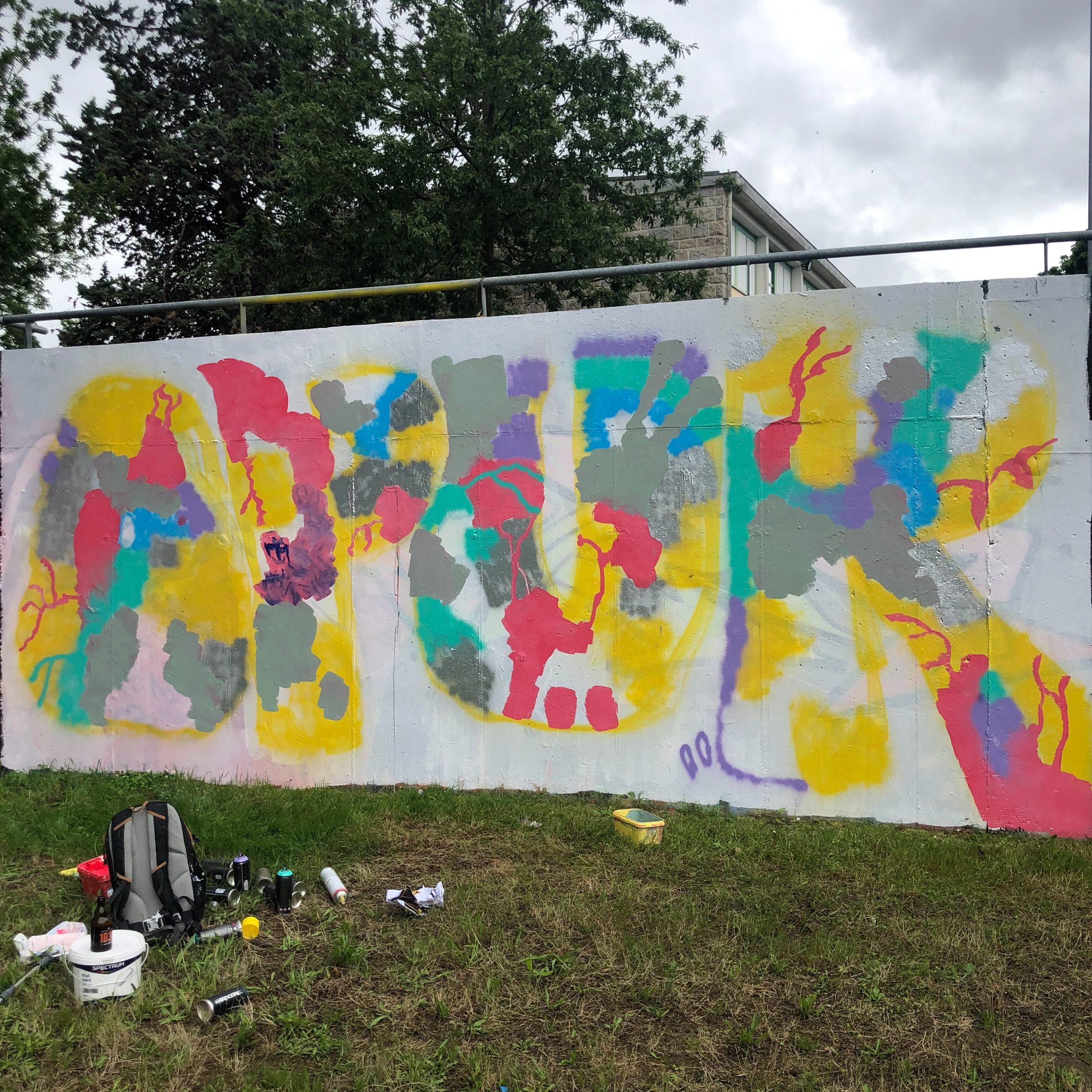
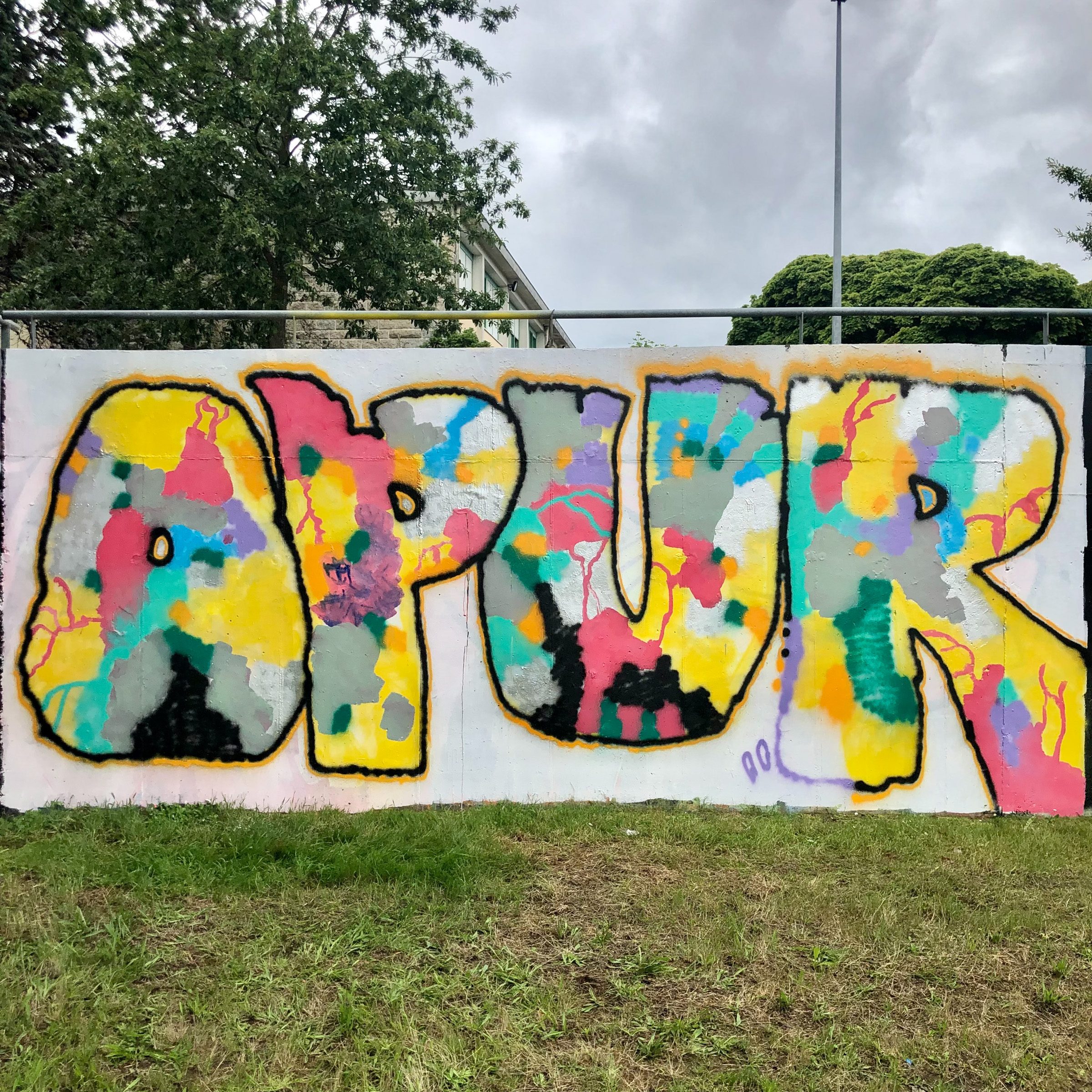
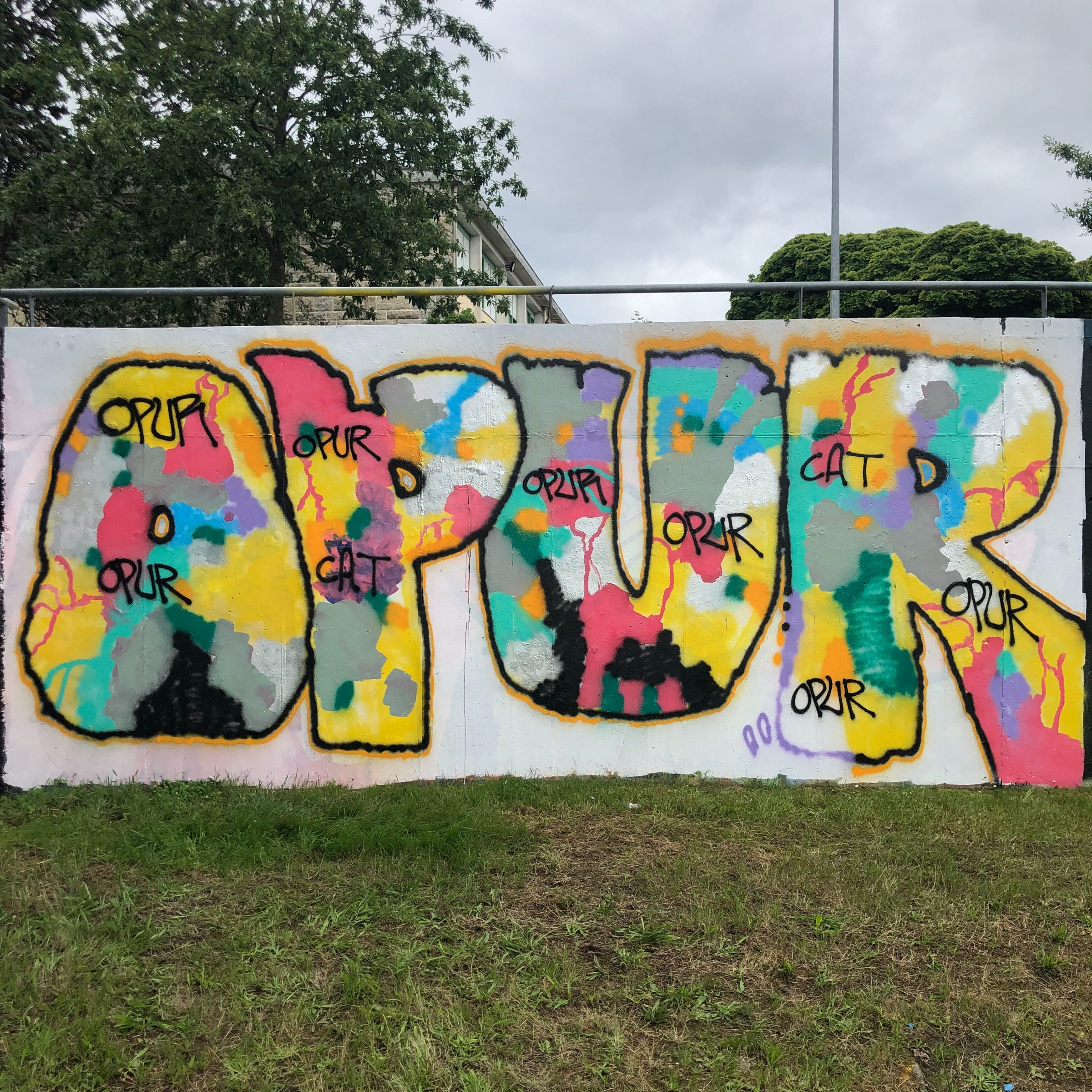
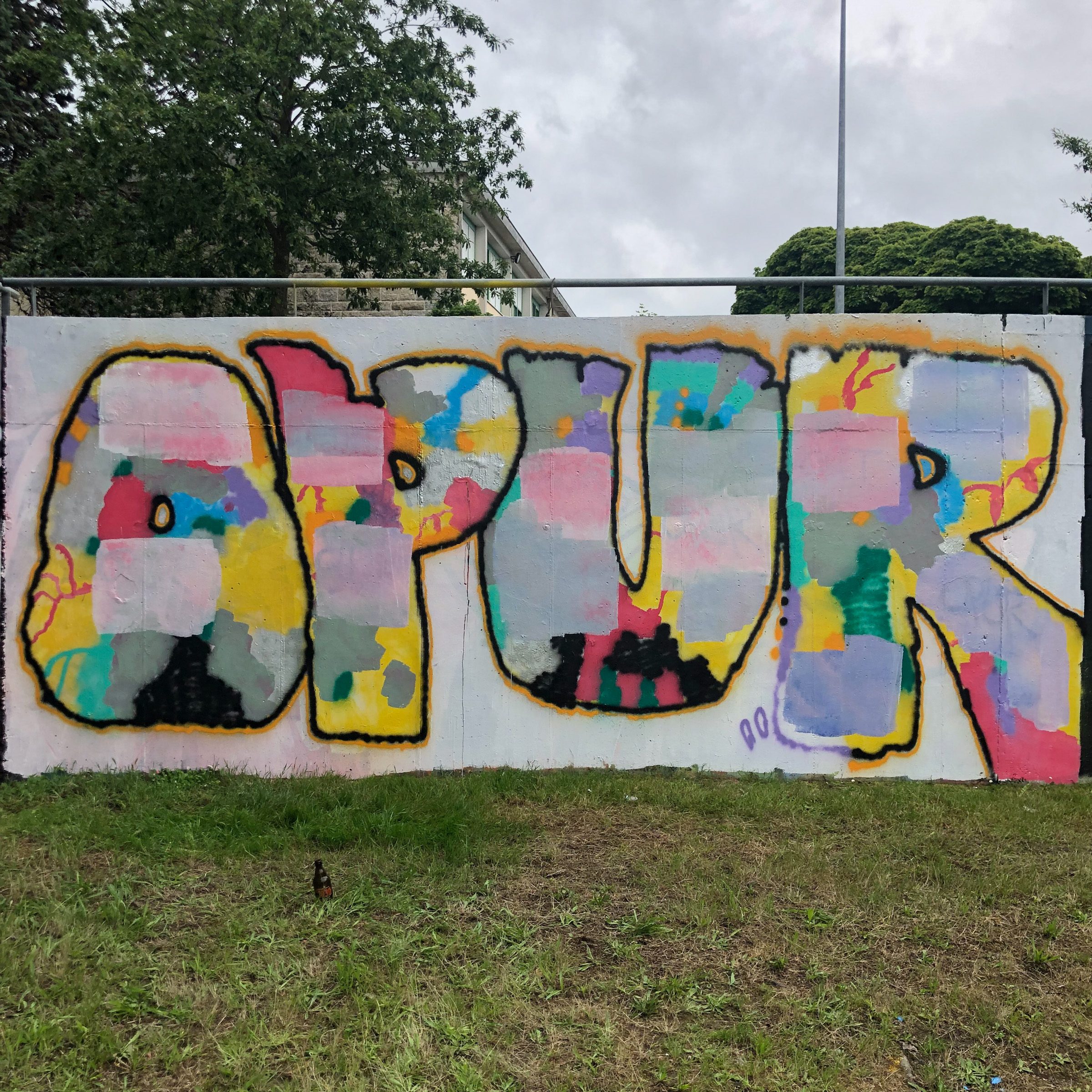
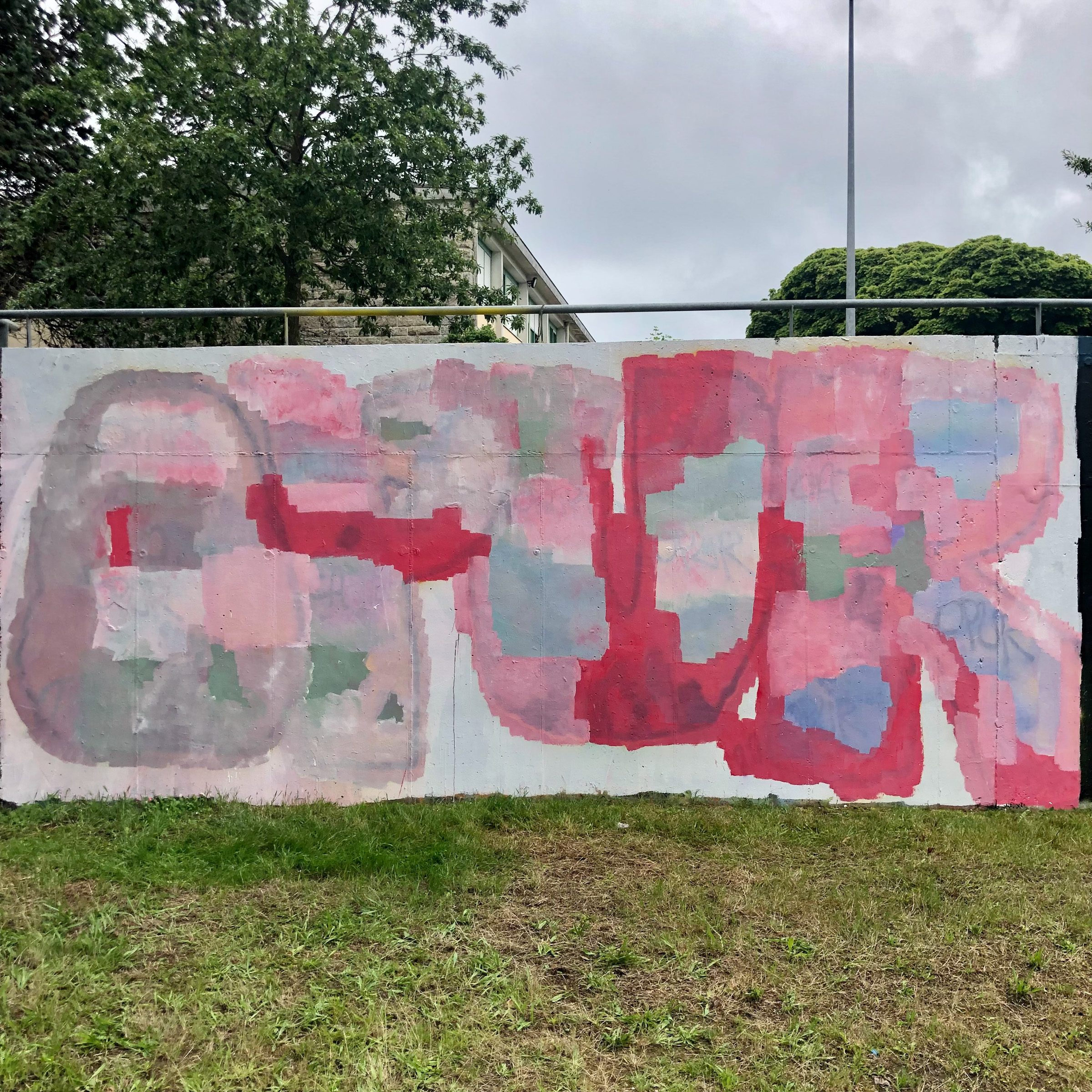
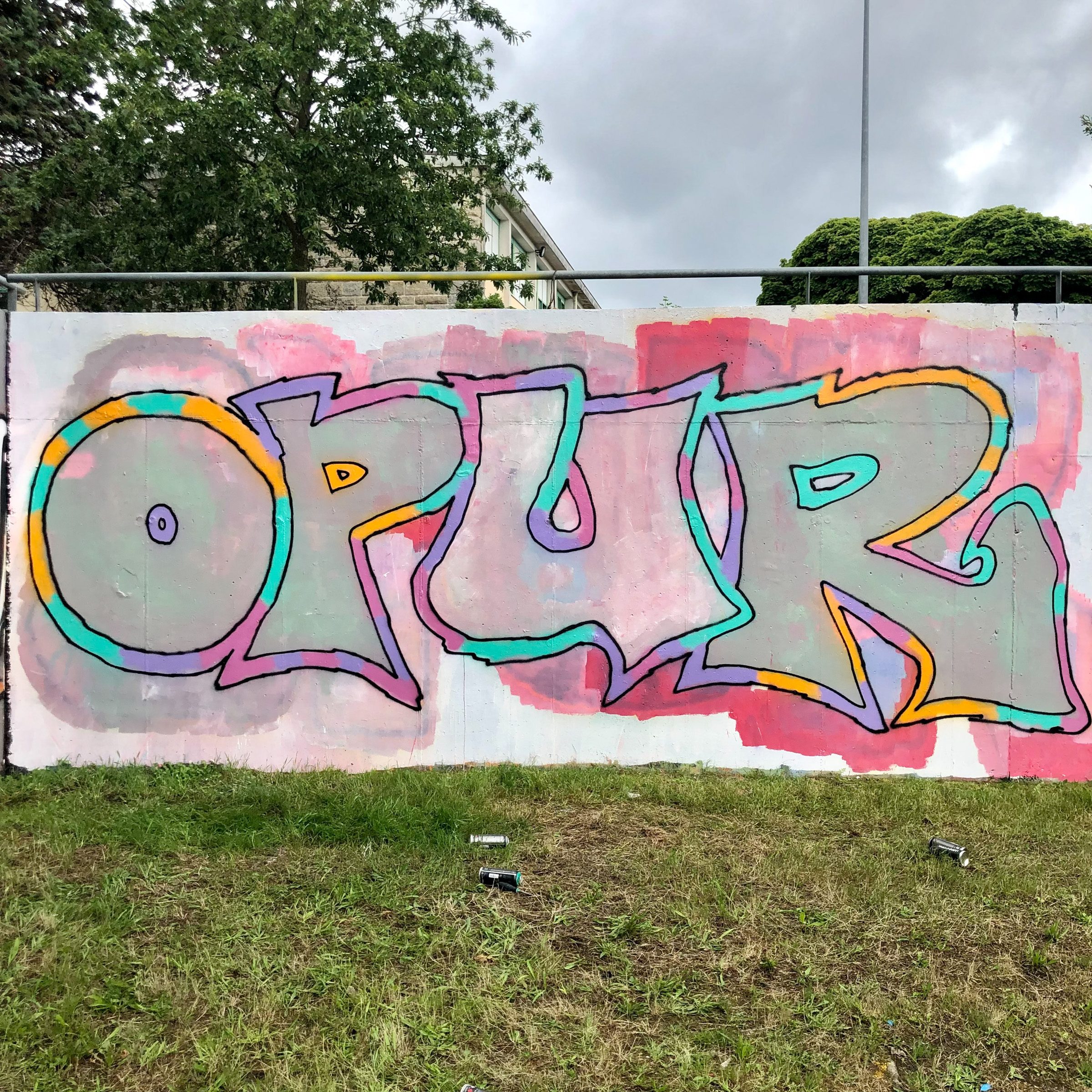
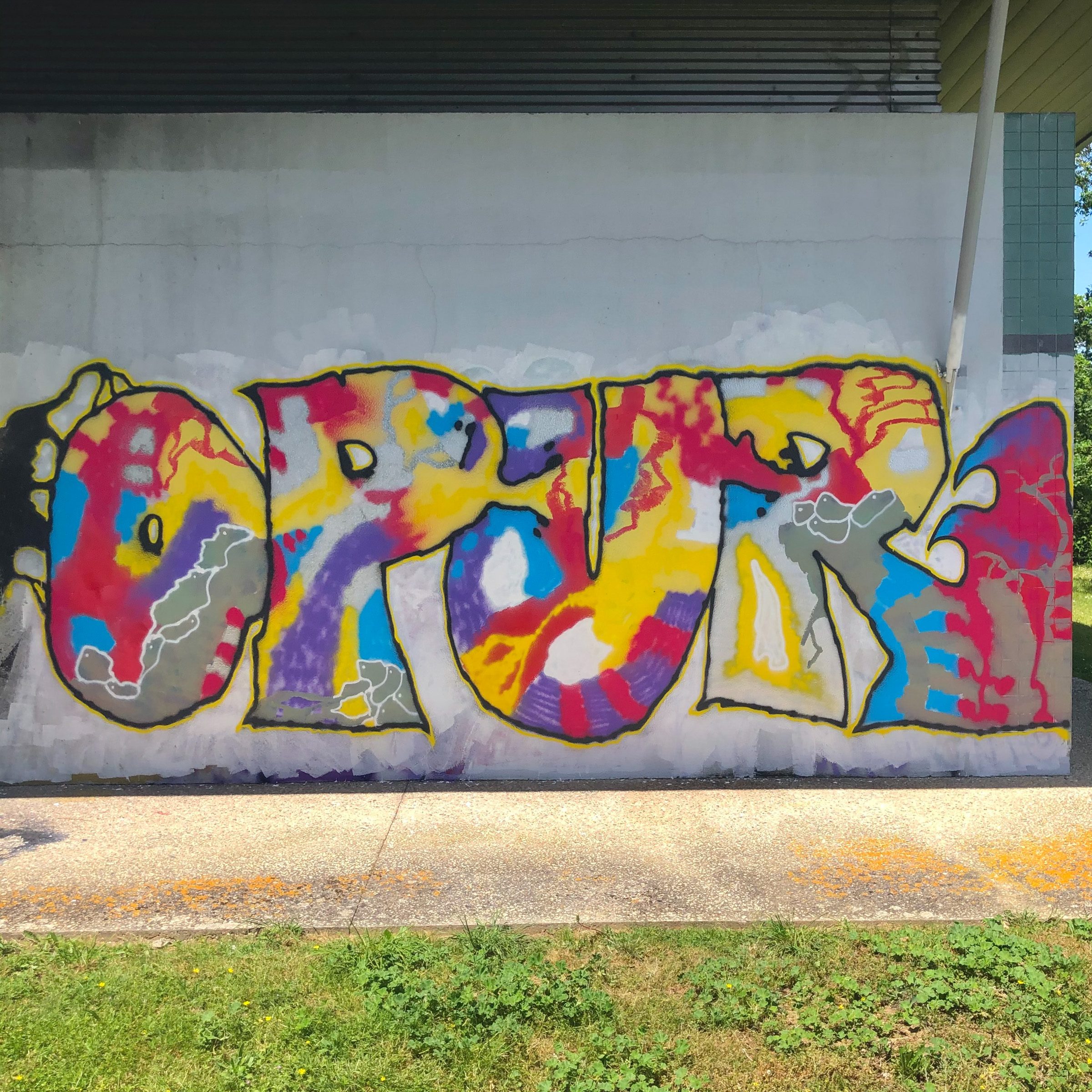
A series of graffiti pieces created in Rennes and Meudon in 2020–2021 allowed you to begin experimenting with the evolution of a graffiti piece within a single session. Can you describe this concept and process?
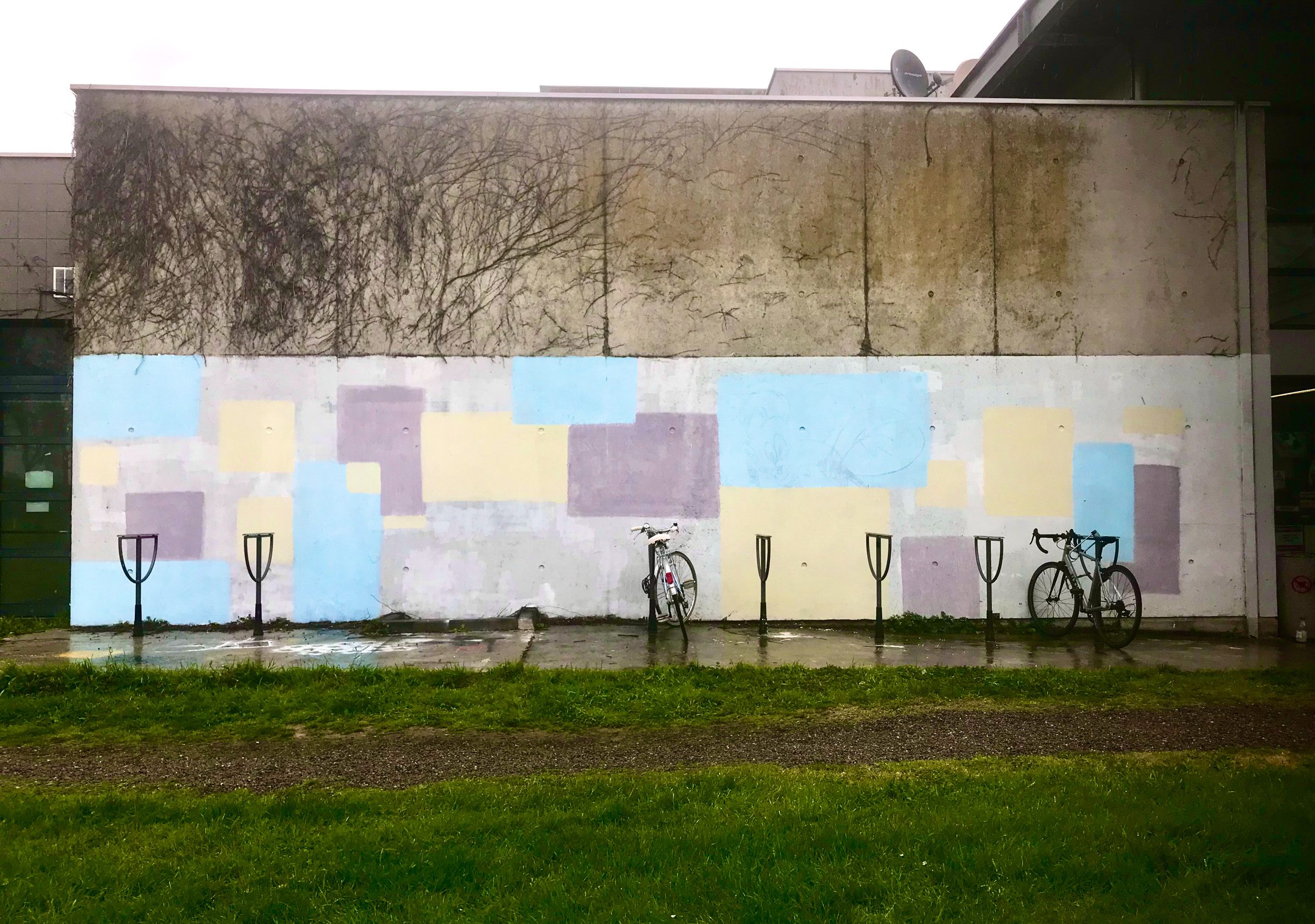
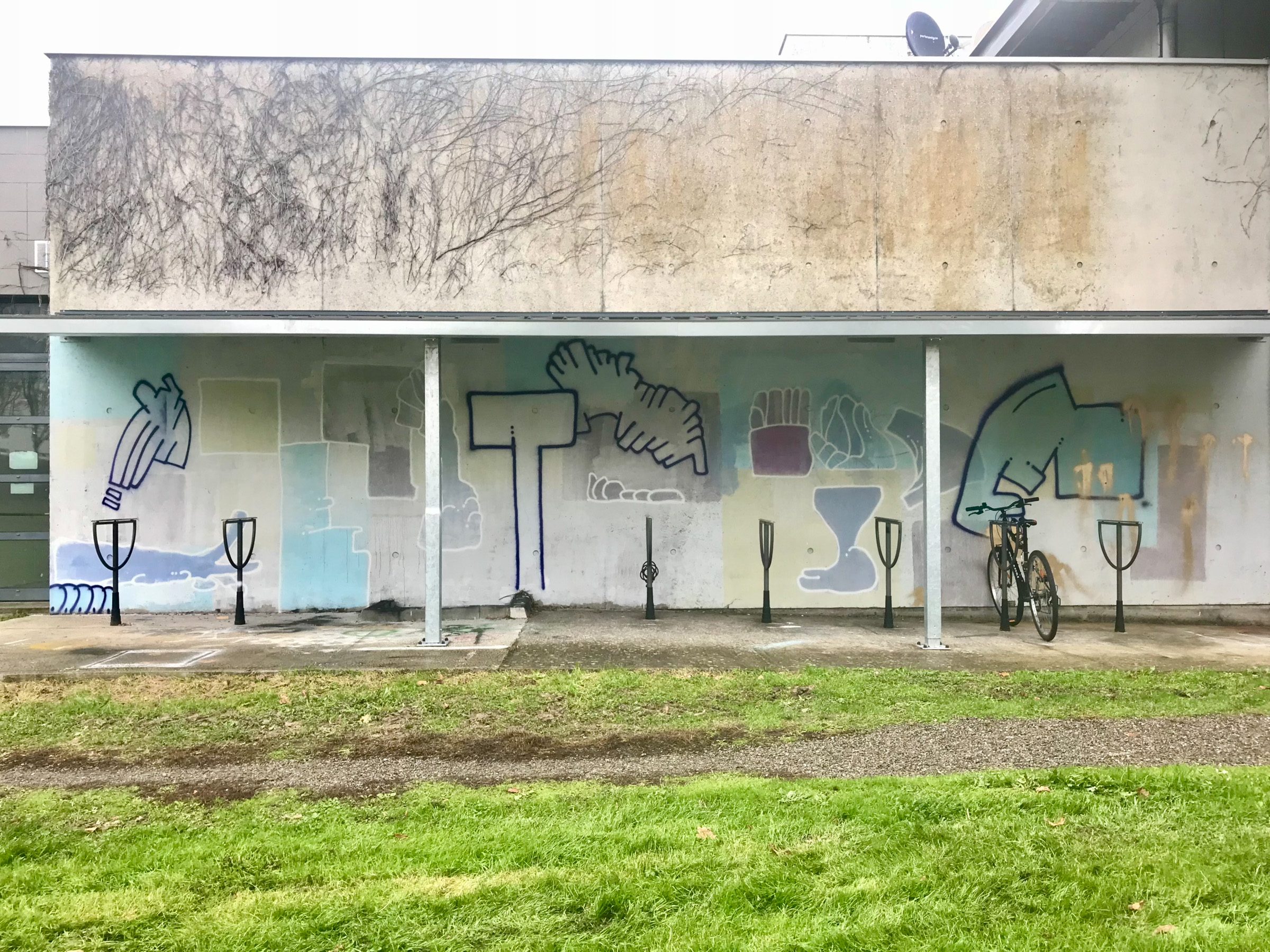
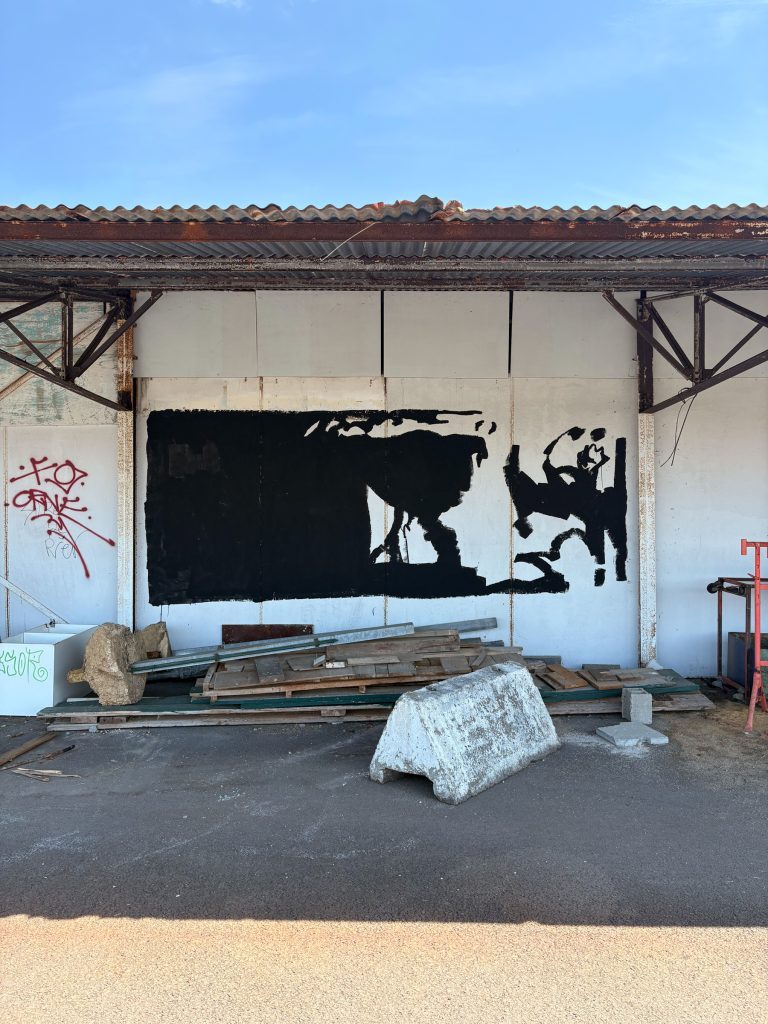
I had the opportunity to take some time during several painting sessions to think about staging. By creating a graffiti piece using different materials—spray paint and a roller—I crafted theatrical scenes that I performed in a single session. The graffiti appears, tags are slowly added on top, the buff makes an appearance until everything is erased, and then a new piece emerges.
In 2023–2024, you continued to experiment with different styles and variations of lettering using paints you managed to find on the street and at construction sites; this allowed you to discover new compositions. At the same time, you worked more extensively on certain letter pieces and illustrations, thereby refining your mastery of the medium. Can you describe your lettering and illustrations during this phase?
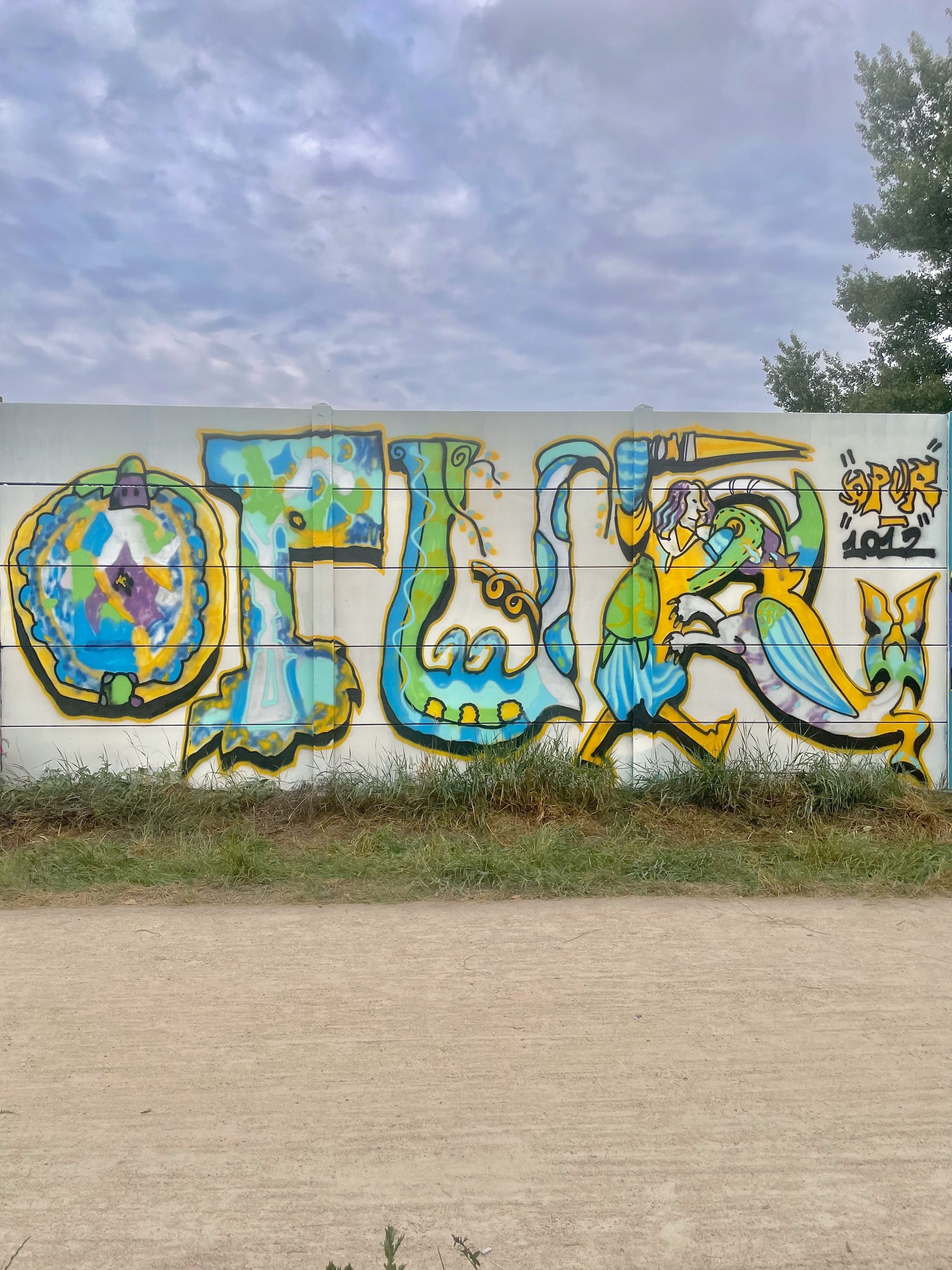
This period was indeed quite rich in experience from a technical standpoint. I had the opportunity to explore lettering inspired by medieval illumination. This kind of work stands in contrast to what I usually do; it’s still a way of paying homage to the ancient art of initial letters, from which modern graffiti has drawn very little inspiration. If we accept that graffiti has its origins in illegality—from cave paintings to soldiers’ scrawls on the walls of Rome—then lettering can also have a history of its own.
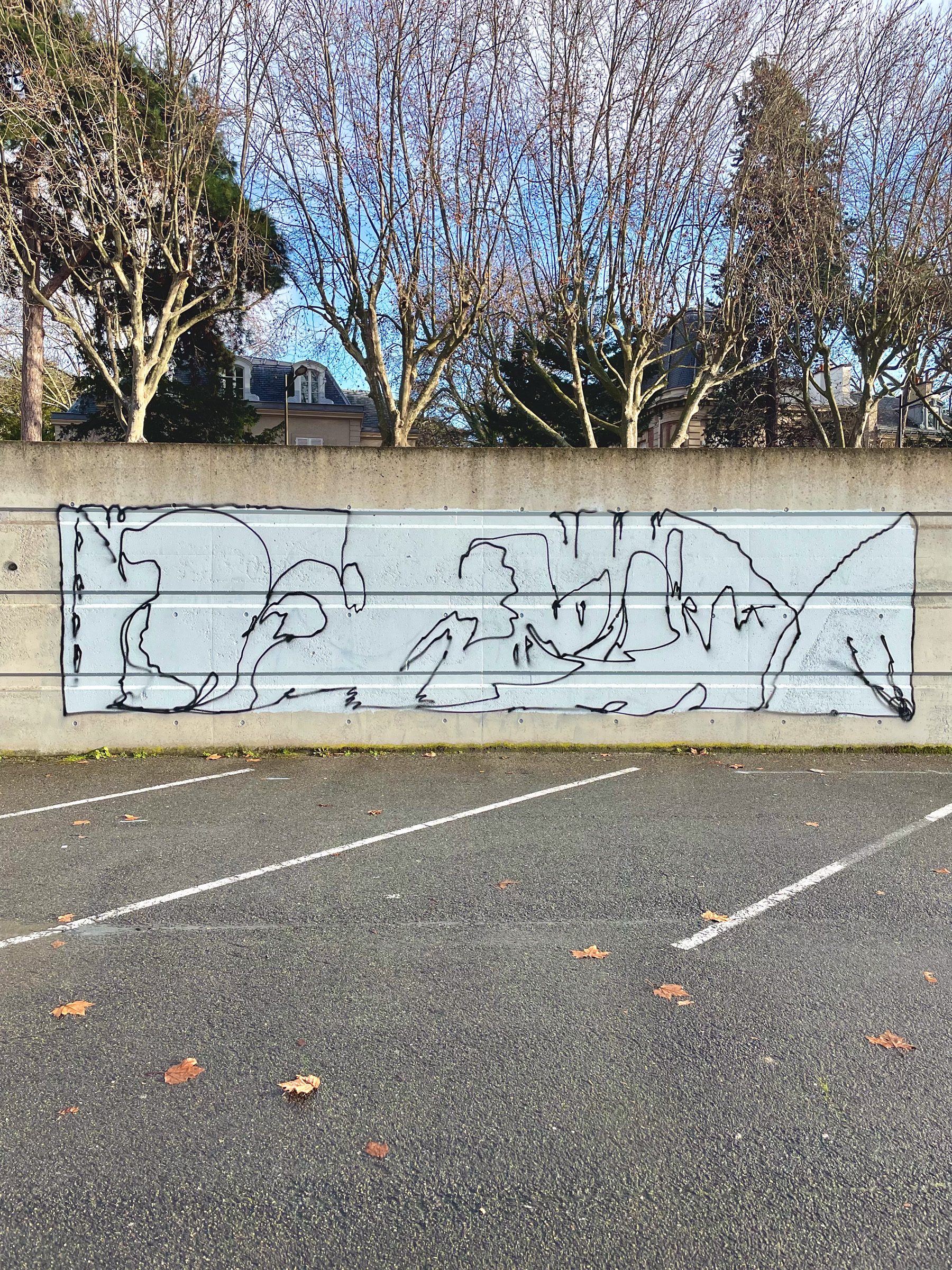
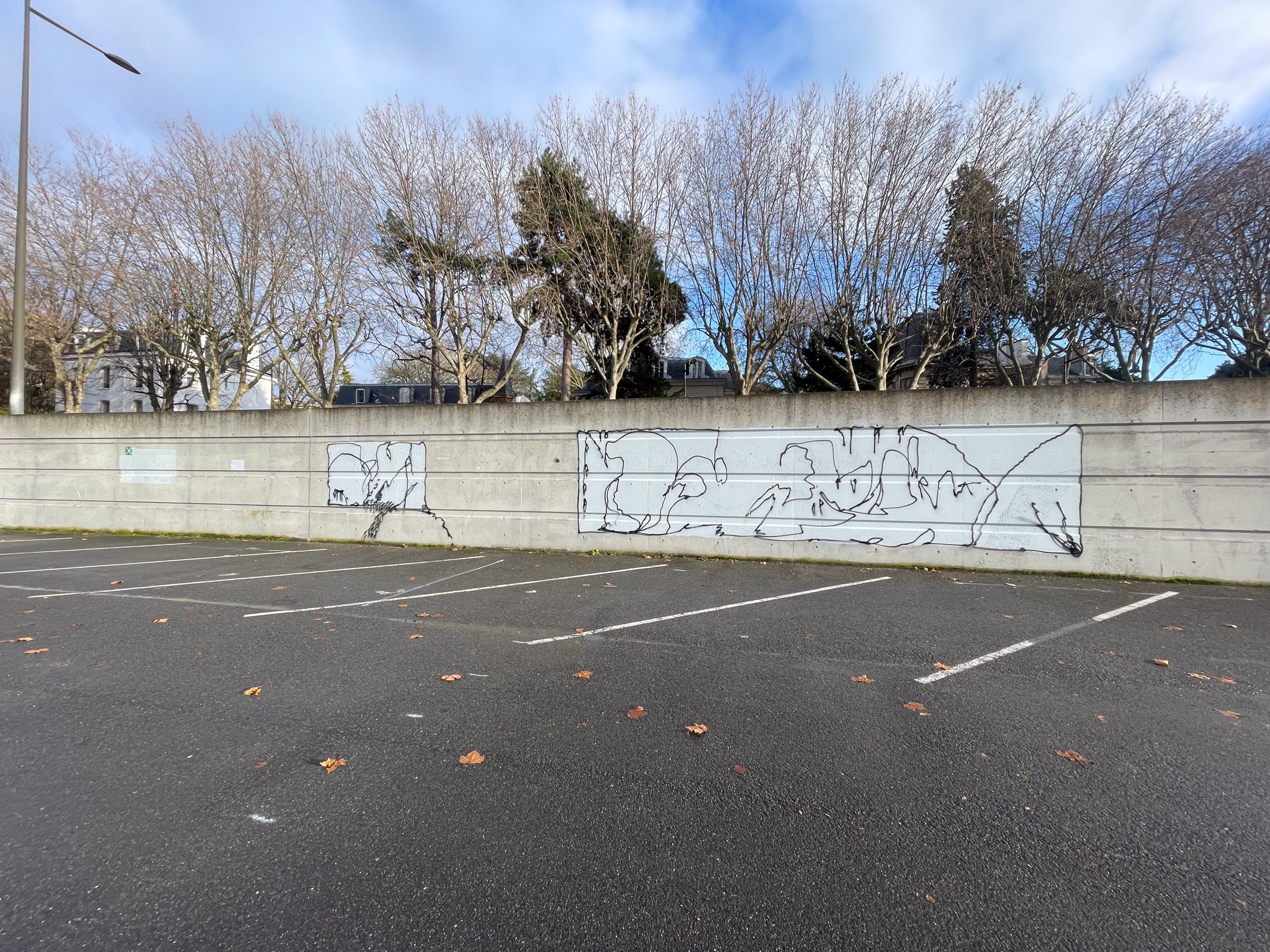
In 2025, you used new colours and new combinations. Can you tell us a little about the importance of colour to you?
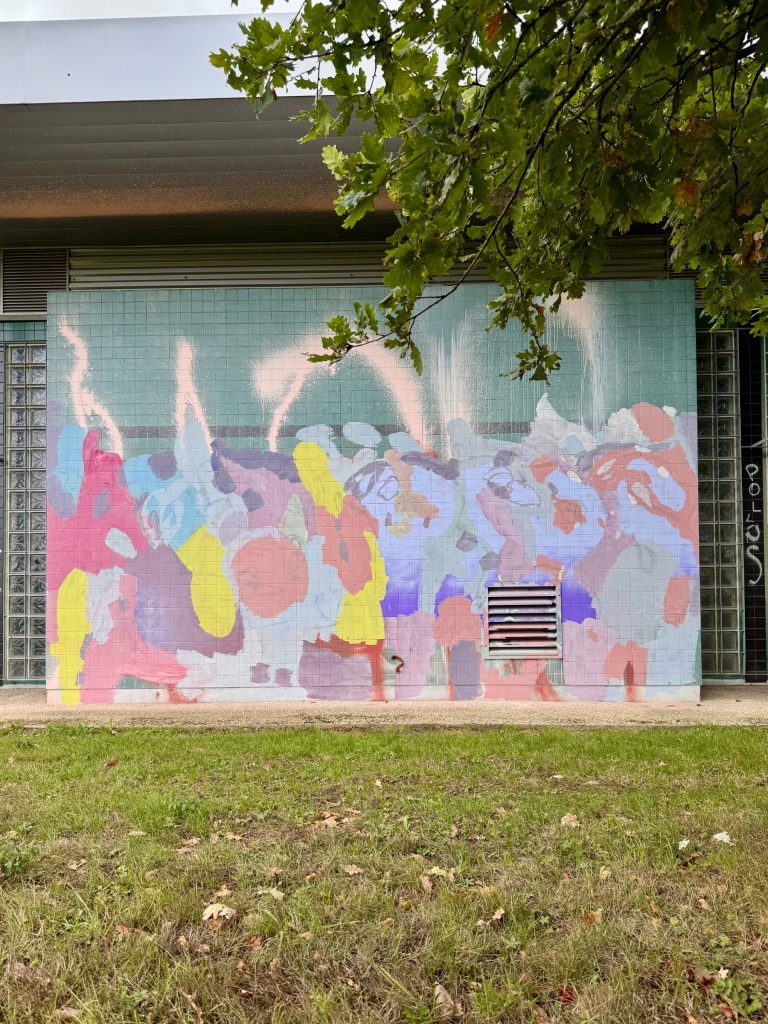
Colour is indeed very important in my work; in fact, it’s often the foundation of my pieces. Colours are a starting point, and it’s the interplay between them that I combine. After making extensive use of pastel and industrial colours, as well as the primary colour palette and their bold combinations, I began to take an interest in more muted and natural colours.
Regarding your working methods: What types of spaces or walls do you prefer (old or modern)?
I like modern walls and concrete slabs when I can find them, but I don’t really have a preference for any particular texture. I like slightly hidden spots where I can return several times to keep working on my pieces or spread out in an environment. I find such places by chance—sometimes right in the city, sometimes in the forest.
What’s the situation like in Rennes for street painting? How do you discover and choose your spots?
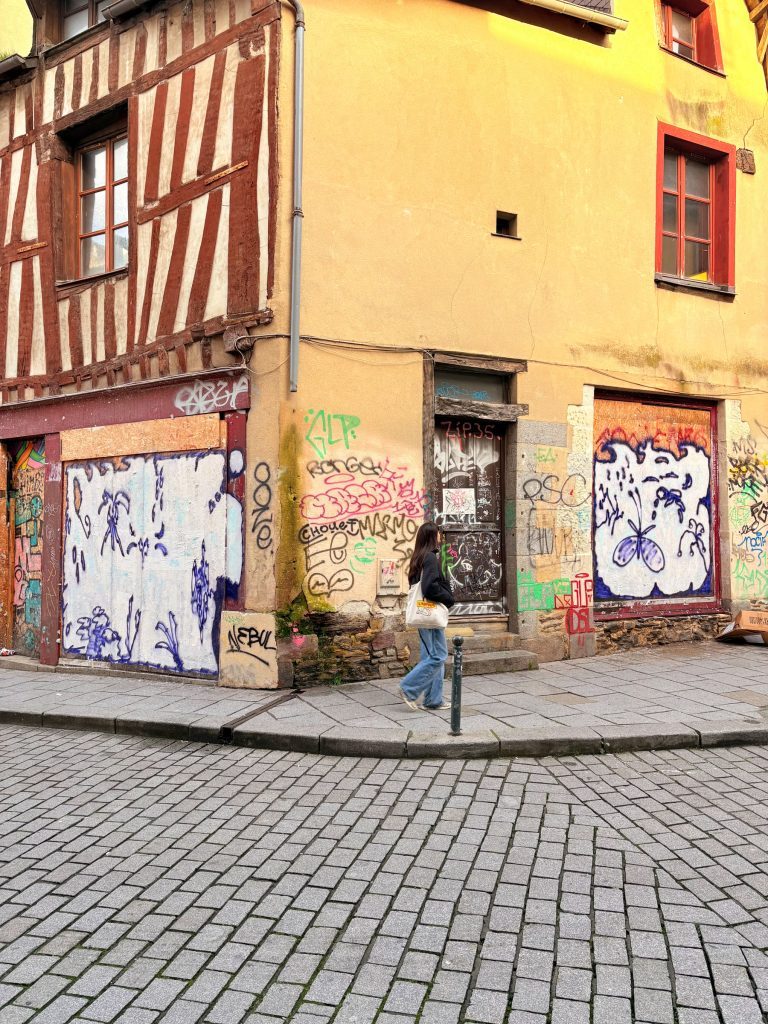
Rennes is a city undergoing extremely rapid change, ranking among the 15 largest cities in France. I’ve seen sites that were quickly demolished, and conversely, I’ve seen spaces that were gradually overrun by vegetation. The more Urbex sites I visited, the more I noticed the damage that certain people could cause (broken windows, burn marks on the walls…). I even once went to an abandoned building to paint and found it burning from the inside—the firefighters were already on the scene. Generally speaking, in Rennes it’s good to explore the different neighborhoods, which all have very distinct architectural styles, and that inevitably leads to discovering interesting spots.
What technique did you use when you first started, and what do you use on walls these days?
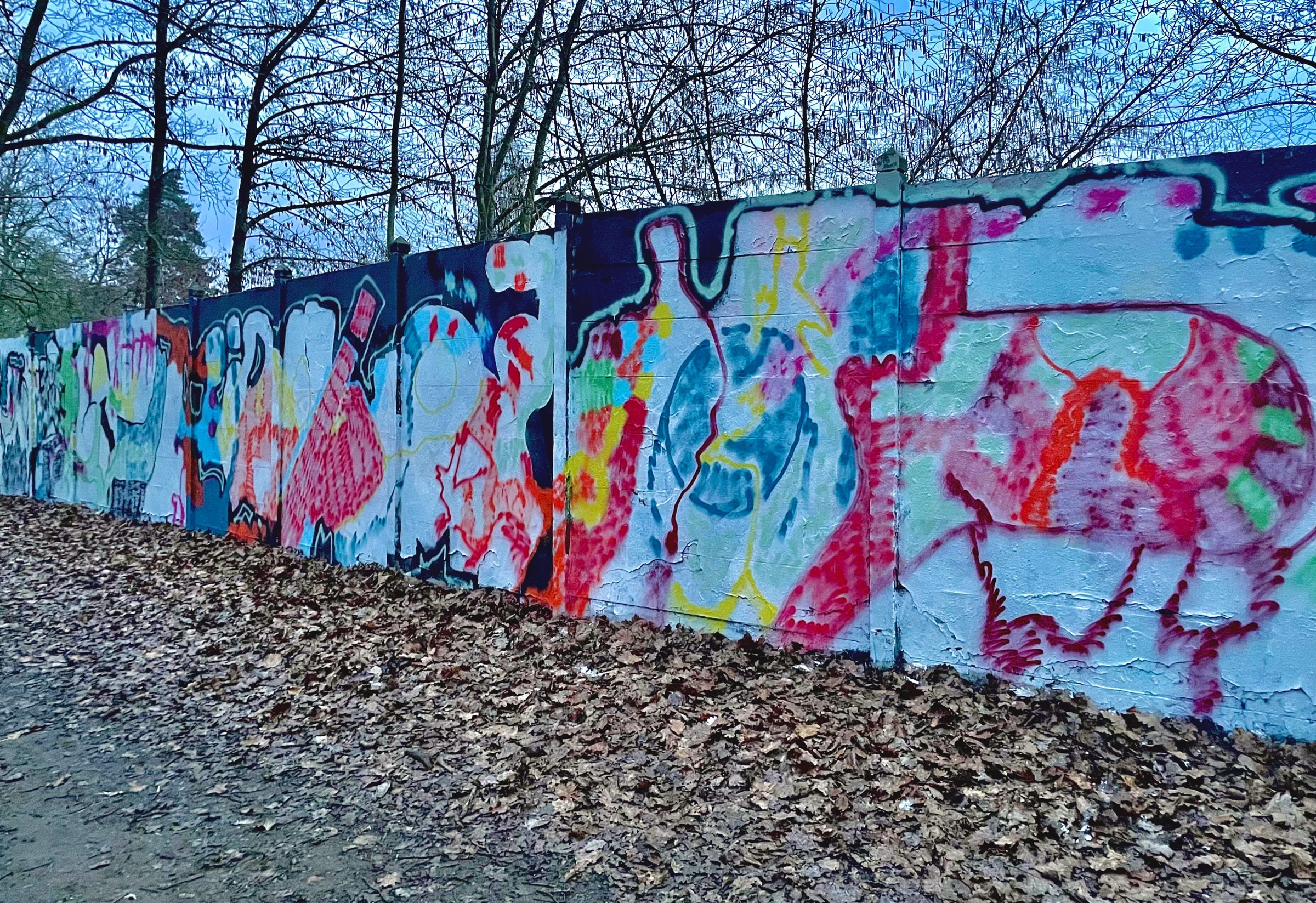
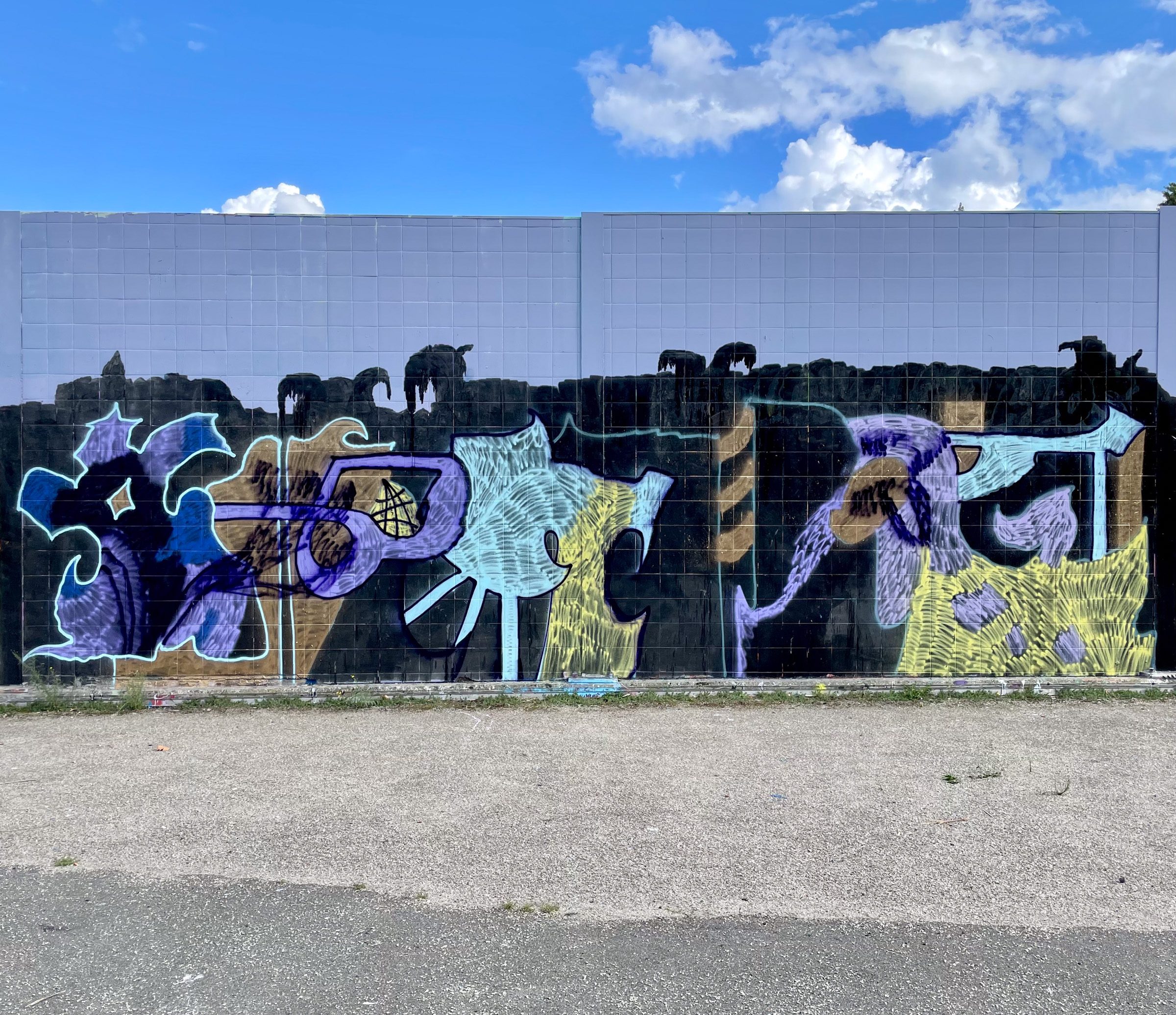
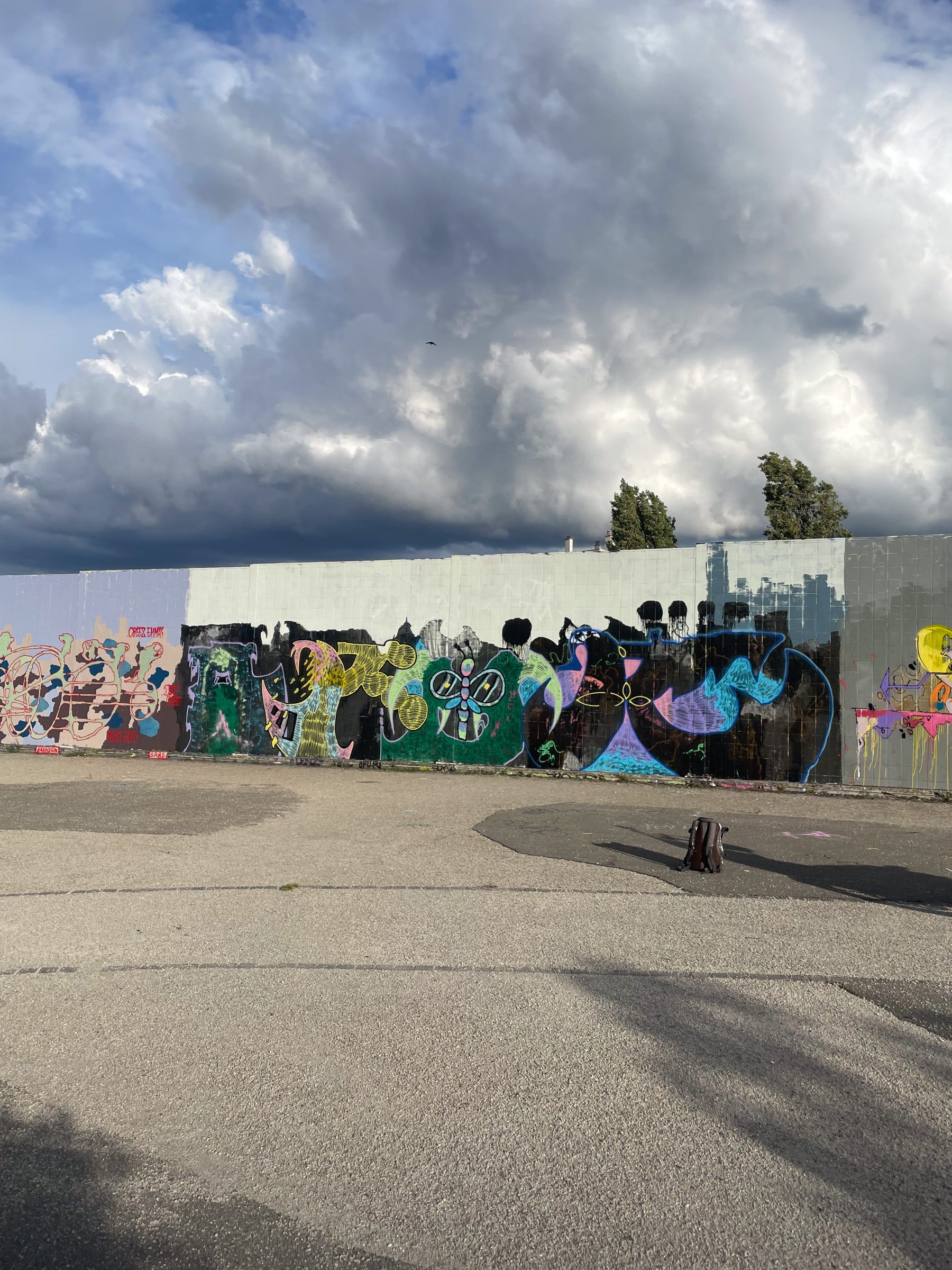
I still mostly use spray paint. It’s a necessary tool, but I try to repurpose it beyond its usual uses to create new forms. I also use rollers and brushes, which allow me to explore more painterly aesthetics.
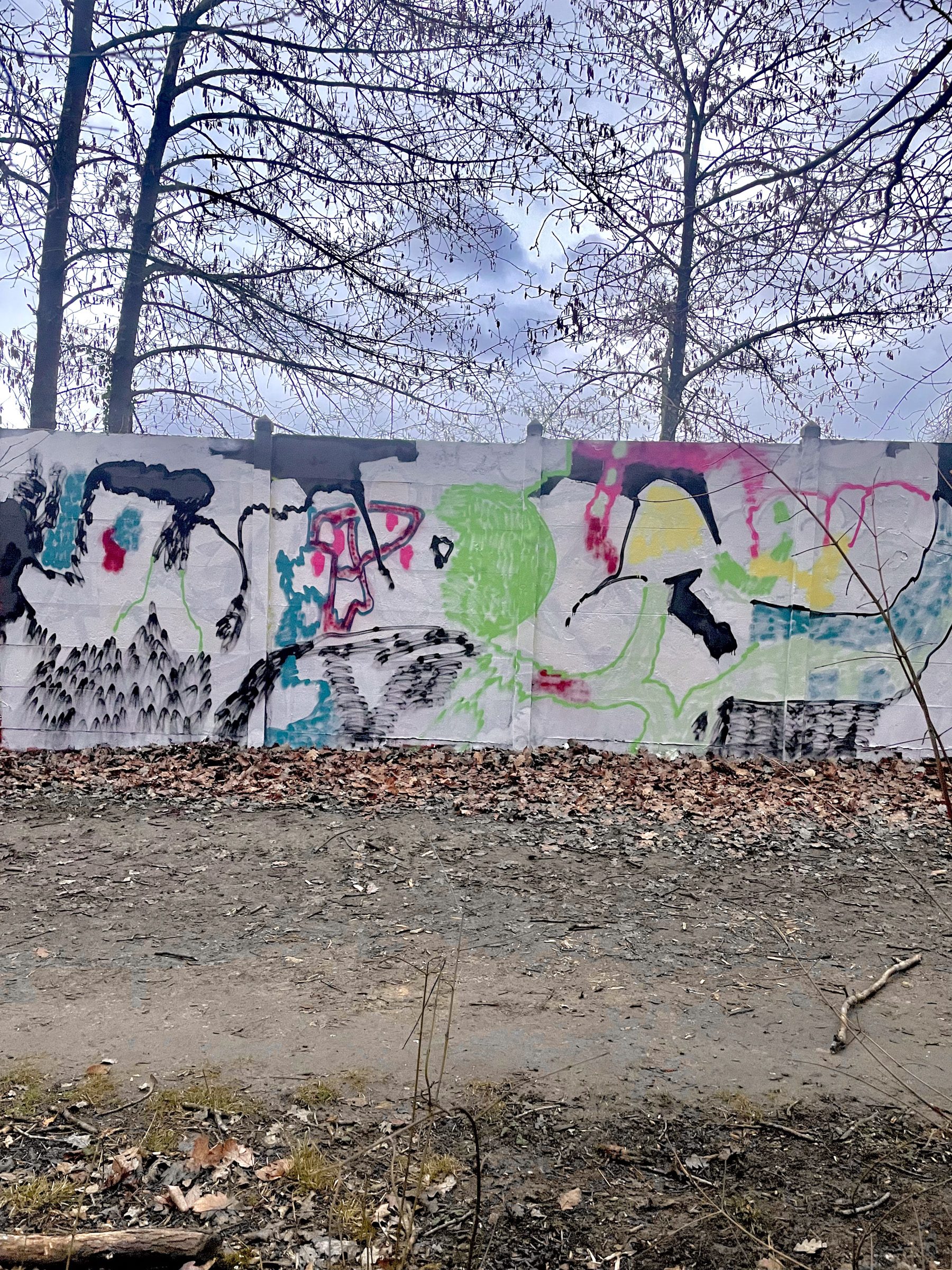
Have you developed a specific tool or technique?
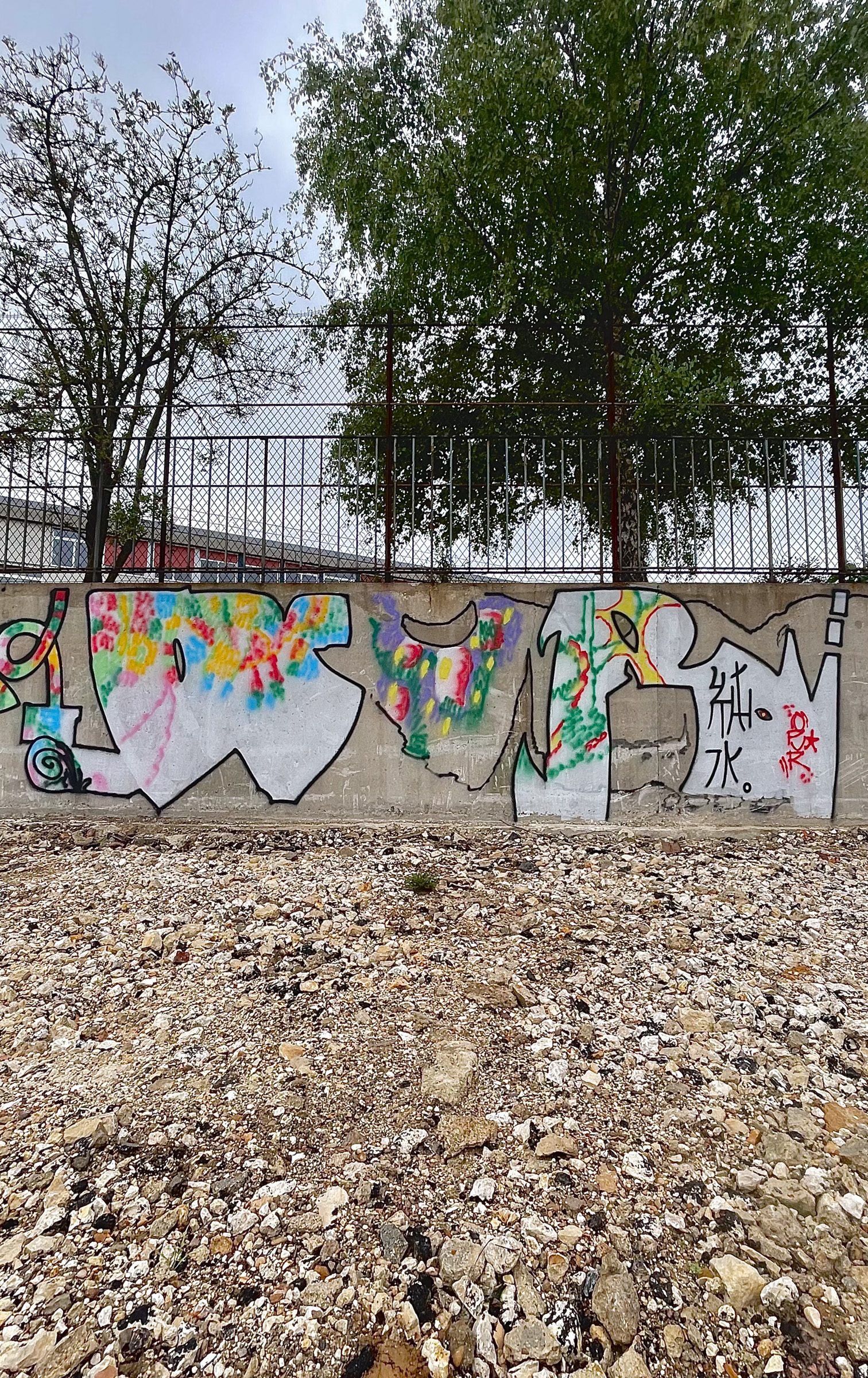
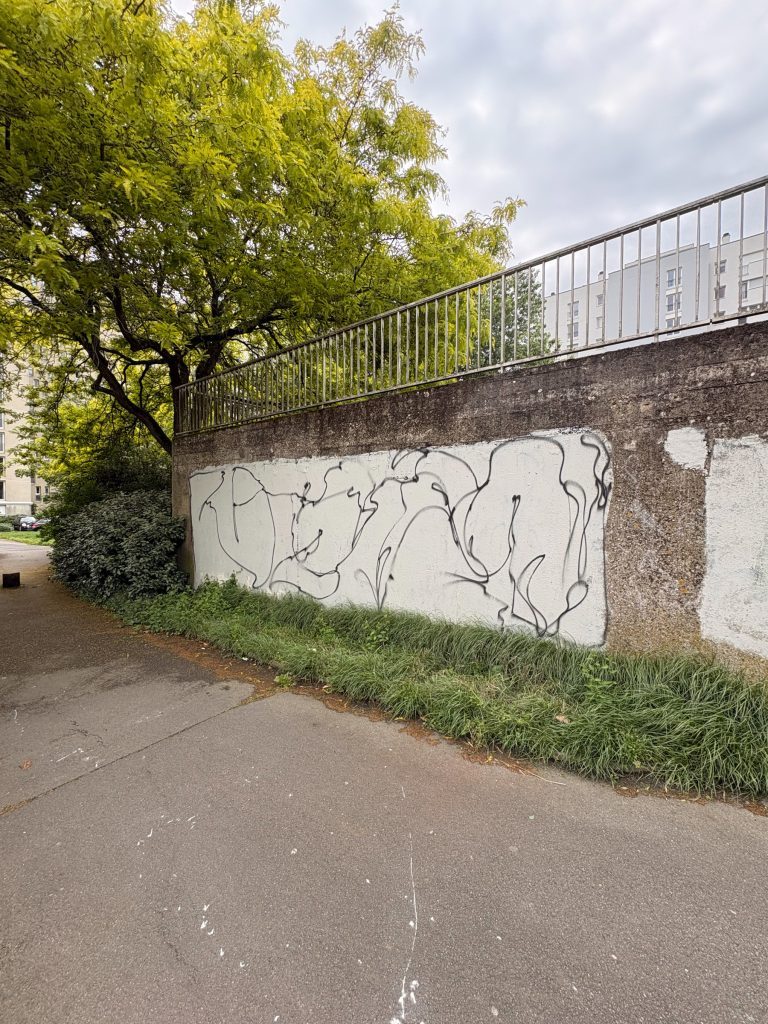
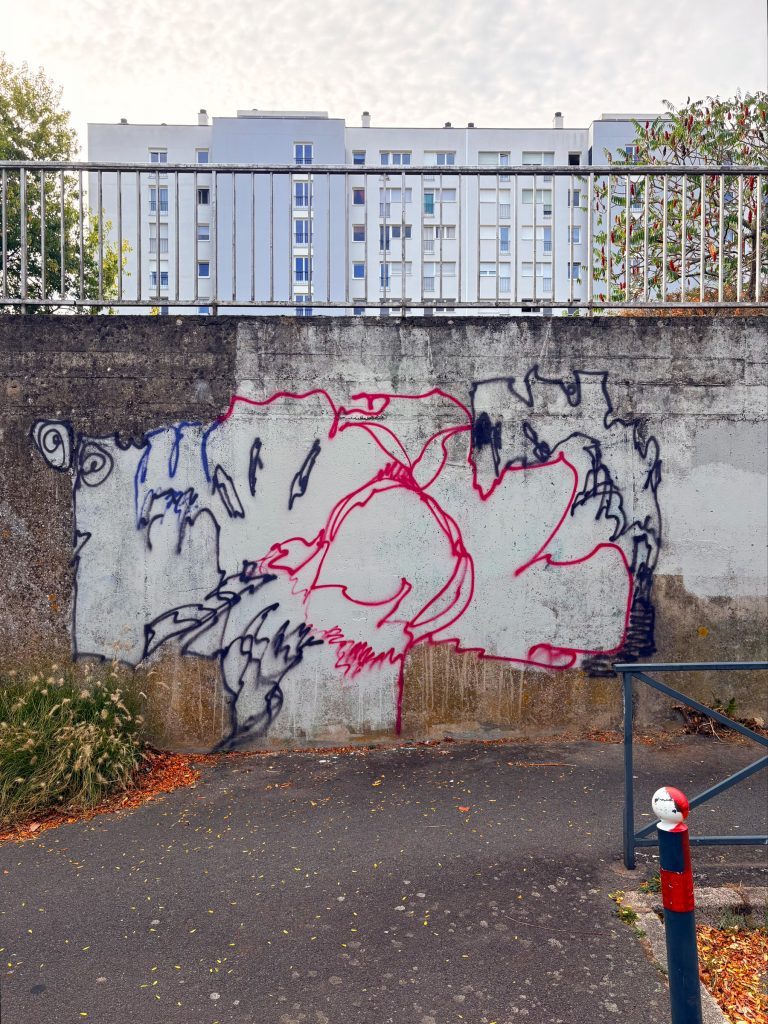
It’s more of a jerky technique with spray paint, where the movements clash with the classic conventions of contouring, filling, or outlining.
What are the steps in your wall-painting process, and how long does it take you to paint a piece roughly?
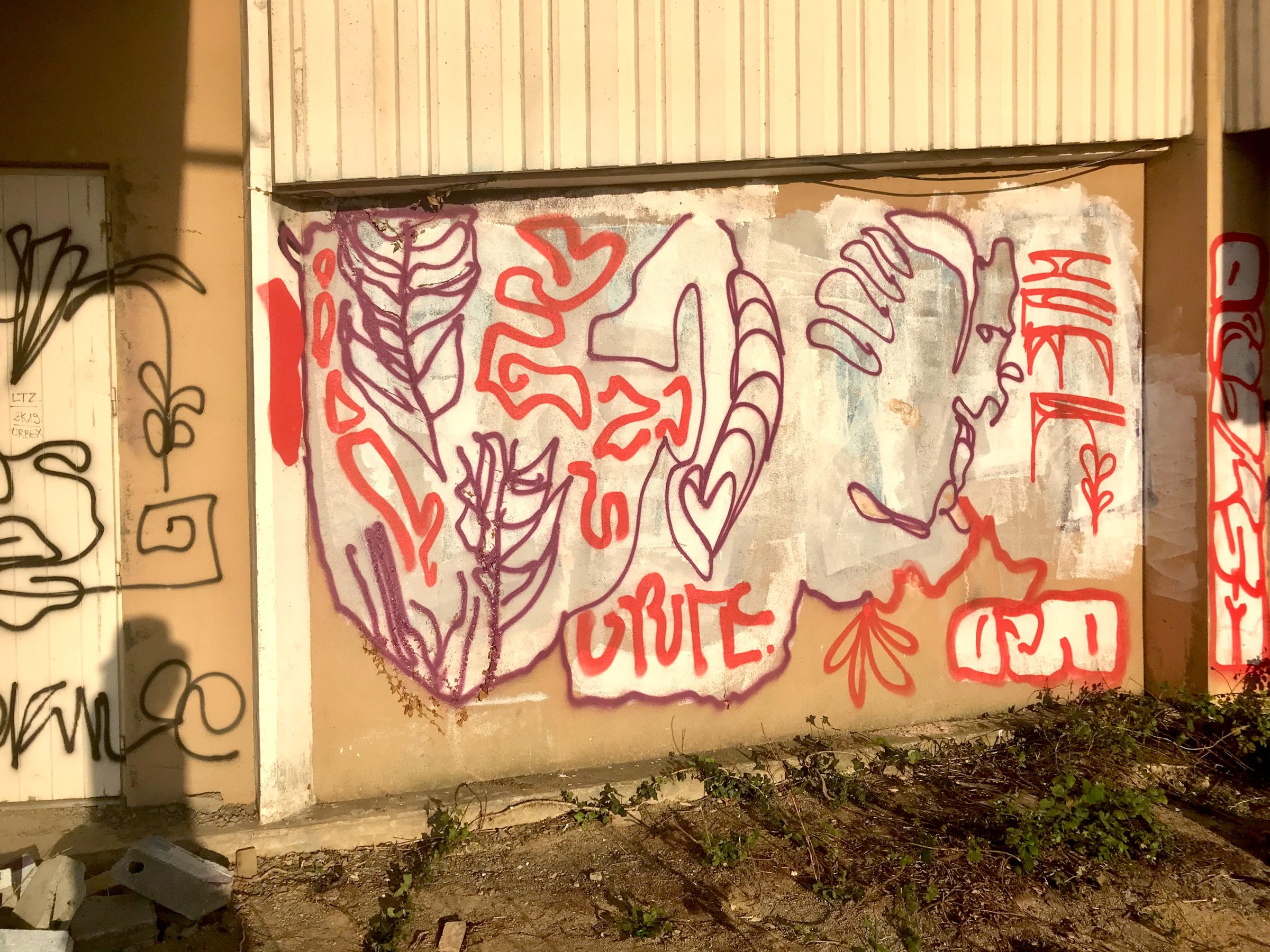
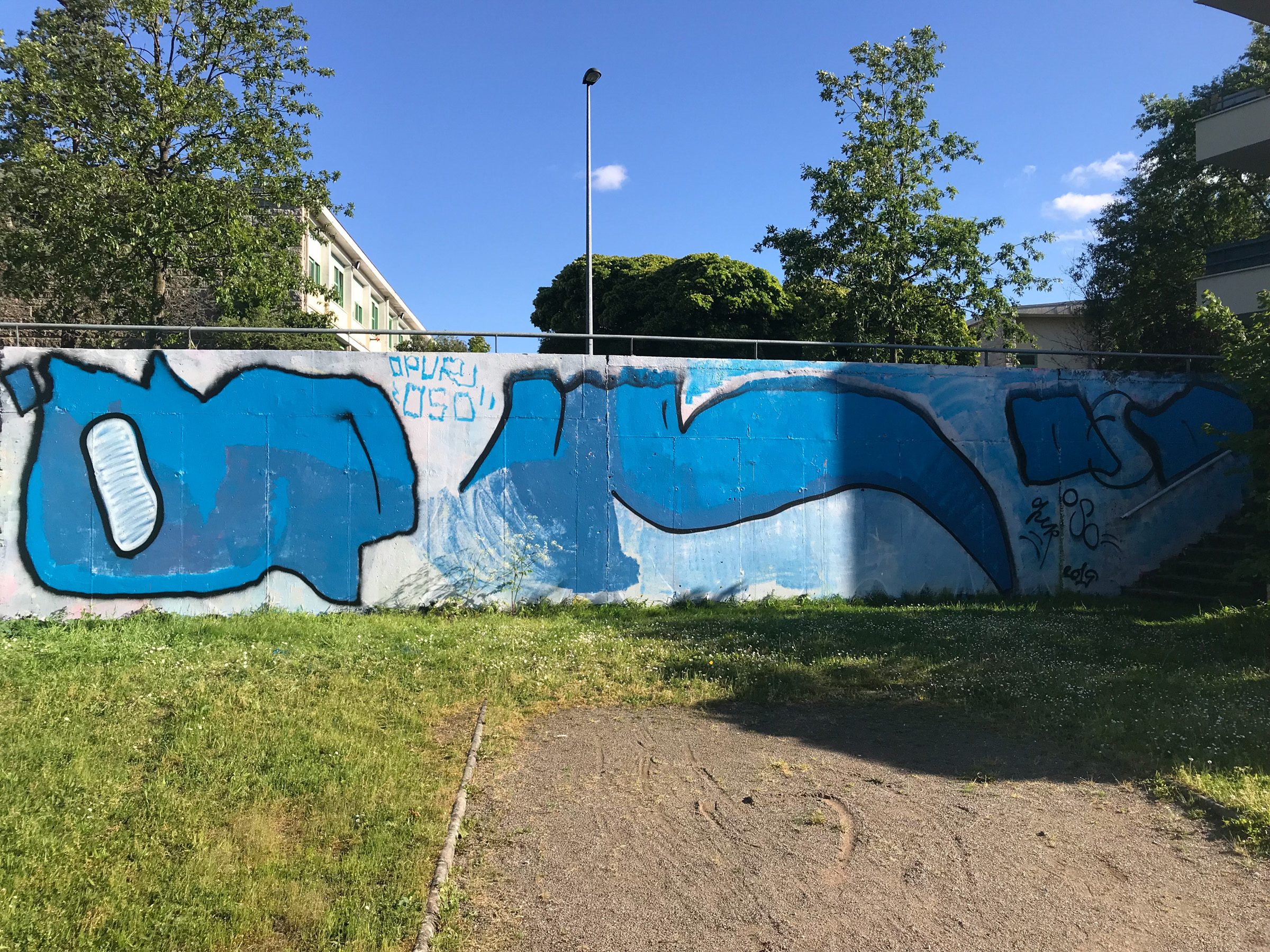
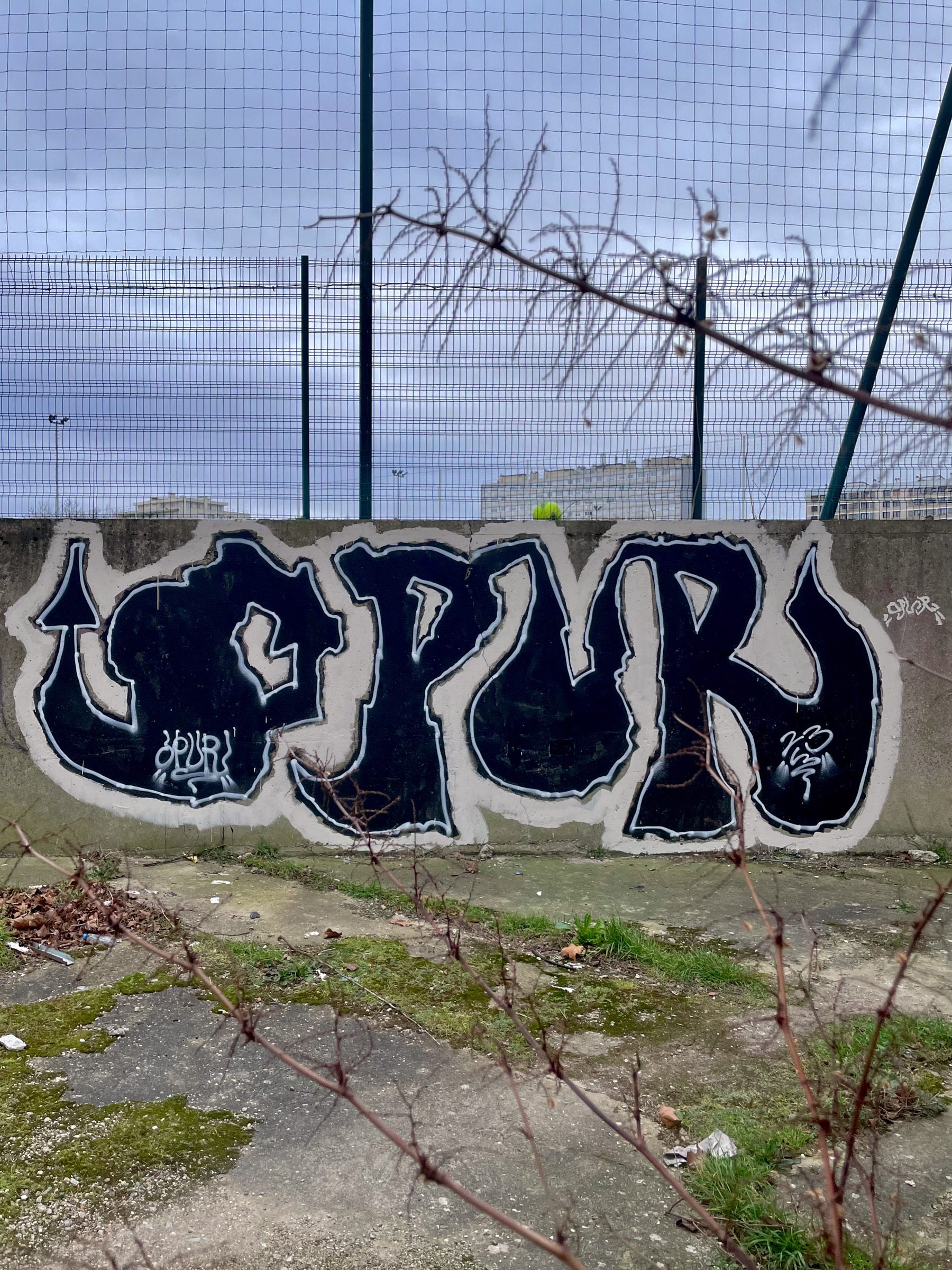
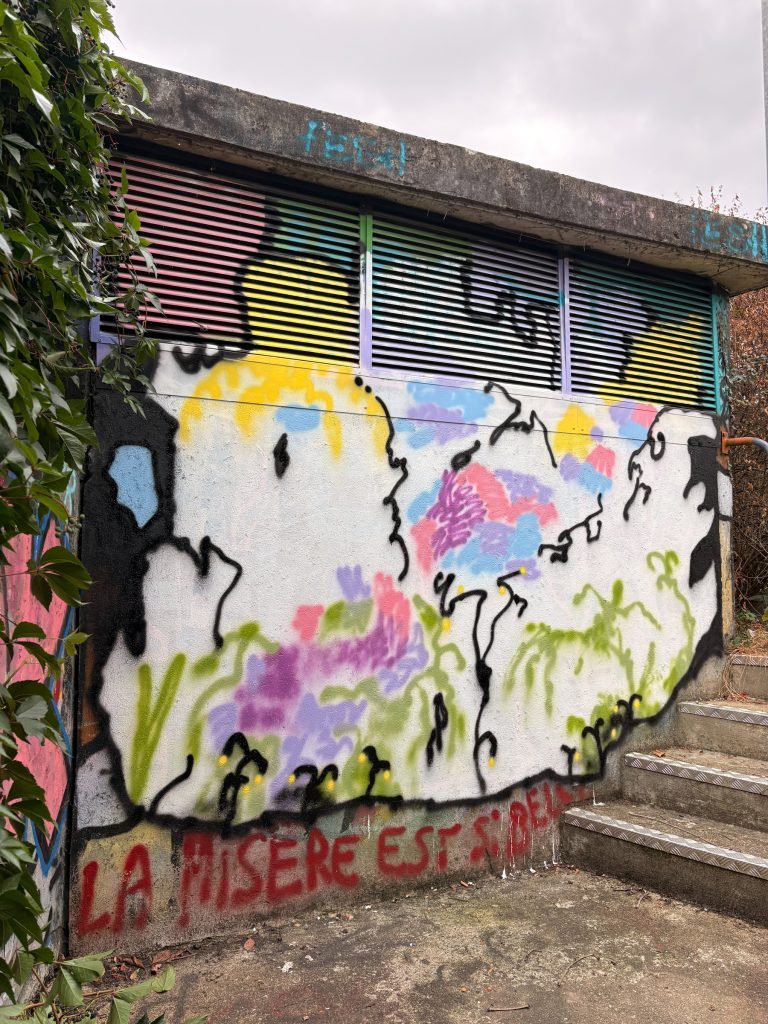
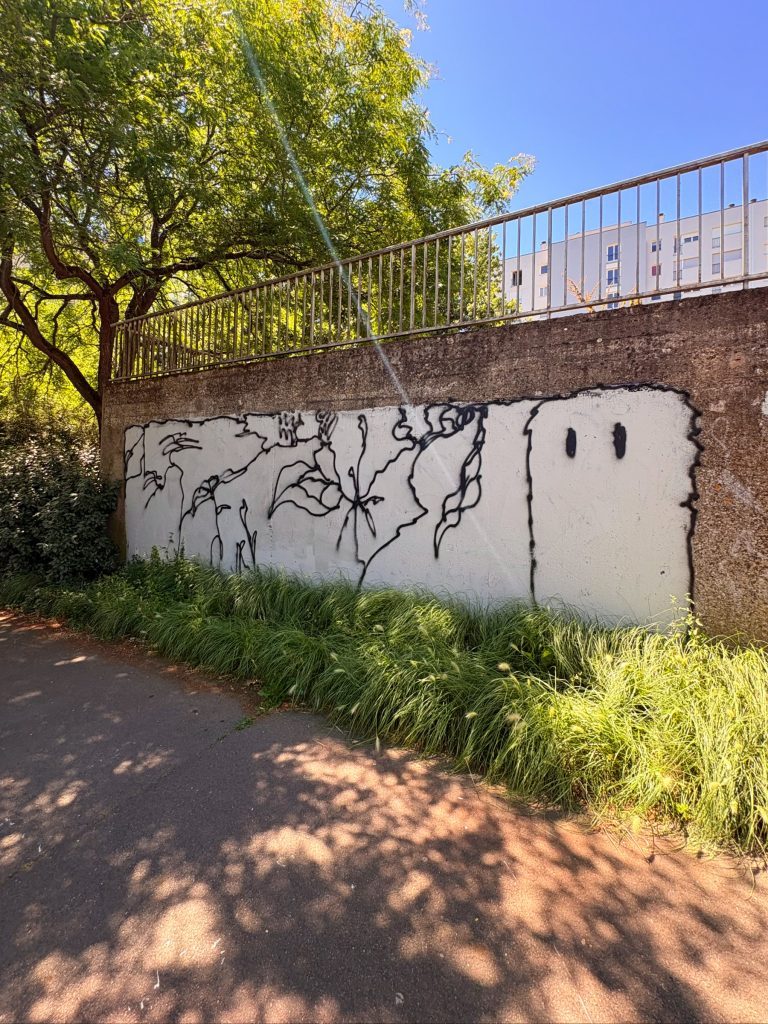
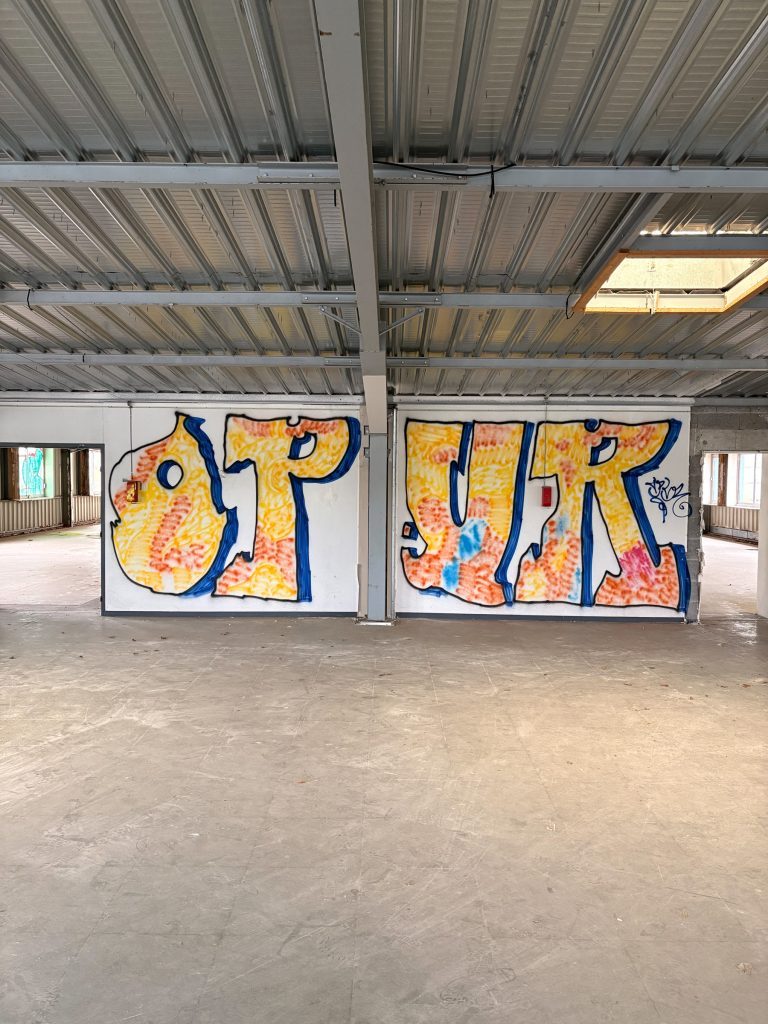
It can take anywhere from 30 seconds to create an “Antibuff”—my abstract works that interact with the “buff”—to several hours for much larger pieces. Overall, I try to find the right balance between efficiency and density—not overloading a space so that the painting feels free and fluid, while still producing a complete piece. Although, of course, unfinished paintings can have their own charm.
Do you decide on a specific format for the wall before you start?
Yes, most of the time, when other graffiti is already there. In that case, I adapt, but when I’m in an untouched area, I can spread out and not plan a specific framework— that can lead to long-term evolution.
What was the longest long-term evolution of a piece?
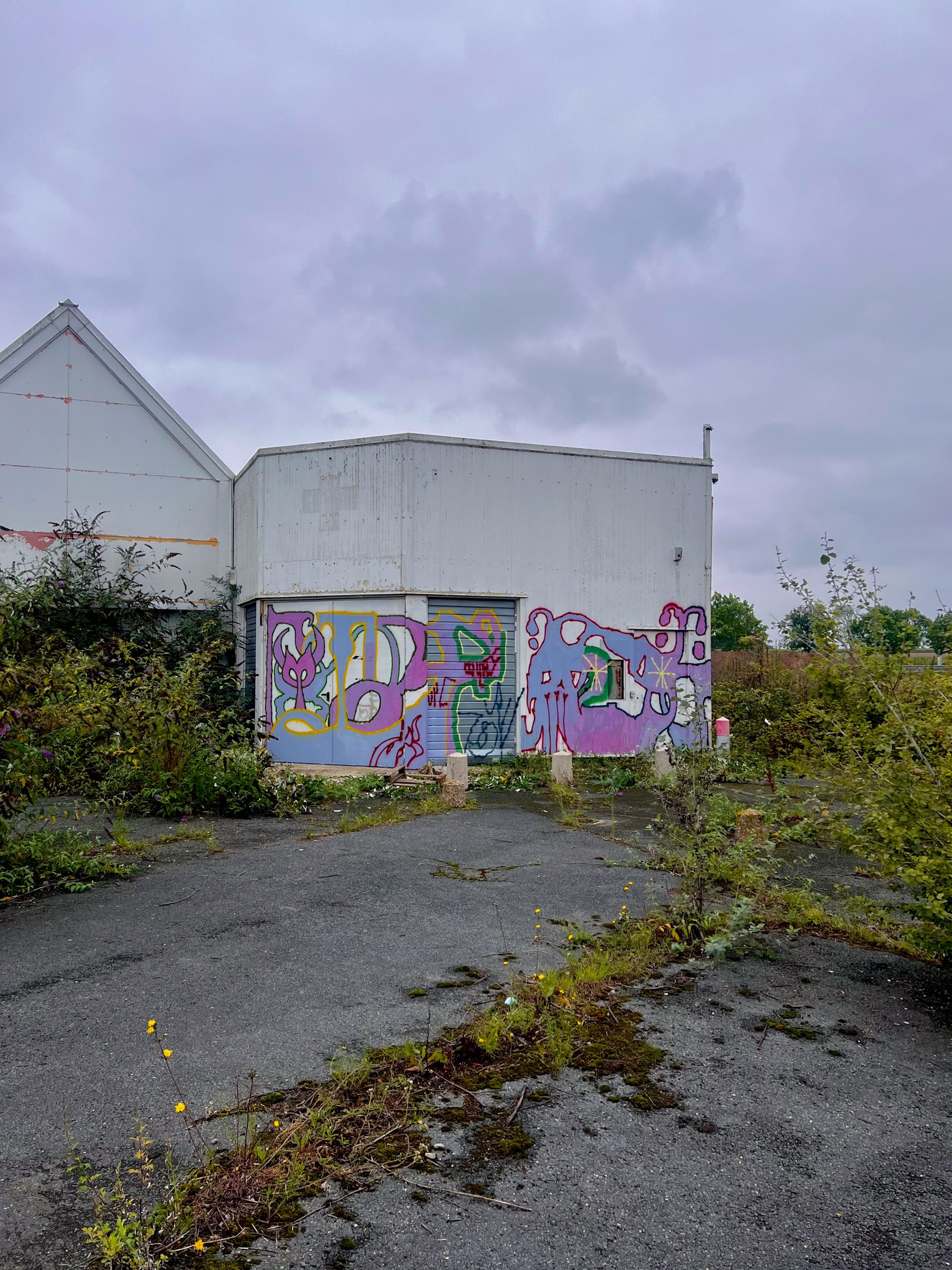
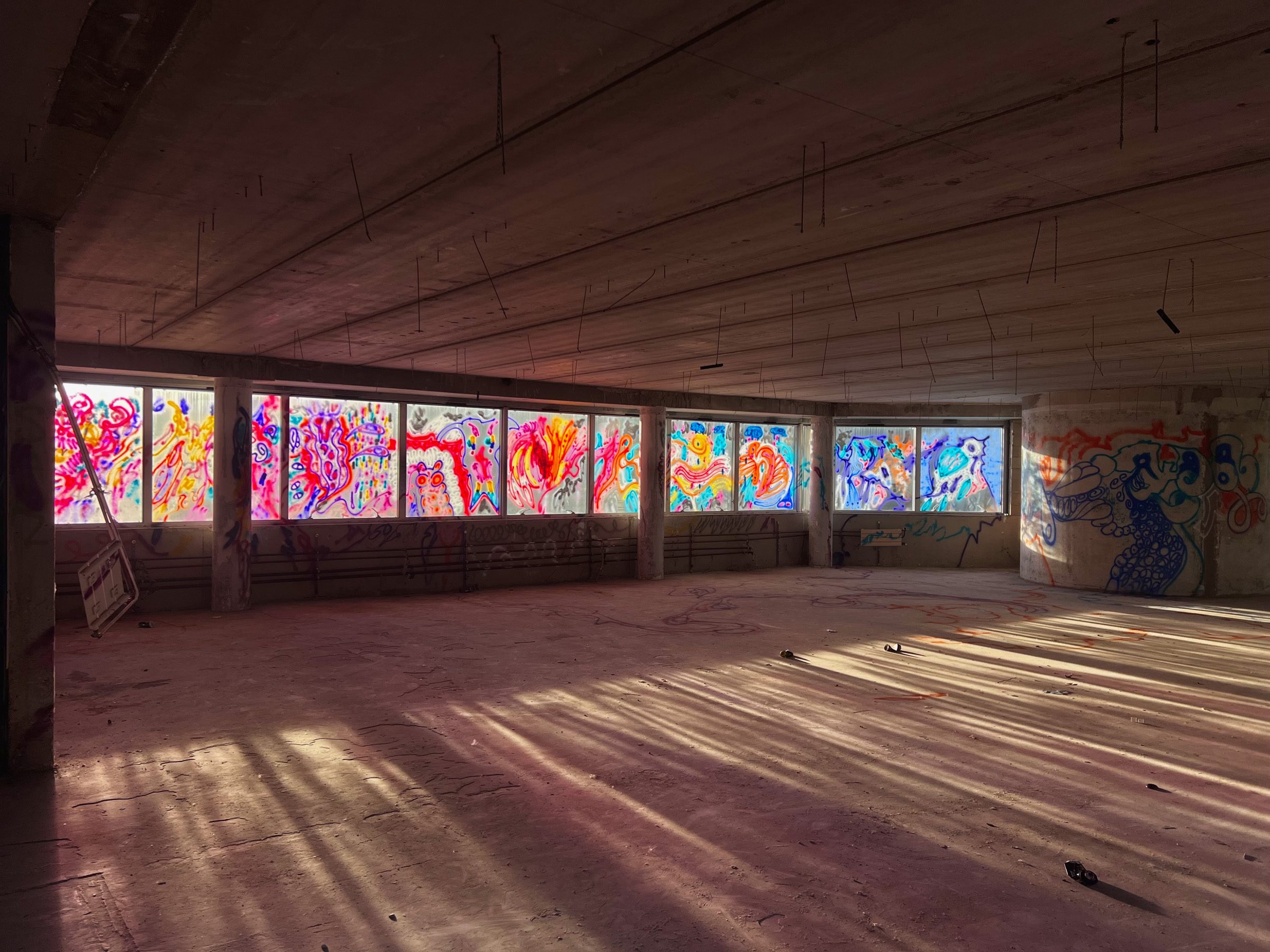
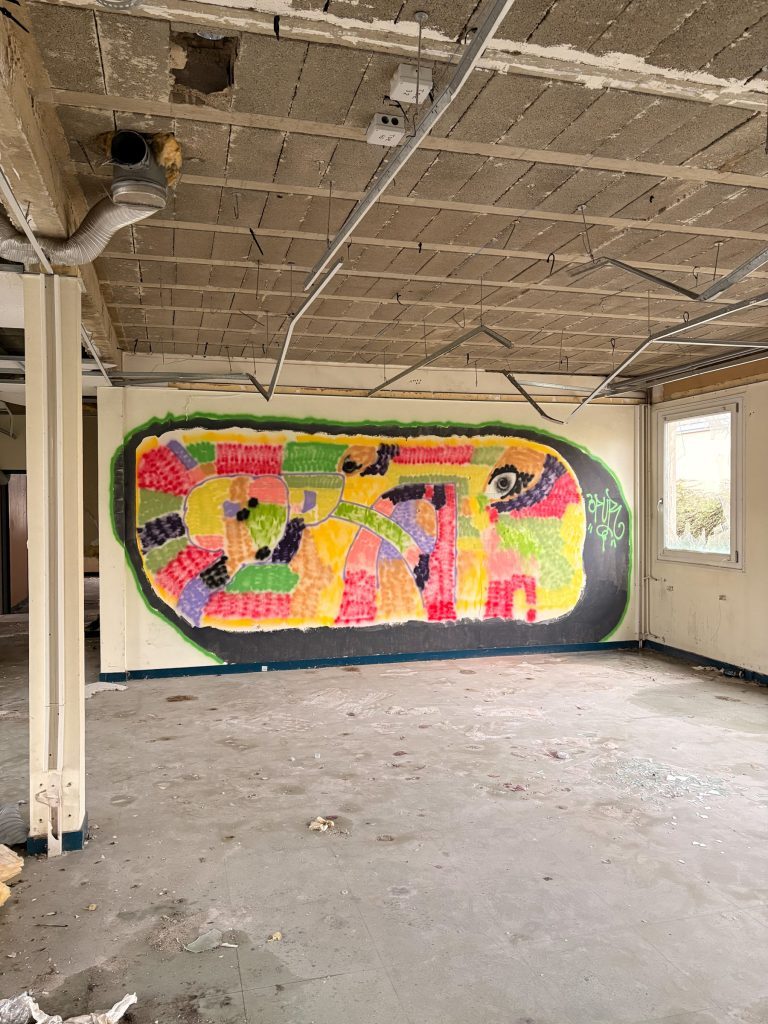
There’s a building that’s been abandoned for many years and is hidden away enough that few graffiti artists have been there. I’ve been visiting this spot regularly since 2021. I’ve created loads of pieces there, covering a fairly wide section of the building’s façade. They interact with one another and evolve alongside any toy art or other graffiti that appears. I’ve managed to get in several times and add my pieces inside, but now it’s completely sealed off. Regardless, this spot is still a work in progress and I’m continuing to develop my work there.
Do you make a sketch beforehand, and how important is sketching to your work in general?
I draw very often—almost every day. Sometimes I keep certain shapes to draw inspiration from and reproduce their energy on the wall, but that’s pretty rare. Most of the time, I improvise directly on the wall, and it’s my gestural style that guides me as I paint.
How important is freestyle in your work?
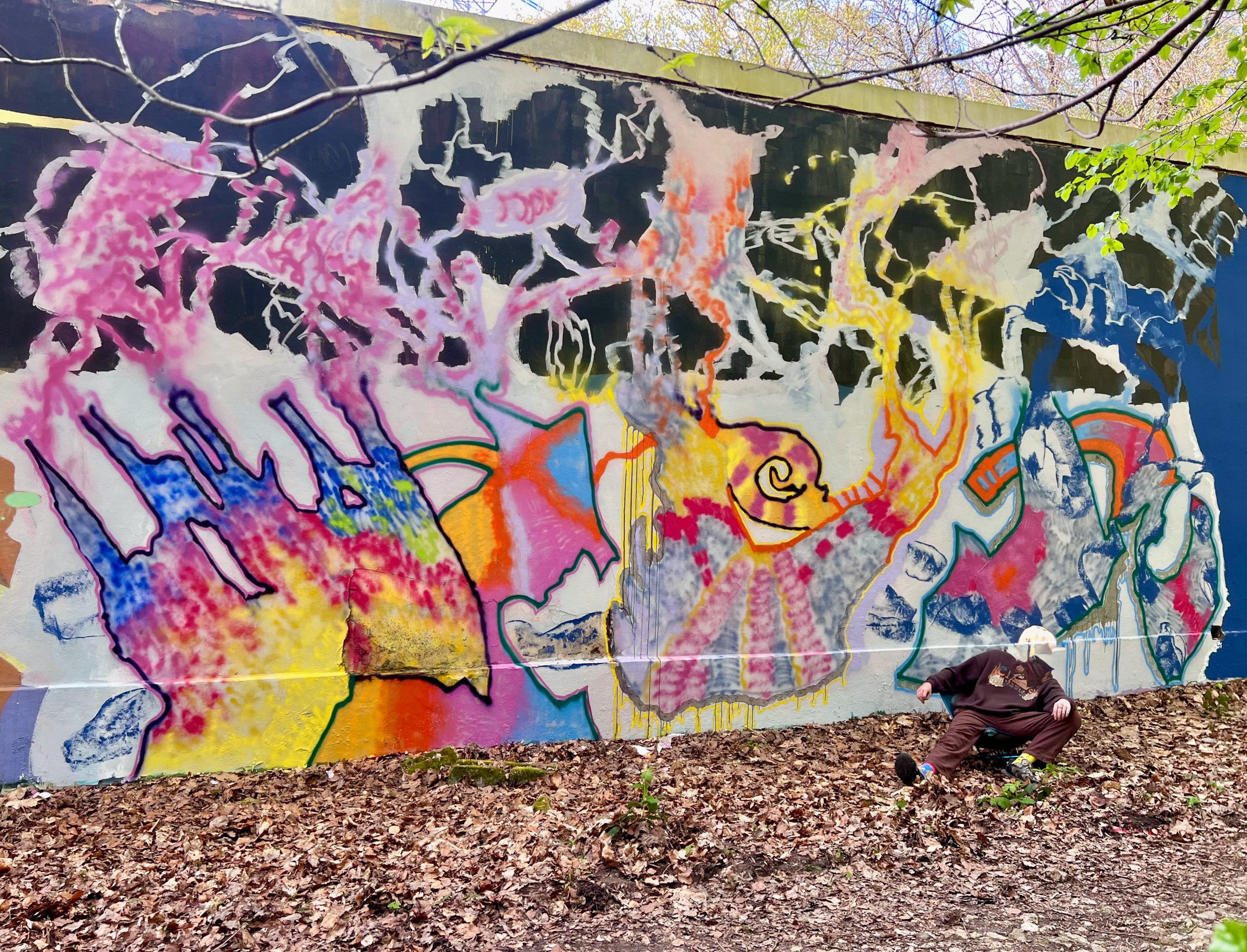
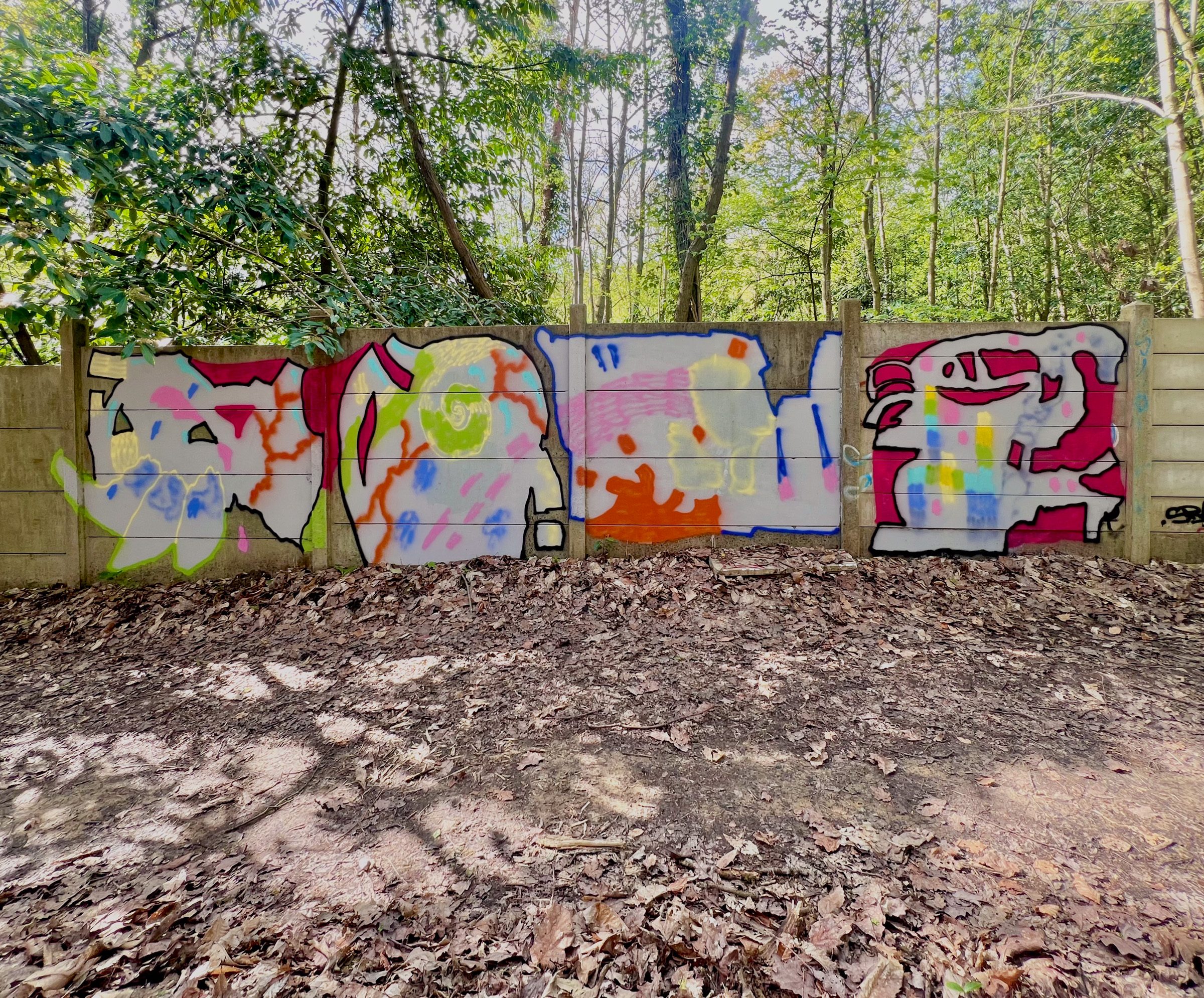
It’s a pretty significant part of my work. I have a template that I follow most of the time, using jagged lines. It’s a style that brings me closer to graffiti—just as people who do throw-ups know their lettering perfectly, I know exactly how to control the randomness in my work.
How do you proceed to find new shapes and textures?
I come up with them based on the spaces I visit and the colours I can combine on the spot. Sometimes I mix colours in my paint cans to create new combinations.
How would you describe your actual style in your own words?
First of all, I don’t necessarily mean “antistyle”—it’s an internet term that’s useful for bringing together graffiti artists who can understand one another. I’m also interested in all the styles that fall into this category. Personally, I’d rather talk about contemporary, experimental graffiti or abstract painting in public spaces. In an era when it’s easy to confuse terms and labels, I’m still working on finding a name for my work. It might be a bit pretentious to claim a special term all for myself, especially since I sometimes create traditional pieces, “antistyle” pieces, and—at times— completely abstract works. I think it’s better to describe individual pieces rather than my body of work as a whole, until I publish a manifesto to label my entire body of work.
You are thinking about writing a manifesto?
Yes, I think so. I’ve already written some short essays on ‘antibuff’ – a concept I didn’t invent, but for which I came up with the name. I’m not the only one to use buffing and erasure to create new works, but I felt it was important to find a clear name for this process. Once I’ve managed to find a consistent thread in my painting – if I can carve out my own personal path – I’ll write a manifesto. For now, I’m already very happy to have a recognisable style amongst the large number of graffiti artists working in abstraction and experimenting with graffiti.
What do you like about abstraction?
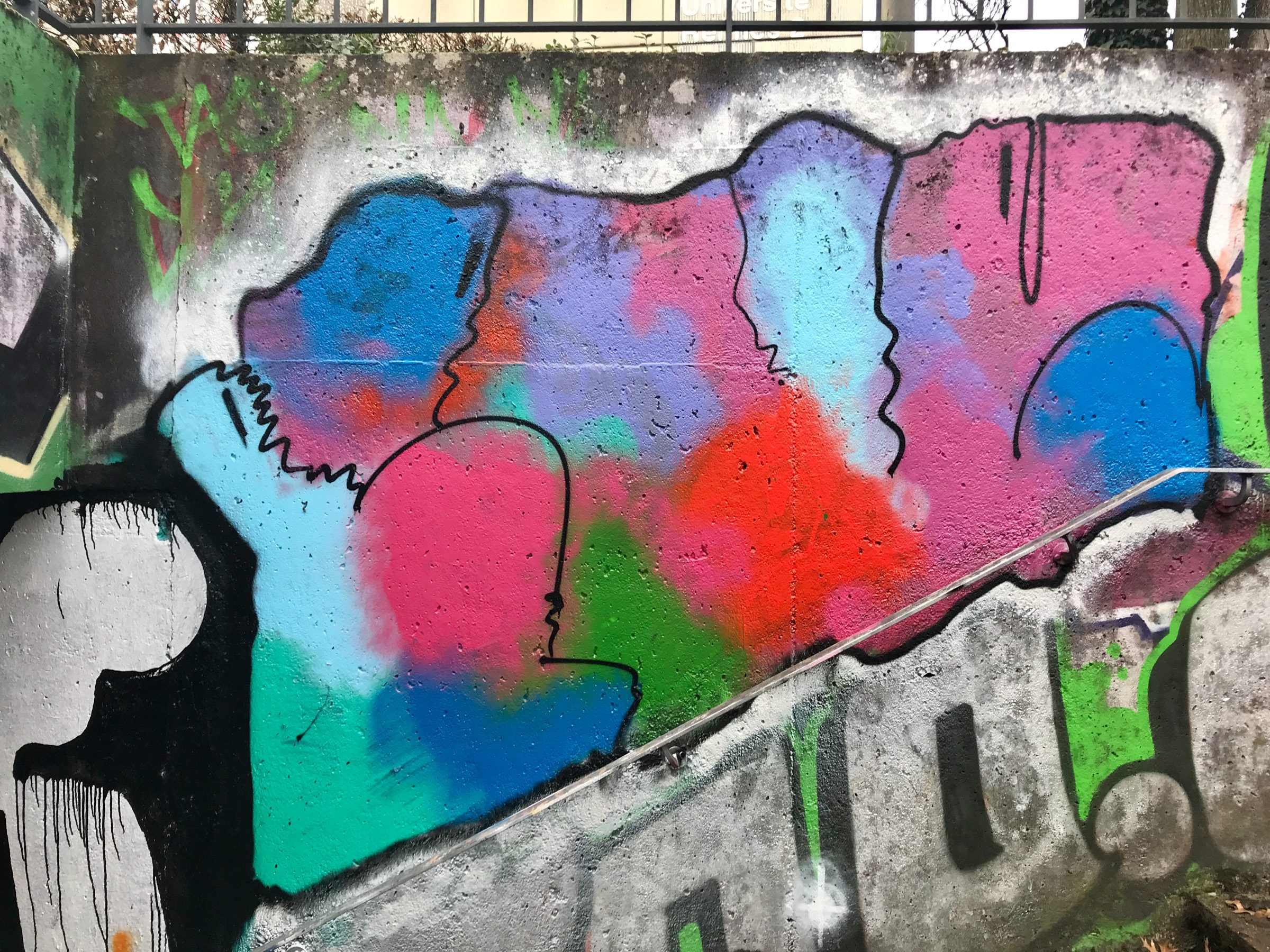
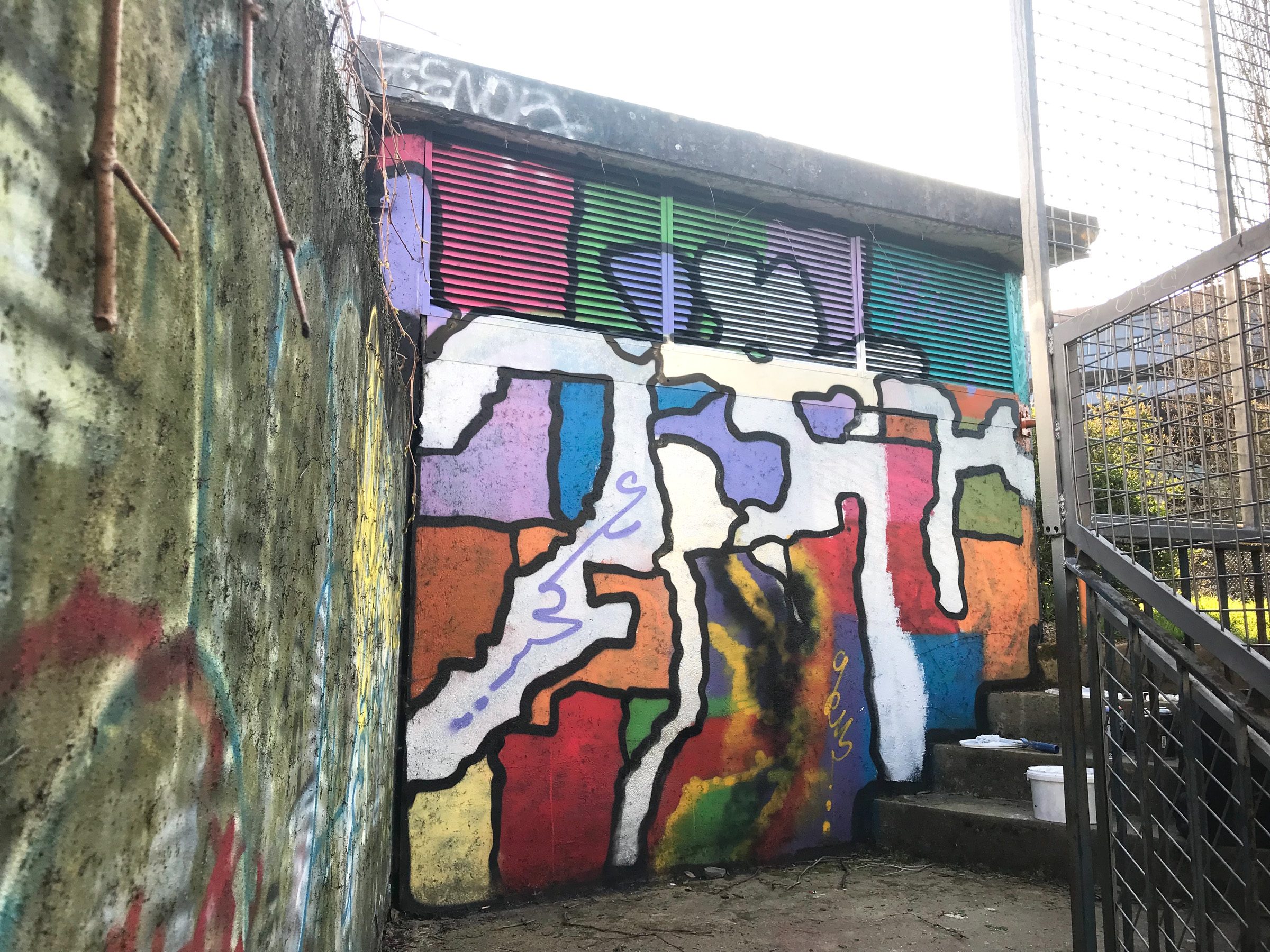
Moving from lettering to abstraction is a process that takes as many forms as there are artists. For me, abstraction lets me play with colours and pareidolic shapes, so I imagine worlds and forms as I paint, without necessarily trying to accurately illustrate what I’m thinking. I like to create vibrant, effervescent worlds; this state of mind can linger in the minds of people who see my paintings. It’s like an open door, an invitation to a conversation, an exchange between the artist and the active viewer.
Do you always call your wall works “pieces”?
Yes, when they’re large-scale works that took me a long time to create. “Piece” is a term I use for graffiti that’s fairly accomplished in terms of size and detail. If it’s a smaller, more incisive, quickly executed piece of graffiti or an “Antibuff,” I just call it “graff.”
The older generations painted in classic styles, learning the rules of lettering and being active in the urban space for a long time to gain experience and recognition within the scene. It seems that some of the younger generations aren’t even learning the classic styles and rules anymore; they’re skipping the basics to paint an “anti” or abstract style right away, inspired by those who developed these new languages after 20 years or more of graffiti writing practice. Moving from lettering to new forms and expressions, they’re creating pictorial works and murals. What do you think of this phenomenon that’s part of this younger generation?
I think it’s pretty fun to see people younger than me confidently taking on highly visible spots. I find it amusing to see them embrace their rough styles—after all, I kind of started out that way too, experimenting differently with each session.
If someone starts right away with abstract paintings or antistyle forms, are they still graffiti writers, or should they simply be called wall painters/muralists? What do you think?
I get the impression that younger people who start doing graffiti spontaneously—right away in unconventional or bizarre styles—are still influenced by certain things at the beginning. That’s normal, of course, but it doesn’t necessarily define their direction; they might change course, or stick with certain ideas that will lead them to do graffiti no matter what. We’re always talking about painting, but the influence of graffiti as a mindset is always there.
Do you know many young people in France between the ages of 15 and 27 doing graffiti or murals?
Yes, I know several with different styles. I’ve already noticed changes in the painting styles of graffiti writers younger than me; I get the impression that some of them understand that there’s something at stake in standing out. Challenging one’s own habits and formulas to bring energy to one’s work, leaning toward the abstract—that’s a way to stand out, to take less-traveled paths within the world of graffiti.
Can you describe the styles that are emerging? Do you see anything new or original?
When I look at the generations a little younger than me, I see a return to traditional graffiti with a deconstructed feel. It’s not laziness or carelessness—I think each generation brings something new to graffiti. And in this return to traditional lettering, I get the impression that it’s more about pure vandalism driven by political ideas—in a world where repression is on the rise and people are seeking increasingly concrete ways to rebel against political powers that couldn’t care less about us. In any case, this observation holds true for Europe.
Do you have a vision of what this new generation might invent or develop further?
I see a new relationship with vandalism—a kind of defiant relationship with aesthetics. I think it would be a trap to focus solely on the aesthetics of the new generations; the real interest lies in the chosen spots and the coming together of individuals around the legacy of graffiti. Surveillance systems are evolving, as are the spots, the methods used, and the cost of paint—all these elements will shift the codes of graffiti.
You’re studying art history now. Why theory, and how can this knowledge be useful for your practice?
I’m always drawing connections between contemporary art and graffiti; these explorations allow me to develop my practice. So I work simultaneously with art brut, experimental art, 1960s conceptual art, and post-vandalism, for example. I try to take a holistic view and establish connections between the things we study and my own practice. Theory allows me to think and reflect differently when I’m painting, which invariably changes my pictorial practice.
How exactly do you work with art brut?
For the past year, my colleagues in art history and I have been working on art brut and its developments within contemporary art. I see what is known as art brut as a tree that is still distinct from contemporary art, one that grows on the periphery and occasionally breaks through the walls of contemporary art. Today, there are many thinkers, writers and artists examining art brut, and it is a term that must be considered alongside art therapy, mediumistic art, the concept of care, and the link to mental disabilities. All these fields have historically been part of art brut, which is why it is a concept that must be handled with great care. I’ve heard quite a few graffiti artists link graffiti and art brut; I believe the bond between them is a spirit of independence and a desire for freedom.
What is post-vandalism, and how did you discover the term?
Post-vandalism is a term coined by Stephen Burke to explore concepts related to graffiti through visual art. On the one hand, I welcome this approach, which is necessary for many artists to flourish within this movement and framework. On the other hand, I believe it may sometimes be necessary to distance oneself from it, or at least to embrace it sparingly. Indeed, it is a framework that can stifle creativity and the philosophical aspect of graffiti – we’re talking about a practice that originated in Palaeolithic caves over 20,000 years ago. As humanity has evolved, it has become illegal, and numerous factors have come to define this art form. To use the term ‘post-vandalism’ to describe contemporary artworks that incorporate graffiti may be reductive and prevent us from exploring intellectual avenues.
Thank you so much for your time, and good luck for your projects and the manifesto!


Leave a Reply