

Hello Utopia, I heard that you are currently living in Australia? Where exactly?
Since when, and are you planning to stay there now?
I moved to Australia around a year ago. I have been living in Adelaide, South Australia, and I am currently moving to Melbourne.
Before that, you lived in Berlin, right? From when until when?
I lived in Berlin between 2018 and 2023, with a year break in Scotland in 2019.
Where were you born and raised?
I was born in a small town in the north of Italy, in the Veneto region.
Is or was anyone in your family an artist?
No, I come from a hard-working family. Both of my parents work in the mechanical industry, which is the main source of work in my area. My mum, though she didn’t become an artist, is a very artistic person and has always had projects and things she was working on. Lots of crafts she can do anything really, from sewing, knitting, crochet, woodworking, metalwork, drawing…
Did you already draw as a child?
Yes, I always had an interest in drawing and painting. It always felt natural, and I had support to keep doing that.
Did you study fine art or graphic design after school?
I studied graphic design and visual communication in Berlin, and I also did a year of higher education in Scotland, a foundation course in art and design.
When and how did you discover mural painting/graffiti, and when did you start doing it?
I always had an interest, but growing up in a small town there wasn’t really a scene to plug into. Graffiti, generally speaking, wasn’t and still isn’t exactly marketed toward girls, so I didn’t properly encounter it until I left home. That only really happened when I moved to Berlin and met people who were already painting. My first real piece was at the legal wall in Natur Park Südgelände. It was objectively terrible, but I loved it.
There’s something about spray paint that feels completely different from any other medium it almost forces you to unlearn everything you think you know about painting. The way you use your body, your hand, even the pressure of your fingers it’s all new. You’re guaranteed to be bad at it in the beginning, which is strangely freeing. It’s frustrating, but also exciting. More than anything, it’s just fun.
It wasn’t until I moved to Scotland that I started painting consistently. The smaller scene made for a much friendlier entry point, whereas Berlin as welcoming as it can be is also the European capital of graffiti, and that comes with its own intensity.
Did you start by painting letters with spray cans?
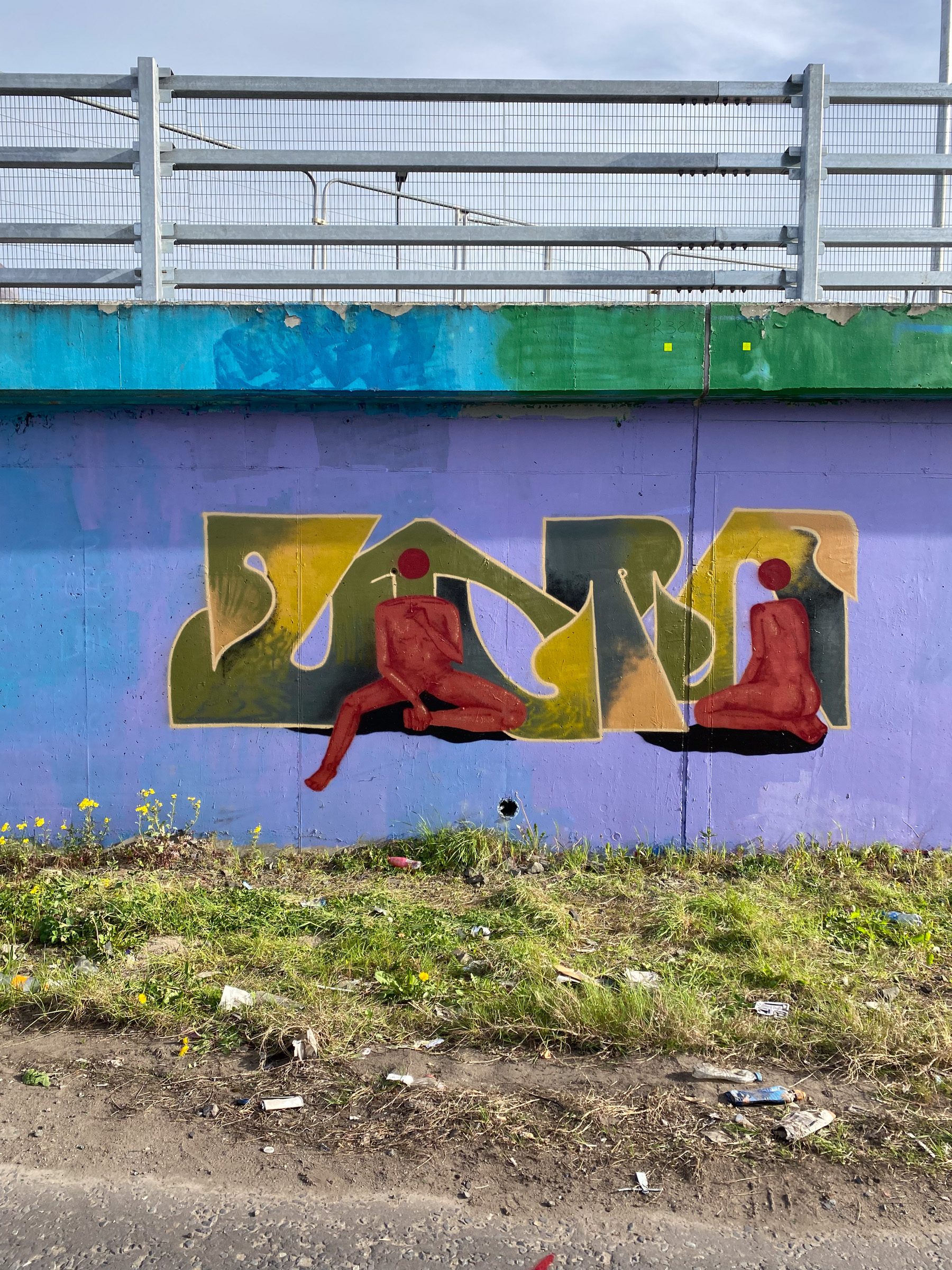
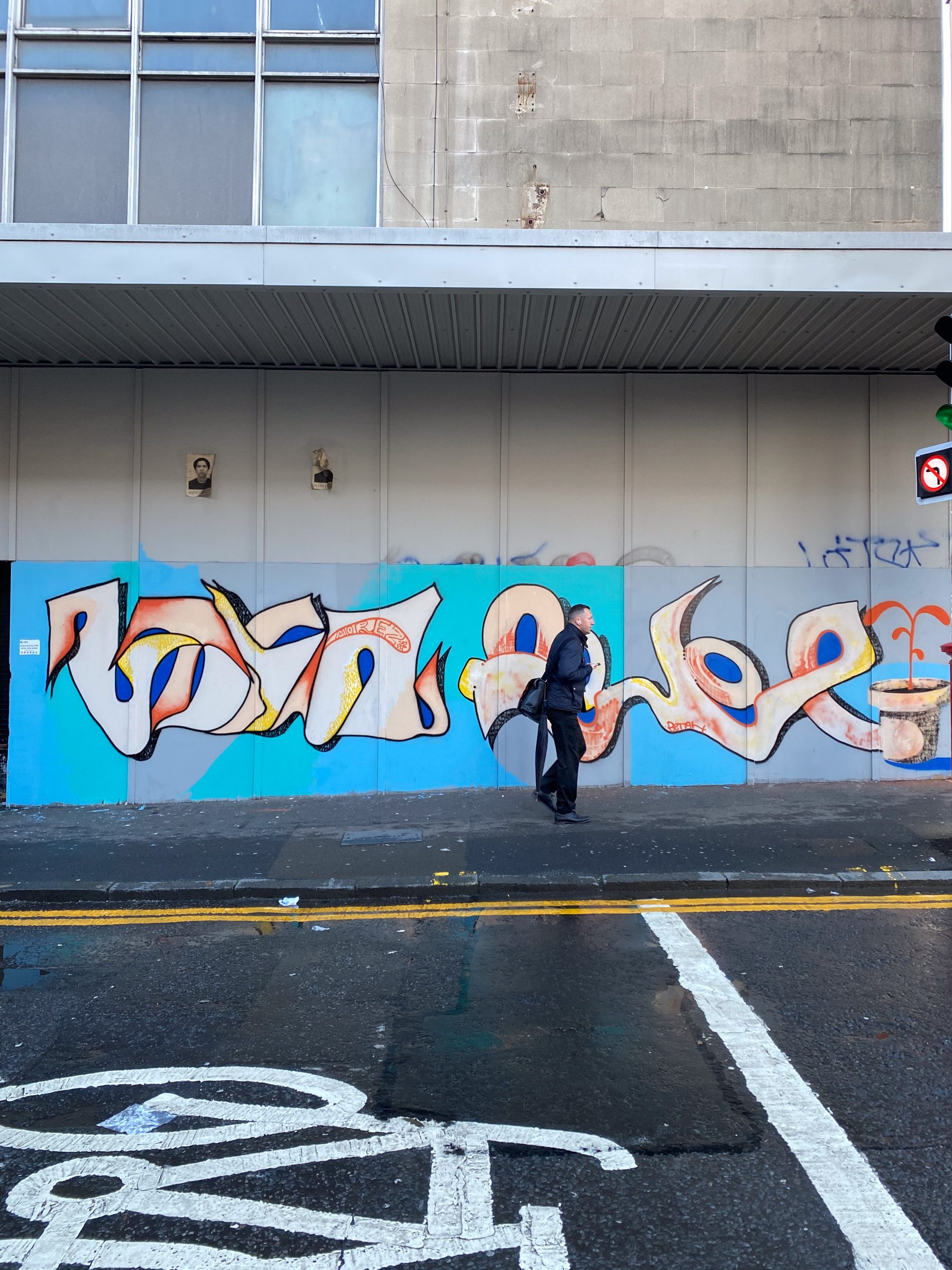
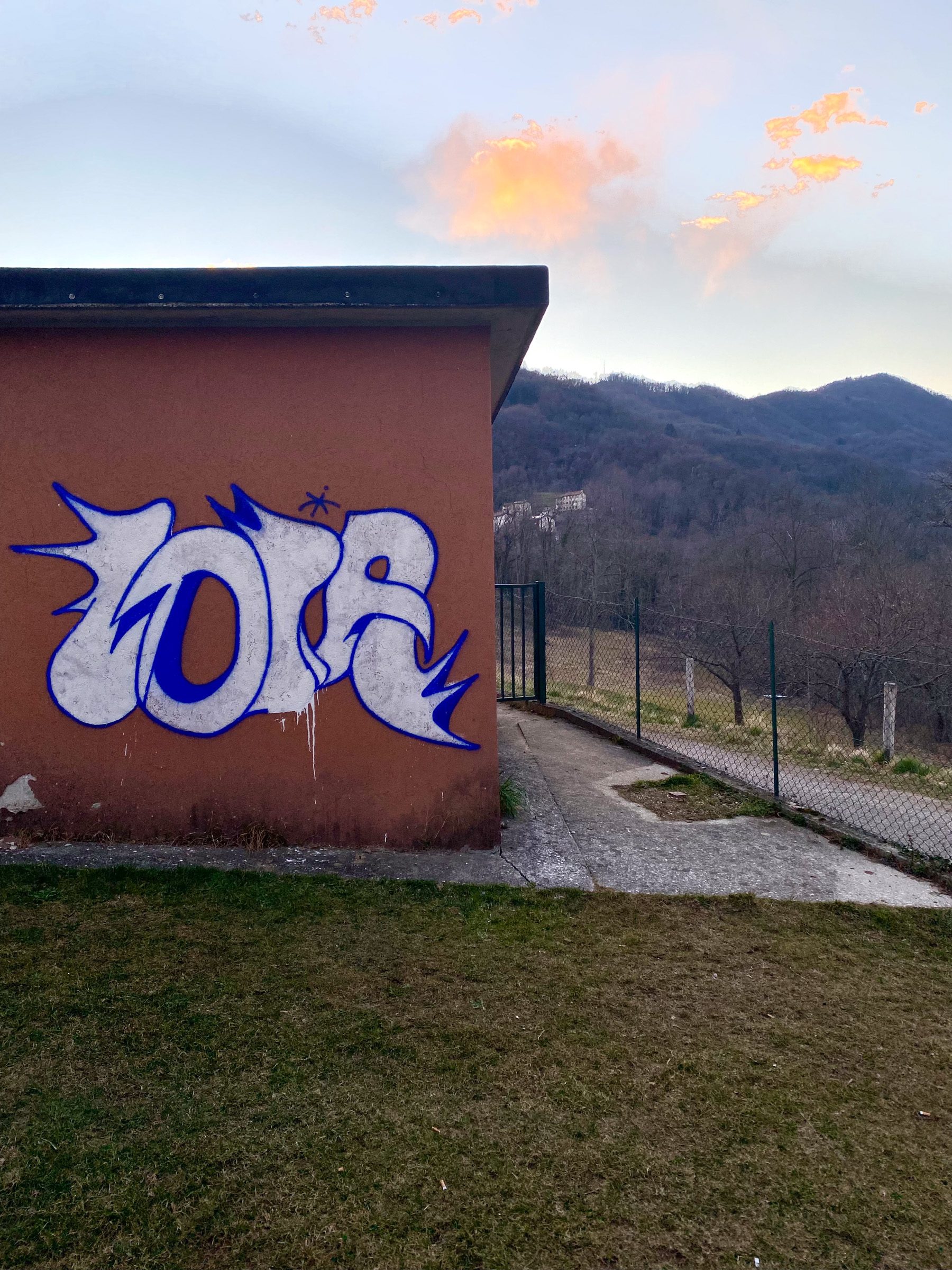
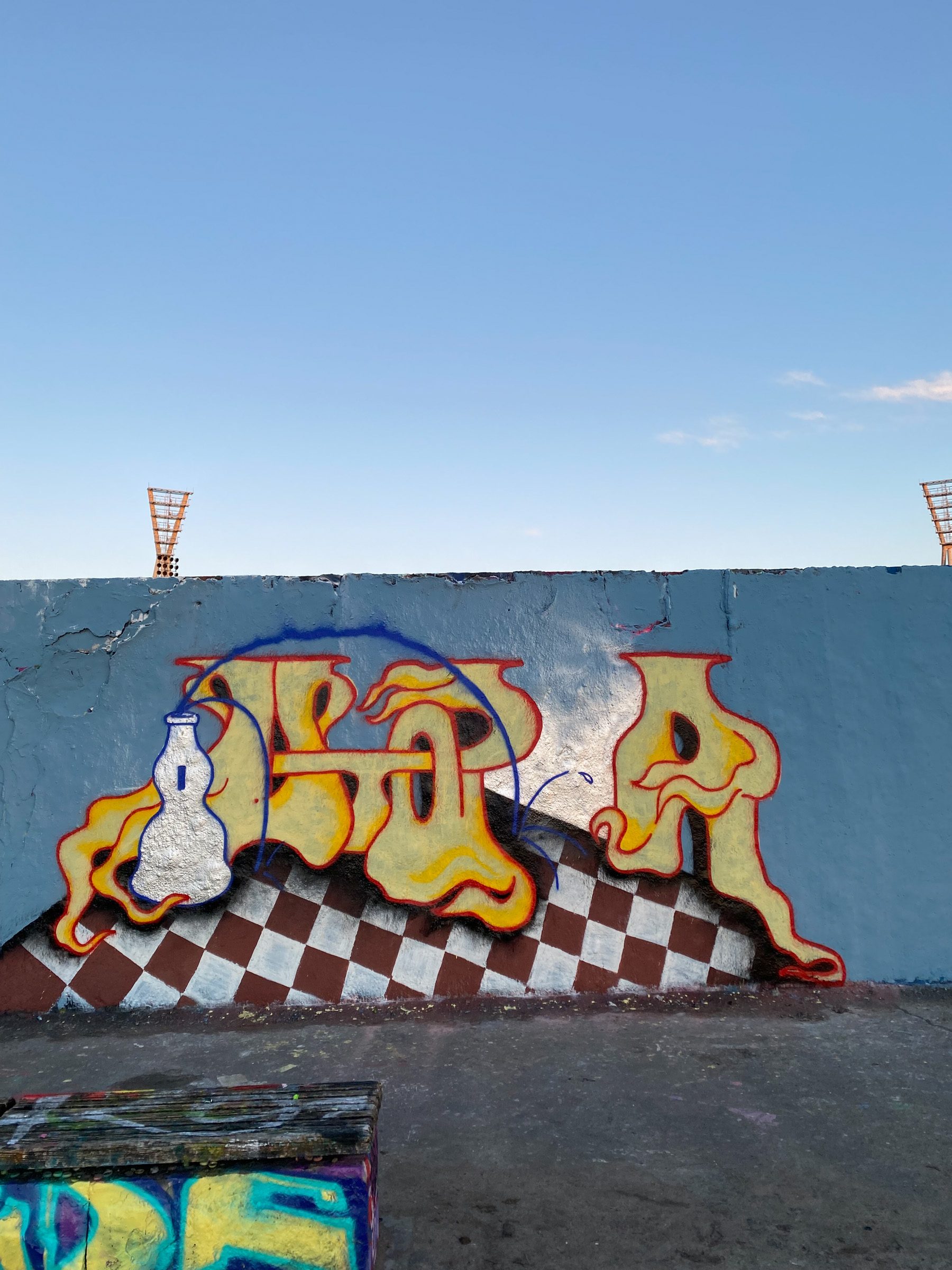
Yes, I started by making very ugly letters, which, to be fair, is where most people begin. Letters are the foundation of graffiti, and I was quite stubborn about figuring mine out properly. I also didn’t make it easy for myself . “Utopia” is six letters, which is already longer than the usual four or five, and it’s made up of letters that aren’t particularly friendly in terms of shape or flow. In graffiti, you see a lot of names built around letters like S or R because they connect well, whereas Utopia is more of a challenge. But I had made that decision, so I committed to it.
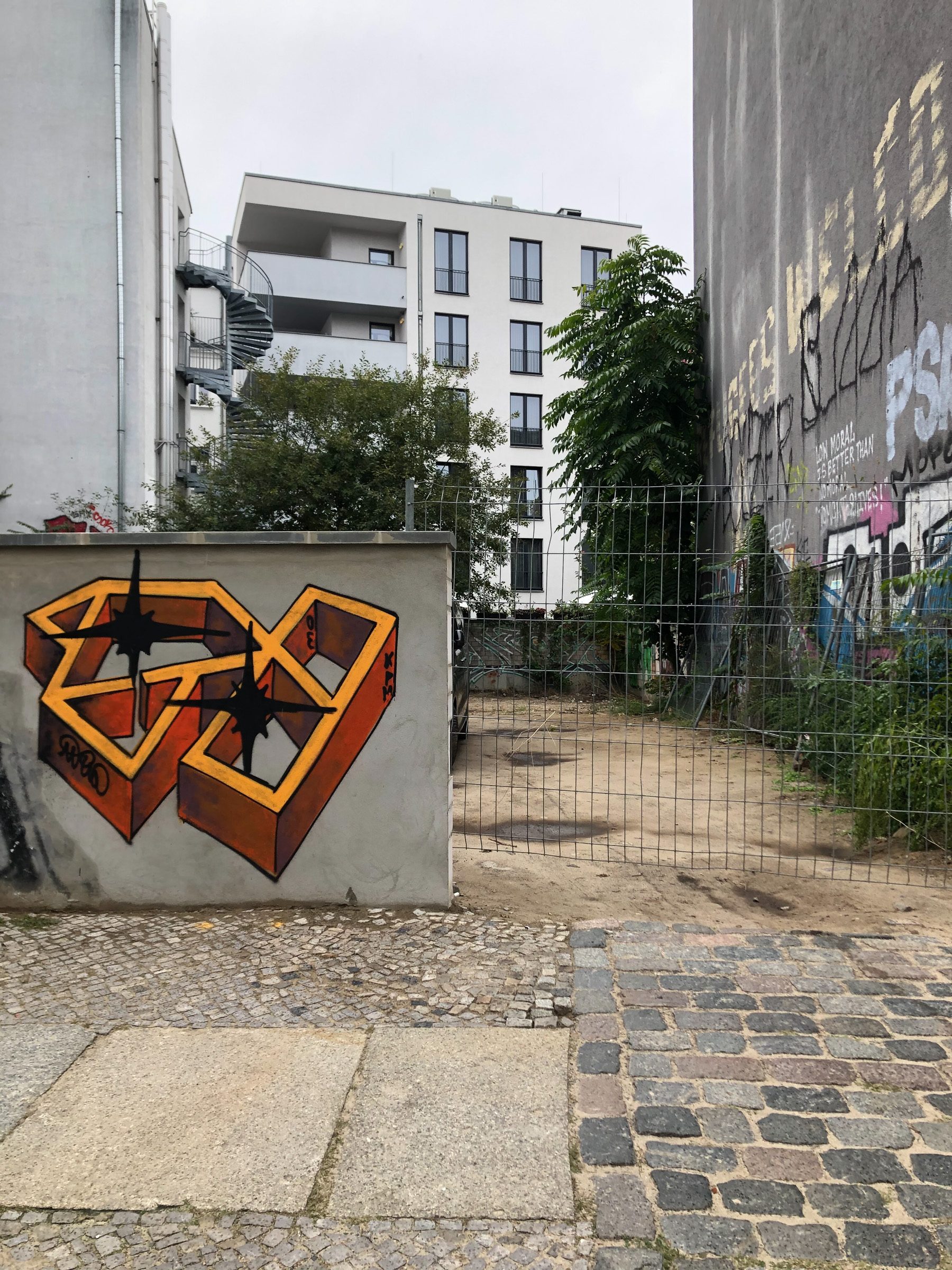
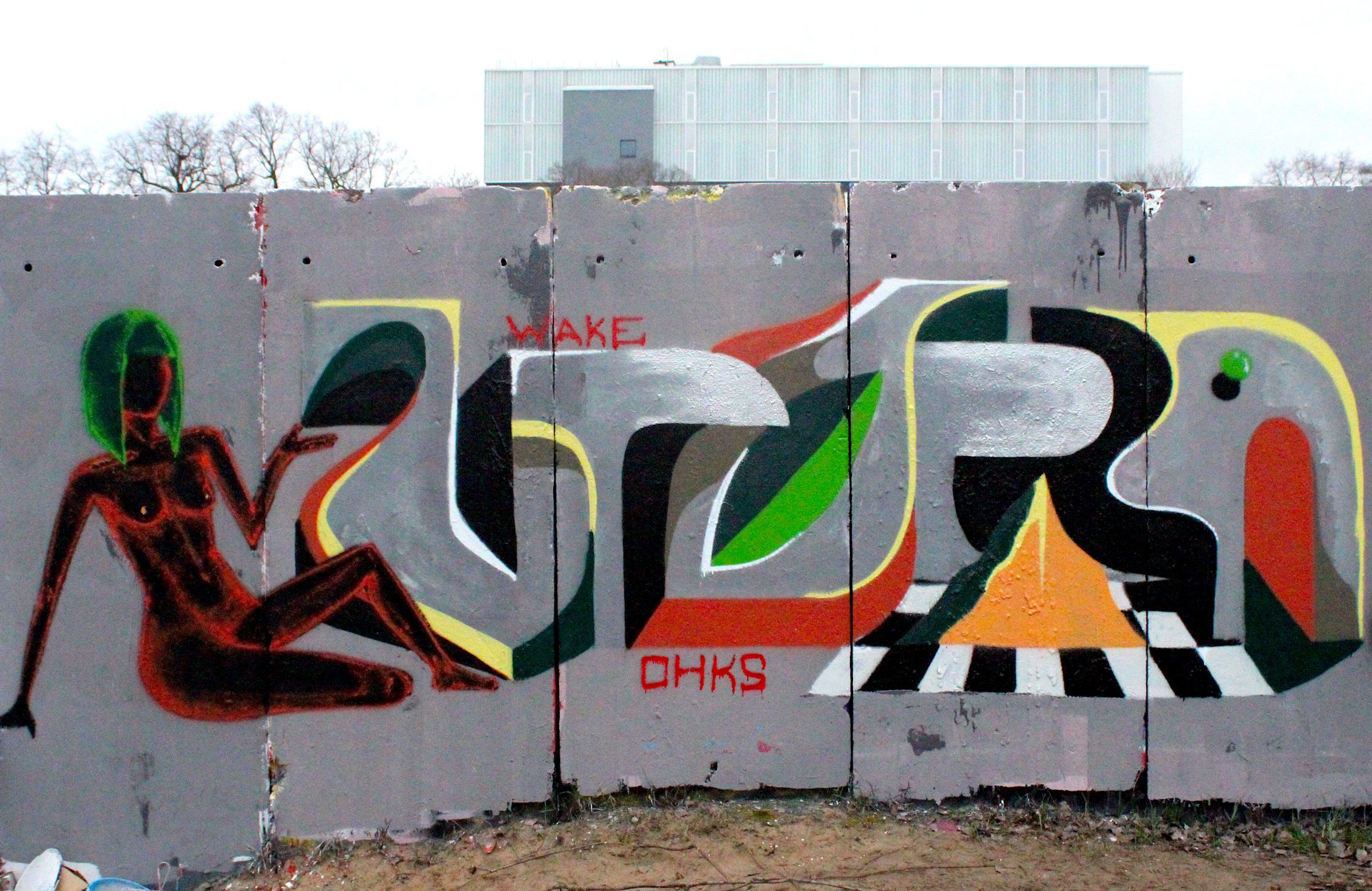
Over time, I actually grew very attached to those letters even if I still have a personal grudge against the letter I. Once I felt I had a solid grasp on them, I allowed myself to start deconstructing them. I think abstraction only really works when it comes from understanding you can’t convincingly break something apart if you never knew how to build it in the first place. For a long time, I felt like I had to earn that freedom before moving into more abstract or surreal territory.



At that time, were there any graffiti writers or other mural artists who inspired you?
I was mostly inspired by people who didn’t really fit the polished, glossy idea of graffiti that people tend to imagine. I think everyone, especially women, ends up finding their own way of navigating that space, and in my case, I leaned quite naturally toward doing my own thing. It felt like a way to sidestep expectations and truly enjoy myself make something mine. I’ve always been drawn to artists who approach it that way unapologetically making work that feels personal, slightly unconventional, and very much their own. People like Roids, Ruin Sawe, Saio and Prall.
When I moved to Berlin, meeting people like Moon and Bsos had a big impact on me. They both paint with rollers, building a piece slowly, letting it evolve rather than locking into a fixed plan or having a final result in mind. The work shifts and changes as they go, which I found really freeing.
Were you connected to the local scene?
Not really, my hometown is very small, and there was never much of a visible scene. If there was one when I was growing up, I wasn’t aware of it. The closest city is Vicenza, which has a bit more going on, but in my town there wasn’t much at all at the time. That said, the last time I went back, I noticed a lot more work around. It seems like younger people have been inspired just by seeing more graffiti appear. I spoke with some of them, and it was interesting and slightly surreal to hear they were going to the same spots I used to paint. There are a lot of abandoned factories in my area, and many of them were completely untouched before me and Seven25 painted them. We treated those places like our own private gallery. Then, a few years later, others went in, saw what we had done, and started painting there as well. It’s quite satisfying to see, even if it meant my “secret spots” weren’t so secret after all.
What names did you start out with?
I prefer not to say…
When did you meet Seven25 and are you still a couple and painting together?
I met him in 2019 when I moved to Scotland for a uni course, and we’ve been together ever since. He introduced me to the scene in Edinburgh and, more importantly, encouraged me to just do my own thing and not feel pressured to conform. Being introduced to that environment can be quite intimidating, having someone who made that space feel accessible made a big difference.
Did you learn a lot from him?
Of course. It helps a lot when your partner shares the same passion, we’ve always motivated each other to paint, exchanged advice, and basically had a second set of eyes on everything. He made it so that, even when I was often the only woman around, I didn’t feel uncomfortable. Honestly, I don’t think I would be where I am now without that actually, I know I wouldn’t. We’ve also collaborated a lot, and our progression has always been quite parallel. I sometimes feel like we developed twice as fast just by pushing each other.
How and when did you come up with the name Utopia?
The name “Utopia” came from the idea I had that every painting is its own kind of utopia not just mines, but any painting. To me, each one is a small, self-contained world that isn’t real, but somehow works perfectly within itself. You can look into it and momentarily believe in that impossible logic. I’ve been writing this name for many years now, and I’m not sure I fully relate to the initial feeling behind it anymore. At the time, I was in art school very inspired, very idealistic about it all. But in a way, it still represents quite well how I felt about painting when I chose it, even if I see it a bit more critically now.
Were or are you a member of any crews? If so, which ones?
KPM, Sport Club and Drum Brum.
KPM — what does KPM stand for, and who are the members?
KPM stands for Kein Platz mehr. It’s a crew I started with some close friends I met in Berlin. We had all just left our respective countries and found ourselves in a new city, figuring things out hungry for experiences hungry to know people see things, and we ended up finding each other all wanting to make something of ourselves through painting, so we started a crew. Not everyone still paints, and we’ve all moved to different places now, but it remains a really nice memory. It’s a reminder, in a way, of why I started painting in the first place.
What did you focus on in the beginning? Was it only letters at first, or did you also work with figurative motifs from the start?
In the very beginning I actually painted quite a mix of things. Alongside letters, I did a lot of illustrations and characters partly because I found them more immediate, and also because people tend to have less to say about them. With letters, everyone suddenly has an opinion about spacing, connections, structure, all of it. Characters felt a bit more open in that sense.
Over time, though, as I gained more confidence and skill with spray cans, felt more confident that my letters weren’t gonna be too bad. I began experimenting with different styles, trying to understand what made sense to me rather than what was expected, and I became really interested in that process.
What techniques did you begin with?
I started with spray paint, the cheapest cans I could find. At some point I realised that roller paint was even cheaper, which felt like a breakthrough at the time. The way I work now actually came quite naturally out of that necessity: I could stretch buckets of paint for ages and only rely on a few cans for colour.
Over time, I grew to really appreciate the restraint that comes with that limitation. It probably also ties back to my studies, especially in the German/Swiss graphic design, where everything is about intention and clarity. If something doesn’t serve a purpose, it doesn’t belong there. The same goes for colour: if it confuses rather than communicates, it gets removed. So in a way, what started as budget constraints turned into a deliberate way of working.
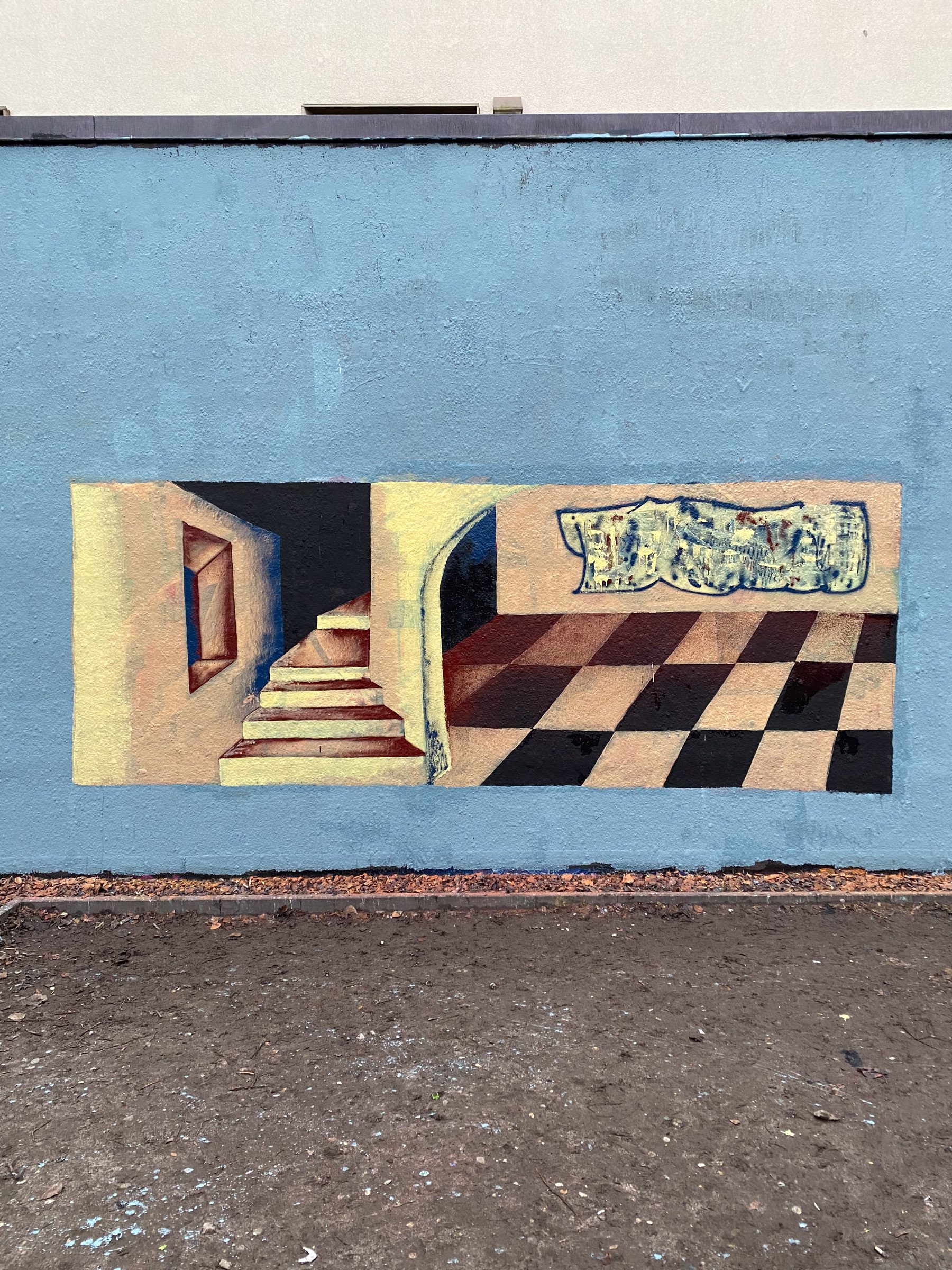
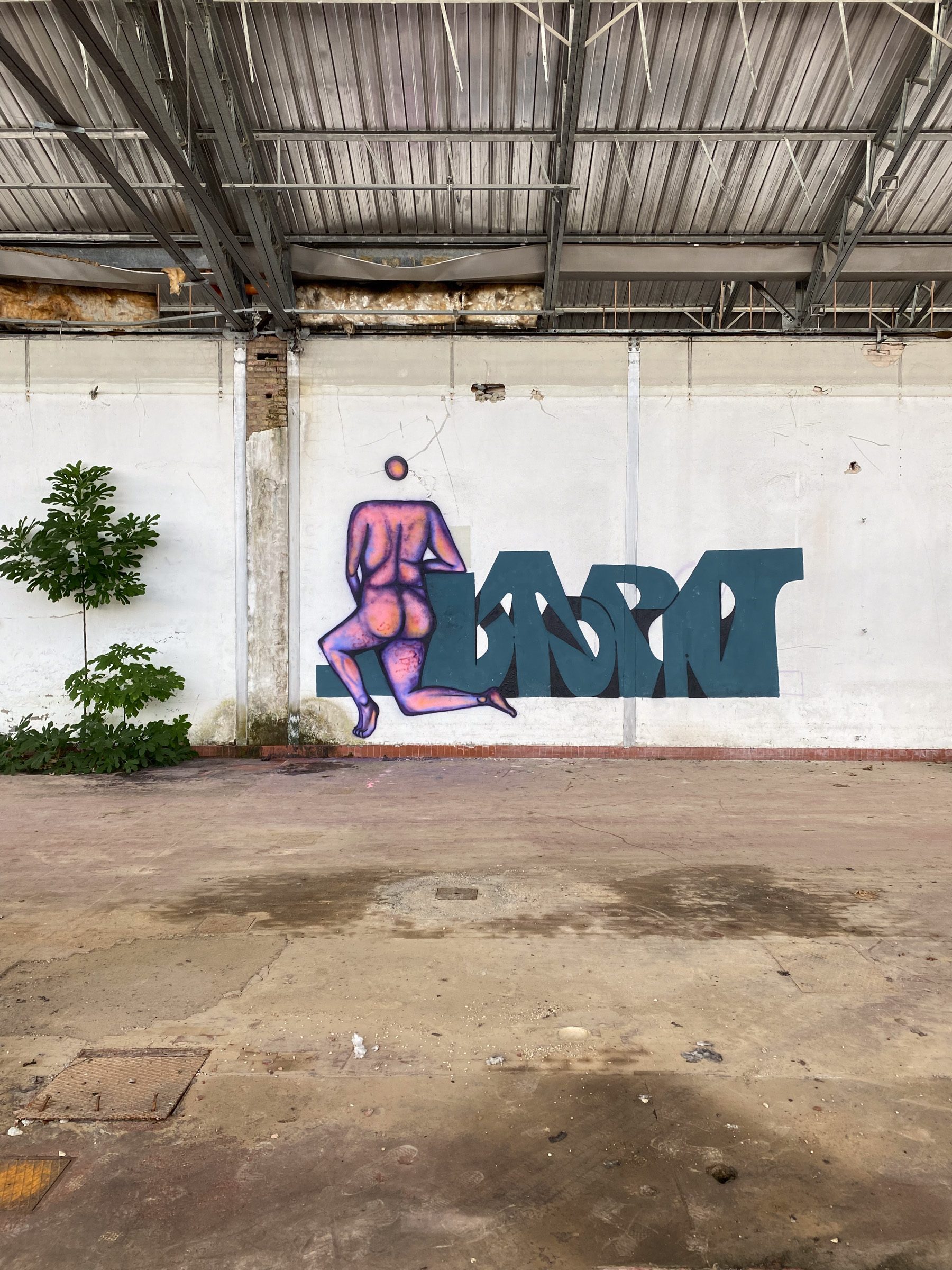
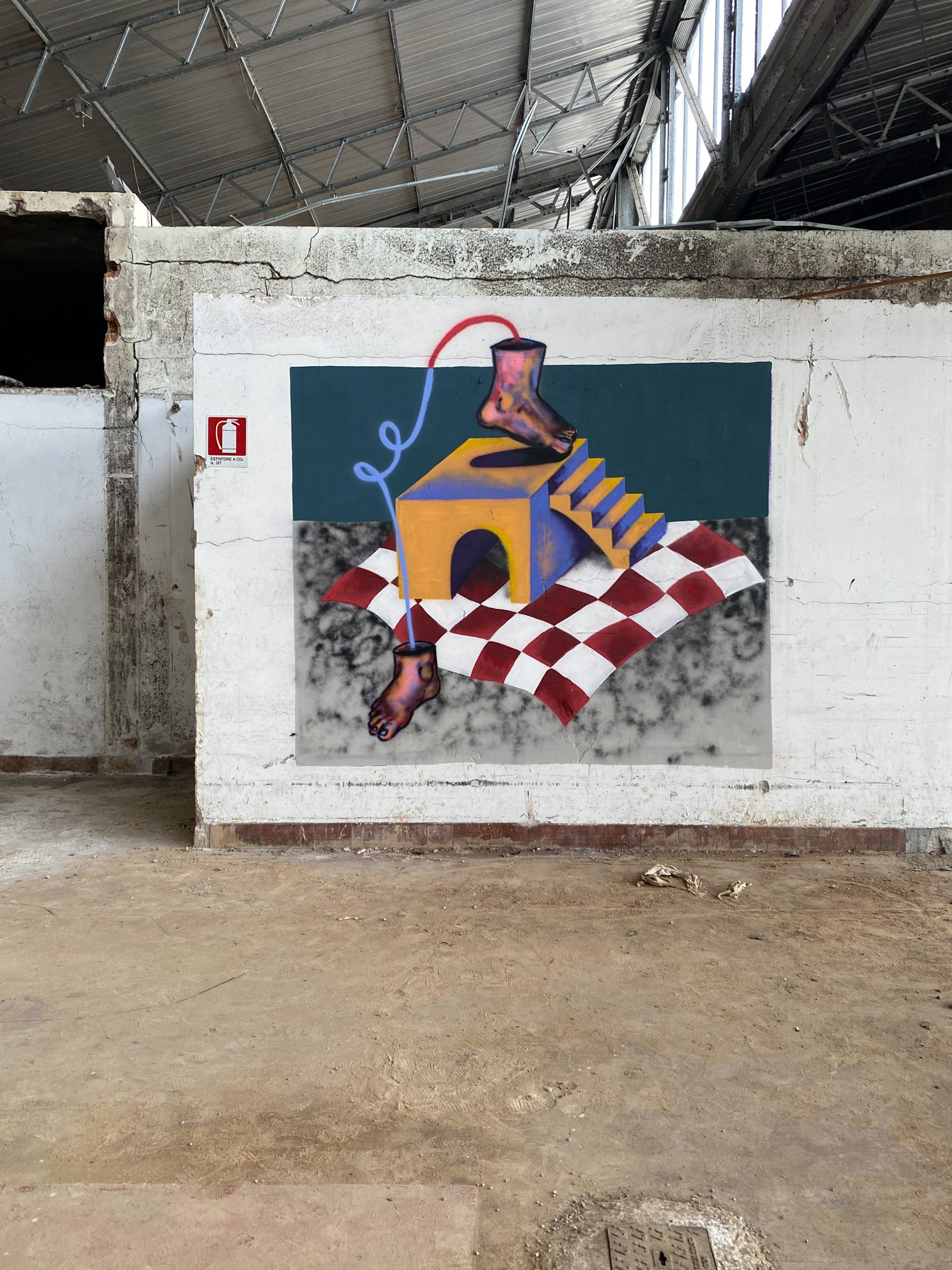
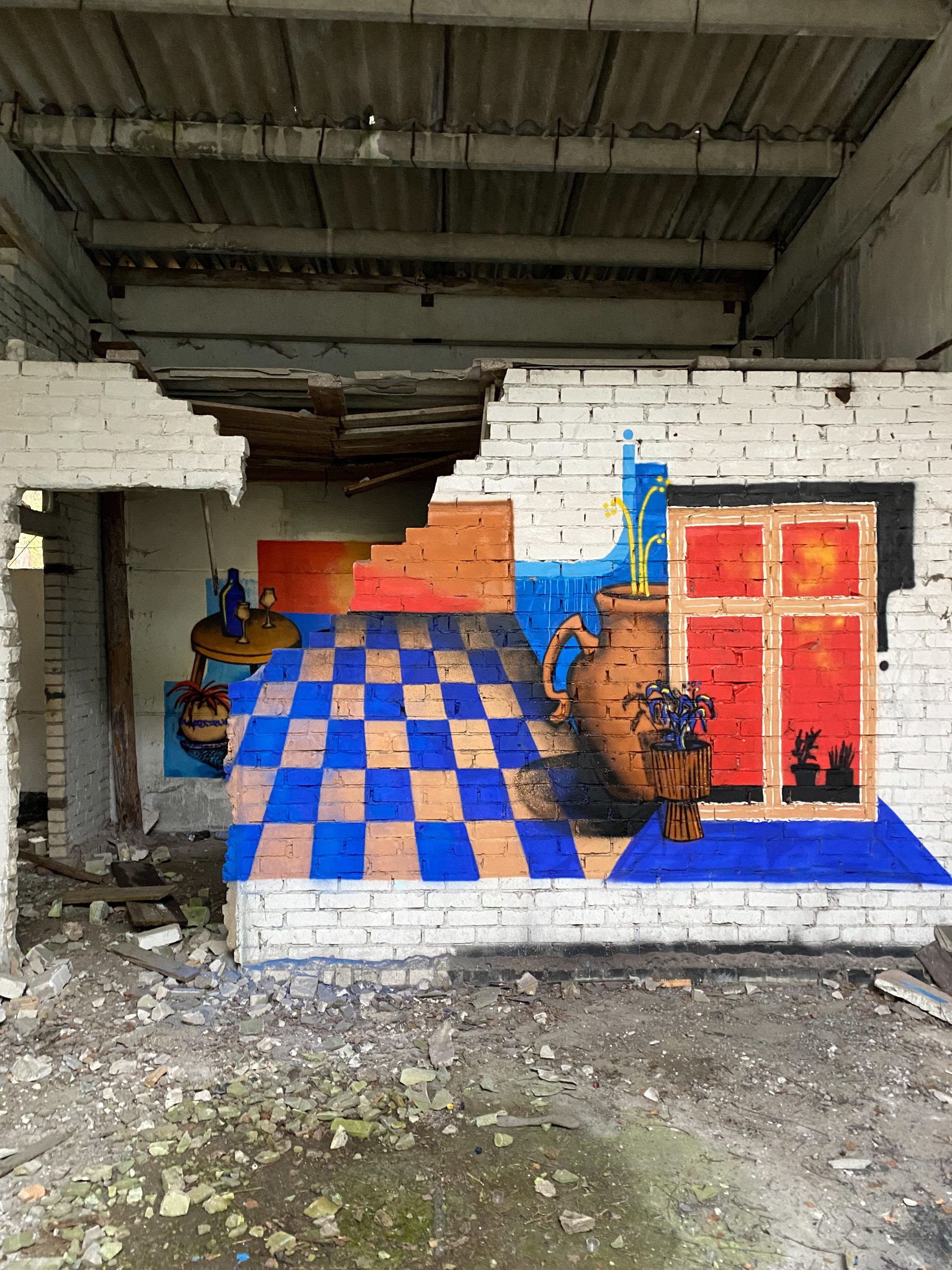
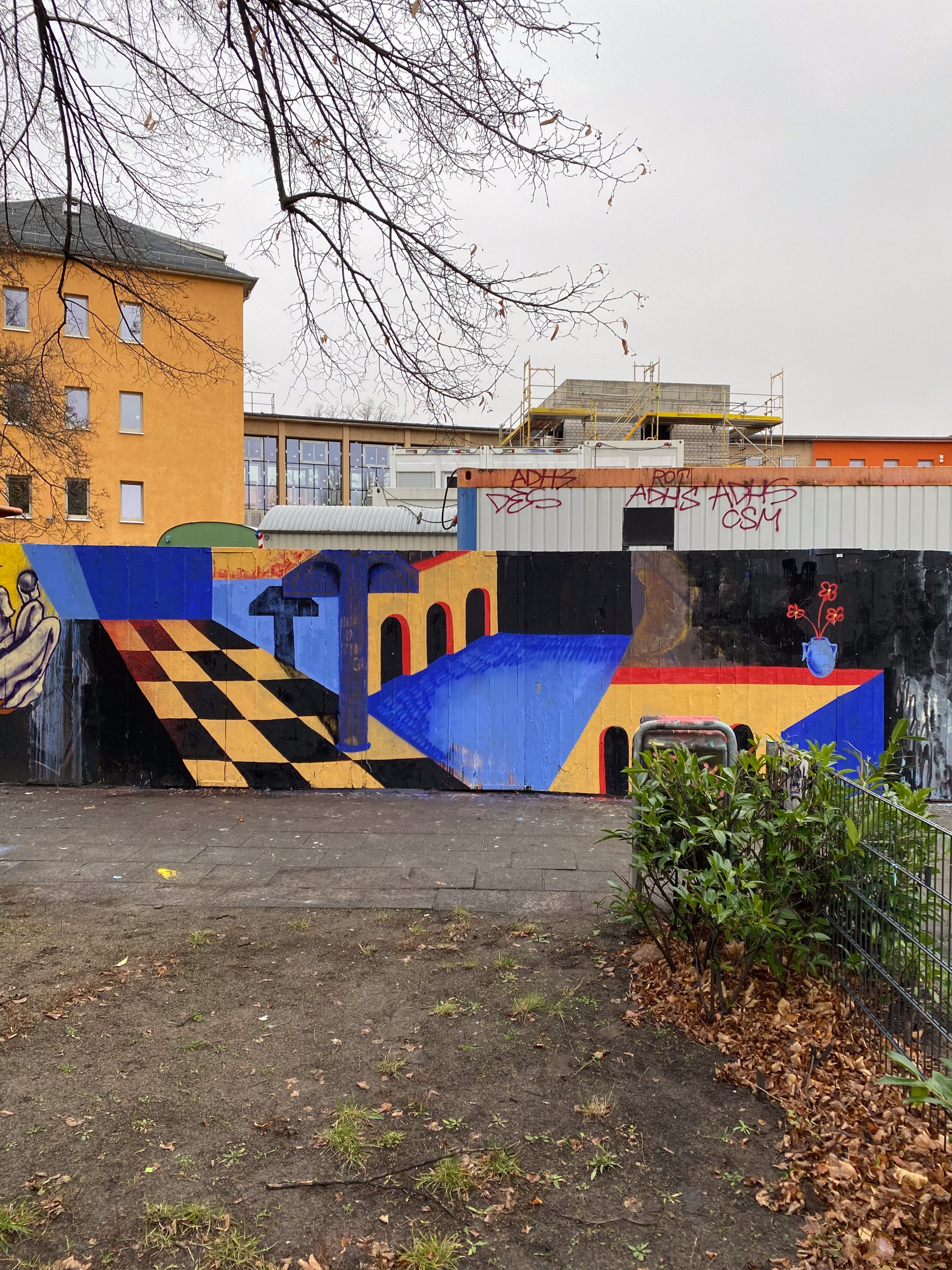
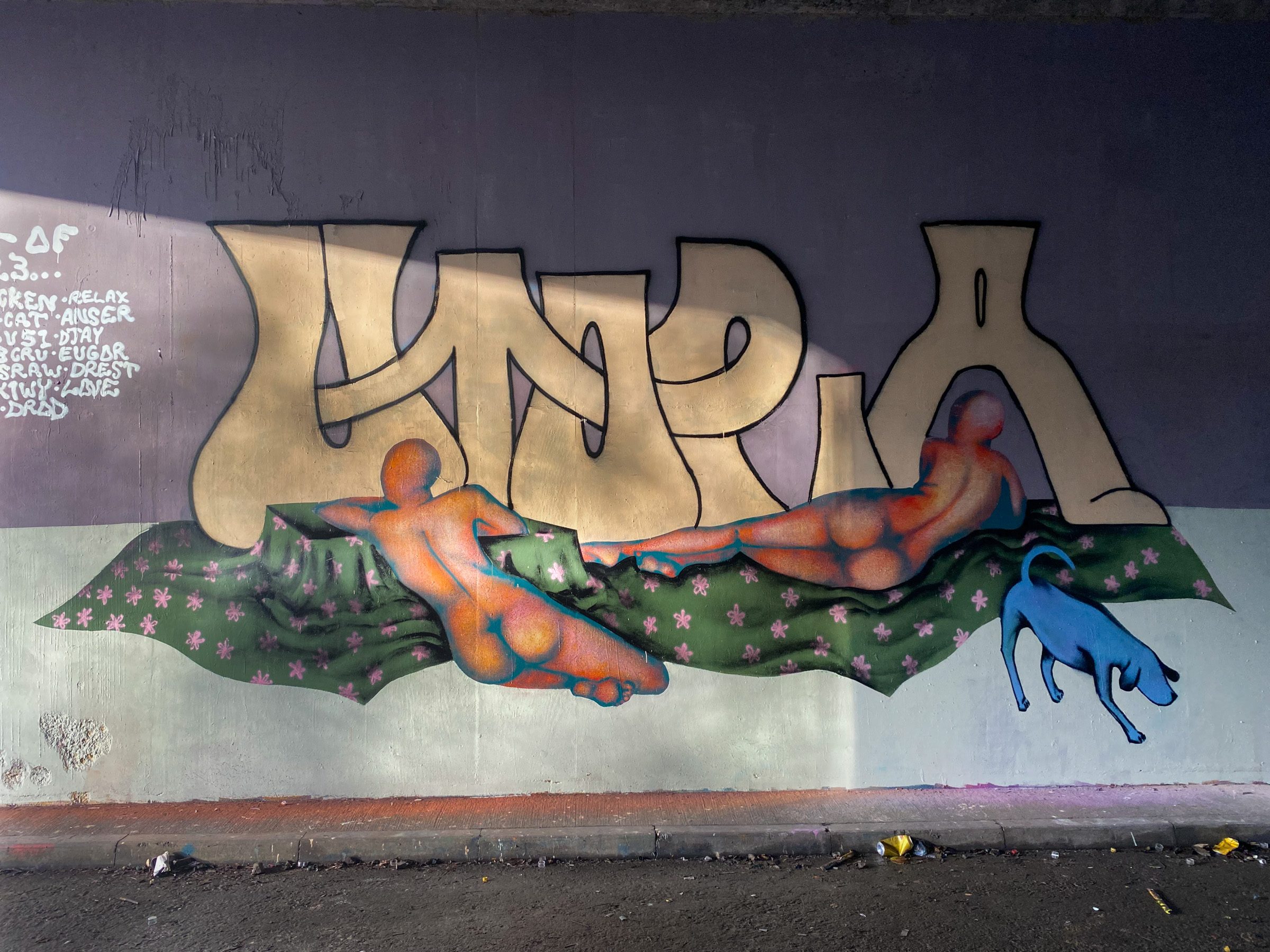
Were / are they mostly halls of fame or legal walls?
Anything, really legal walls and otherwise. I’m not particularly strict about that. That said, my favourites are abandoned places. There’s something very appealing about having a completely untouched wall a proper blank canvas. You can take your time, be a bit more relaxed, and actually enjoy the process without feeling rushed or under pressure from the surroundings. It’s probably the closest graffiti gets to a studio environment, just with a bit more dust and uncertainty.
How do you usually choose your walls?
Honestly, I’m not very precious about the walls themselves. Of course, the bigger and smoother, the better, although I do have a soft spot for a good brick wall. What matters more to me is the atmosphere.
Do you also do commissioned work?
Yes, here and there. Ideally, I’d love to do more, but at the moment I’ve been moving around quite a lot, which makes that a bit less straightforward. I’ve still done projects in every place I’ve stayed, though. What I’d really love one day is to paint the side of a high-rise building to see a work at that scale would be incredible.
When you paint freely, do you improvise directly on the surface? Or do you already have an idea in mind before you start, or even a drawing/sketch?
It’s about 50/50 for me. There are times when I paint purely for the enjoyment of it at the end of the day, that’s usually where it all starts anyway. In those moments I don’t really have a fixed plan. I might bring a sketch as a loose reference, but once I start, it’s more about letting things flow, changing ideas, merging them, or letting the piece completely take its own direction. That can be very rewarding, but also occasionally frustrating.
Then there are other times when I approach it more deliberately when I want to develop an idea properly, or translate something more thought-out onto a wall. In those cases I’ll plan a bit more and try to stay faithful to the concept, while still leaving space for the painting to evolve naturally in the process.
How do you choose your colour palette?
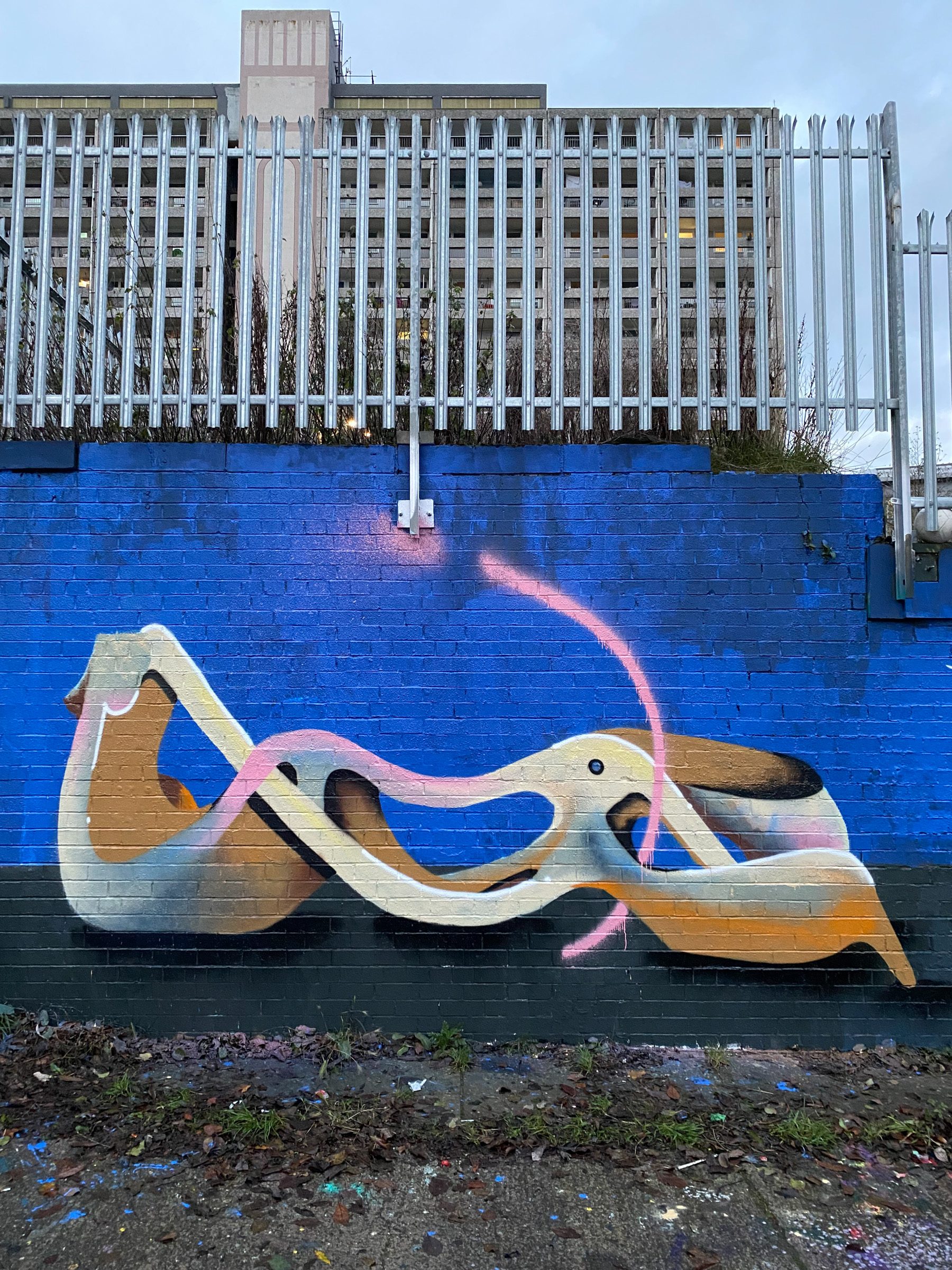
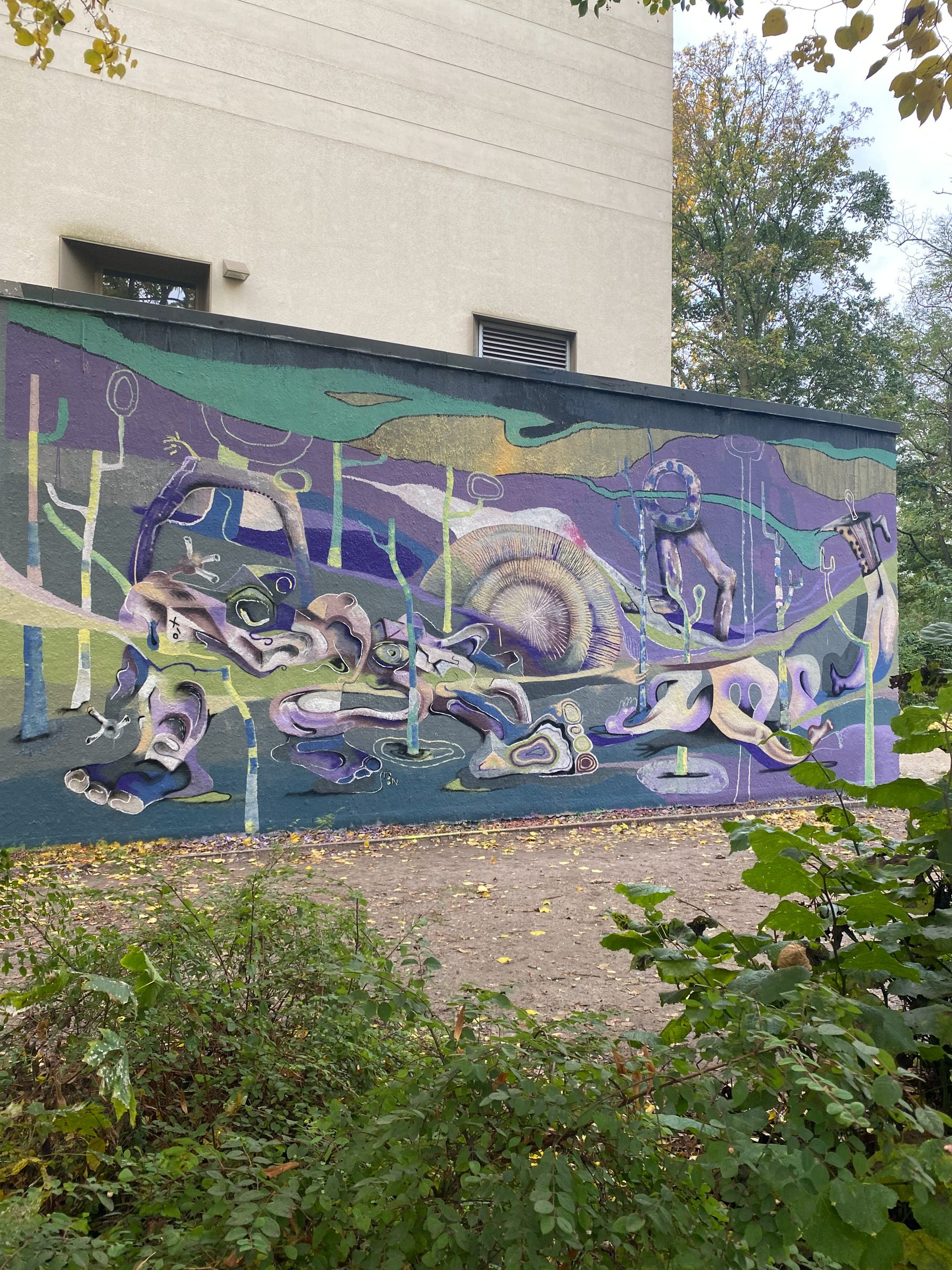
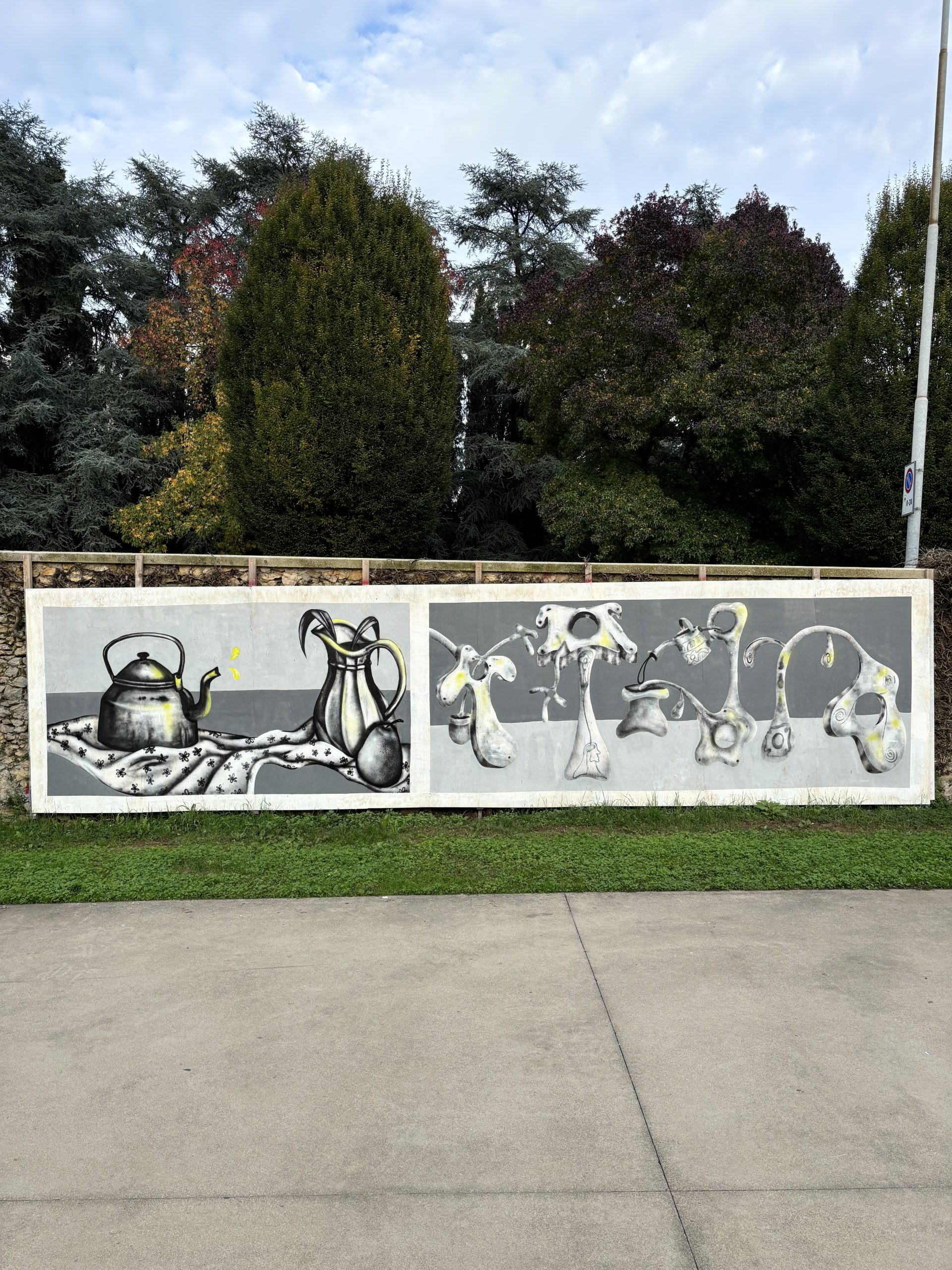
Unlike other parts of my aesthetic and visual identity, I think colour is something I’ve had quite defined from the beginning. In a lot of graffiti, colour is used to grab attention to be loud, punchy, and stand out through strong contrasts. I’ve always found that if everything is trying to stand out, then nothing really does, so I tend to prefer more muted palettes, which then allow the brighter elements to actually pop and create a sense of focus and hierarchy in what you see first. Maybe that comes from my studies, but I’ve always tried to choose colours based more on feeling and intention than pure impact. Lately, I’ve been playing with that even further trying to reduce colour even more and see how much restraint the image can actually hold.
What techniques do you use on walls today?
I mostly work with a mix of emulsion and rollers (I don’t really use brushes) and spray paint mostly used in very specific, soft and controlled way. This approach comes from a range of influences. I’ve been quite inspired by writers I’ve met in Berlin and seen over time, like Relax, Moon, Bsos, Roger and Scim…Some of the first people I saw doing full graffiti pieces using only rollers, which really stayed with me. Seeing them work so confidently with such a reduced set of tools made me realise you can step away from what’s expected and still fully own the process. Another influence is Elph1, a Scottish writer, who uses spray paint in a very soft, speckled way to build subtle gradients and texture. That really opened up a different way of thinking about what spray can do for me.
Approximately how large are your murals?
As big as can make it.
What was the biggest wall painting you did so far?
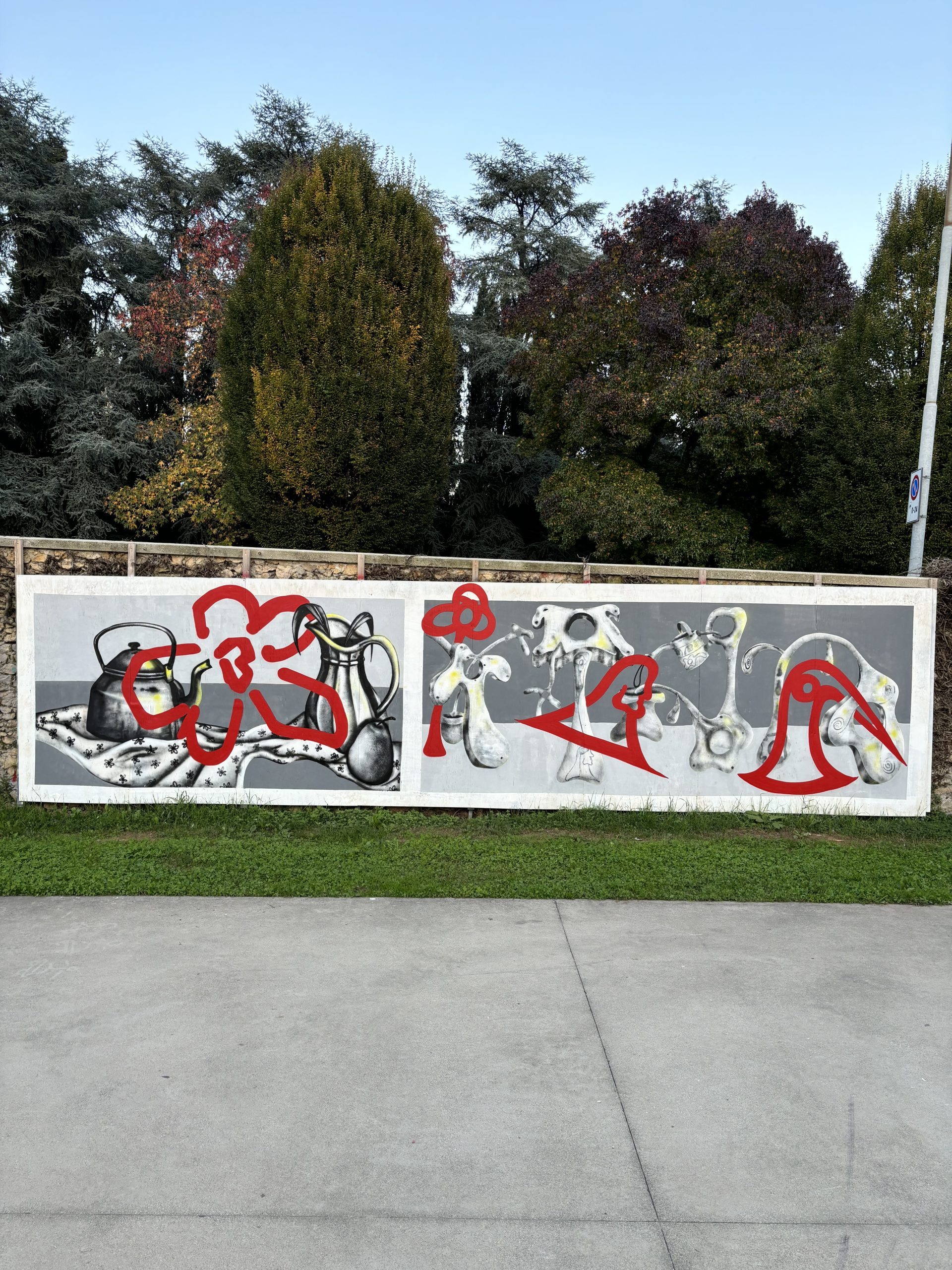
Probably around 20 × 5 metres. Most of my work so far has been more landscape-oriented, wide rather than tall, so I’d really like to work on something more vertical at some point.
Roughly how long does it take you to complete a piece?
It really depends on the type of work. Graffiti pieces are to be done within a day that’s very much part of the culture. When you’re painting a legal wall, especially, you don’t really have the luxury of coming back the next day. Murals, on the other hand, can take several days since they’re often more planned and developed over time.
What are the challenges of creating a successful wall painting?
The challenges are different every time, because you’re always working with a new environment, surface, and set of materials, so the technical side constantly changes. The only real constant is that at some point in the process sometimes at the beginning, sometimes right in the middle I usually become completely convinced that I’ve messed it up. Getting past that moment, or just staring at it and then continuing anyway, that’s a challenge.
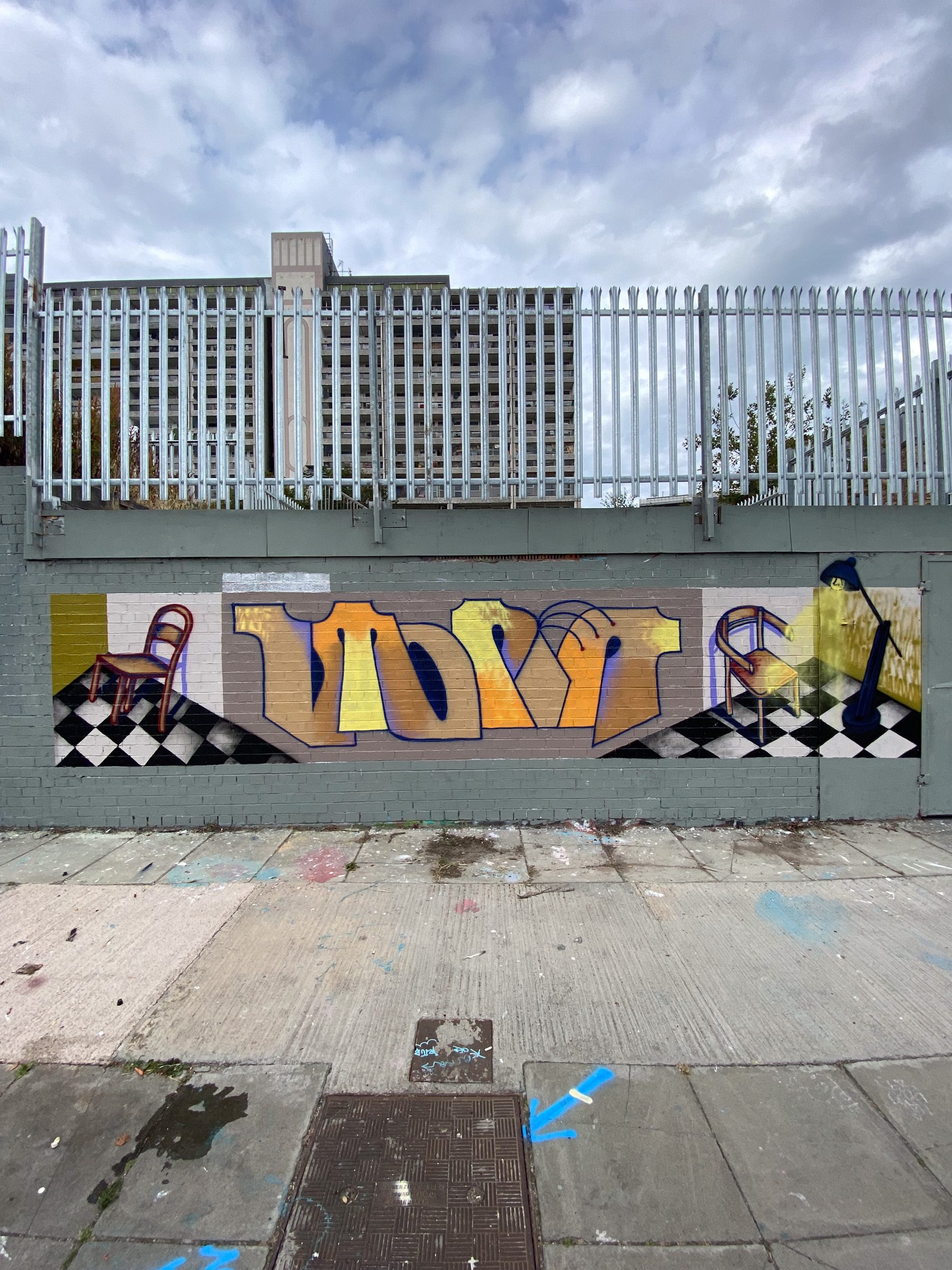
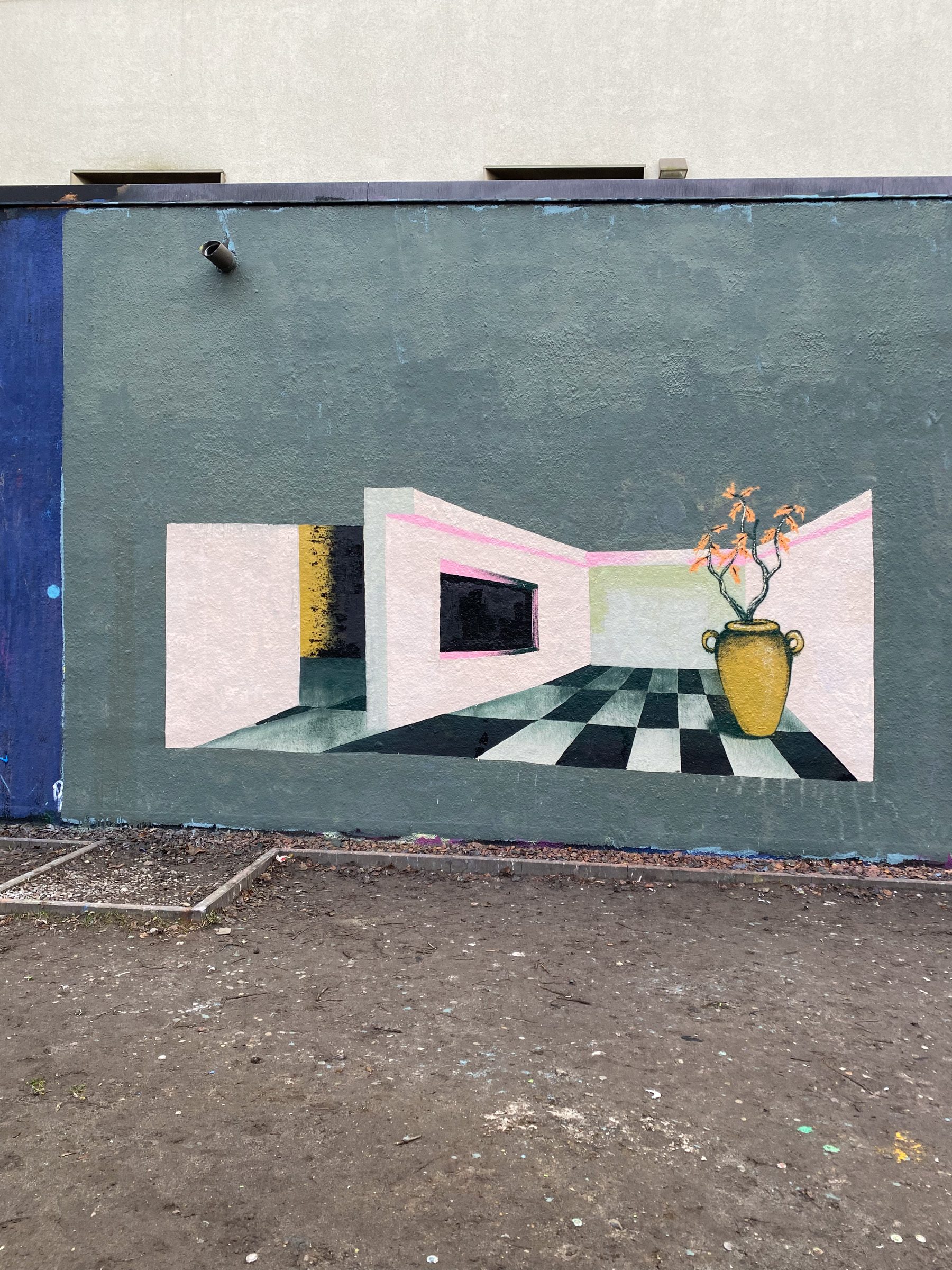
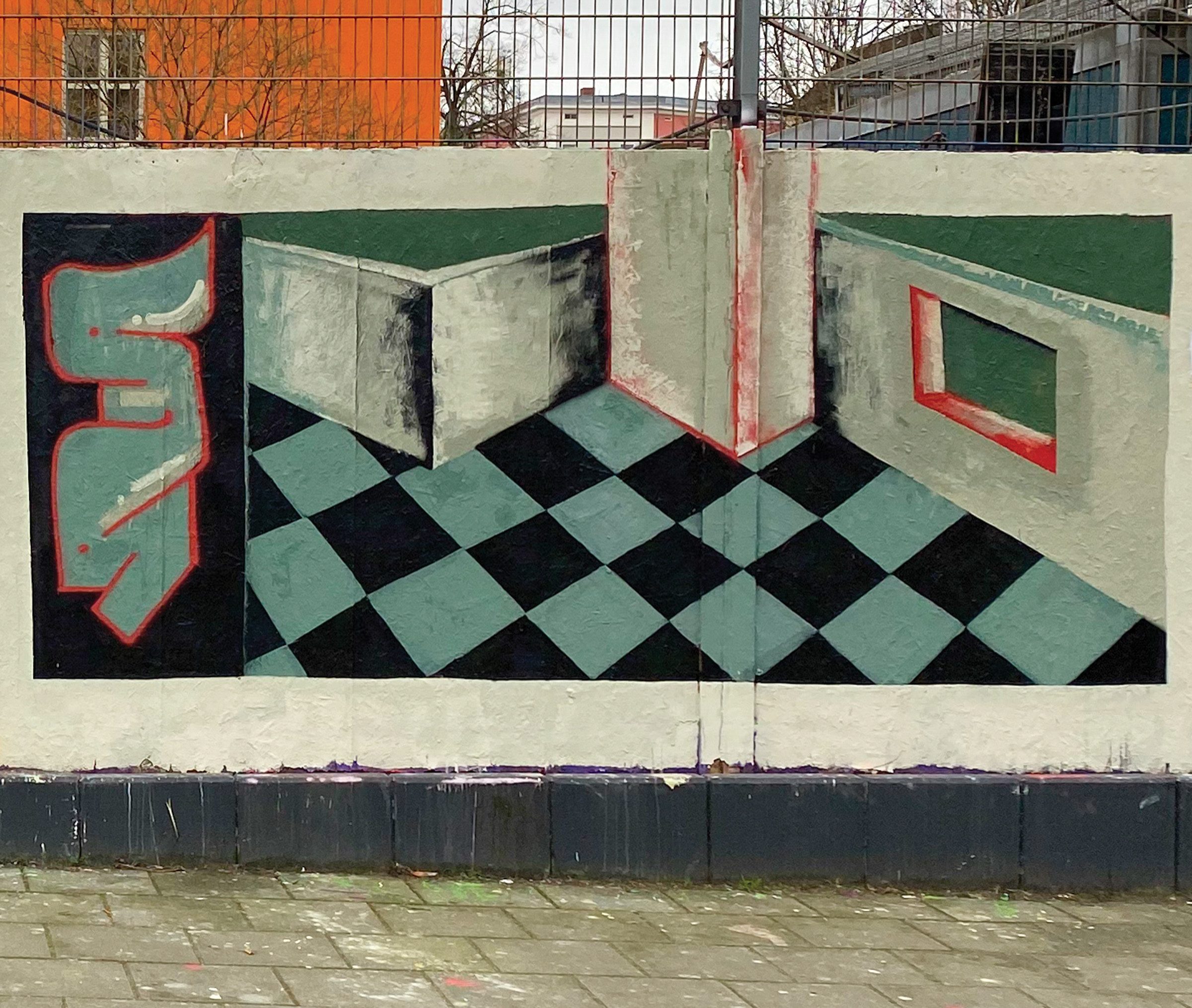
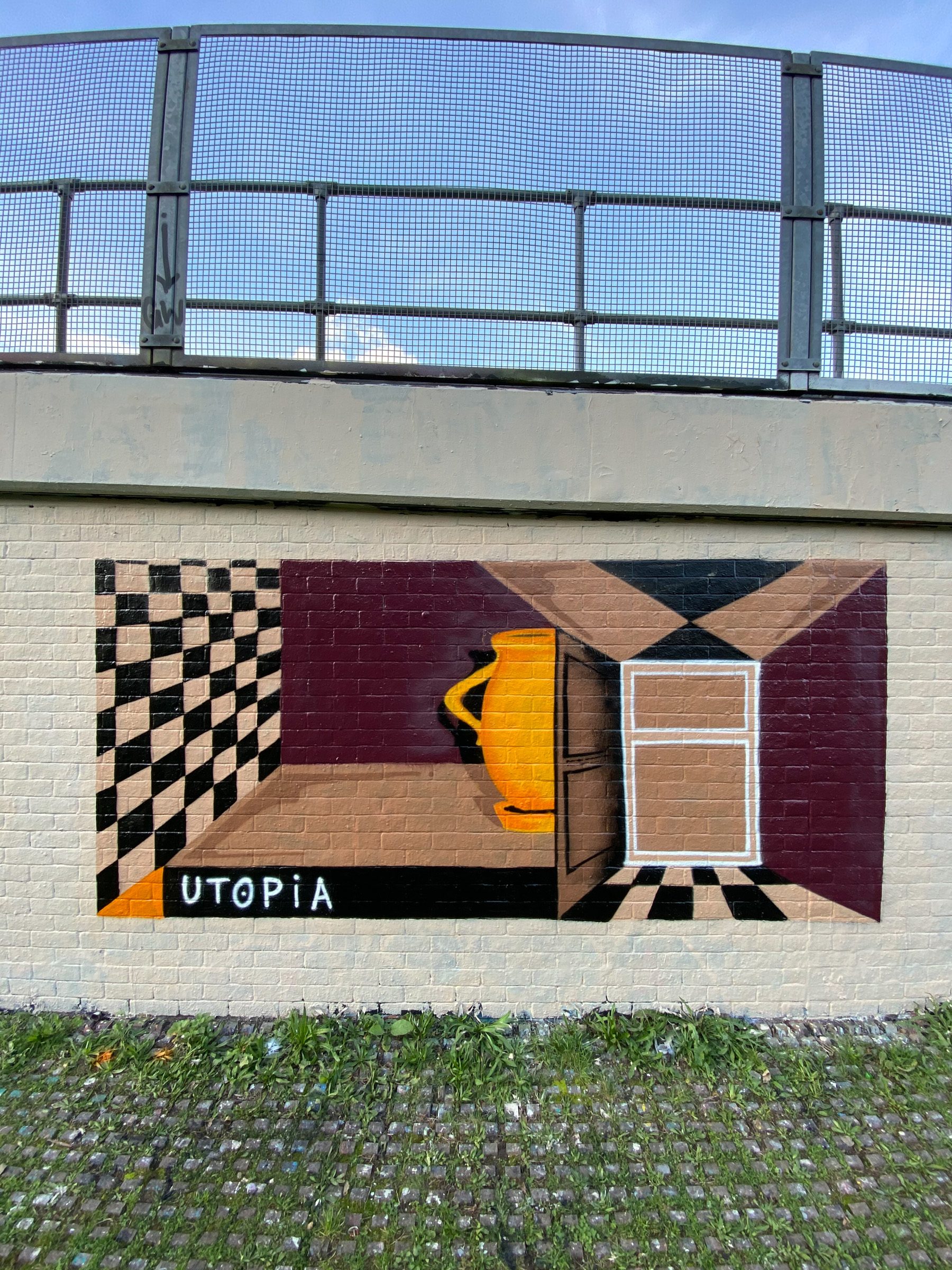
Letters, figures, objects and spaces, interiors, seem to inspire you.
Could you tell us something about that?
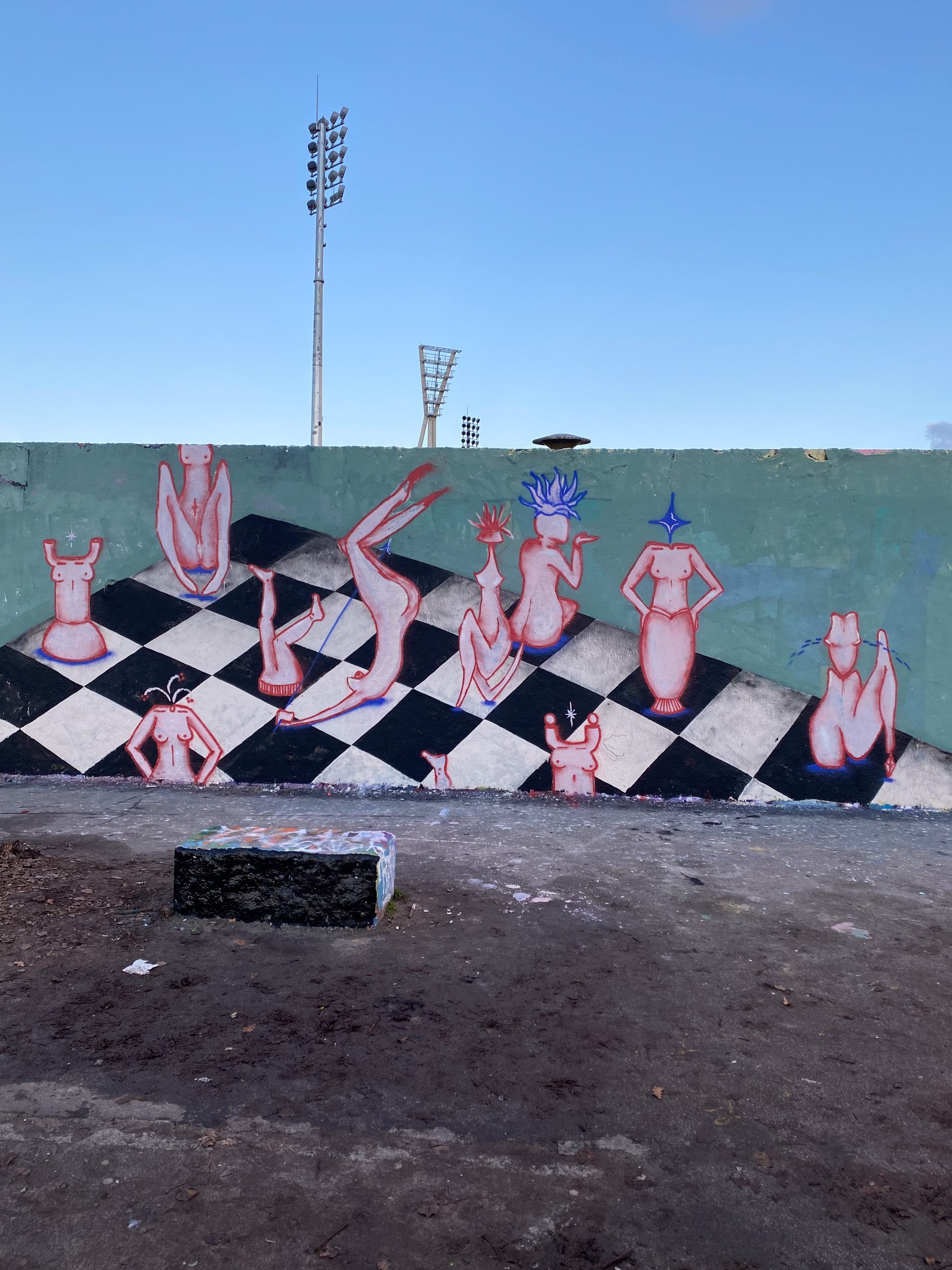
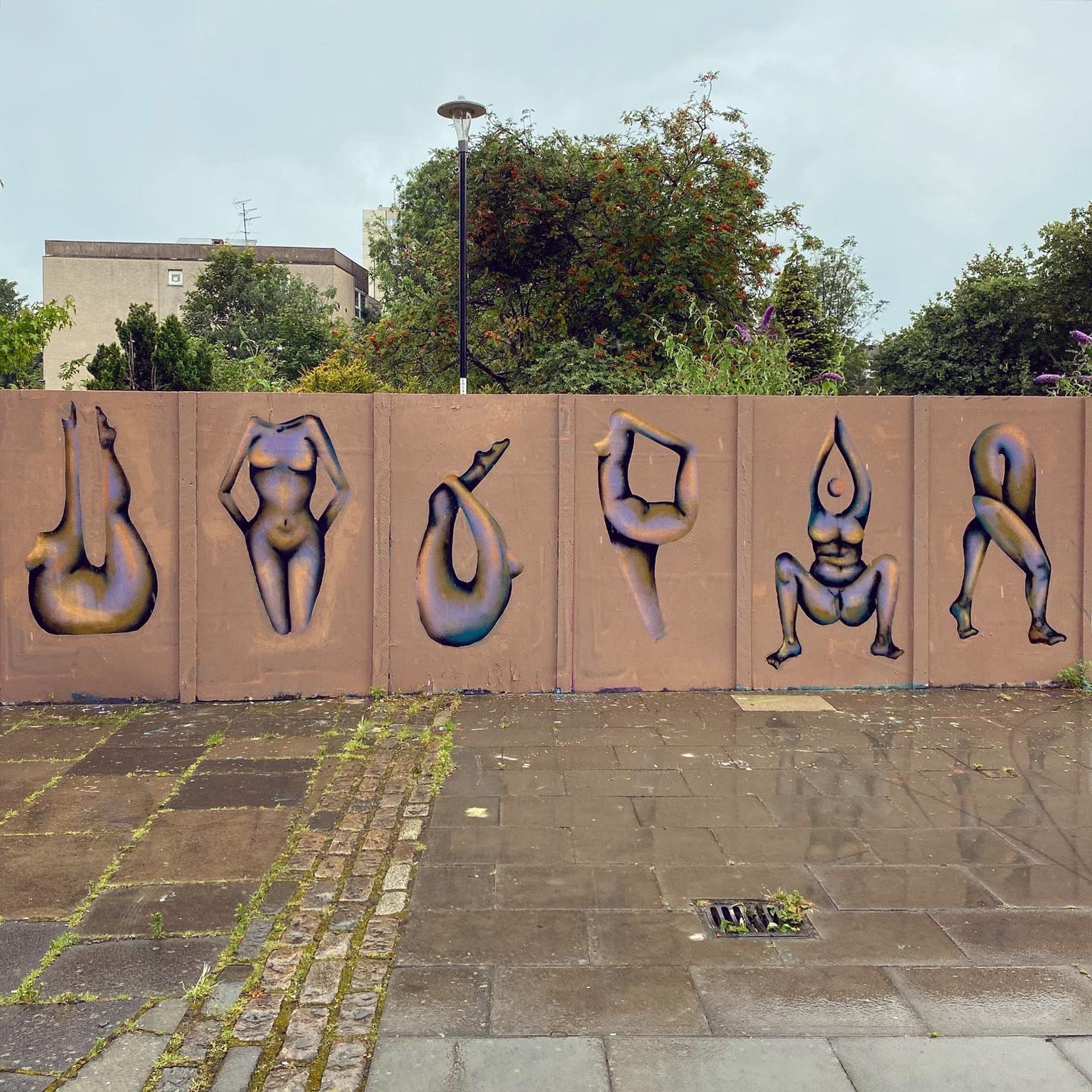
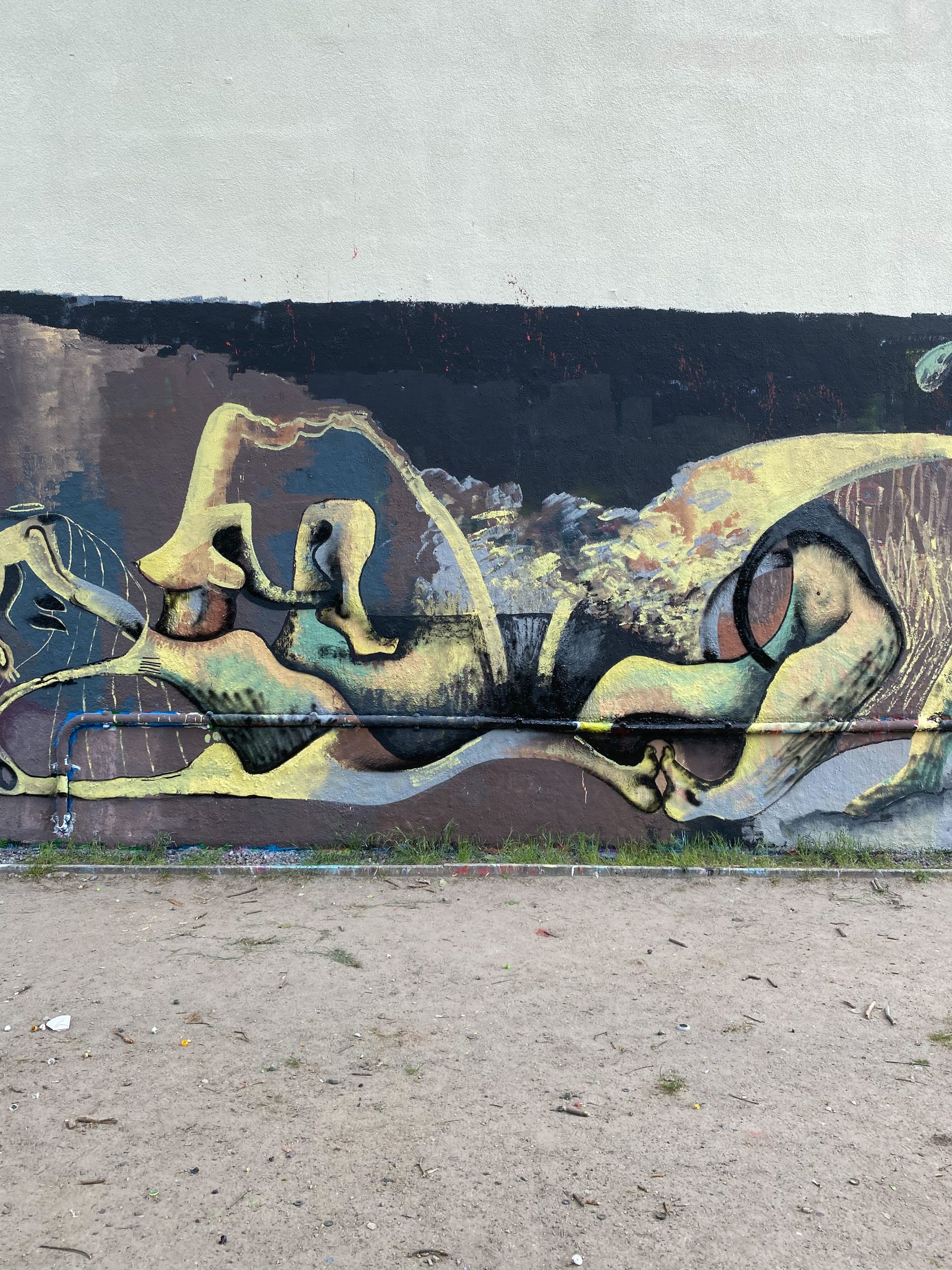
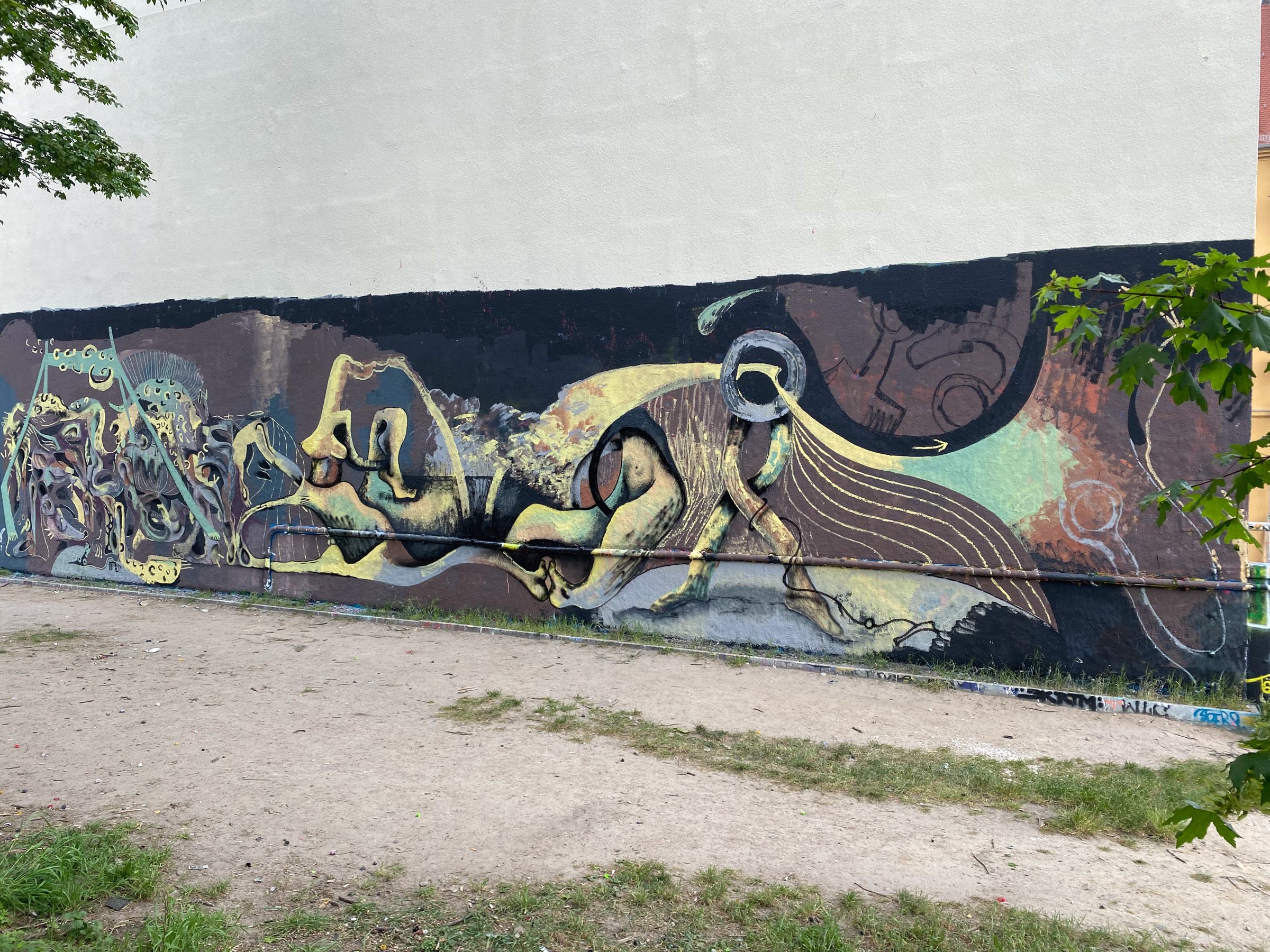
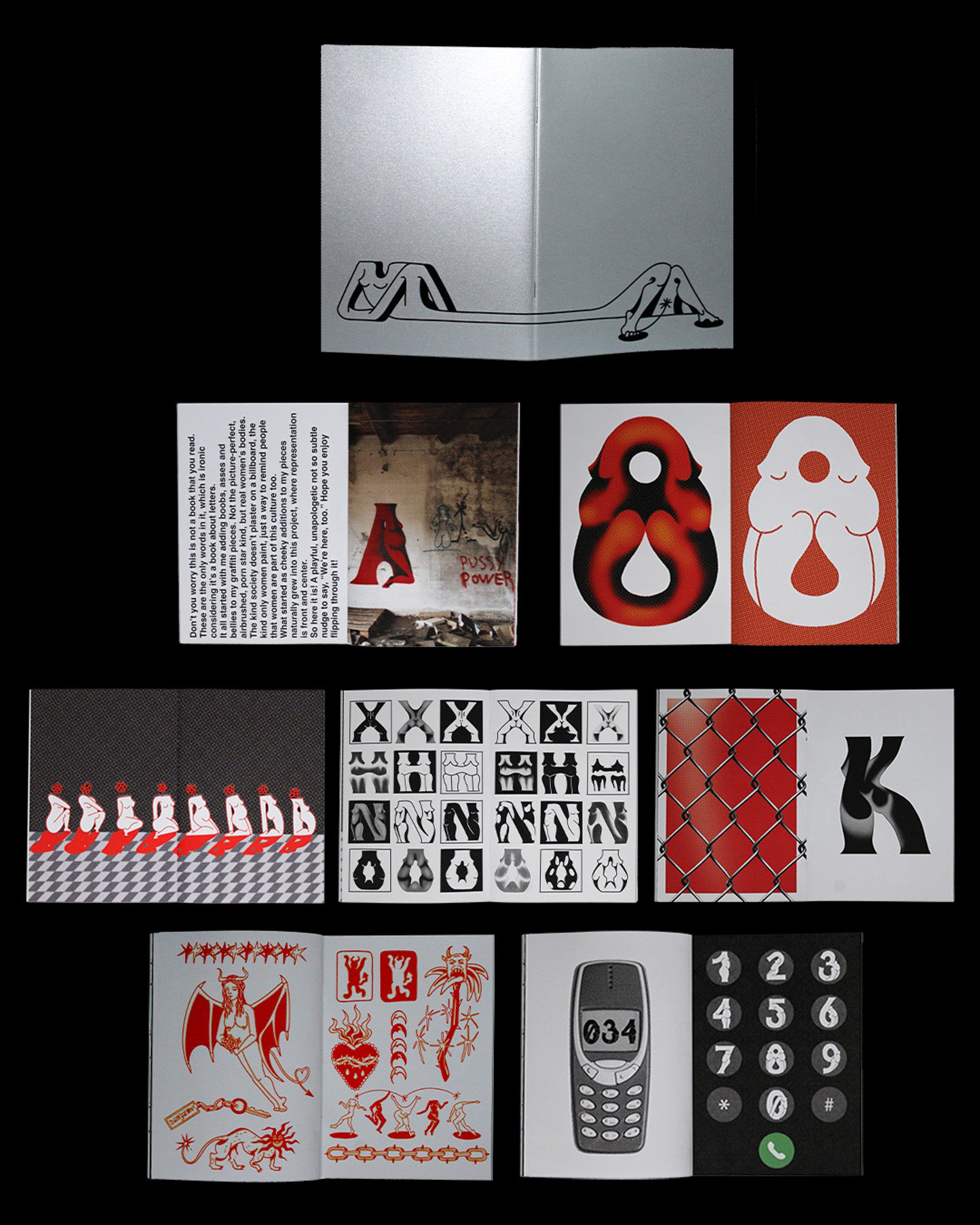
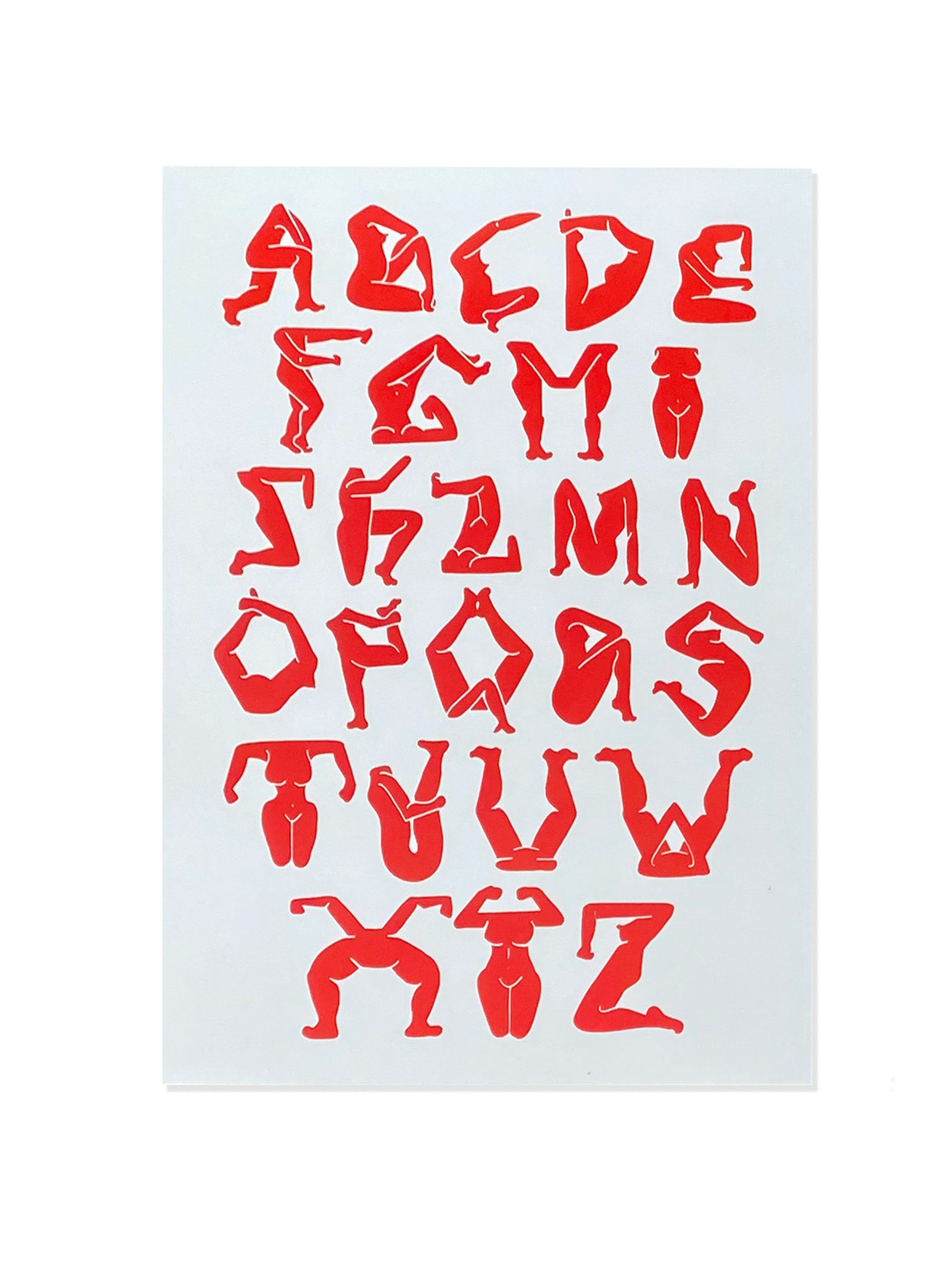
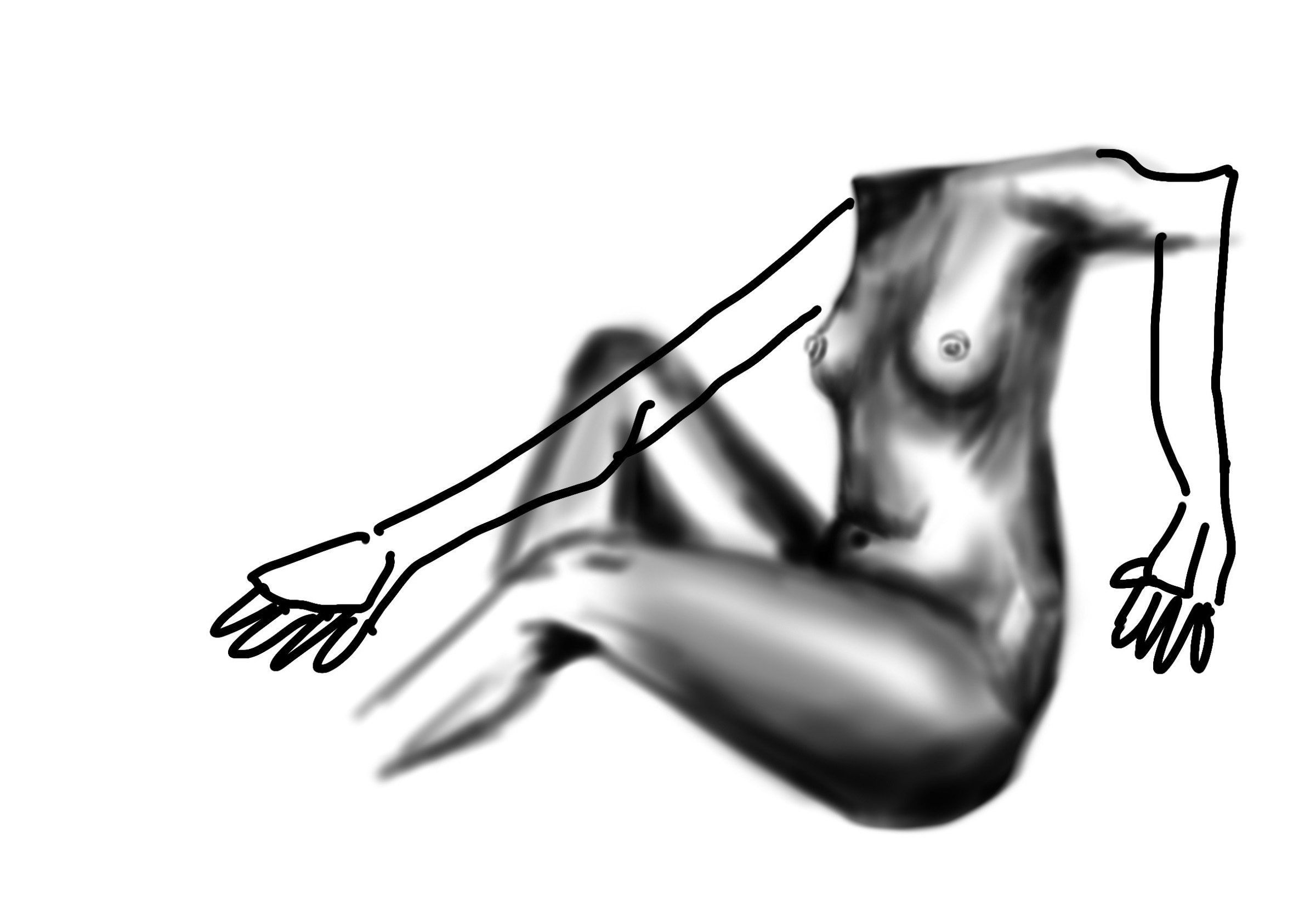
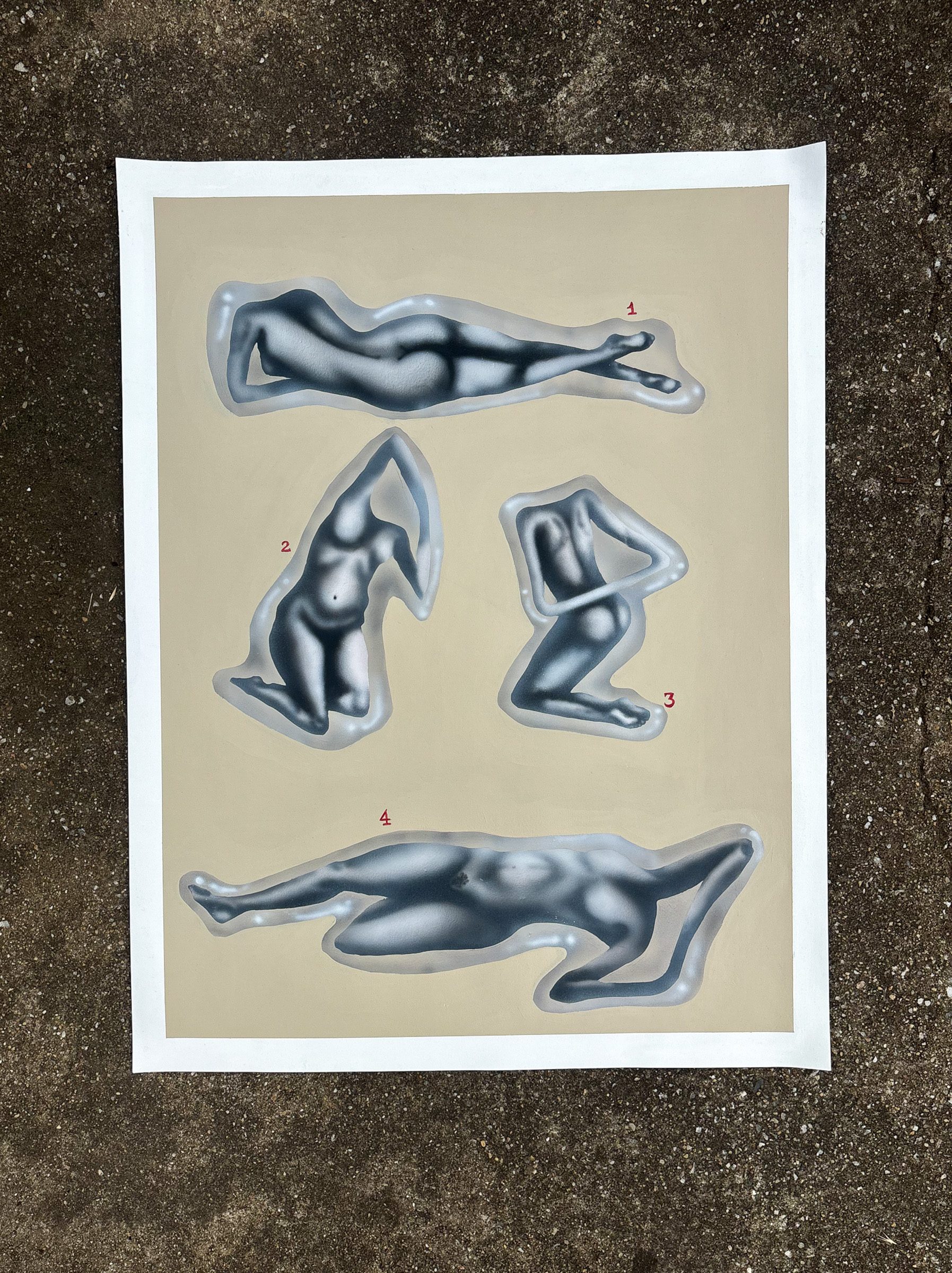
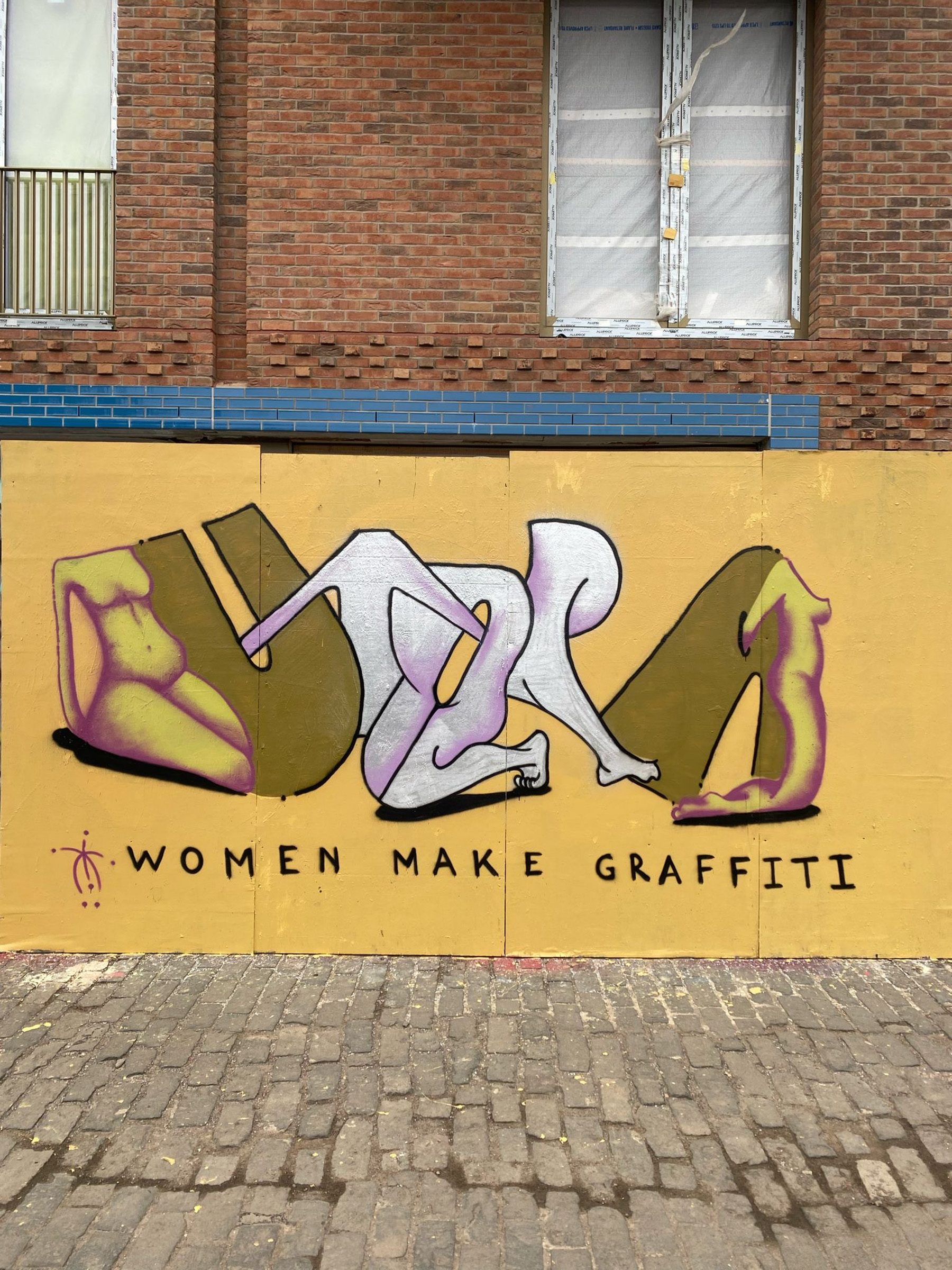
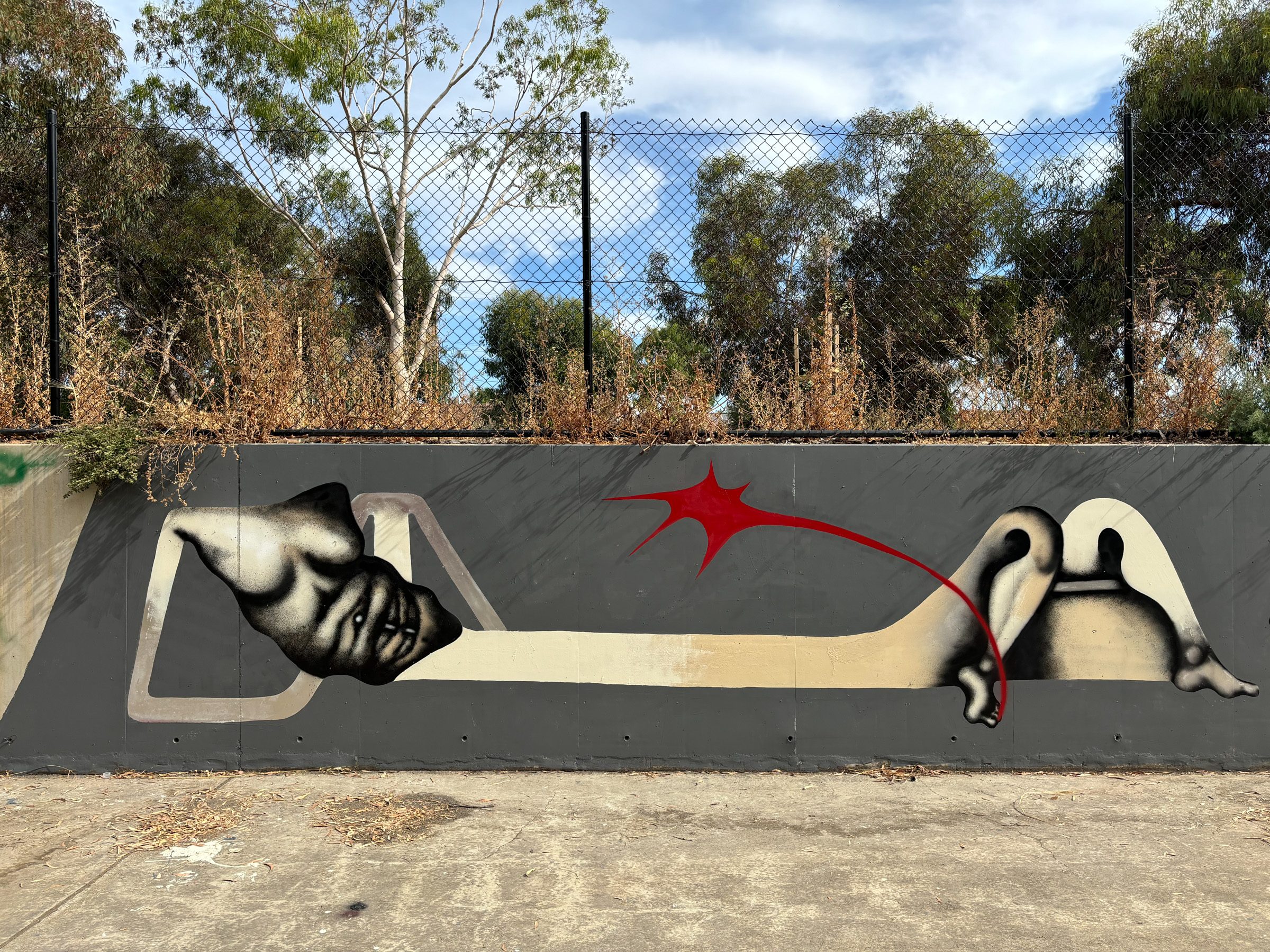
I’ve always painted figures, even before I started painting letters. I suppose there’s something quite human about it we’ve always been fascinated by representing ourselves. I’m probably no different; I just try to approach it in my own way, exploring different forms of the body, with a particular focus on women and our complicated relationship to it. We’re constantly surrounded by images of the female body, often highly sexualised, and still only a very narrow range of body types is considered “acceptable,” which inevitably shapes perception.
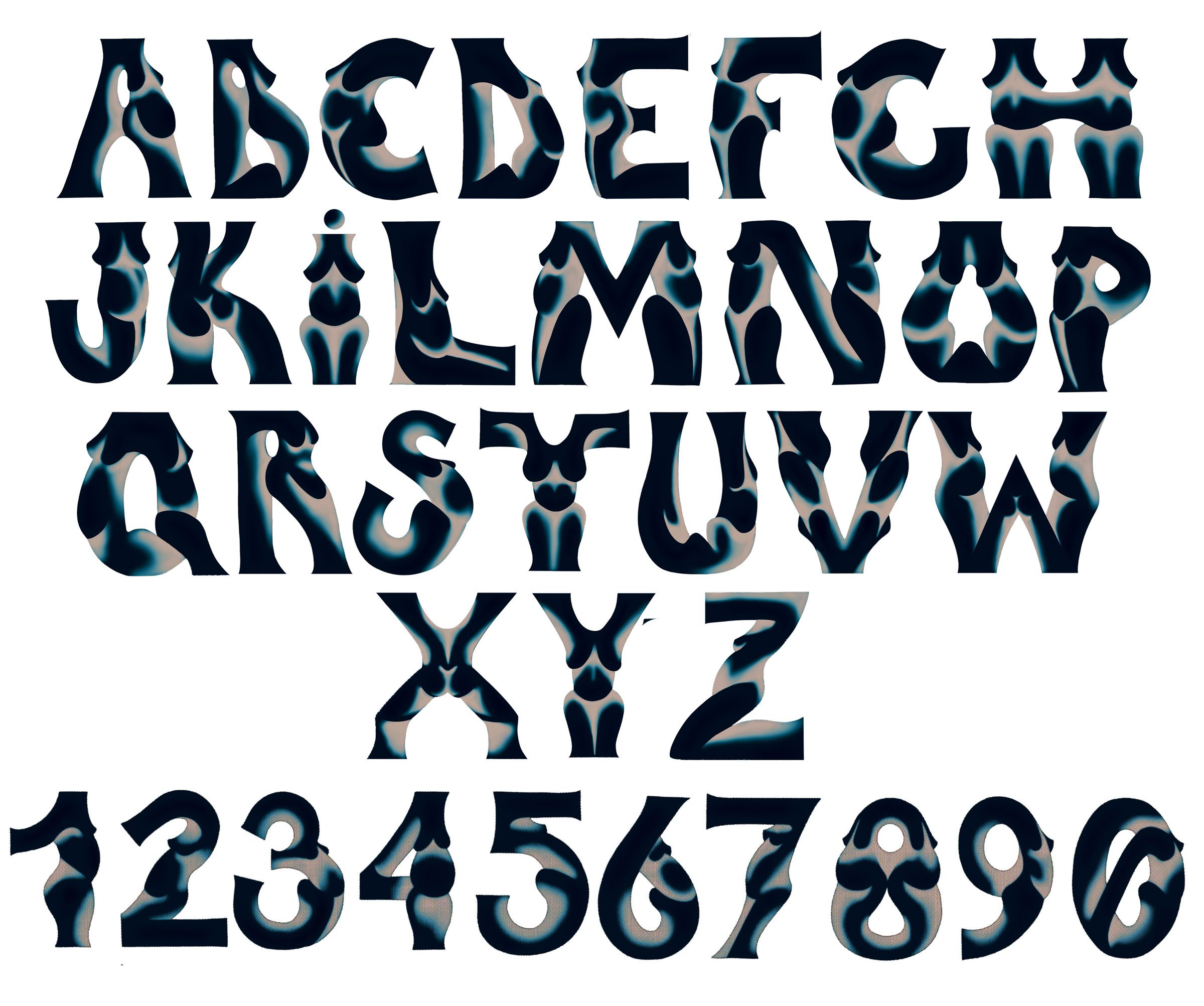
When I later started working with letters, I became interested in combining the two. Almost using the body as a structure for language letting figures form letters, or the other way around. That became a really interesting space to explore, especially the tension between legibility and form: sometimes the letter leads, sometimes the anatomy, and the work shifts depending on which one I choose to prioritise.

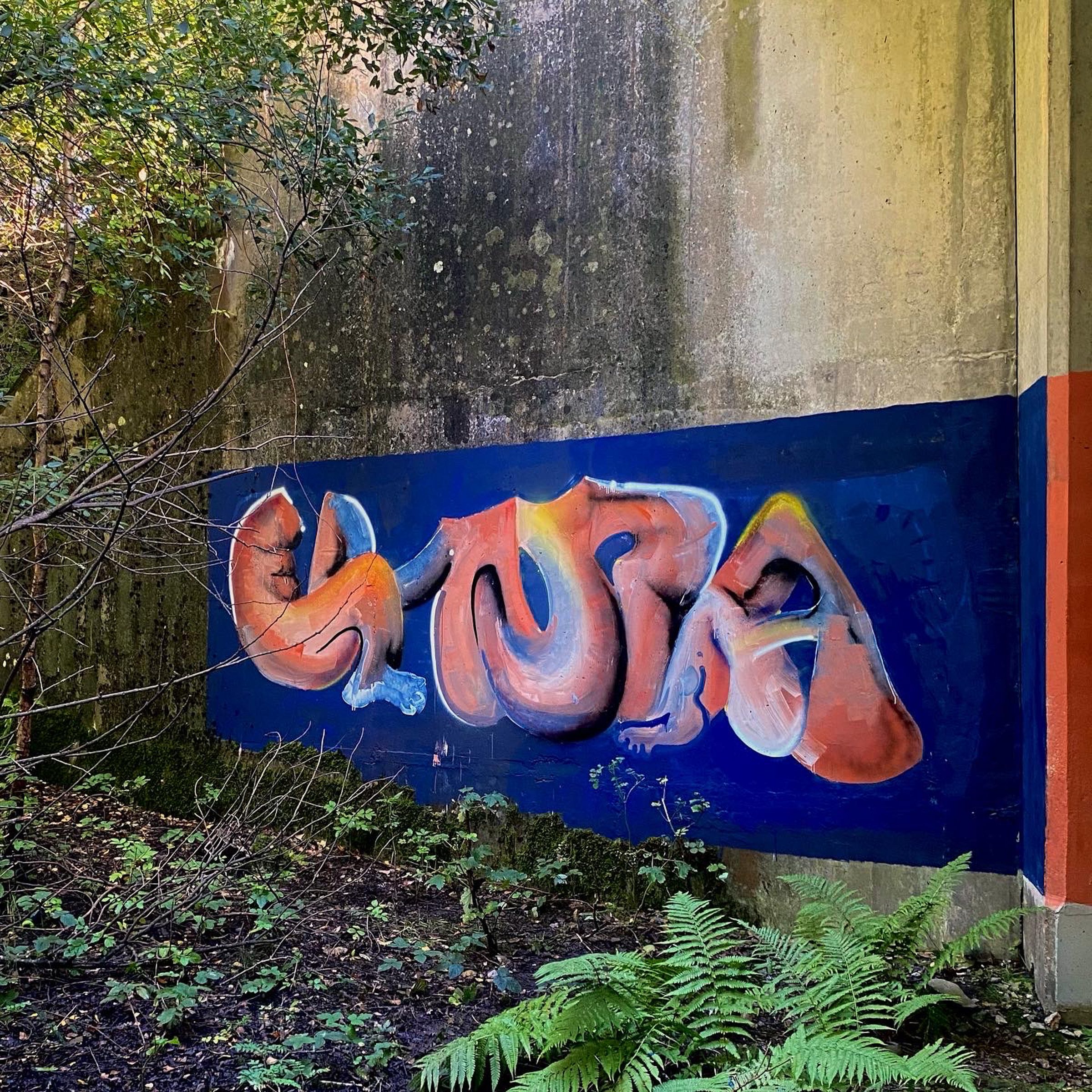
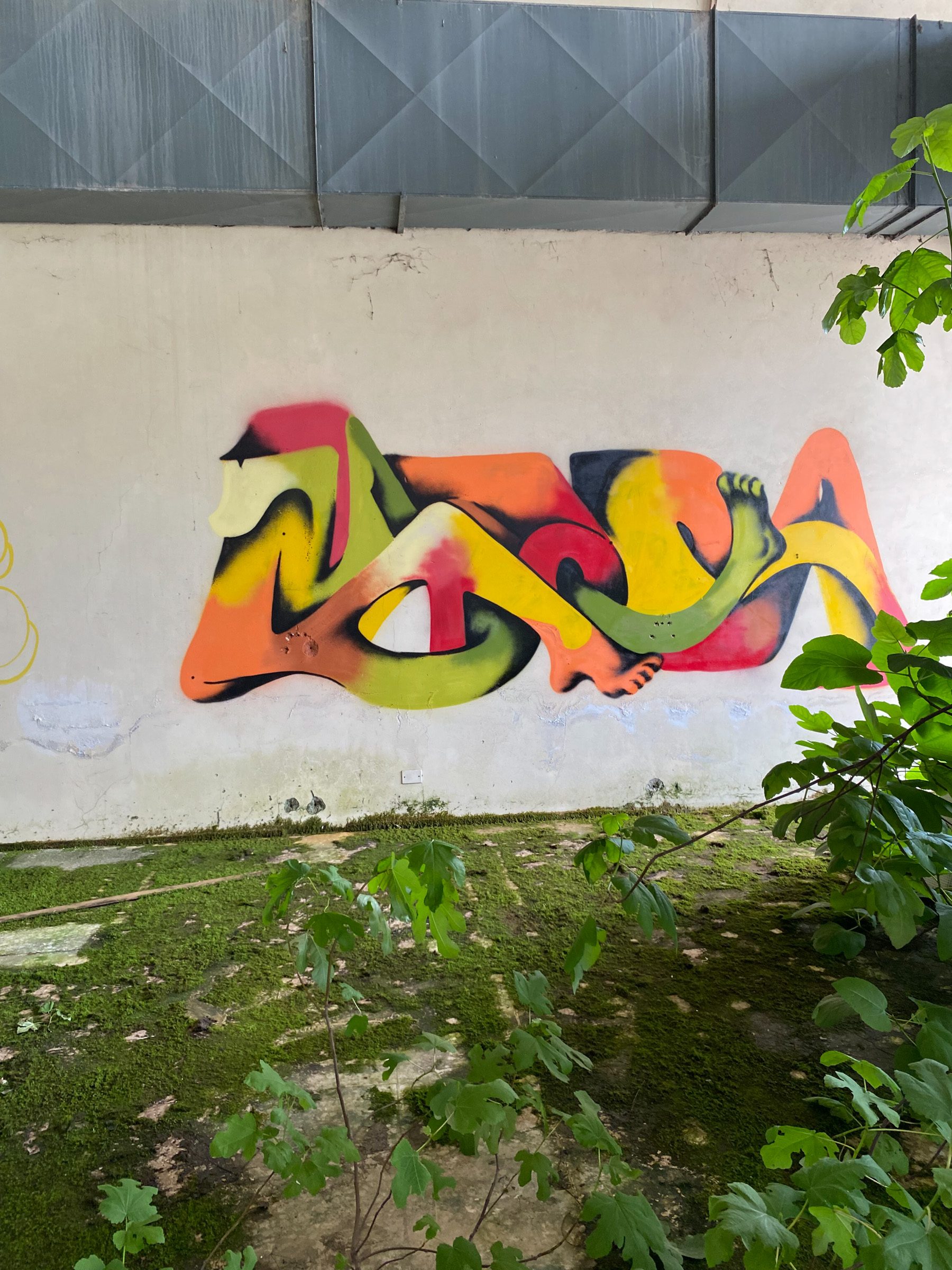
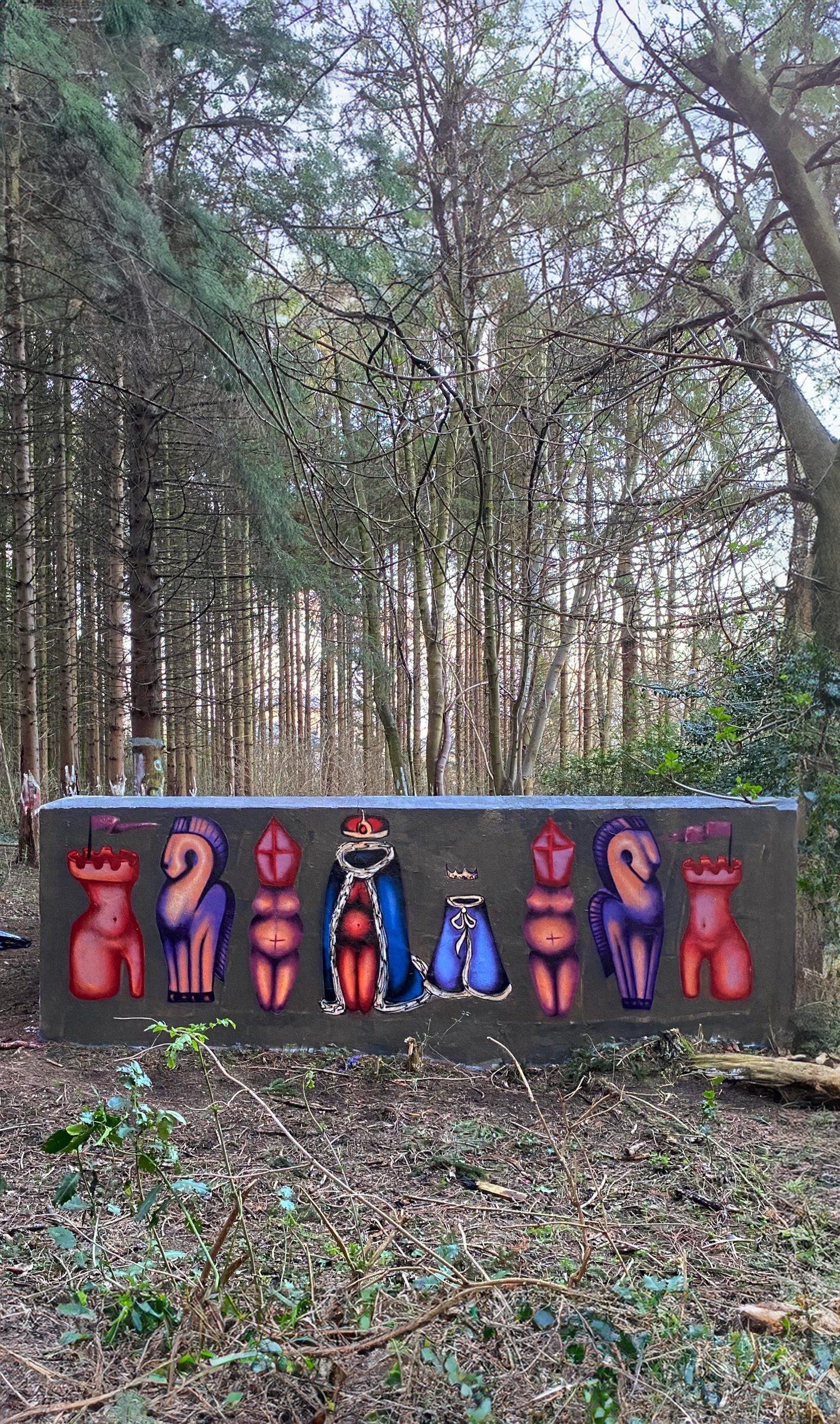
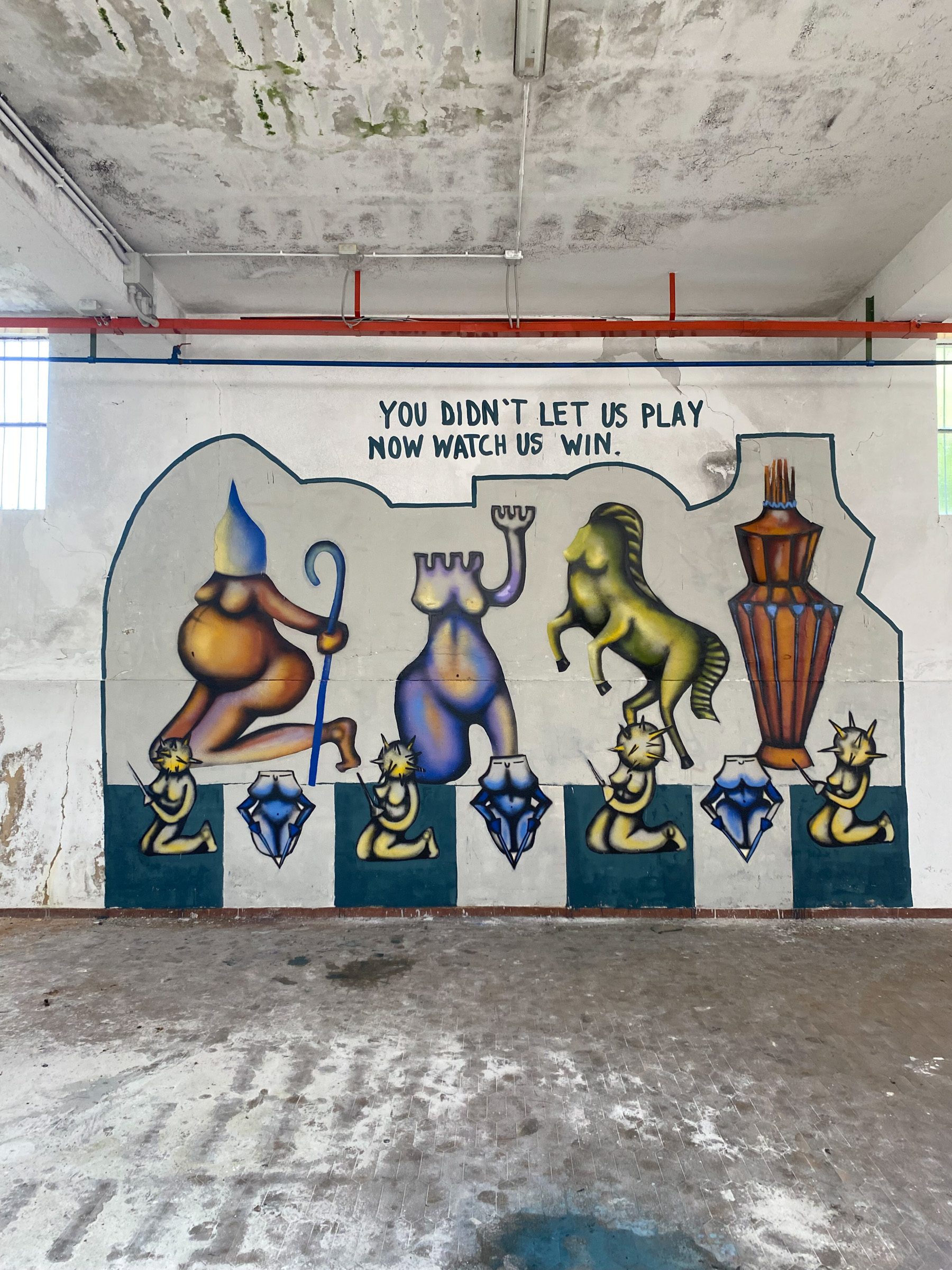
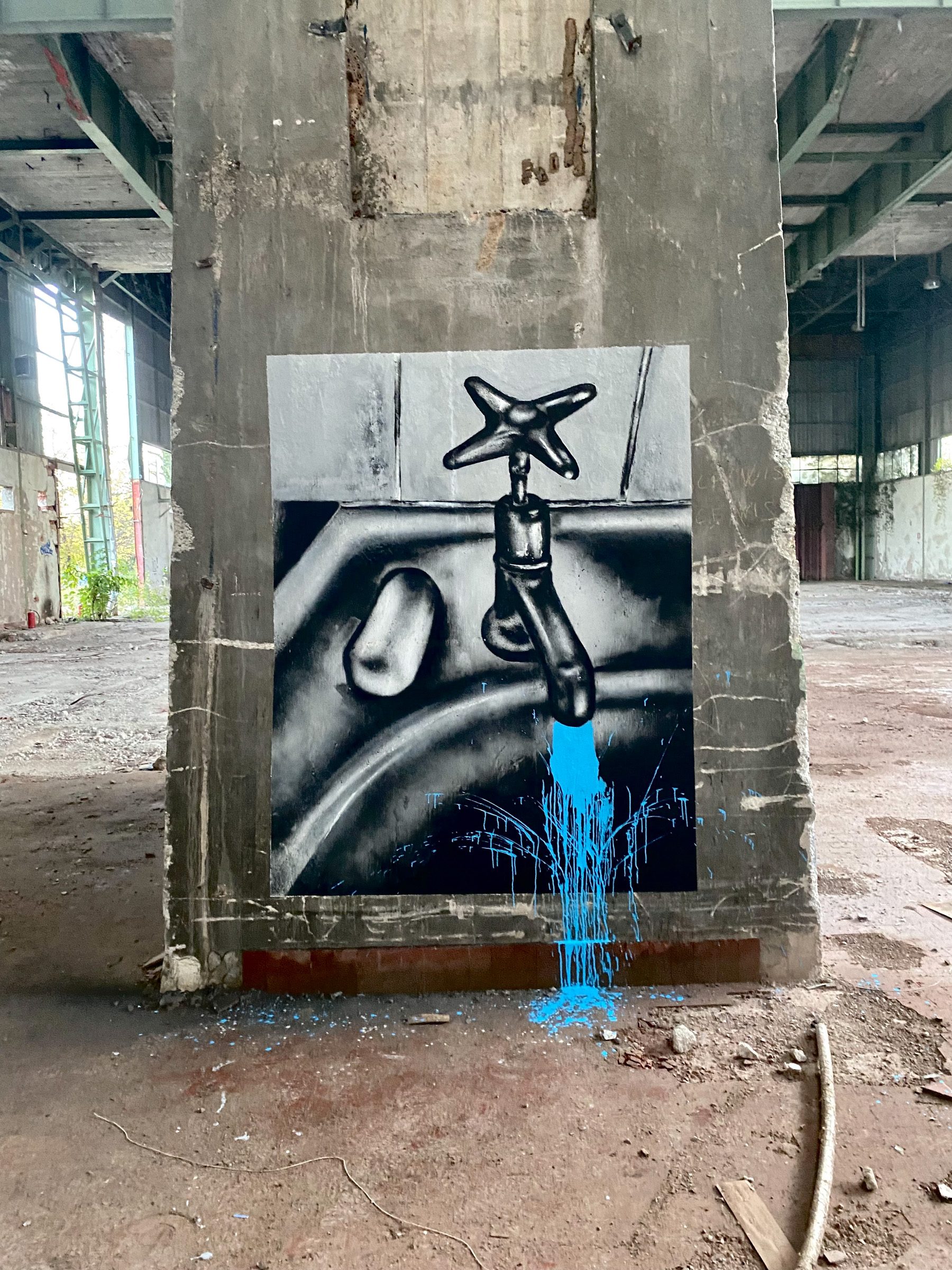
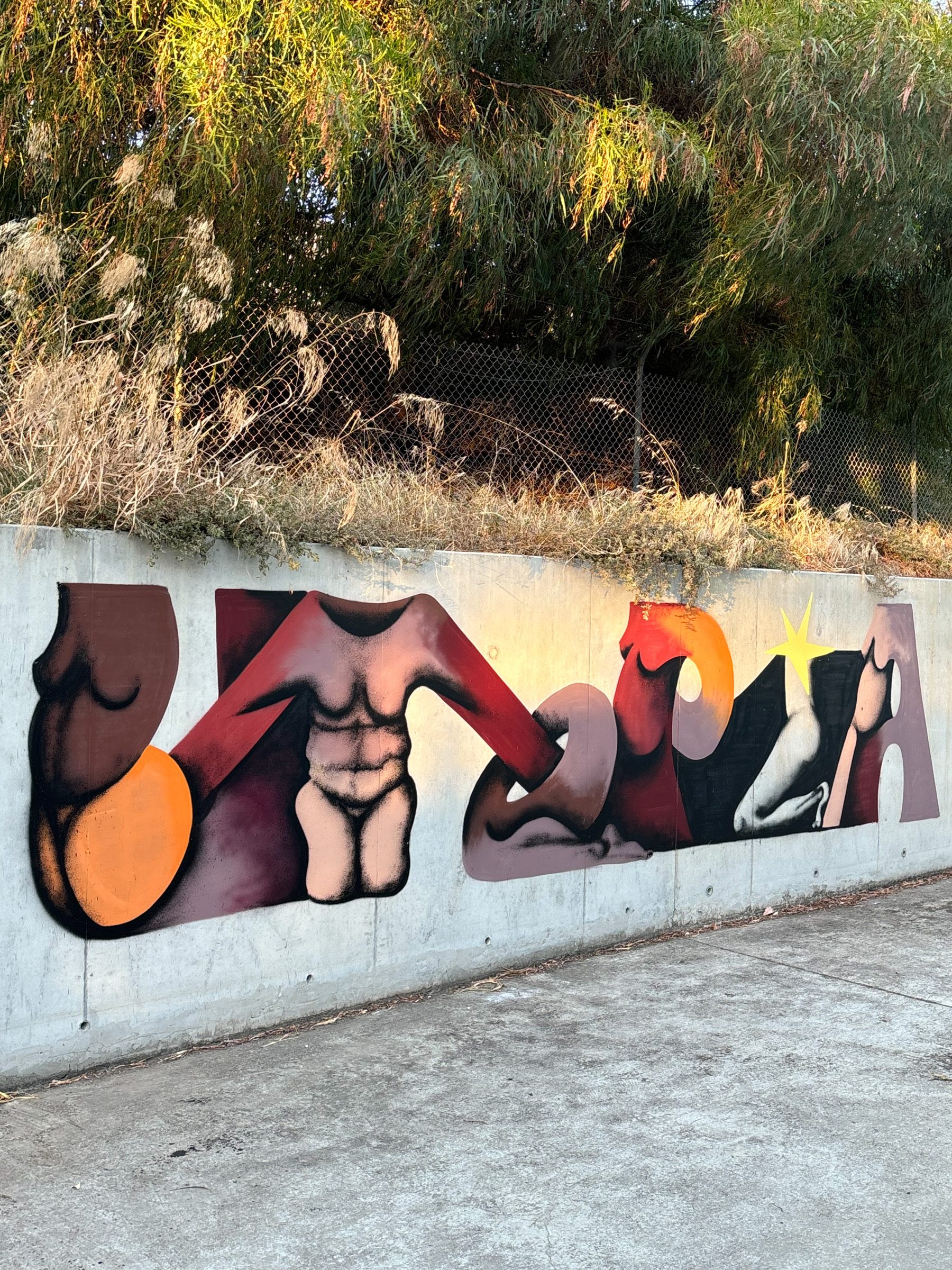
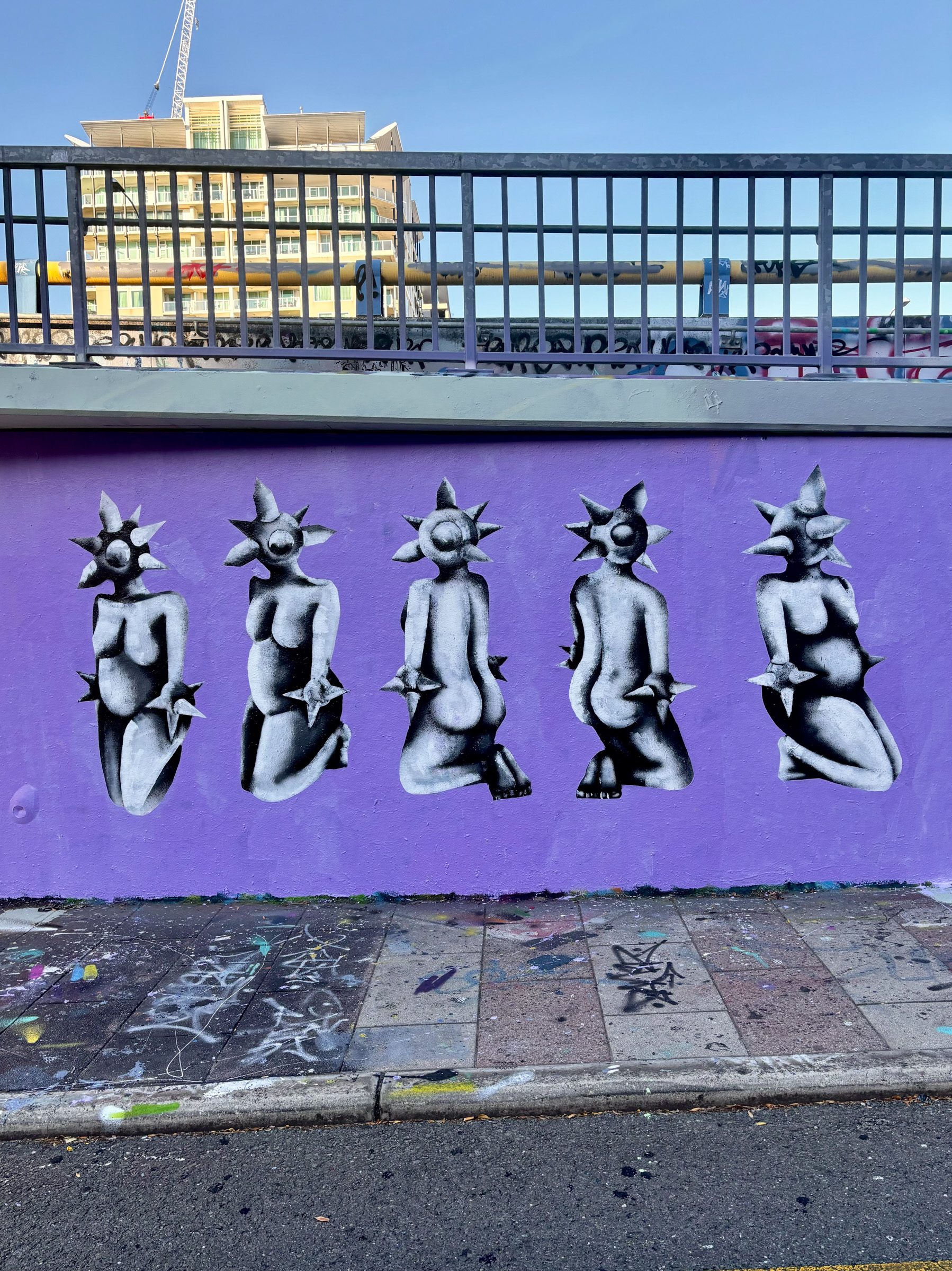
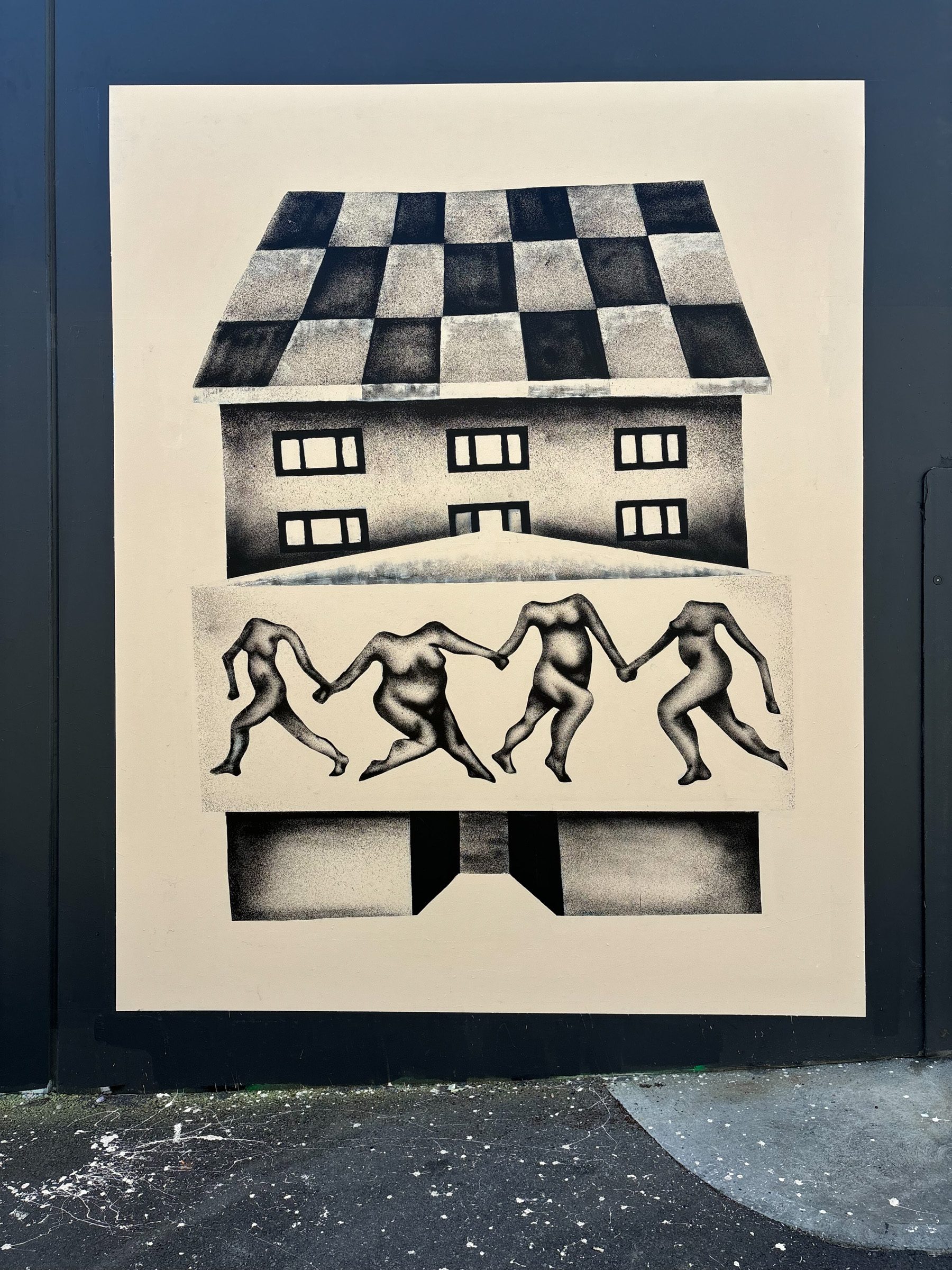
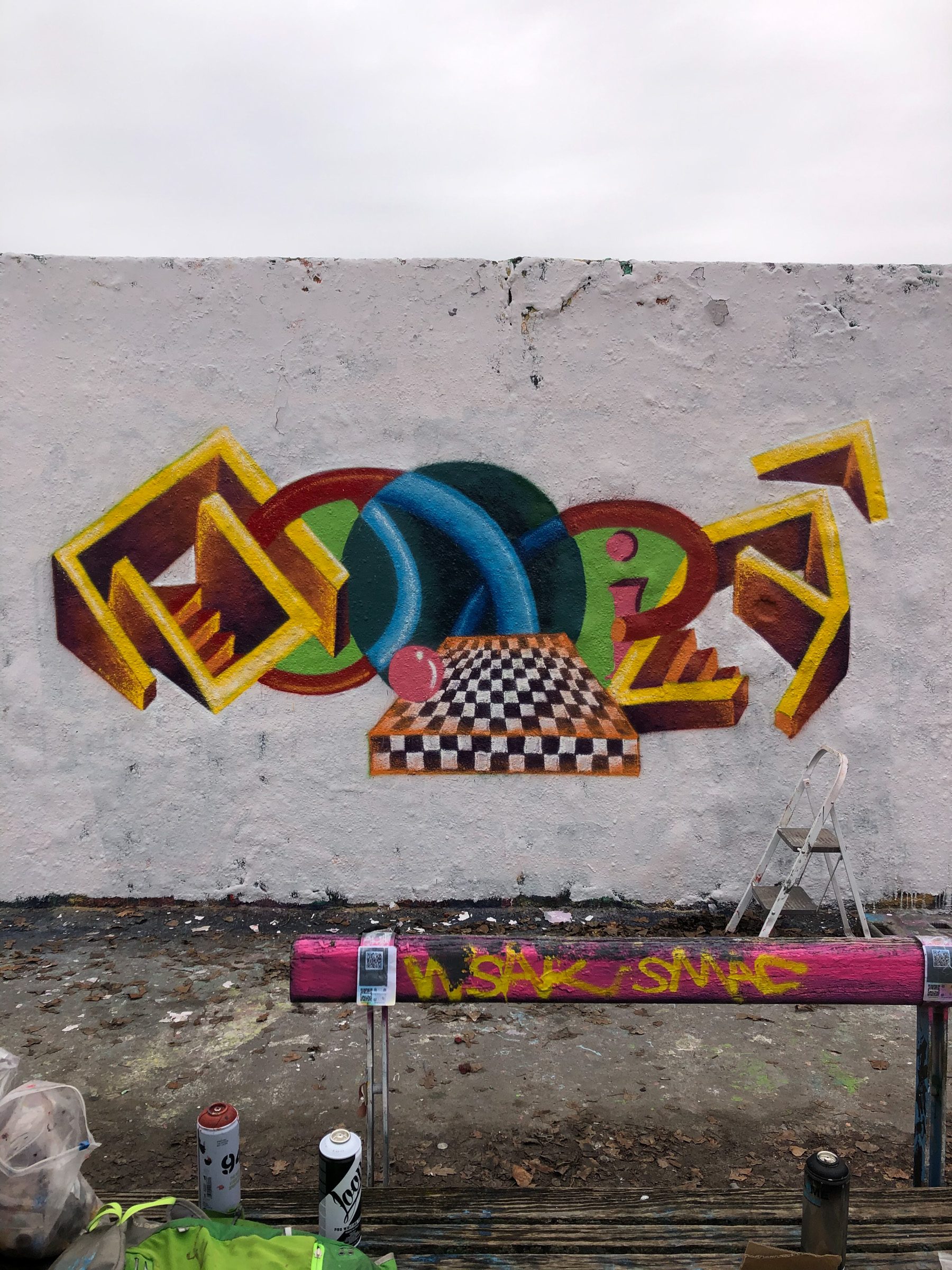
The chessboard pattern as a floor appears frequently in your works — does it have a particular meaning for you?
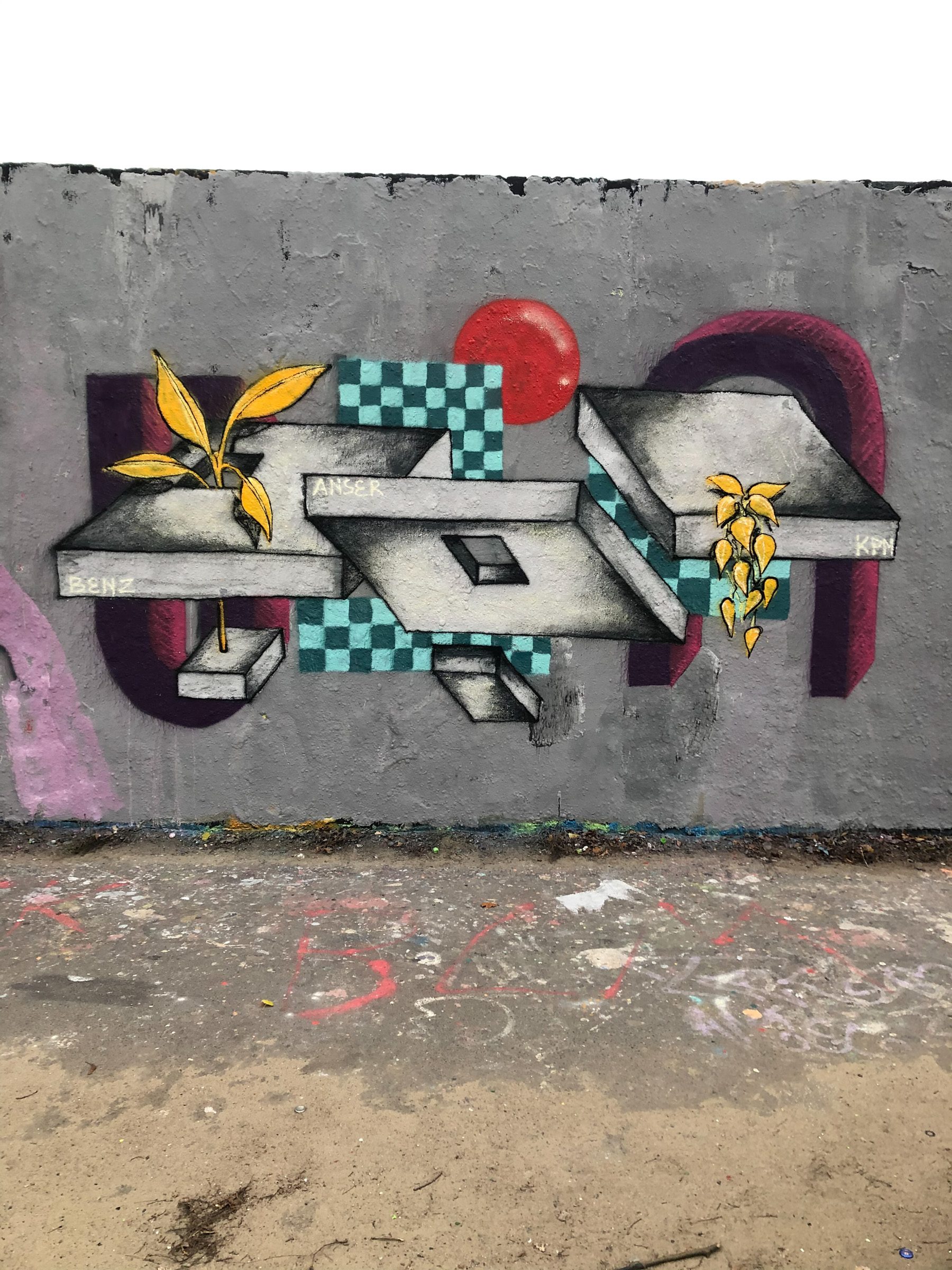
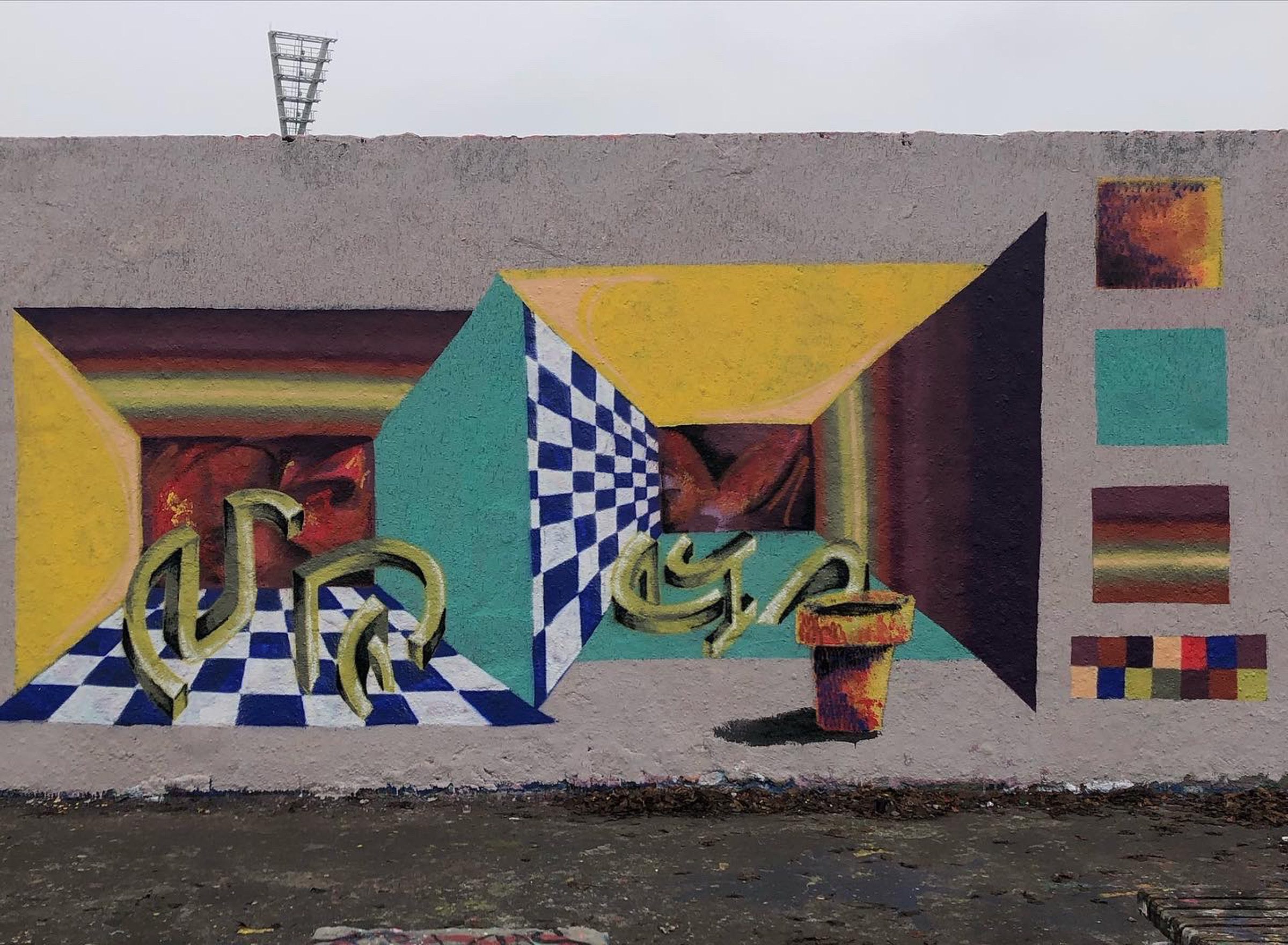
I’ve recently asked myself the same question, because sometimes you choose things instinctively, and only later you start to understand why you kept coming back to them. I think I’ve come to the conclusion that it has multiple layers. On one level, it’s quite simply aesthetic I’ve always liked the high contrast and how graphic it feels. I’m also very fond of chess, and I often come back to that idea of strategy and how differently each piece is allowed to move. In a way, it starts to feel like a quiet reflection of society too, the uneven ways in which people are allowed to move through it, almost like we’re all navigating a system with different levels of freedom.
Then there’s also a more domestic reference that I find interesting the chessboard pattern often appears in kitchens or bathrooms, spaces tied to care, routine, and traditionally women’s labour, or even in tablecloths that relate to preparing and sharing food.
In earlier works, you worked a lot with space and perspective…
Yes, and I still do now. For a while I thought I was constantly shifting between different themes, but over time I realised I keep returning to the same ones. Space is something I’m actively working with at the moment I’m trying to bring these different elements together into a more unified visual language. Before, I tended to explore them more separately, and now I’m more interested in what happens when they start to overlap and interact.
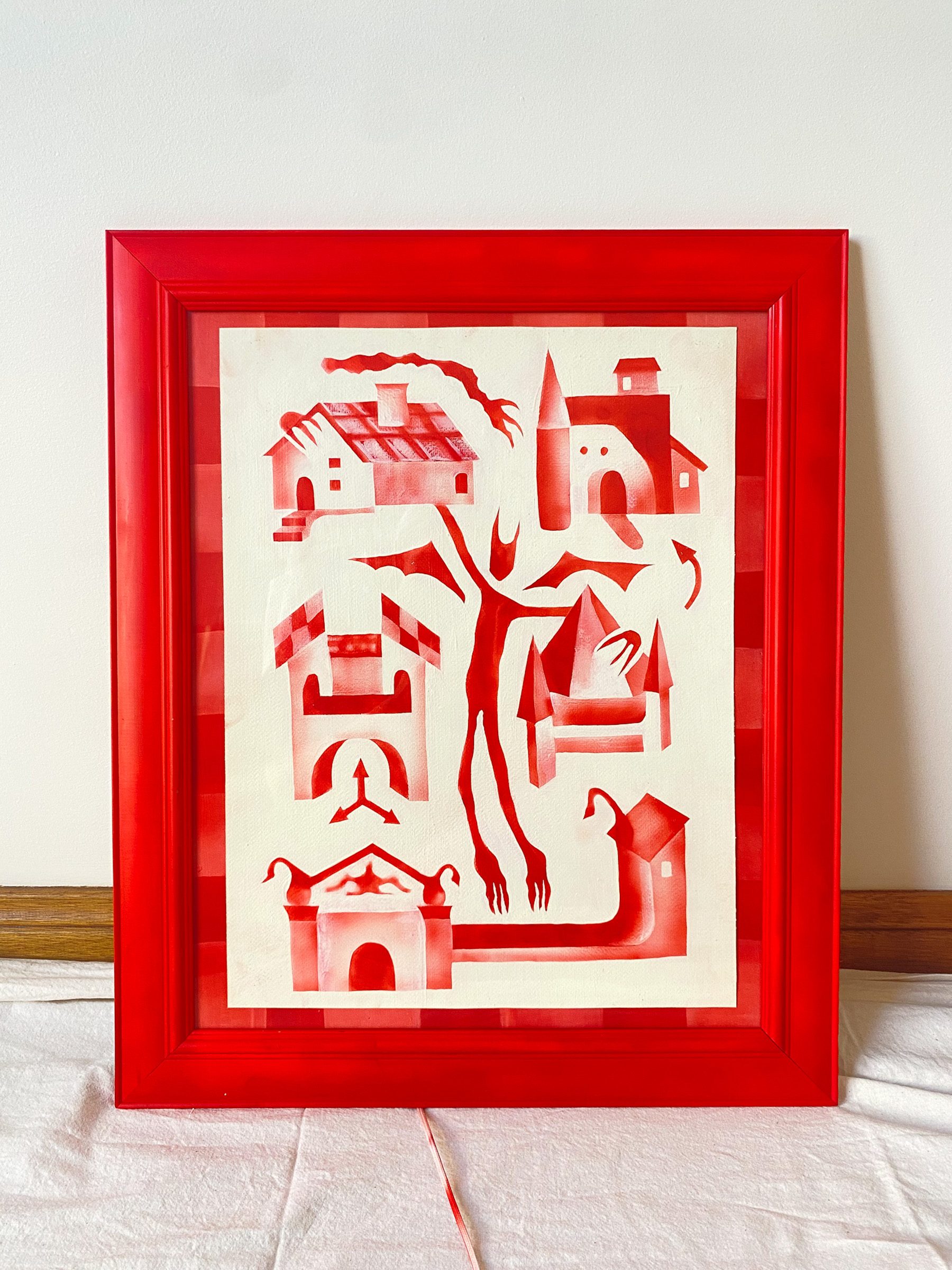
What I like about space is that it can feel completely real and completely impossible at the same time almost like dream-like mazes or liminal environments that are both familiar and slightly alien. There’s often a consistent feeling of being lost in them, which, I suppose, might also just reflect something personal.
How do you find new motifs?
At the beginning I was painting quite a lot of different things, just exploring whatever I found visually interesting at the time. Now I’ve realised I tend to come back to a more defined set of motifs and keep pushing them further rather than constantly changing direction.
I can feel some Surrealists painting in some of your works — the distorted, flowing figures, for example, remind me of Dalí. The contrast and the figures/volumes in spaces remind me of Giorgio de Chirico. Are there any modern or contemporary painters whose work you particularly like, and who inspire you?
I’m really drawn to painting that feels a bit like a dream something that sits between what is real and what can’t quite be, where there’s distortion but still recognition, and the viewer is left to complete the meaning themselves.
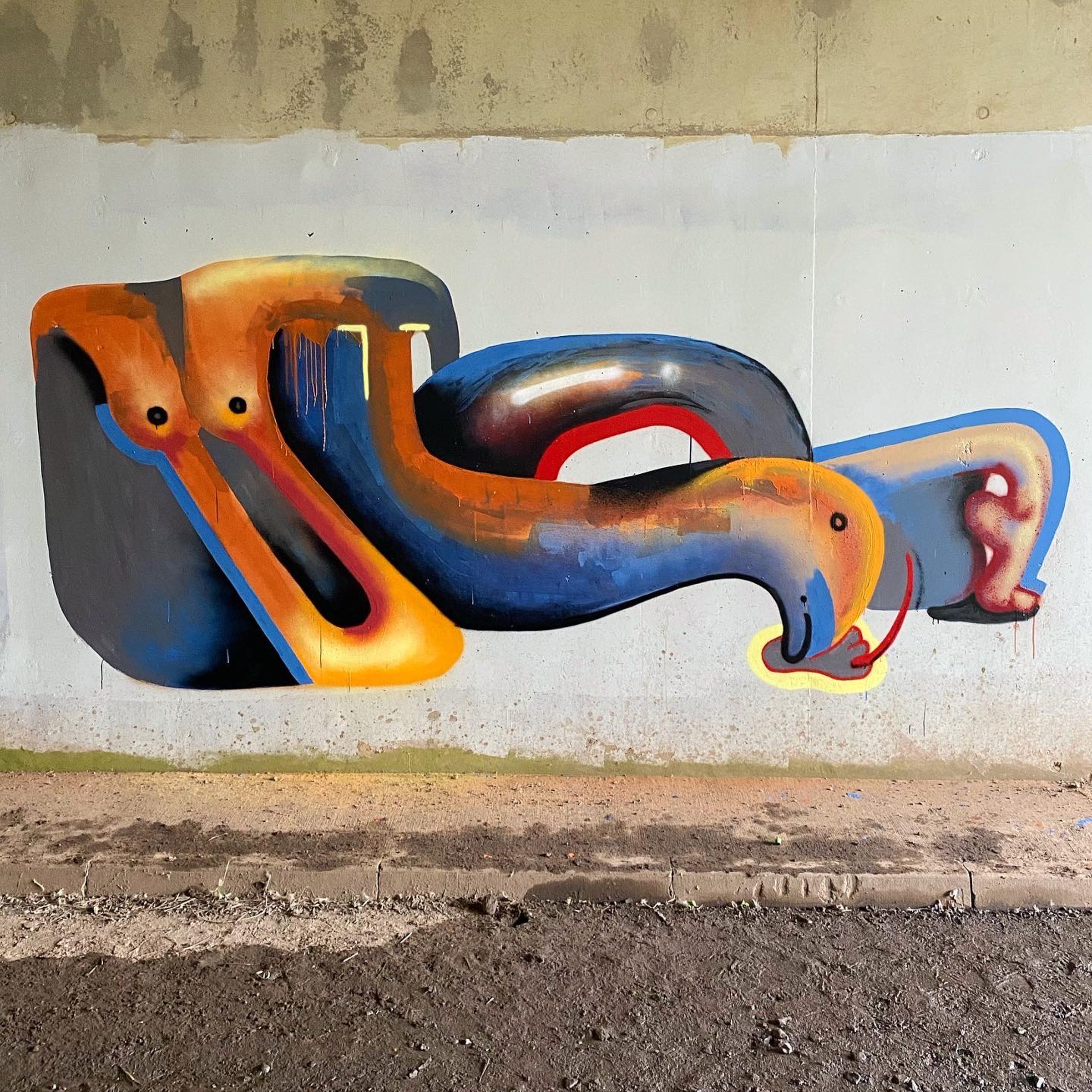
There are a few recurring themes I keep coming back to. One is the female body I’m interested in how its representation is often heavily objectified and shaped by external expectations. I paint figures that are distorted by desire or stretched by those projections, often without defining features like a head or skin colour, so they can remain open and not fixed to one interpretation. For the figures and their distortion, I find inspiration in Henry Moore, Francis Bacon, and Egon Schiele.
I also work with surreal spaces that don’t quite function maze-like, sometimes almost prison-like environments. They can feel dreamy or even beautiful at first, but there’s usually an underlying sense of confusion or entrapment that you can’t quite resolve for this For the spatial elements and world-building, I look more towards Escher and Giorgio de Chirico…
How often do you paint outdoors?
Every time I possibly can! When I was at university I had a lot more free time, so I was out painting pretty much every week. These days it’s less regular, and it really comes in phases sometimes very active, sometimes quieter, depending on everything else going on.
Do you paint alone or with others?
Both, but mostly with others. The beauty of graffiti and wall painting is that it’s probably one of the most social art forms (if you want it to be) but you’re not in a studio on your own, you’re outdoors with people, and that naturally becomes part of the learning process. Some of the most useful tricks I’ve picked up have come from painting alongside others.
You also realise how differently people approach the same wall: different orders, different ways of building things up, and completely different outcomes. You can learn a lot just by watching how someone else works through a piece.
How would you describe your own artistic development?
I’d say it’s been fairly scattered and occasionally confused with alternating phases of intense focus, where I get very into new ideas and paint a lot, followed by moments of doubt where I briefly question what I’m even doing.
Do you continue painting in Australia?
Yes of course I’ll always continue painting!
Do you know the local scene?
Yes, I’ve had the chance to meet some local writers here
What and how many works do you create in the studio? Because wall painting seems to be your main activity…
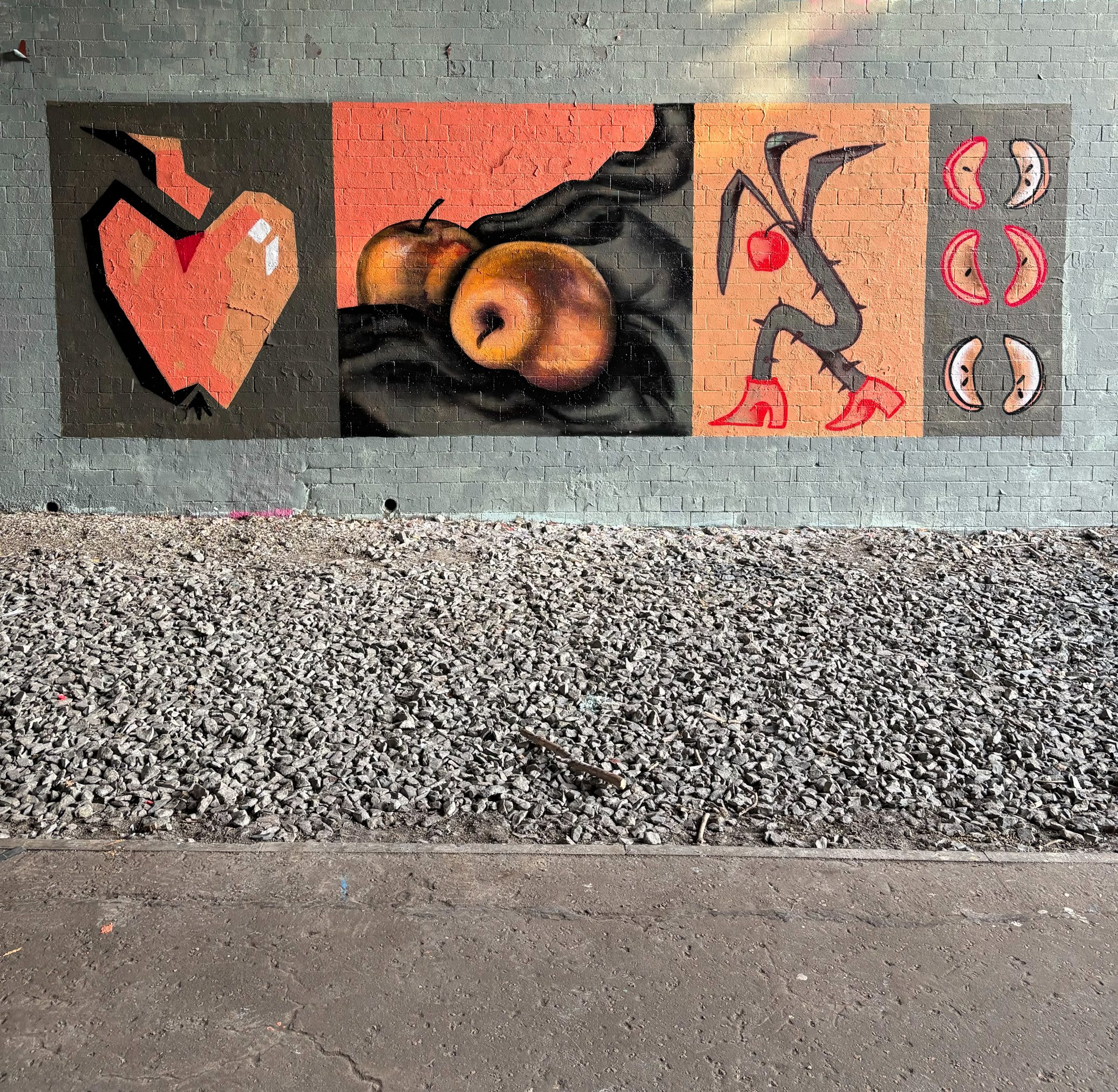
I do paint quite a lot in the studio, mainly using airbrush. I’ve always been drawn to mixed media, and at the moment I’m working on a project that combines airbrush, pencil, spray paint, and some more unconventional materials like nail polish. The way I produce work is quite cyclical I tend to go through phases where I get very immersed and produce a lot alternated with others when I mostly sketch.
Do you have any plans for the near future? Are there any projects coming up?
For now, the plan is simple: keep painting. I’m moving to Melbourne and hoping to push the mural side of my practice a bit further. I’m also organising an exhibition with Seven25 for mid-June before I leave Australia.
Why did you move to Australia and where are you going after, and why?
It wasn’t necessarily the first choice, sorry, Australia. But basically, my partner is Scottish, and after the UK left the EU, he could no longer stay in Germany. So we moved to the UK, but then my visa got denied. Apparently I’m not quite wealthy enough. At that point, we were just looking for somewhere we could both actually live, and Australia said yes to both of us. It’s been a really positive experience overall, but I don’t see myself staying here long-term. I think I’m still in a phase of moving around and figuring things out.
Did you see changes for women in the graffiti/urban art scene over the years?
Yes and no. Women are still very much a minority, but at the same time graffiti has this aspect where, if your work is good, people do respect it if you paint strong pieces in good spots, that does count. People respect the work… mostly.
But there’s definitely still a big “but.” You only have to look at the comment section under any woman posting her work to see that things aren’t entirely fine. Take someone like Bento objectively a very strong writer, clean style, solid pieces and still, a lot of the comments focus on her appearance rather than her work. That says a lot.
For me personally, having a partner who also paints added another layer to that. Even though I had my own interest in graffiti before, people often assumed I was just a “graffiti girlfriend,” painting because of him. It’s been years now, and I don’t think anyone still thinks that but the fact that it was assumed in the first place is quite telling. No one ever thought he was painting because of me.
I don’t think graffiti exists in a vacuum, it reflects the wider society. And right now, we are definitely seeing a kind of regression when it comes to women’s rights, so naturally that shows up here too. I’ve lost count of how many times I’ve been painting next to my partner with two finished pieces on the wall and people assume I’m just there watching or waiting. Covered in paint, actively working, and still not immediately recognised as the one painting. I’ve even been asked if I was “going to paint a little character,” which says enough.
That said, I have to say that in Berlin I generally felt treated more as an equal. Germans are quite good when it comes to that. And one positive change I’ve noticed is that women don’t lack interest, they often just lack a safe entry point. I’m convinced there are just as many women as men who want to paint, but the environment can feel unsafe. And I don’t mean the police, anyone painting graffiti is prepared to run from the police. What we’re less prepared for is squeezing into a tunnel with five strangers who all happen to be men.
I noticed that as soon as I started painting, a lot of my female friends became interested too. Sometimes all it takes is having someone to go with, someone you trust, to make that first step feel possible.
Thank you for your time and good luck!


Leave a Reply